
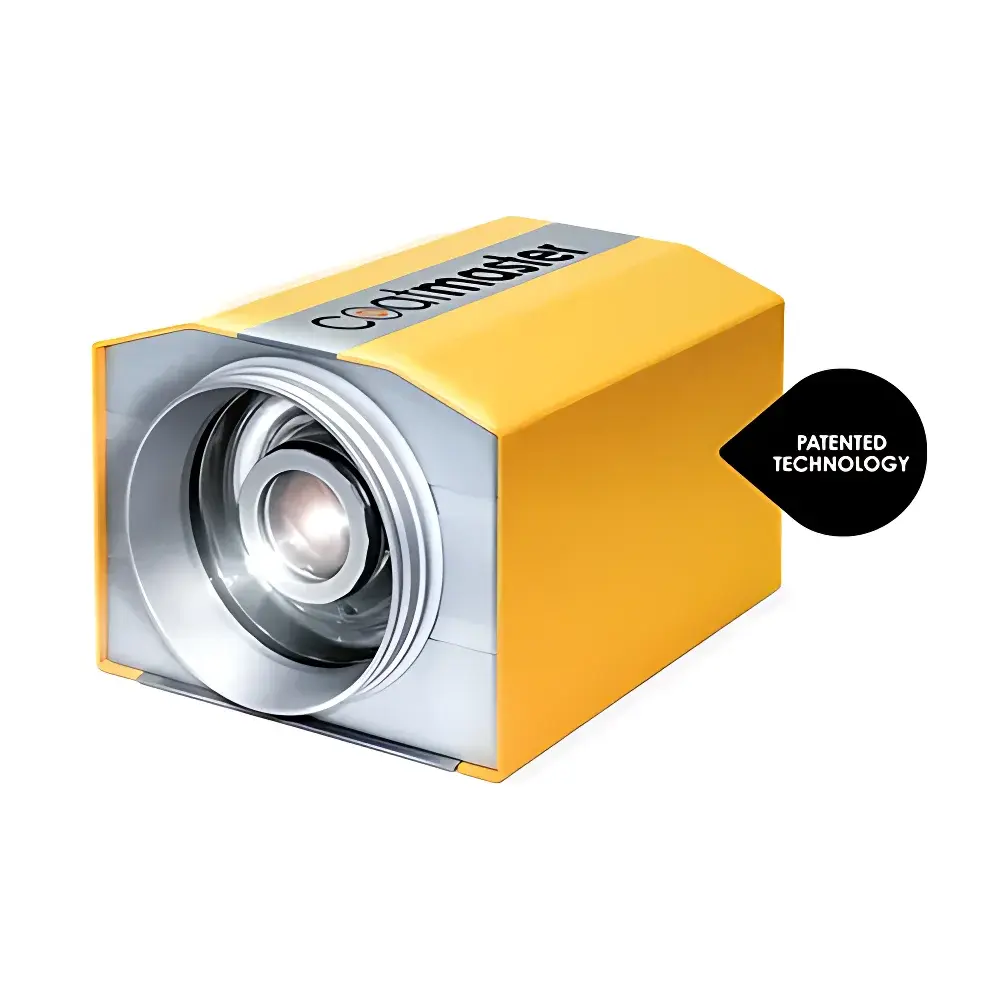
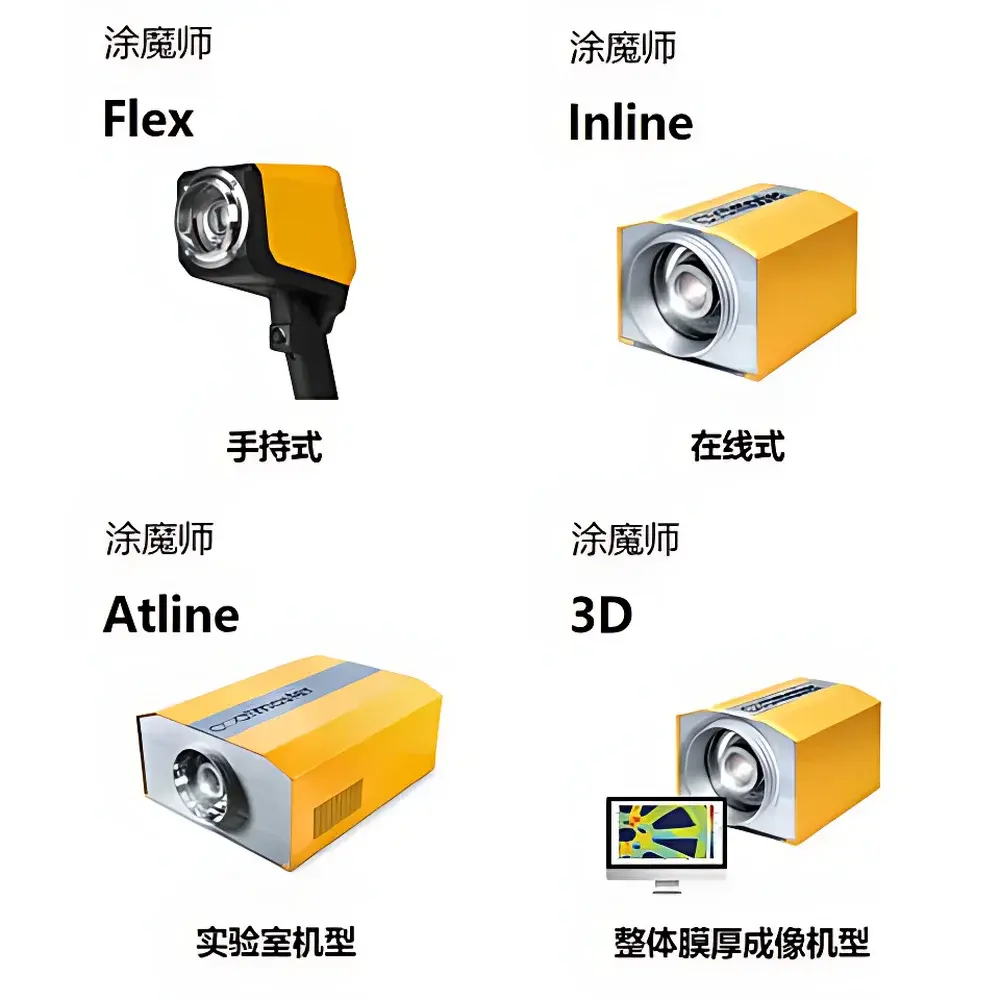
Coatmaster Inline Porcelain Enamel Coating Thickness Monitor
| Brand | Coatmaster |
|---|---|
| Origin | Switzerland |
| Model | Coatmaster Inline Porcelain Enamel Thickness Gauge |
| Type | Non-contact, Real-time Online Thickness Measurement System for Powdered Enamel Coatings |
| Compliance | Designed for ISO/IEC 17025-aligned quality environments, supports GLP/GMP data integrity requirements (audit trail, user access control, electronic signature readiness) |
| Measurement Principle | Optical Interferometry with Multi-Point Spatial Calibration |
Overview
The Coatmaster Inline Porcelain Enamel Coating Thickness Monitor is an industrial-grade, non-contact optical measurement system engineered for real-time, quantitative monitoring of powdered porcelain enamel coatings during continuous manufacturing processes. Unlike contact-based or destructive methods (e.g., cross-section microscopy or eddy current gauges), this system employs calibrated optical interferometry—leveraging wavelength-stable light sources and high-resolution spatial detection—to determine coating thickness on thermally pre-treated metal substrates (e.g., steel baking trays and oven cavities) prior to firing. Its core function is to resolve the critical process window where enamel thickness directly governs functional performance: insufficient thickness compromises non-stick durability and aesthetic uniformity; excessive thickness increases raw material consumption, risk of cracking during thermal cycling, and energy demand in the firing stage. Deployed inline—typically upstream of the enameling furnace—the system delivers sub-micron repeatability under factory ambient conditions (temperature ±5 °C, relative humidity 30–70 %, no forced air turbulence), enabling closed-loop feedback to spray booth controllers.
Key Features
- Real-time, non-contact measurement at production line speed—no part handling, no surface contact, zero risk of coating disturbance or substrate marking
- Multi-point dynamic scanning capability: programmable measurement grids adapt to complex geometries (e.g., tray corners, recessed edges, curved cavity walls)
- Static and dynamic operational modes: fixed-height static mode for calibration reference; synchronized conveyor-coupled dynamic mode for full-part coverage
- Integrated visual and audible alarm system triggered automatically when measured values exceed user-defined upper/lower specification limits (USL/LSL)
- Onboard data logging with time/date stamping, configurable save intervals (e.g., per batch, per hour, or continuous streaming to network storage)
- Robust mechanical housing rated IP65, designed for integration into industrial painting and enameling lines with exposure to dust, mild solvent vapors, and thermal radiation
Sample Compatibility & Compliance
The system is validated for use on ferrous substrates (cold-rolled steel, cast iron) coated with dry, unfired porcelain enamel powder—typically applied via electrostatic or fluidized bed methods. It does not require surface preparation, conductive primers, or reflective backings. Measurement range spans 80–450 µm, optimized for standard domestic appliance enamel layers. Compliance documentation includes CE marking, RoHS conformity, and electromagnetic compatibility (EMC) certification per EN 61326-1. While not a medical device or pharmaceutical instrument, its data management architecture aligns with principles referenced in FDA 21 CFR Part 11 (electronic records/signatures), including operator login tracking, immutable audit logs, and version-controlled configuration files—facilitating validation under ISO 9001 and IATF 16949 quality management systems.
Software & Data Management
The Coatmaster Control Suite provides a Windows-based interface with dual operational views: real-time dashboard (showing live thickness heatmaps, statistical process control charts, and pass/fail status per measurement point) and historical analysis module. All measurement data—including raw intensity profiles, calculated thickness values, timestamp, conveyor position index, and operator ID—are stored in encrypted SQLite databases with automatic daily backup. Trend visualization supports SPC analysis (X-bar/R charts, Cp/Cpk calculation) and deviation root-cause correlation (e.g., linking thickness drift to ambient humidity logs or powder feed rate changes). Export formats include CSV, PDF reports, and OPC UA connectivity for MES/SCADA integration. Software updates are delivered via secure HTTPS channel with SHA-256 signature verification.
Applications
Primary deployment contexts include high-volume manufacturing of domestic ovens, toaster ovens, baking trays, and cookware components where porcelain enamel serves as both decorative and functional barrier layer. Secondary applications extend to industrial heat exchanger plates and laboratory furnace linings requiring precise thermal insulation consistency. The system eliminates reliance on post-firing destructive testing (e.g., SEM cross-sectioning), reduces scrap from undetected under-coating, and prevents over-application waste—documented ROI cases show annual savings exceeding €40,000 through reduced rework, lower powder consumption, and avoidance of customer warranty claims. It further supports Six Sigma initiatives by converting qualitative “visual inspection” into quantitative, traceable metrology.
FAQ
Does the system require calibration against reference standards?
Yes—initial calibration uses NIST-traceable step-height standards and certified enamel-coated reference samples. Field recalibration is recommended every 3 months or after mechanical impact, using the built-in auto-zero and gain-adjust functions.
Can it measure on curved or textured surfaces?
It accommodates moderate curvature (radius ≥50 mm) and fine surface texture (Ra < 3.2 µm) via adaptive focus algorithms; deep grooves or sharp undercuts require custom optical path alignment.
Is it compatible with existing PLC or SCADA infrastructure?
Yes—via Ethernet/IP, Modbus TCP, or analog 4–20 mA output signals for thickness mean value and alarm status.
What environmental conditions affect measurement stability?
Ambient temperature gradients >1 °C/min or condensation on the optical window will degrade signal-to-noise ratio; optional heated purge air kit mitigates this in high-humidity zones.
How is operator training and system validation supported?
Coatmaster provides IQ/OQ documentation templates, on-site installation qualification, and certified technician training programs covering GAMP 5-aligned validation protocols.



