
Defelsko PosiTest DFT Electromagnetic & Eddy Current Coating Thickness Gauge
| Brand | Defelsko |
|---|---|
| Origin | USA |
| Model | PosiTest DFT |
| Measurement Principle | Magnetic Induction (for ferrous substrates) & Eddy Current (for non-ferrous substrates) |
| Range | 0–1000 µm |
| Accuracy | ±(2 µm + 3%) |
| Dimensions | 100 × 38 × 23 mm |
| Weight | 70 g |
| Probe Type | Wear-resistant ruby-tipped sensor |
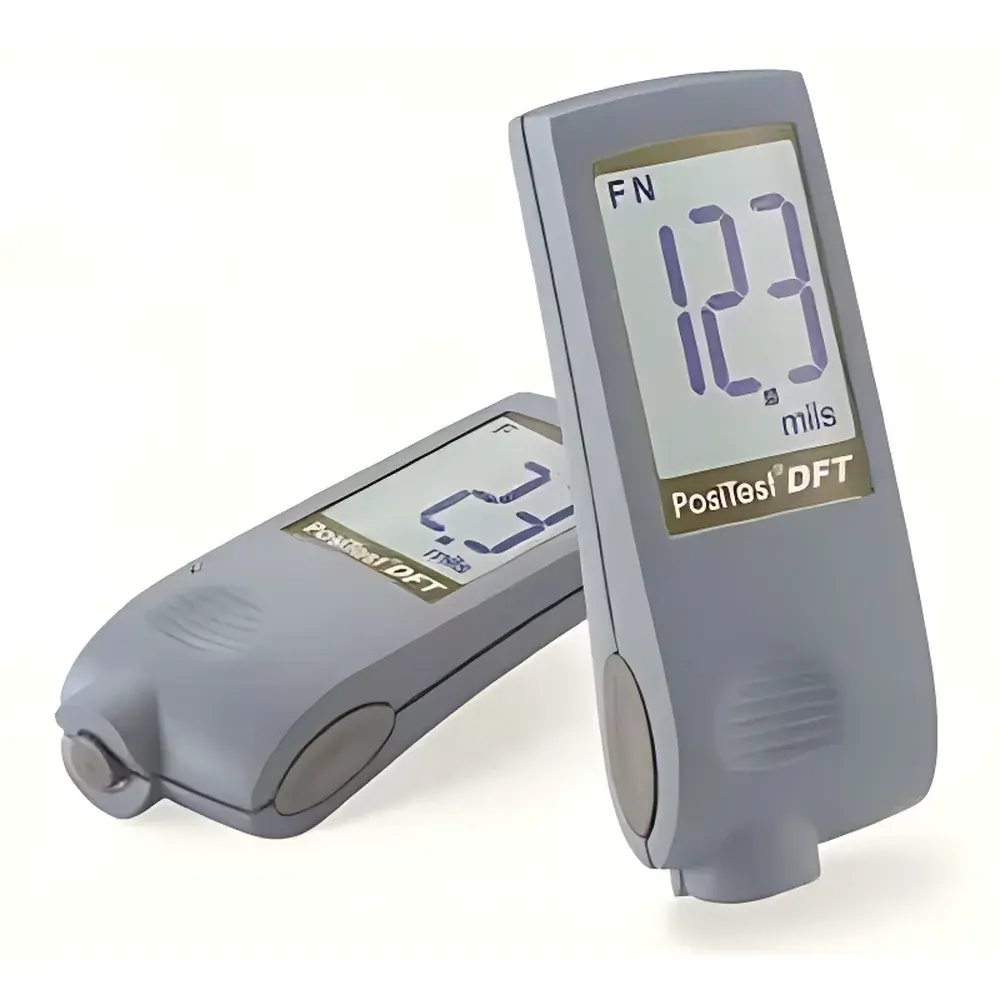
| Display | Backlit LCD |
| Power Management | Auto-on / auto-off |
| Calibration | Zero-point calibration |
| Geometry Support | V-groove for curved surfaces |
| Units | Metric/imperial toggle |
| Compliance | ASTM D7091, ISO 2178, ISO 2360, SSPC-PA 2, AS 3894.3 |
Overview
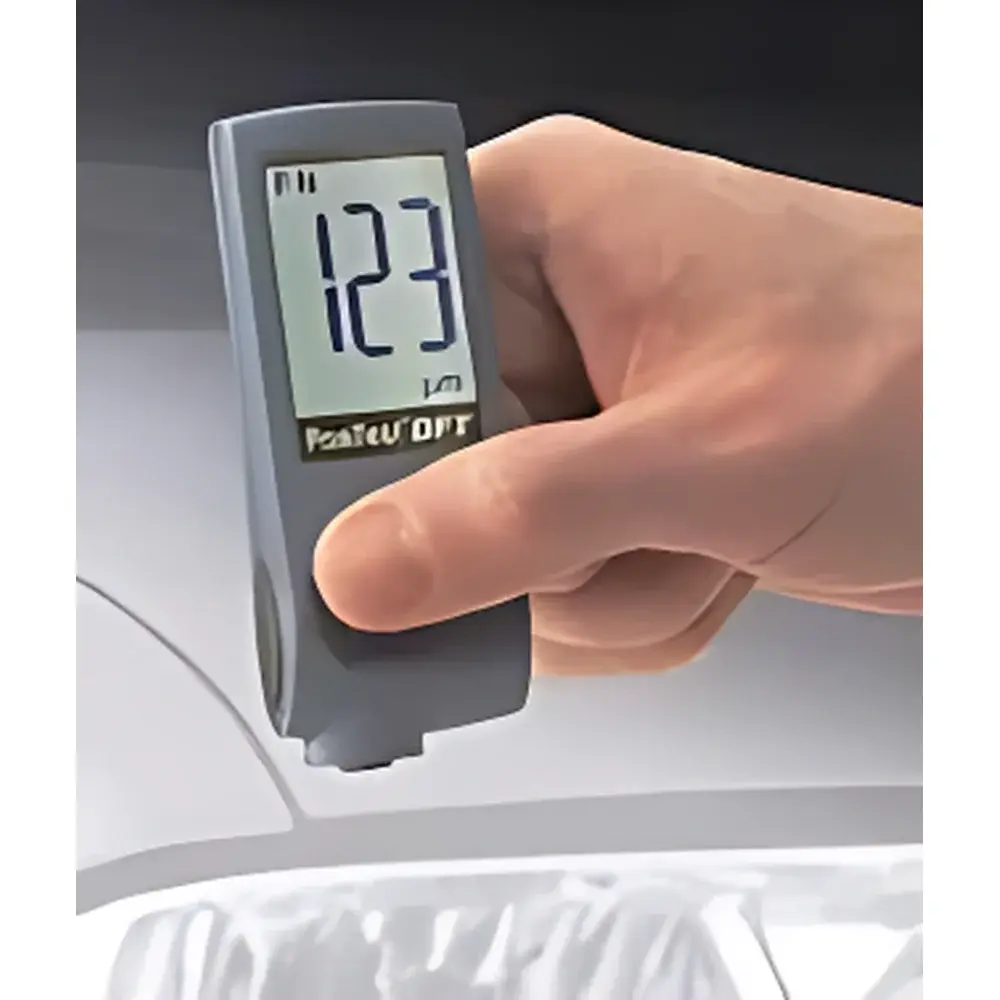
The Defelsko PosiTest DFT is a handheld, dual-principle coating thickness gauge engineered for high-reproducibility non-destructive measurement of non-conductive coatings on conductive substrates. It operates via two complementary electromagnetic methods: magnetic induction for non-magnetic coatings (e.g., paint, enamel, plastic, zinc, chrome) applied to ferrous metals such as steel and iron; and eddy current technology for insulating layers (e.g., anodized oxide, lacquer, powder coat) on non-ferrous conductive substrates including aluminum, copper, and austenitic stainless steel. This dual-mode architecture eliminates manual mode switching—intelligent substrate recognition automatically selects the appropriate measurement principle based on real-time probe-substrate interaction. Designed for field and shop-floor use, the instrument meets internationally recognized standards for coating quality control, including ASTM D7091 (Standard Practice for Nondestructive Measurement of Dry Film Thickness of Nonmagnetic Coatings Applied to Ferrous Metals and Nonconductive Coatings Applied to Non-Ferrous Metals), ISO 2178 (magnetic method), and ISO 2360 (eddy current method). Its compact form factor (100 × 38 × 23 mm), ultra-lightweight construction (70 g), and ergonomic V-groove design enable reliable measurements on flat, cylindrical, or contoured surfaces without requiring fixture support.
Key Features
- Auto-detecting dual-sensor platform: seamlessly distinguishes between ferrous and non-ferrous substrates and applies the correct measurement physics without user intervention
- Ruby-tipped probe with hardened wear surface ensures long-term dimensional stability and resistance to abrasion during repeated contact with rough or abrasive coatings
- Backlit LCD display with high-contrast characters supports readability under variable lighting conditions—including low-light industrial environments and outdoor daylight exposure
- Continuous measurement mode enables rapid scanning across large surfaces, while single-shot mode provides discrete point verification aligned with SSPC-PA 2 or ISO 19840 sampling protocols
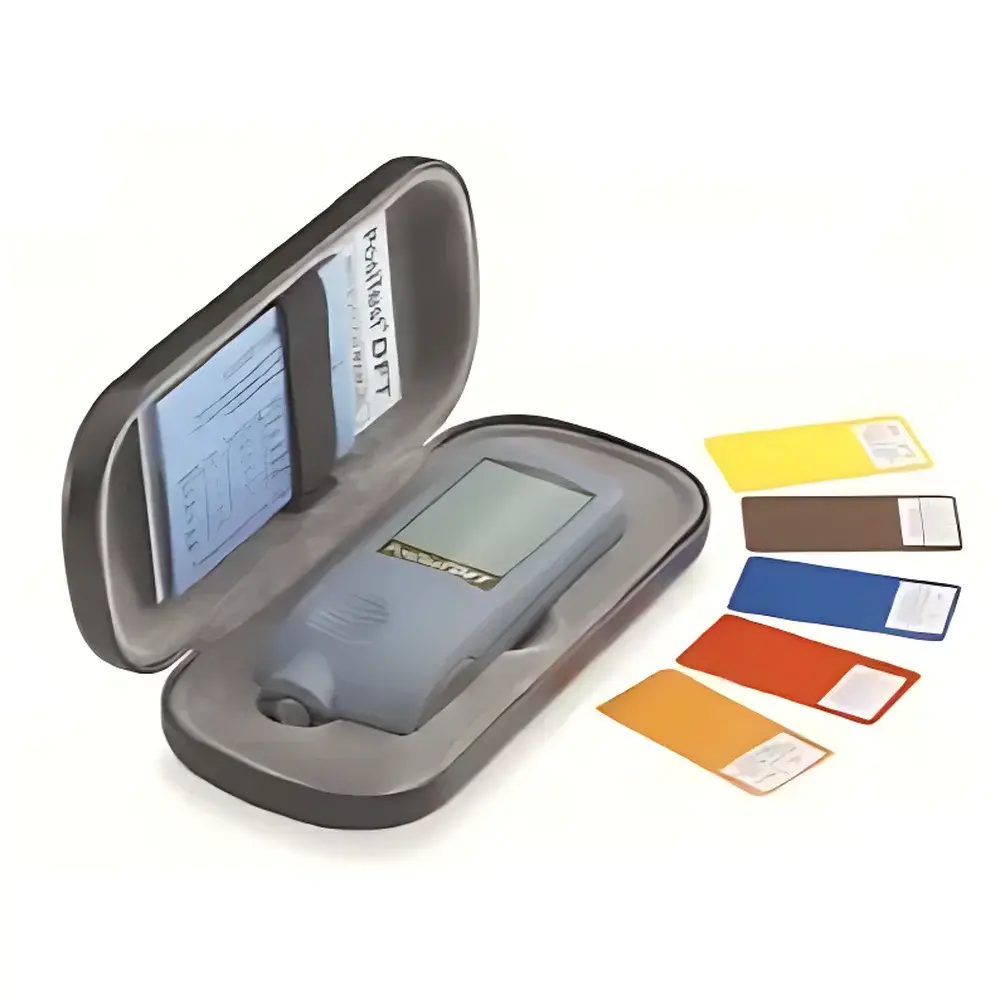
- Integrated zero-point calibration routine allows on-site verification and adjustment using certified shims or uncoated reference substrates—no external calibration kit required for routine operation
- V-groove base geometry facilitates stable positioning on pipes, tubes, and curved components, minimizing tilt-induced measurement error per ISO 19840 Annex B guidance
- Automatic power management extends battery life: unit powers on upon probe actuation and enters sleep mode after 5 minutes of inactivity, retaining calibration and last-measurement memory
- Unit conversion toggle (µm/mil) simplifies reporting compliance for multinational supply chains adhering to both SI and imperial specifications
Sample Compatibility & Compliance
The PosiTest DFT is validated for use across diverse industrial coating systems and substrate combinations. On ferrous substrates, it measures typical industrial coatings including epoxies, polyurethanes, zinc-rich primers, electroplated chromium, porcelain enamel, and thermoset powder coatings. On non-ferrous substrates, it accurately quantifies anodic oxide films on aluminum (per MIL-A-8625), liquid-applied paints on copper busbars, UV-cured coatings on brass fixtures, and insulative conformal coatings on printed circuit board assemblies. All measurements comply with the traceability and uncertainty requirements defined in ISO/IEC 17025-accredited laboratories. The device’s measurement uncertainty budget—±(2 µm + 3%)—is verified against NIST-traceable step gauges and certified reference materials per ASTM E2821. It supports audit-ready documentation workflows compatible with GLP and GMP environments where measurement integrity must be demonstrable through calibration records, operator ID logging, and environmental condition annotation.
Software & Data Management
While the PosiTest DFT operates as a standalone field instrument, optional Bluetooth-enabled data transfer modules allow seamless integration with Defelsko’s free PosiSoft Desktop software (Windows/macOS). This application supports batch export of measurement series—including timestamp, location tag (via connected GPS), substrate type flag, and statistical summaries (mean, std dev, min/max, Cp/Cpk). Raw datasets are exportable in CSV and PDF formats compliant with FDA 21 CFR Part 11 requirements when used with electronic signature-enabled configurations. Audit trails record all calibration events, firmware updates, and parameter changes—ensuring full data lineage for internal quality audits or third-party certification reviews (e.g., ISO 9001:2015 Clause 7.1.5.2).
Applications
- Automotive refinish shops verifying OEM-compliant primer/final coat thickness per SAE J2607
- Aerospace MRO facilities measuring thermal barrier coatings on turbine housings and anodize thickness on wing spar extrusions
- Architectural metal fabricators validating AAMA 2604/2605 coating performance on aluminum curtain wall systems
- Industrial maintenance teams auditing protective coatings on offshore platform structural steel per NORSOK M-501
- Electronics manufacturers controlling conformal coating uniformity on PCBAs prior to environmental stress screening
- Paint manufacturing QA labs performing incoming raw material verification and batch release testing
FAQ
Does the PosiTest DFT require annual recalibration?
No mandatory annual recalibration is specified by Defelsko; however, users must perform periodic verification using certified reference standards before each shift or measurement session per ISO 9001 and IATF 16949 requirements.
Can it measure coatings on galvanized steel?
Yes—the instrument treats the zinc layer as part of the ferrous substrate and measures the topcoat thickness above it, provided the zinc layer is continuous and non-porous per ASTM A123.
Is the probe interchangeable between F-type and Combo models?
No—probe assemblies are model-specific and not cross-compatible due to differences in coil geometry and shielding configuration optimized for respective measurement principles.
What environmental conditions affect measurement accuracy?
Extreme temperatures (40 °C), strong ambient electromagnetic fields (e.g., near welding equipment or VFDs), and surface contamination (oil, dust, rust scale) can introduce deviation; ISO 2178 recommends cleaning substrates per SSPC-SP1 prior to measurement.
Does it support statistical process control (SPC) output?
Yes—when paired with PosiSoft Desktop, it generates X-bar/R charts, histogram distributions, and capability indices directly exportable to Minitab or JMP for SPC deployment.
Related Products



