
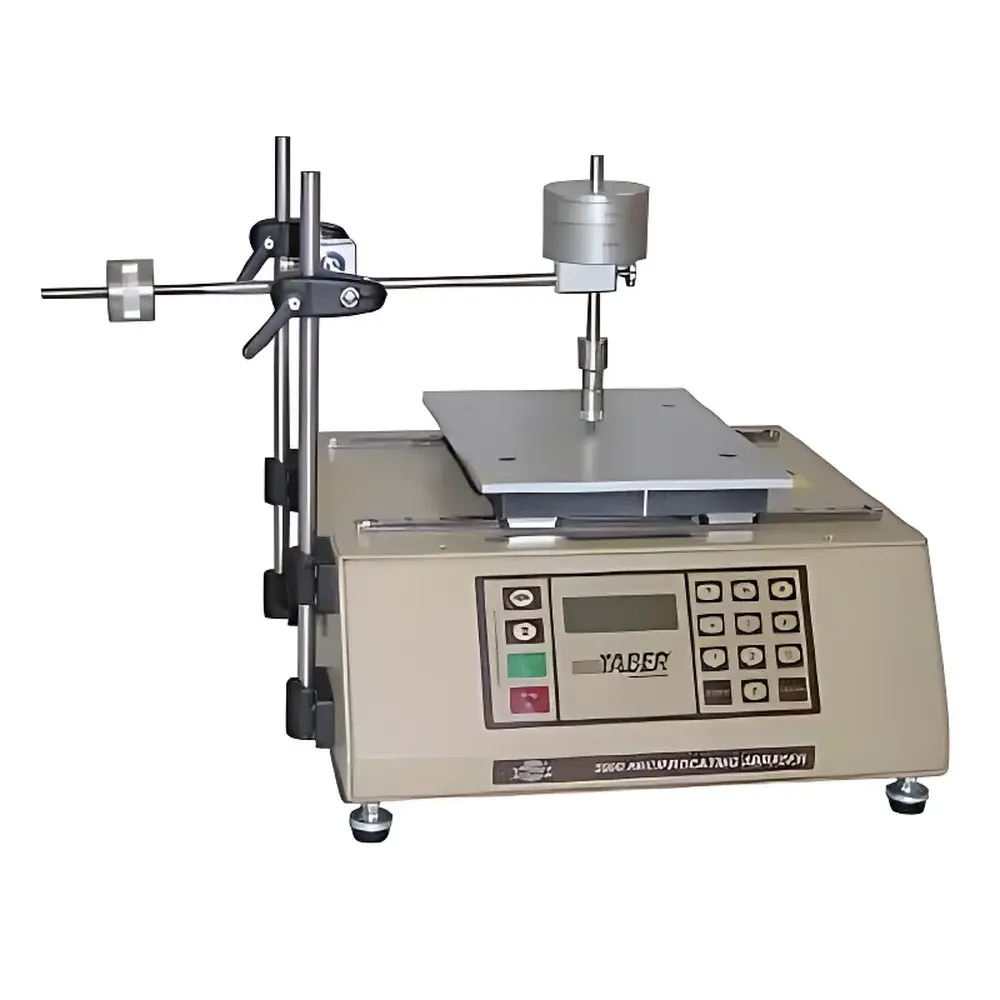
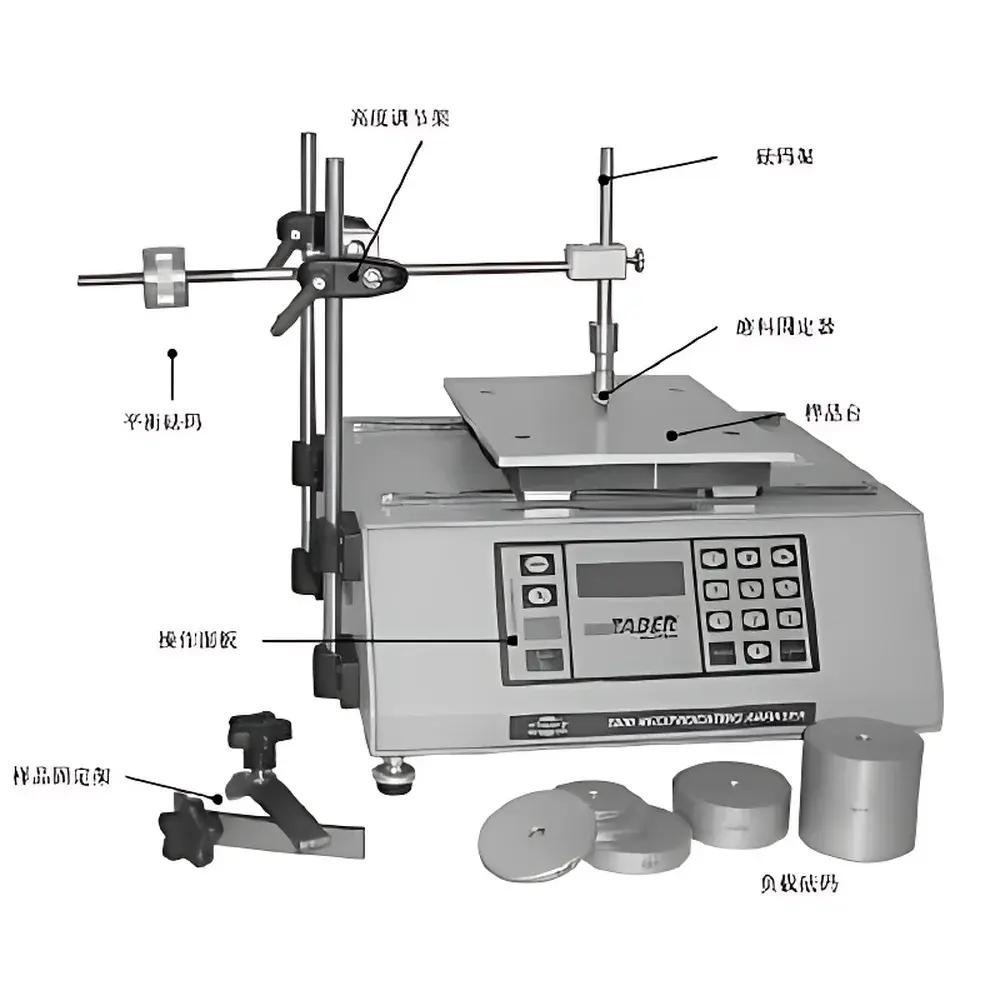
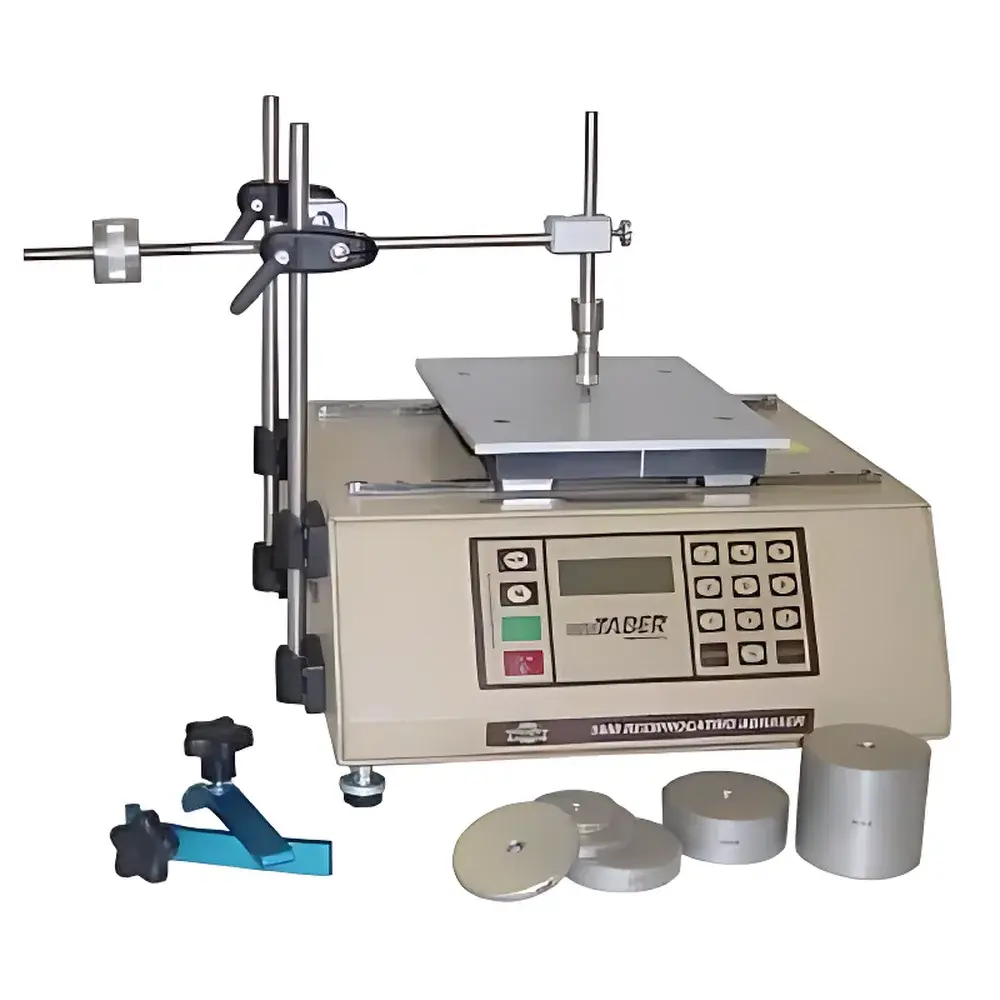
Taber 5900 Reciprocating Tribological Tester
| Brand | Taber |
|---|---|
| Origin | USA |
| Model | Taber 5900 |
| Instrument Type | Reciprocating Wear and Abrasion Tester |
| Maximum Applied Load | 1–24 N |
| Load Resolution | 1 mN |
| Maximum Operating Temperature | 50 °C |
| Reciprocating Stroke Length | 6–155 mm |
| Reciprocating Frequency | 3–75 cycles/min |
| Adjustable Test Arm Height | up to 130 mm |
| Compliance Standards | ASTM F2495, ISO 1518, GME 60248, GME 60368, GMW 14125 |
Overview
The Taber 5900 Reciprocating Tribological Tester is an engineered precision instrument designed for quantitative evaluation of surface durability under controlled linear oscillatory motion. Based on the fundamental principles of reciprocating tribometry—where a defined indenter or abrasive element moves back-and-forth across a stationary or horizontally translated specimen—the system enables reproducible assessment of wear resistance, scratch resistance, abrasion resistance, and surface deformation behavior. Its mechanical architecture follows ISO 1518-compliant geometry, featuring a calibrated lever-based loading mechanism that translates gravitational force from standardized masses into highly accurate normal loads (1–24 N) applied to the test interface. This design ensures traceable load application independent of operator technique, making it suitable for quality control laboratories, R&D departments, and third-party testing facilities requiring GLP-aligned repeatability.
Key Features
- Adjustable reciprocating stroke length (6–155 mm) with digital cycle counter capable of up to 99,999 cycles per test sequence
- Precision-machined, height-adjustable test arm (up to 130 mm vertical clearance) accommodating specimens of varying thickness and geometry
- High-resolution load application system with ±1 mN resolution and six standard calibration masses (1 N, 2 N, 2.5 N, 5 N, 10 N, 24 N)
- Programmable reciprocating frequency (3–75 cycles/min) via integrated motor controller with consistent velocity profile across full stroke range
- Modular abrasive fixture system compatible with Taber’s full line of standardized wear media—including CS-10, H-18, CS-17, and Calibrase®/Calibrade® series abrasives
- Stainless-steel sample stage with dual clamping fixtures for rigid planar specimen fixation; optional textile-specific mounting plates available
- Robust cast-aluminum frame with vibration-dampening base, ensuring mechanical stability during extended high-cycle testing
Sample Compatibility & Compliance
The Taber 5900 accommodates flat, rigid, or semi-rigid specimens up to 130 mm in height and 150 mm × 150 mm in footprint. It supports standardized test geometries for coatings, polymers, composites, metals, textiles, leather, and laminated materials. The instrument meets critical international standards including ASTM F2495 (for coated fabrics), ISO 1518 (paint and varnish—determination of resistance to abrasion), GME 60248 and GME 60368 (General Motors material specifications), and GMW 14125 (textile abrasion resistance). All mechanical configurations—including optional triple-test-arm kits—maintain compliance when used with certified accessories and calibrated masses. Data generated on this platform is admissible in regulatory submissions where ISO/IEC 17025-accredited testing is required, provided environmental conditions (e.g., temperature ≤50 °C, humidity control) and operator training protocols are documented per internal SOPs.
Software & Data Management
While the Taber 5900 operates as a standalone electromechanical tester without embedded microprocessor control, its analog-digital hybrid architecture supports external data acquisition via TTL pulse outputs synchronized with stroke initiation and cycle completion. Users may integrate the system with third-party DAQ hardware (e.g., National Instruments USB-6009) and software platforms such as LabVIEW or MATLAB for time-stamped load/stroke correlation, real-time friction coefficient estimation (when paired with optional force transducers), and automated pass/fail reporting. Audit trails—including operator ID, test parameters, mass calibration records, and environmental logs—can be maintained in accordance with FDA 21 CFR Part 11 requirements when deployed within validated laboratory information management systems (LIMS). Taber provides comprehensive calibration documentation and traceable NIST-certified mass sets to support metrological integrity.
Applications
- Quantitative wear depth measurement of automotive interior trim materials per GMW 14125
- Evaluation of pencil hardness and mar resistance using conical indenters and controlled normal loads
- Scratch resistance profiling of optical lenses and display cover glasses under variable stroke amplitude and velocity
- Textile pilling and surface fuzzing analysis using Scotch-Brite® abrasive pads and standardized pressure profiles
- Coating adhesion and cohesive failure assessment through progressive cycle testing with post-test microscopy
- Validation of anti-scratch nanocoatings on consumer electronics housings under accelerated reciprocating stress
- Comparative ranking of polymer blends for medical device housing applications under dry and lubricated conditions
FAQ
Does the Taber 5900 support automated data logging?
The base model does not include onboard data storage or touchscreen interface; however, its TTL-compatible cycle output signal enables integration with external DAQ systems for fully automated logging.
Can the instrument operate above 50 °C?
No. The specified maximum operating temperature is 50 °C due to thermal limitations of the motor drive assembly and load-bearing pivot mechanisms.
Is calibration certification included with purchase?
Yes—each unit ships with a factory calibration report referencing NIST-traceable mass standards and mechanical alignment verification.
What maintenance is required for long-term accuracy?
Biannual inspection of pivot bearings, recalibration of counterweight balance, and replacement of worn abrasive fixtures per Taber’s Maintenance Schedule M-5900.
Are multi-specimen configurations compliant with ASTM standards?
Triple-test-arm kits are intended for comparative screening only; single-arm configuration must be used for ASTM/ISO-compliant reporting unless otherwise validated per method deviation protocols.



