
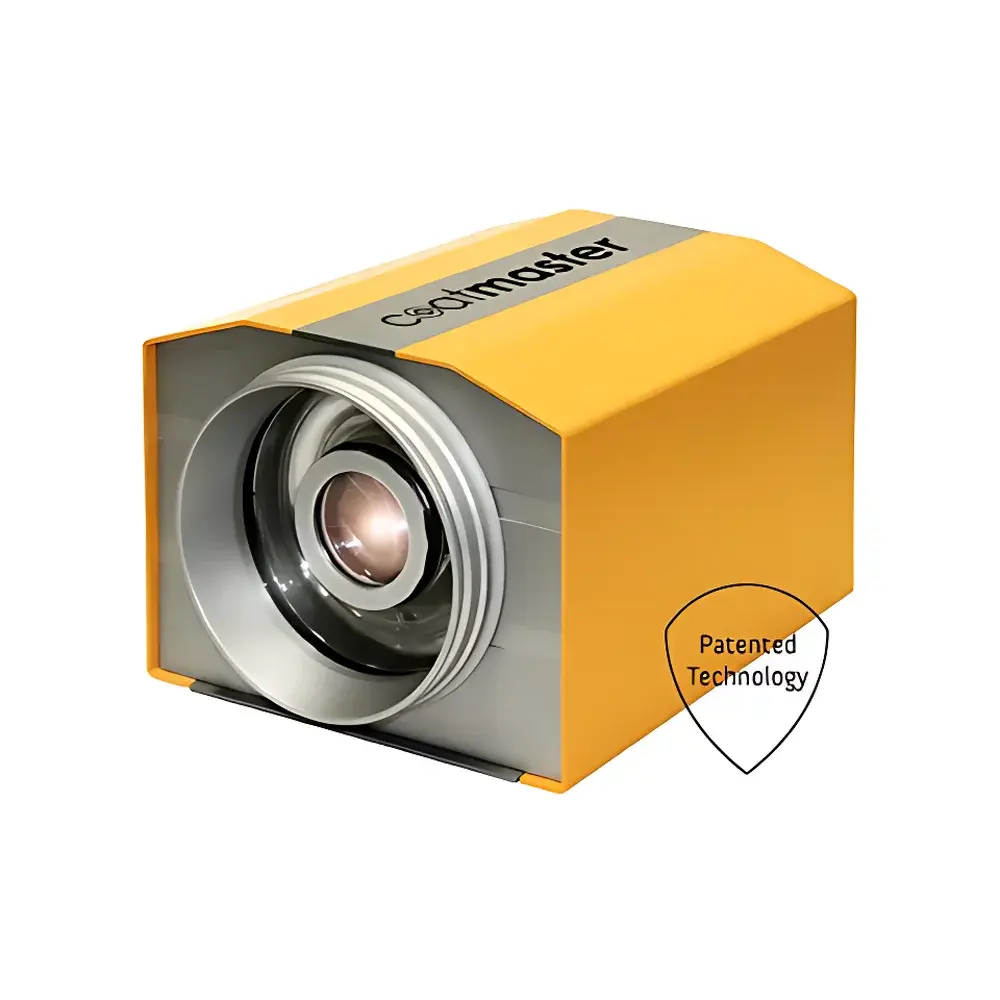
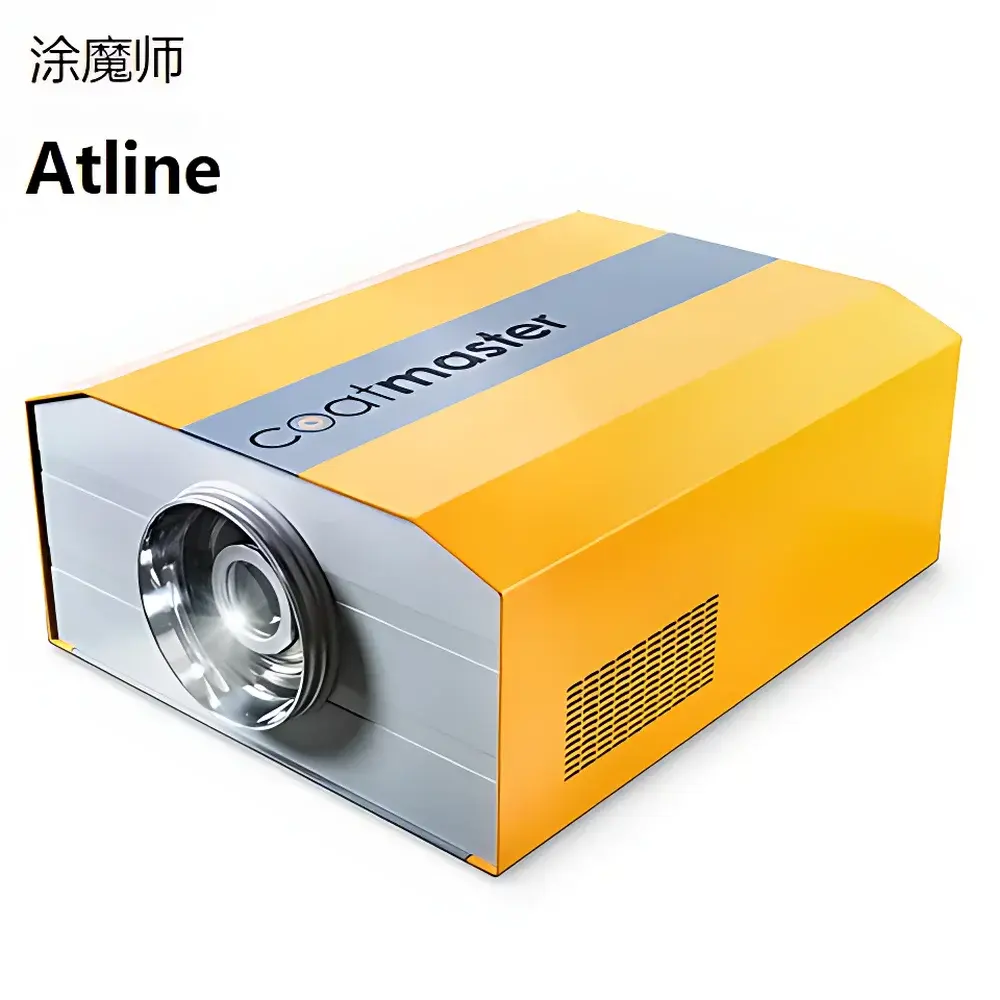
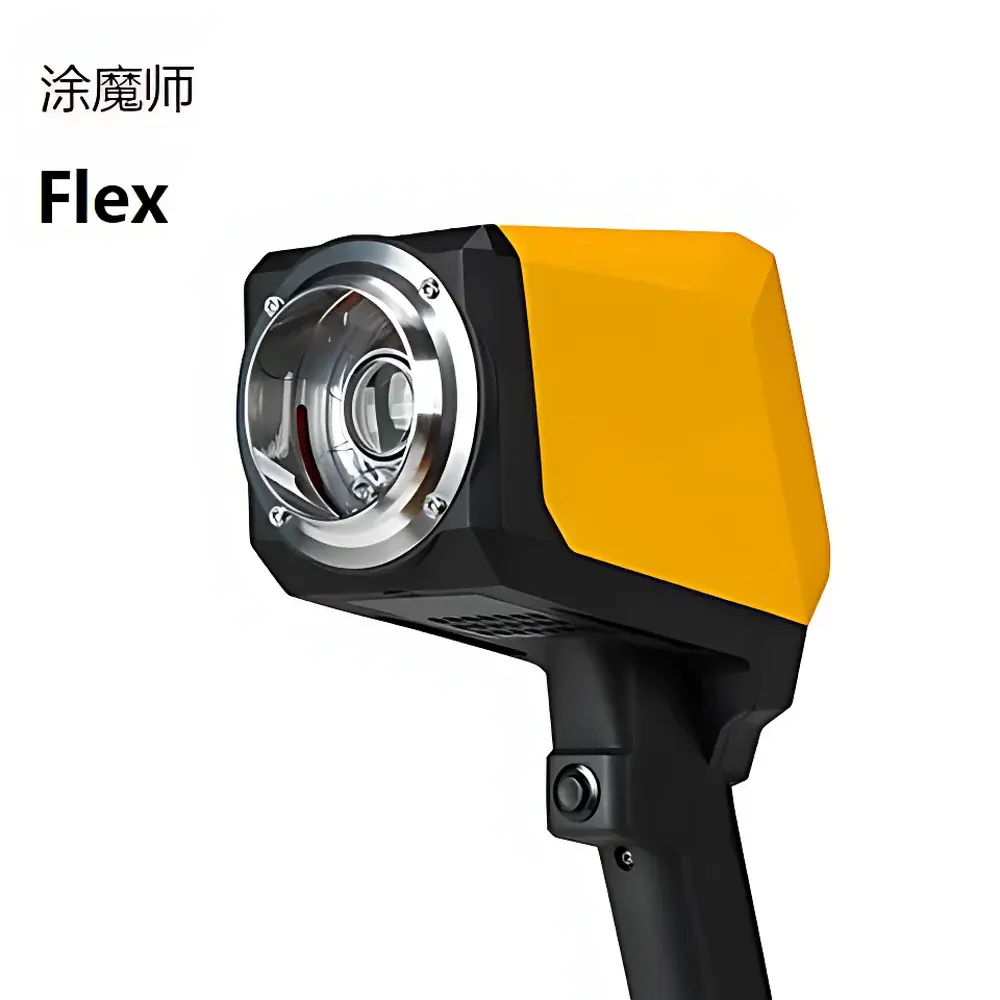
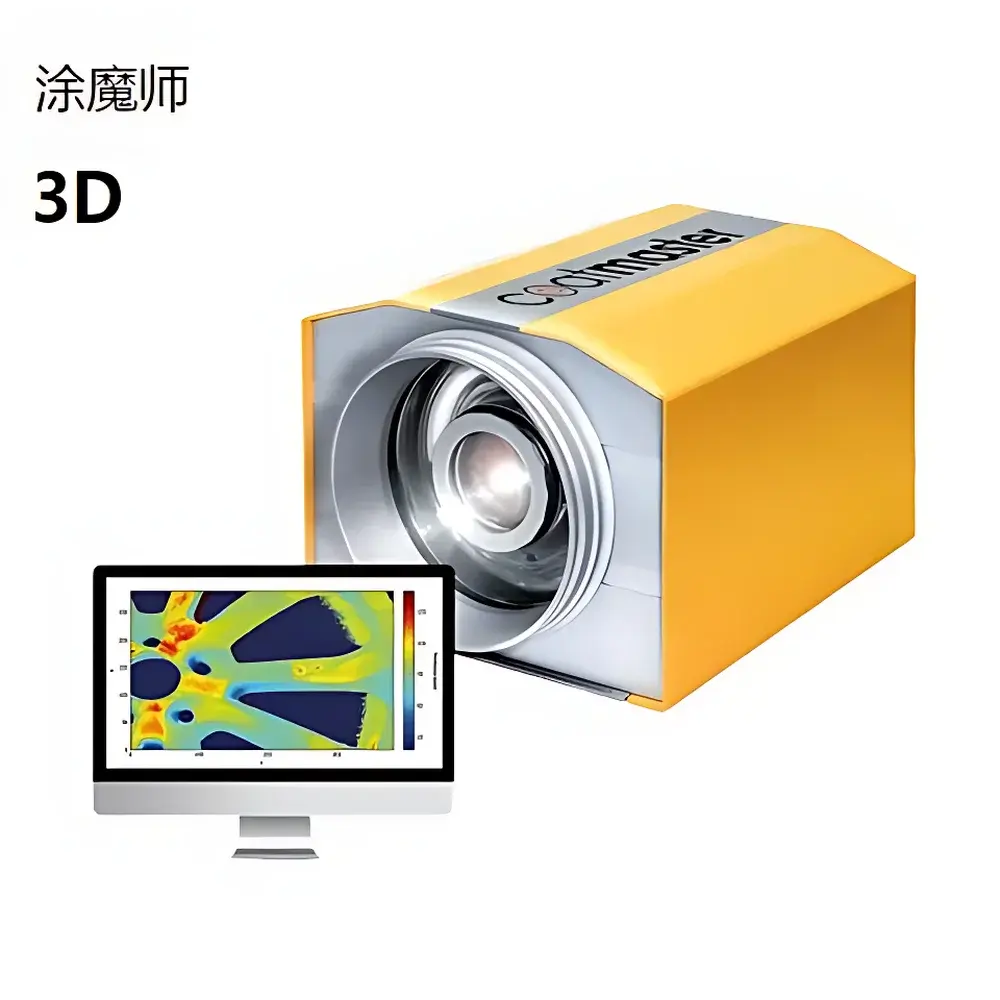
Coatmaster Inline Non-Contact Online Thickness Analyzer
| Brand | Coatmaster |
|---|---|
| Origin | Switzerland |
| Model | Coatmaster Inline |
| Measurement Principle | Active Thermooptical (ATO) |
| Measurement Range (uncured powder) | 1–2000 µm |
| Measurement Time | 0.5 s |
| Working Distance | 10–120 cm (material-dependent) |
| Tilt Tolerance | ±45° (material-dependent) |
| Relative Standard Deviation | < 2% (at 5 cm distance on 60 µm uncured white powder coating over aluminum substrate) |
| Maximum Substrate Speed | 120 m/min |
| Color Independence | All colors, including white and light shades |
| Data Export | Fully automated ERP/MES integration |
Overview
The Coatmaster Inline Non-Contact Online Thickness Analyzer is an industrial-grade, real-time thickness measurement system engineered for continuous process control in high-volume coating lines. Unlike conventional contact-based or optical interference gauges, the Coatmaster Inline employs patented Active Thermooptical (ATO) technology — a non-destructive, non-contact method that quantifies coating thickness by analyzing transient thermal emission response following controlled, low-energy infrared excitation. This principle enables reliable measurement of both uncured powder coatings and cured films across diverse substrates — including metals, plastics, composites, and complex geometries — without requiring surface contact, calibration artifacts, or color compensation algorithms. Designed for integration directly into production environments, the system operates upstream of curing ovens to provide immediate feedback on wet-film build, allowing for closed-loop adjustment of spray parameters before thermal fixation. Its robust architecture supports continuous operation under ambient factory conditions (IP65-rated enclosure), with no moving parts in the optical head and immunity to dust, vibration, and ambient lighting variations.
Key Features
- True non-contact operation: Measures at distances from 10 cm up to 120 cm — eliminating risk of contamination, damage, or interference with moving parts.
- Full color independence: Validated performance on white, metallic, black, and fluorescent coatings — no spectral bias or reflectance dependency.
- High-speed compatibility: Synchronized acquisition at 2 Hz (0.5 s per measurement) supports line speeds up to 120 meters per minute.
- Geometric flexibility: Capable of measuring curved surfaces, inner walls, edges, recessed features, and rotating or oscillating parts — enabled by wide-angle optics and adaptive signal processing.
- Process-critical timing: Delivers dry-film-equivalent thickness values pre-cure — enabling real-time correction of electrostatic spray guns, fluidized beds, or tribo charging systems.
- Zero-drift stability: Factory-calibrated against NIST-traceable reference standards; drift < 0.3% per 8-hour shift under ISO 9001-controlled environmental conditions.
Sample Compatibility & Compliance
The Coatmaster Inline is validated for use with thermosetting and thermoplastic powder coatings (epoxy, polyester, polyurethane, hybrid), liquid paints (including waterborne and UV-curable systems), and thin functional layers (e.g., anti-corrosion primers, conductive coatings). It complies with ISO 2808 (paints and varnishes — determination of film thickness), ASTM D7091 (standard practice for nondestructive measurement of dry film thickness of nonmagnetic coatings applied to ferrous metals), and EN ISO 19840 (corrosion protection of steel structures by protective paint systems). The system meets IEC 61326-1 requirements for electromagnetic compatibility in industrial environments and supports audit-ready data integrity per FDA 21 CFR Part 11 when deployed with validated MES/ERP interfaces. All measurement protocols are documented per GLP/GMP guidelines, with full traceability of instrument configuration, calibration history, and operator actions.
Software & Data Management
The Coatmaster Inline integrates natively with industry-standard manufacturing execution systems (MES) and enterprise resource planning (ERP) platforms via OPC UA, MQTT, or RESTful API. Raw thickness data — including timestamp, position index, statistical deviation, and diagnostic flags — is streamed continuously without manual intervention. Embedded software provides real-time SPC dashboards (X-bar/R charts, Cpk/Ppk calculation), automatic alarm thresholds (e.g., ±10% deviation from target), and root-cause correlation with equipment IDs (e.g., spray gun #A7, oven zone 3). Audit logs record all configuration changes, user logins, and data export events with SHA-256 hashing. Optional Coatmaster Analytics Suite enables predictive maintenance modeling using historical thickness variance trends to forecast nozzle clogging or charger degradation — reducing unplanned downtime by up to 35% in pilot deployments.
Applications
- Automotive: Real-time monitoring of wheel hub, chassis, and body-in-white powder coating lines — especially where robotic pathing limits access for handheld devices.
- Aerospace: Thickness verification of primer and topcoat layers on aluminum and titanium airframe components prior to autoclave curing.
- Architectural extrusions: In-line quality assurance for anodized and powder-coated aluminum profiles — including complex multi-face sections and thermal-break assemblies.
- Appliance manufacturing: Closed-loop control of coil coating lines for refrigerators, washing machines, and HVAC enclosures — minimizing overspray and material waste.
- Energy infrastructure: Coating thickness validation on pipeline spools, transformer housings, and wind turbine tower segments during batch processing.
FAQ
How does ATO technology differ from laser triangulation or eddy current methods?
ATO measures thermal emissivity dynamics rather than geometric displacement or electromagnetic coupling — making it insensitive to substrate conductivity, surface roughness, or ambient light, and uniquely suited for uncured powder layers.
Can the system measure inside tubular or hollow parts?
Yes — with optional fiber-coupled probe heads or custom mounting brackets, measurements can be performed on internal surfaces at distances up to 60 cm, provided line-of-sight access is maintained.
Is calibration required between shifts or batches?
No routine recalibration is needed; the system maintains traceable accuracy through built-in thermal reference stabilization and auto-compensation for ambient temperature drift (±0.02 °C resolution).
What level of IT infrastructure is required for ERP integration?
Standard Ethernet connectivity (TCP/IP) suffices; no additional servers or middleware are required — the device functions as a deterministic data publisher compliant with ISA-95 Level 2 interface specifications.
Does the system support multilayer thickness analysis?
Not for individual layer resolution; however, total film thickness is reported with uncertainty bands derived from material-specific ATO response models — validated per ISO/IEC 17025 accredited test reports.



