
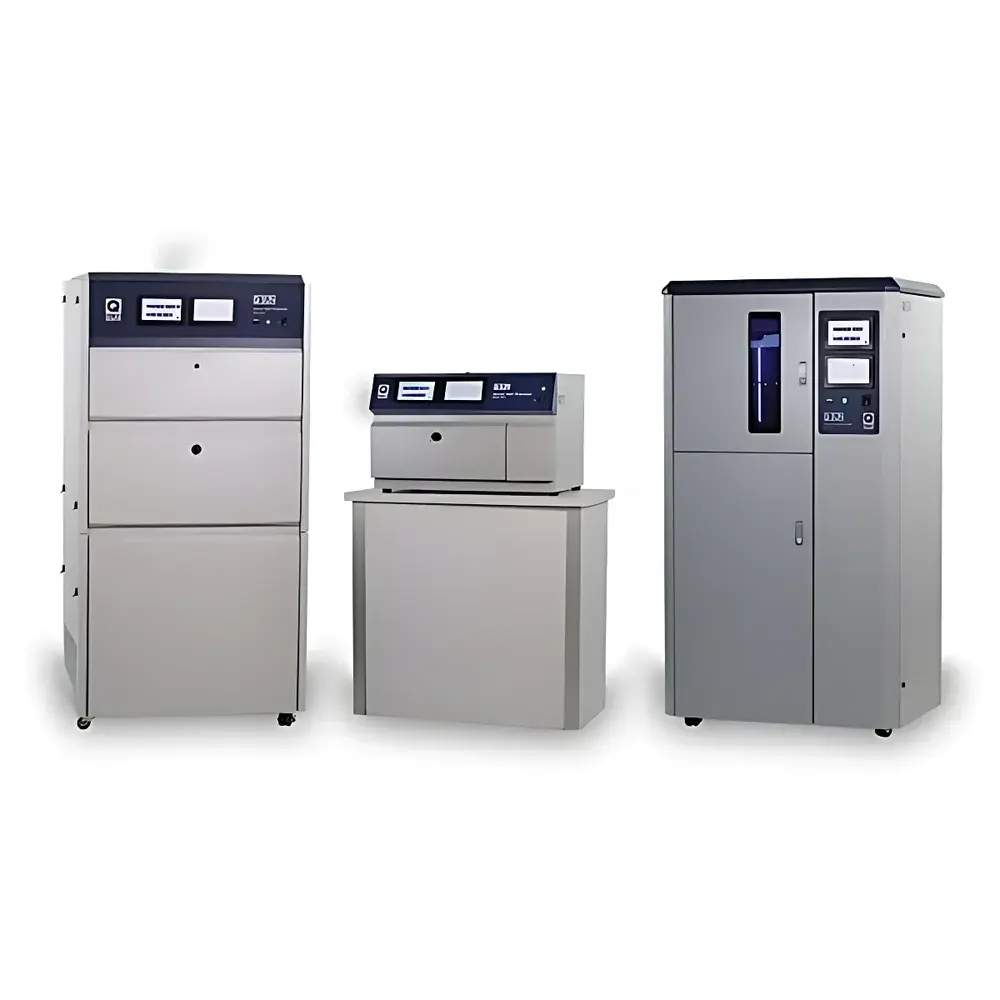
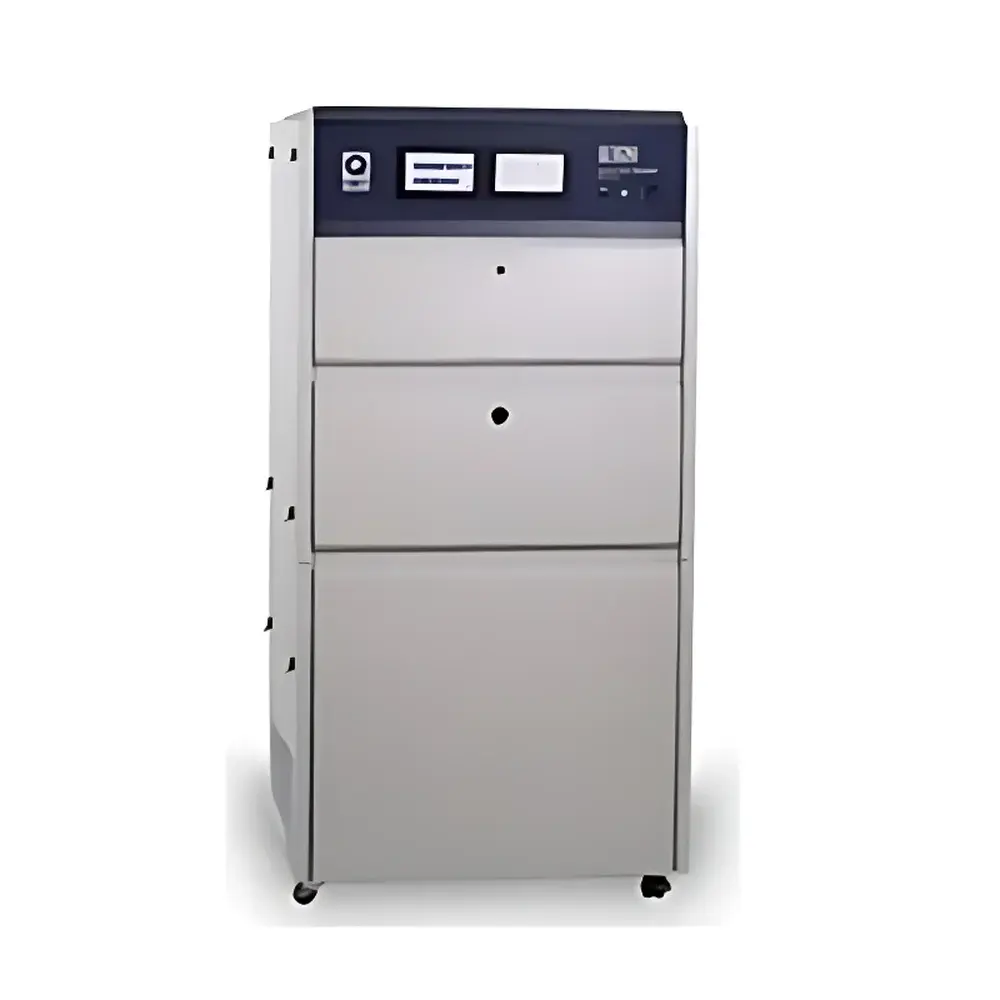
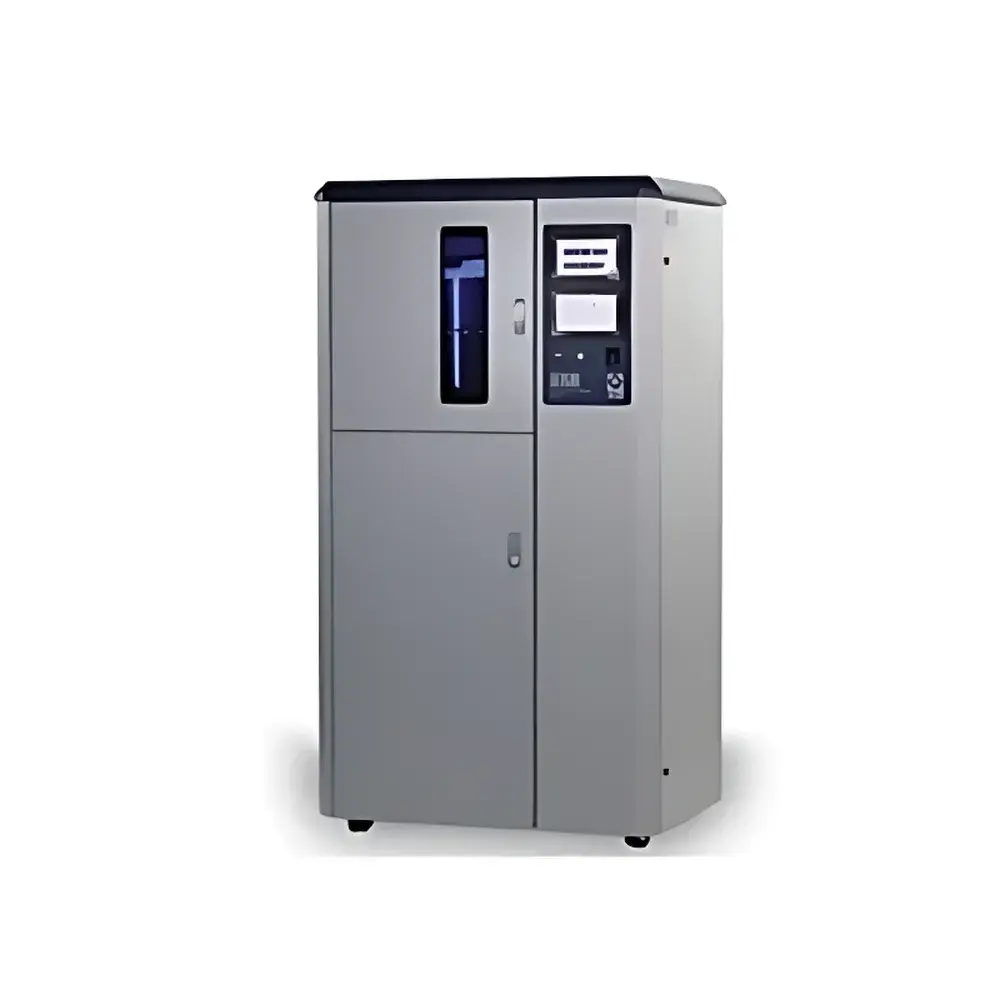
Q-LAB Q-SUN B02 Xenon Arc Weathering Test Chamber
| Brand | Q-LAB |
|---|---|
| Origin | USA |
| Manufacturer Type | Authorized Distributor |
| Origin Category | Imported |
| Model | Q-LAB Q-SUN B02 |
| Xenon Lamp Power | 1800 W |
| Irradiance | 42 W/m² (broadband, 300–800 nm) |
| Light Exposure Duration | 1500 h (lamp life at nominal output) |
| Humidity Range | 35–65 % RH |
| Operating Temperature Range | 35–65 °C (chamber air) |
Overview
The Q-LAB Q-SUN B02 Xenon Arc Weathering Test Chamber is an entry-level, benchtop-scale xenon arc exposure system engineered for accelerated evaluation of material resistance to solar radiation, temperature, and humidity. It employs a single 1800 W air-cooled xenon lamp to replicate the full solar spectrum—including ultraviolet (UV), visible, and near-infrared (NIR) wavelengths—with spectral power distribution closely aligned to terrestrial sunlight (CIE No. 85, ISO 4892-2, ASTM G155). Unlike UV fluorescent or metal halide systems, xenon arc technology provides photometric fidelity essential for accurate color fading, gloss loss, chalking, cracking, and embrittlement assessments—particularly critical in textile dye stability (ISO 105-B02, AATCC TM16), automotive interior trim, coatings, and polymer packaging validation. The B02 model delivers a broadband irradiance of 42 W/m² across 300–800 nm under standard filter configuration, enabling reproducible, traceable aging cycles that correlate strongly with real-world outdoor exposure in diverse climates.
Key Features
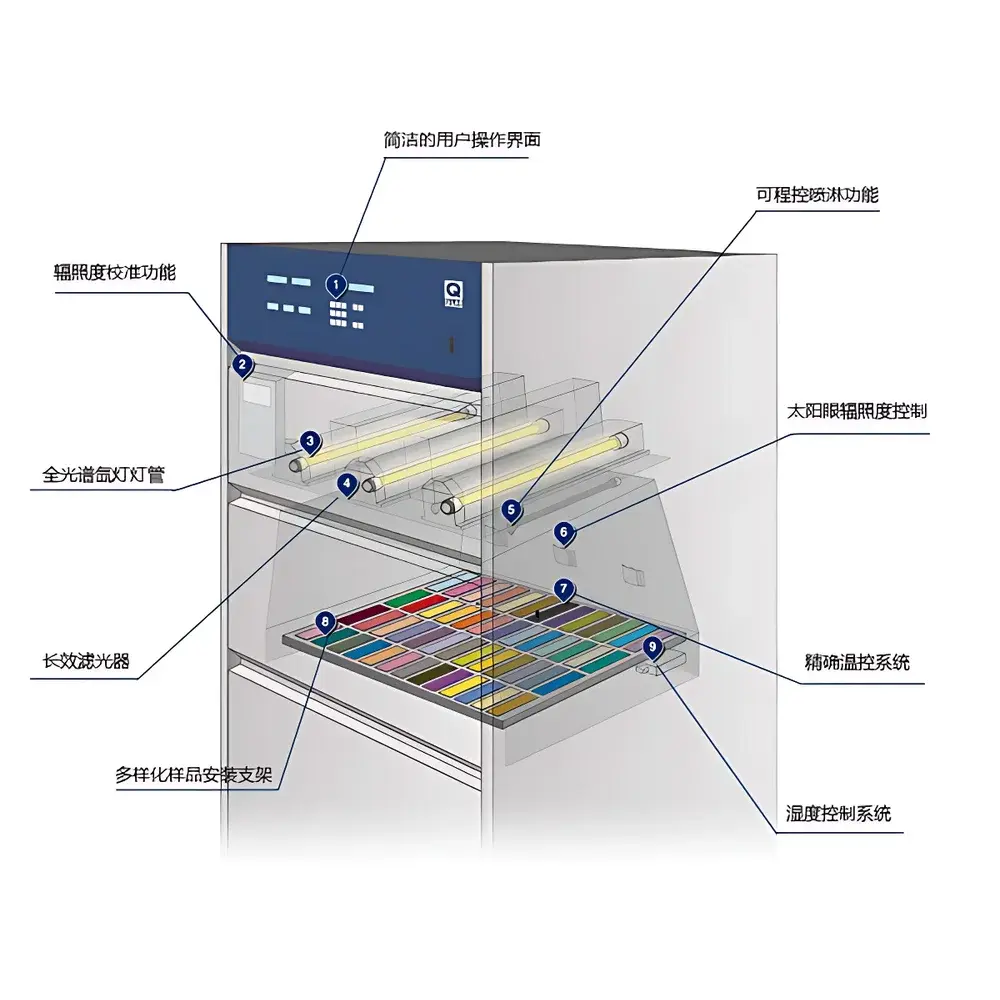
- Single 1800 W air-cooled xenon lamp with 1500-hour rated service life at nominal irradiance output—reducing consumable cost and maintenance downtime versus water-cooled alternatives
- Precise black panel temperature (BPT) control via integrated thermocouple sensor, maintaining sample surface temperature within ±2 °C across 42–120 °C range (dependent on lamp output, filter selection, and ambient conditions)
- Standard relative humidity (RH) control system with closed-loop feedback, actively regulating chamber RH between 35 % and 65 % RH at setpoint accuracy of ±3 % RH
- Microprocessor-based Gen3 controller with alphanumeric LCD display and membrane keypad interface—designed for robust operation in laboratory and QC environments
- Compliance-ready architecture: supports manual calibration procedures per ASTM G155 Annex A2 and ISO 4892-2 Clause 7; compatible with external radiometers for periodic irradiance verification
- Benchtop footprint (W × D × H: 610 × 533 × 584 mm) with front-loading door and removable specimen tray—optimized for small-batch testing of textiles, films, adhesives, and coated substrates
Sample Compatibility & Compliance
The Q-SUN B02 accommodates flat specimens up to 152 mm × 152 mm (6″ × 6″) and thickness ≤ 13 mm, mounted on a rotating sample holder to ensure uniform irradiance distribution. It supports standardized test frames per ISO 105-B02 (textile colorfastness to artificial daylight), AATCC TM16 (lightfastness of textiles and leather), and ASTM D4329 (plastics exposure). While not equipped with automated irradiance feedback or full GLP audit trails, the system meets baseline requirements for ISO/IEC 17025-accredited laboratories performing routine weathering screening under documented SOPs. All operational parameters—including time, irradiance setpoint, BPT, RH, and chamber temperature—are logged internally and exportable via USB port for record retention compliant with internal quality management systems.
Software & Data Management
The B02 operates without proprietary PC software; all test programming, monitoring, and data logging are performed directly on the embedded Gen3 controller. Runtime data—including elapsed exposure time, cumulative lamp hours, BPT, RH, and chamber air temperature—is stored in non-volatile memory for up to 100 test cycles. Users may export timestamped CSV files via USB flash drive for offline analysis in Excel or LIMS platforms. Calibration logs, lamp replacement records, and filter change history must be maintained manually per ISO/IEC 17025 Clause 7.8.1. For laboratories requiring electronic signatures, audit trails, or 21 CFR Part 11 compliance, migration to the Q-SUN E-series (e.g., Xe-3-HSE) with Gen4 touchscreen controller and Ethernet connectivity is recommended.
Applications
- Textile and apparel: Colorfastness evaluation per ISO 105-B02, AATCC TM16-2021, and GB/T 8427
- Automotive interiors: Accelerated aging of dashboards, seat fabrics, and trim components under controlled UV + RH stress
- Coatings and inks: Assessment of chalking, gloss retention, and hue shift in architectural paints and industrial finishes
- Plastics and elastomers: Screening for UV-induced chain scission, oxidation, and mechanical property degradation
- Printing and packaging: Validation of label adhesion, ink bleed, and substrate yellowing under simulated daylight
- Research & development: Comparative ranking of stabilizer packages, pigment systems, and UV absorbers
FAQ
What standards does the Q-SUN B02 comply with?
It is designed to meet the physical configuration and exposure condition requirements of ISO 4892-2, ASTM G155, ISO 105-B02, and AATCC TM16—though final method compliance depends on user-configured test parameters and calibration practices.
Does the B02 support irradiance control at 340 nm or 420 nm?
No—the B02 delivers fixed broadband irradiance (300–800 nm) at 42 W/m² and does not feature spectral irradiance monitoring or adjustable narrowband setpoints.
Can purified water be used for humidity generation?
Yes—deionized or distilled water is required for stable RH control and to prevent mineral deposition on humidification components.
Is the B02 suitable for GMP-regulated environments?
It lacks electronic audit trail, user access controls, and 21 CFR Part 11 features; it is intended for R&D and QC screening—not formal regulatory submission testing.
How often must the xenon lamp be replaced?
At nominal irradiance output, the lamp achieves approximately 1500 hours of service life; actual duration varies with operating setpoints, filter type, and cooling efficiency.



