
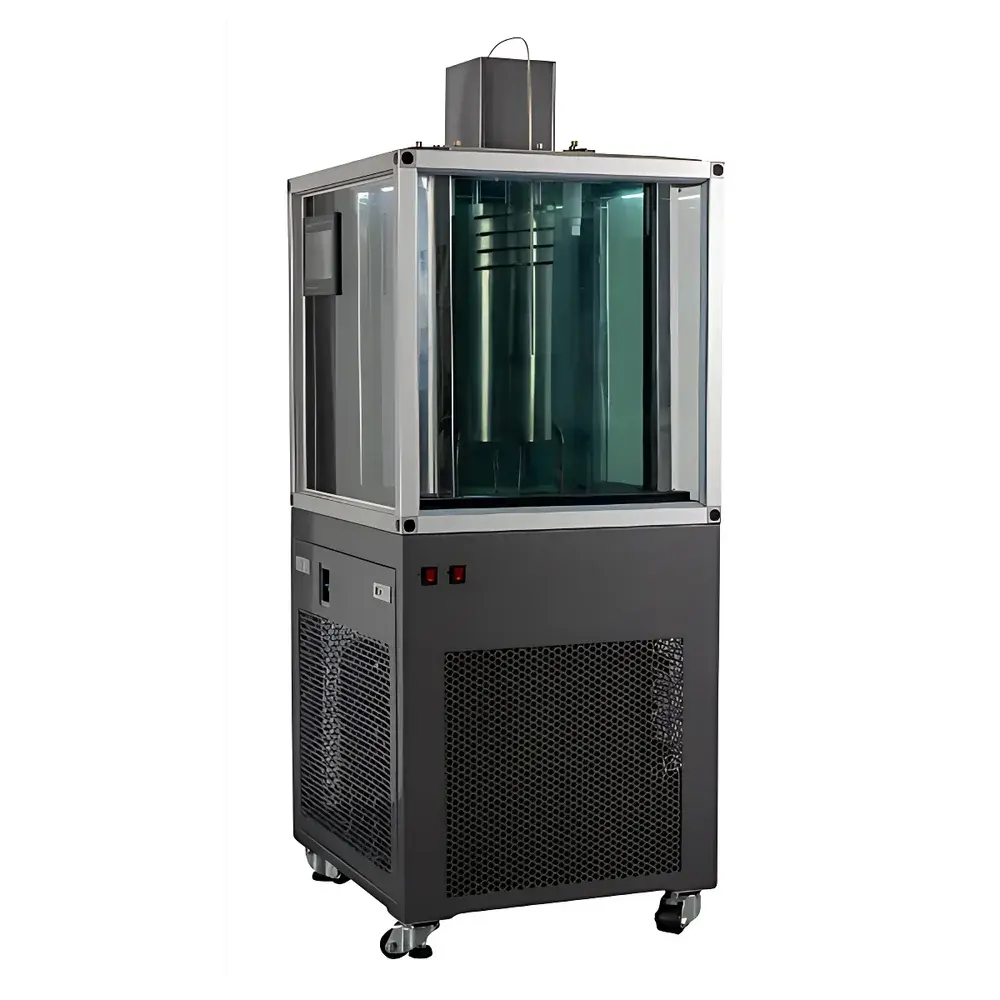
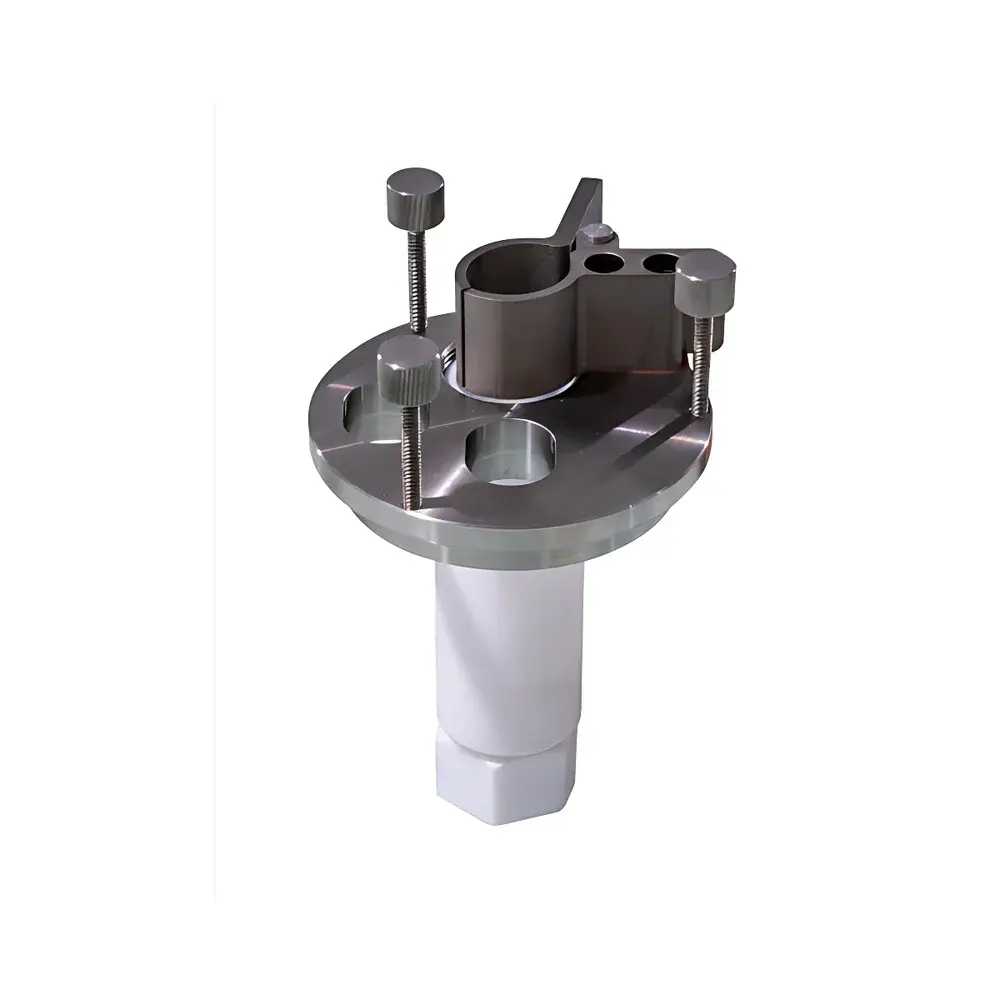
Shenkai SKY1030-I Low-Temperature Kinematic Viscosity Bath
| Brand | Shenkai |
|---|---|
| Origin | Shanghai, China |
| Model | SKY1030-I |
| Temperature Range | −40 °C to +5 °C |
| Temperature Stability | ±0.005 °C |
| Temperature Resolution | 0.001 °C |
| Bath Capacity | ~65 L |
| Number of Test Ports | 6 |
| Cooling System | Dual Compressor (Primary/Backup Auto-Switching) |
| Stirring System | Dual-Blade Impeller + Optimized Flow Guide Cylinder |
| Insulation | Double-Layer Vacuum Glass + Black Polyoxymethylene (POM) Lid |
| Display | LCD Touchscreen Interface |
| Power Supply | AC 220 V ±10%, 50/60 Hz |
| Rated Power | 4700 W |
| Dimensions (W×D×H) | 600 × 730 × 1580 mm |
| Net Weight | 230 kg |
| Compliance | GB/T 265, ASTM D445, ASTM D446, ISO 3104, ISO 3105 |
Overview
The Shenkai SKY1030-I Low-Temperature Kinematic Viscosity Bath is a precision-engineered constant-temperature immersion system designed exclusively for calibration and routine verification of glass capillary viscometers under sub-ambient conditions. It operates on the principle of forced-convection thermal equilibrium, utilizing dual-stage refrigeration, high-resolution digital PID control, and hydrodynamic flow optimization to maintain exceptional spatial and temporal temperature uniformity across the entire bath volume. This architecture ensures compliance with stringent international standards governing kinematic viscosity measurement—particularly where low-temperature stability is critical, such as in lubricant base oil characterization, aviation fuel specification testing, and low-temperature polymer solution rheology.
Key Features
- High-stability temperature control system with ±0.005 °C accuracy and 0.001 °C resolution over the full operating range (−40 °C to +5 °C)
- Dual independent compressor assembly with automatic primary/backup switching—ensuring uninterrupted operation during extended calibration cycles or preventive maintenance windows
- Intelligent pre-cooling scheduler via built-in timer function, enabling programmable start-up to achieve target temperature prior to operator arrival
- Optimized fluid dynamics architecture: proprietary flow guide cylinder combined with dual-blade impeller and high-efficiency evaporator coil geometry minimizes axial and radial thermal gradients (<0.01 °C deviation across 6 test ports)
- Thermal insulation system comprising double-layer vacuum glass walls and a black polyoxymethylene (POM) insulated lid—reducing ambient heat ingress and improving energy efficiency by >35% versus conventional single-wall designs
- Full-function LCD touchscreen interface supporting real-time temperature logging, setpoint adjustment, trend curve visualization, historical data recall, and system self-diagnostic reporting
- Integrated LED illumination system with diffused optical path—enhancing visual clarity for manual timing of capillary efflux without introducing radiant heating artifacts
Sample Compatibility & Compliance
The SKY1030-I is engineered to accommodate standard Ubbelohde, Cannon-Fenske, and Ostwald-type glass capillary viscometers (ASTM D446 Type I–IV, ISO 3105 Annex A). Its six vertically aligned test ports are spaced to prevent mutual thermal interference while maintaining accessibility for simultaneous multi-sample verification. The bath’s thermal performance has been validated per ISO/IEC 17025 calibration laboratory requirements and meets all metrological criteria specified in GB/T 265–2019, ASTM D445–22, ASTM D446–21, ISO 3104:2022, and ISO 3105:2022. Its design supports GLP-compliant documentation workflows, including timestamped temperature logs and operator-accessible audit trails.
Software & Data Management
While the SKY1030-I operates as a standalone instrument with embedded firmware, its touchscreen interface supports USB export of temperature history files (.CSV format) for traceable post-processing in LIMS or Excel-based QA systems. All temperature setpoints, actual readings, and system status events—including compressor cycling, stirrer RPM, and fault codes—are timestamped with millisecond precision. Optional RS-232/RS-485 serial output enables integration into centralized lab automation platforms. The firmware architecture complies with basic principles of FDA 21 CFR Part 11 for electronic records when used in conjunction with validated third-party data acquisition software.
Applications
- Periodic verification and intermediate checks of glass capillary viscometers in ISO/IEC 17025-accredited calibration laboratories
- Kinematic viscosity determination of mineral oils, synthetic lubricants, jet fuels (e.g., Jet A-1), and refrigeration fluids at −30 °C, −20 °C, and 0 °C reference points
- Supporting ASTM D341 viscosity–temperature correlation studies requiring stable low-temperature immersion environments
- Reference bath for interlaboratory comparison programs involving low-temperature viscosity standards (e.g., NIST SRM 2783, 2784)
- Research applications in polymer solution physics where solvent viscosity must be characterized near freezing points
FAQ
What temperature stability is guaranteed across the six test ports?
The bath maintains ≤±0.005 °C deviation from setpoint at each port, with inter-port uniformity ≤0.01 °C under steady-state conditions (per ISO 3104 Annex B verification protocol).
Can the SKY1030-I be integrated into a networked laboratory information management system (LIMS)?
Yes—via optional RS-232/RS-485 interface; raw temperature data and event logs can be streamed in ASCII format using Modbus RTU or custom ASCII command sets.
Is the unit suitable for use with silicone oil or other non-aqueous bath media?
It is validated for use with certified low-temperature silicone oils (e.g., Dow Corning 200 Fluid, viscosity grade 100 cSt) and halogenated hydrocarbons meeting ASTM D445 Annex A specifications.
Does the instrument support automated pass/fail evaluation against tolerance limits defined in ASTM D445?
No—the SKY1030-I is a temperature control platform only; viscosity calculation and acceptance criteria evaluation remain the responsibility of the user’s viscometer software or manual calculation per standard methodology.
What maintenance intervals are recommended for the dual-compressor system?
Compressor oil and filter replacement every 18 months; annual verification of refrigerant charge and condenser coil cleanliness per manufacturer’s technical bulletin TB-SKY1030-02.



