
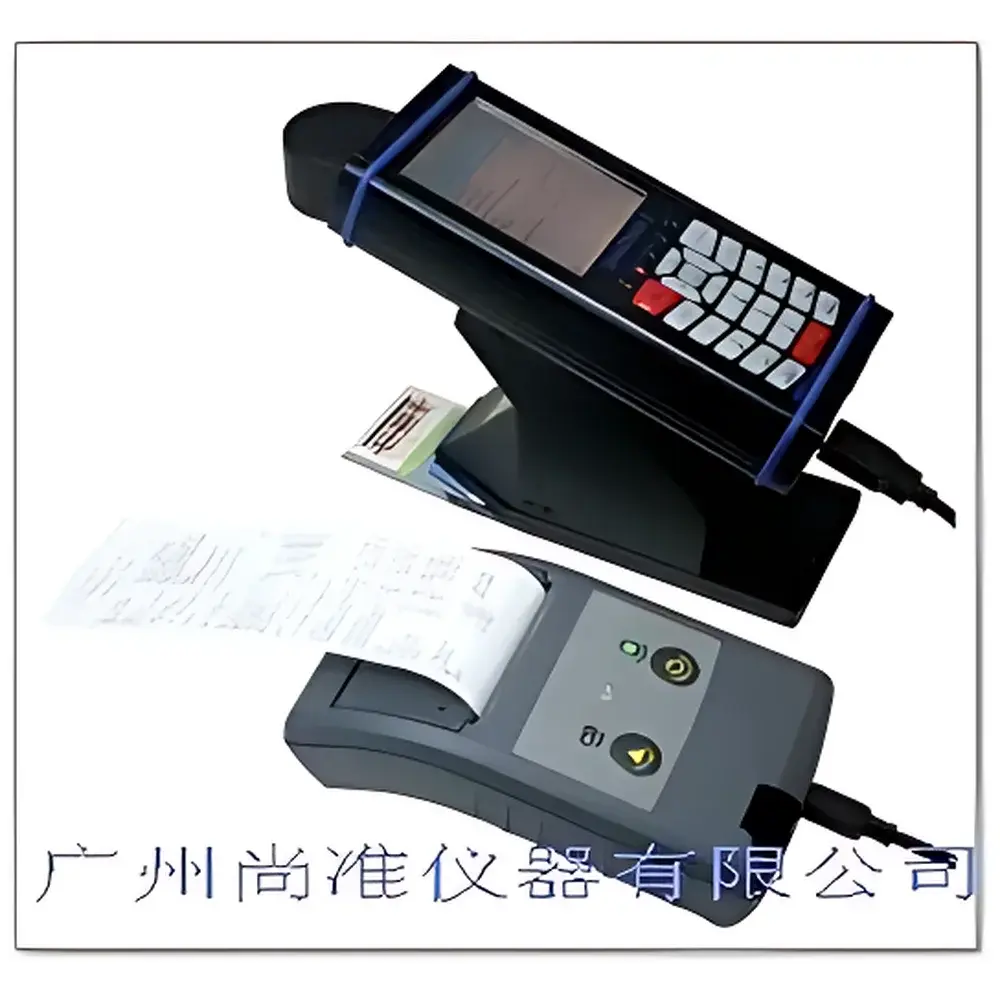
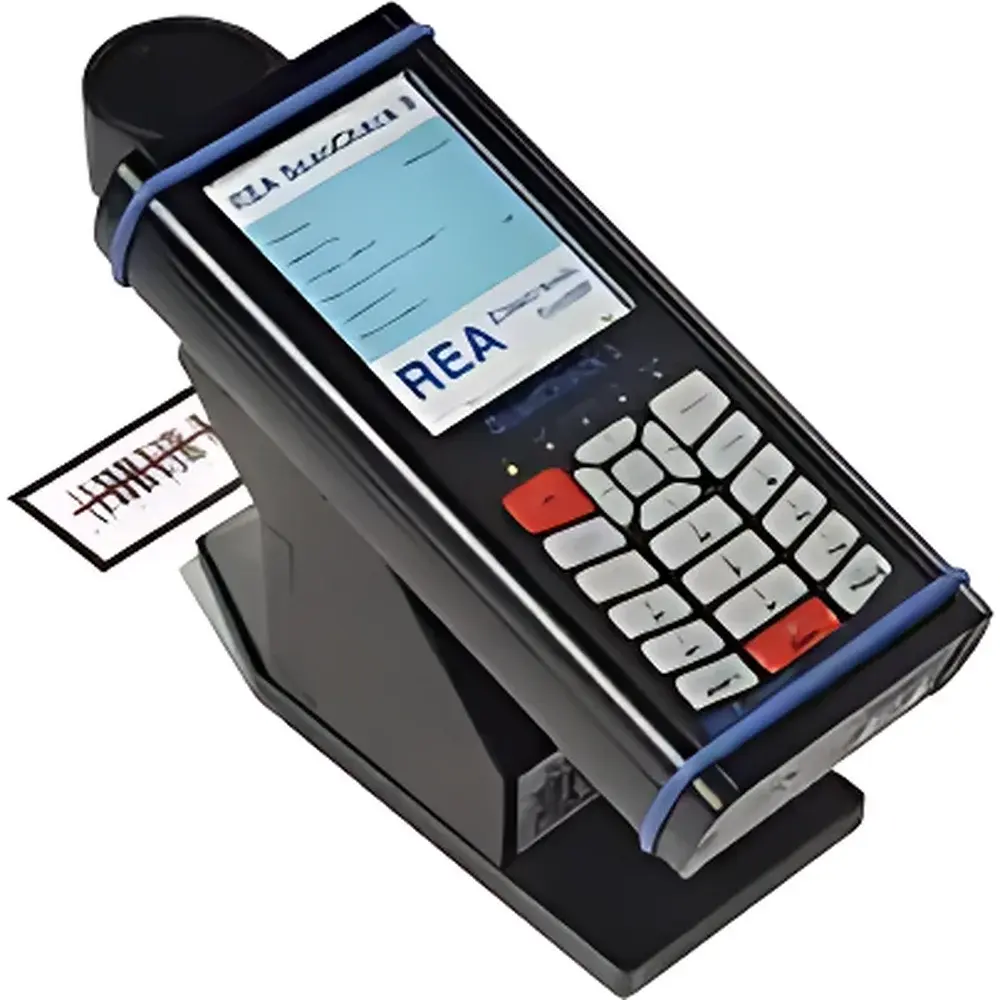
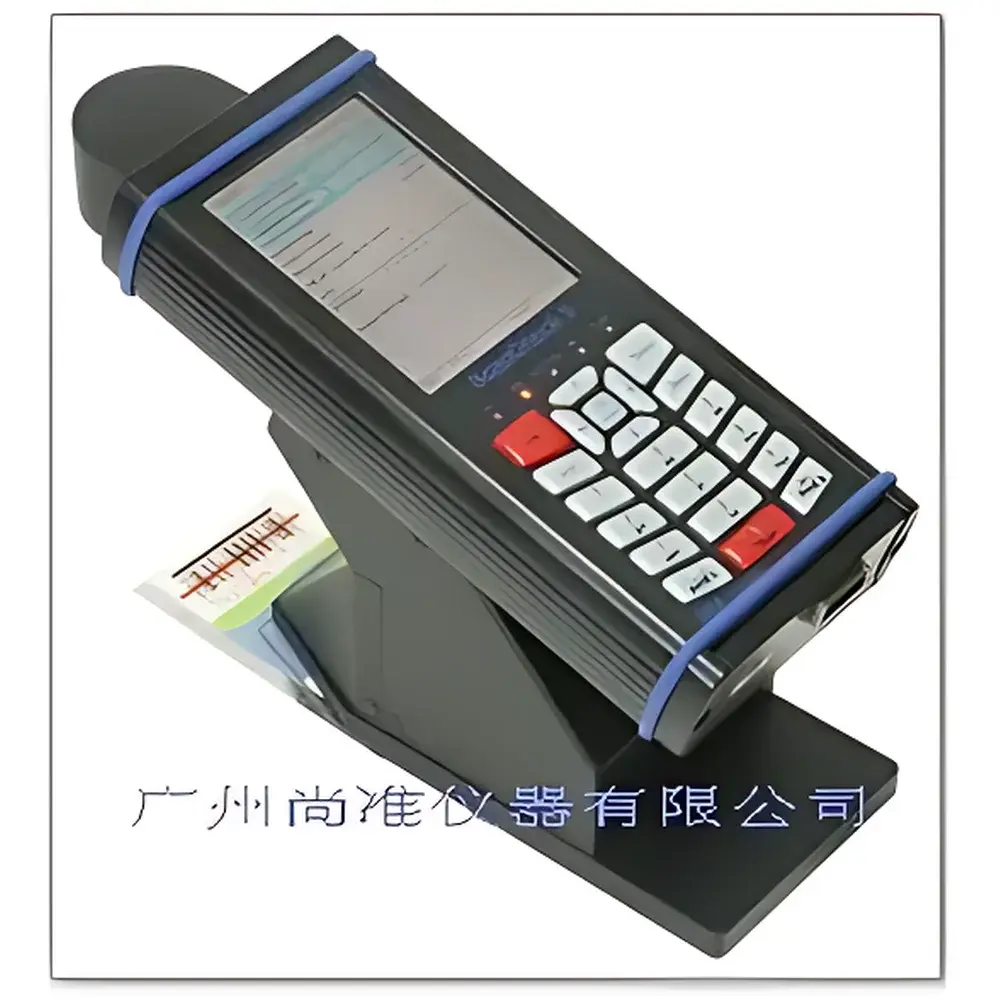
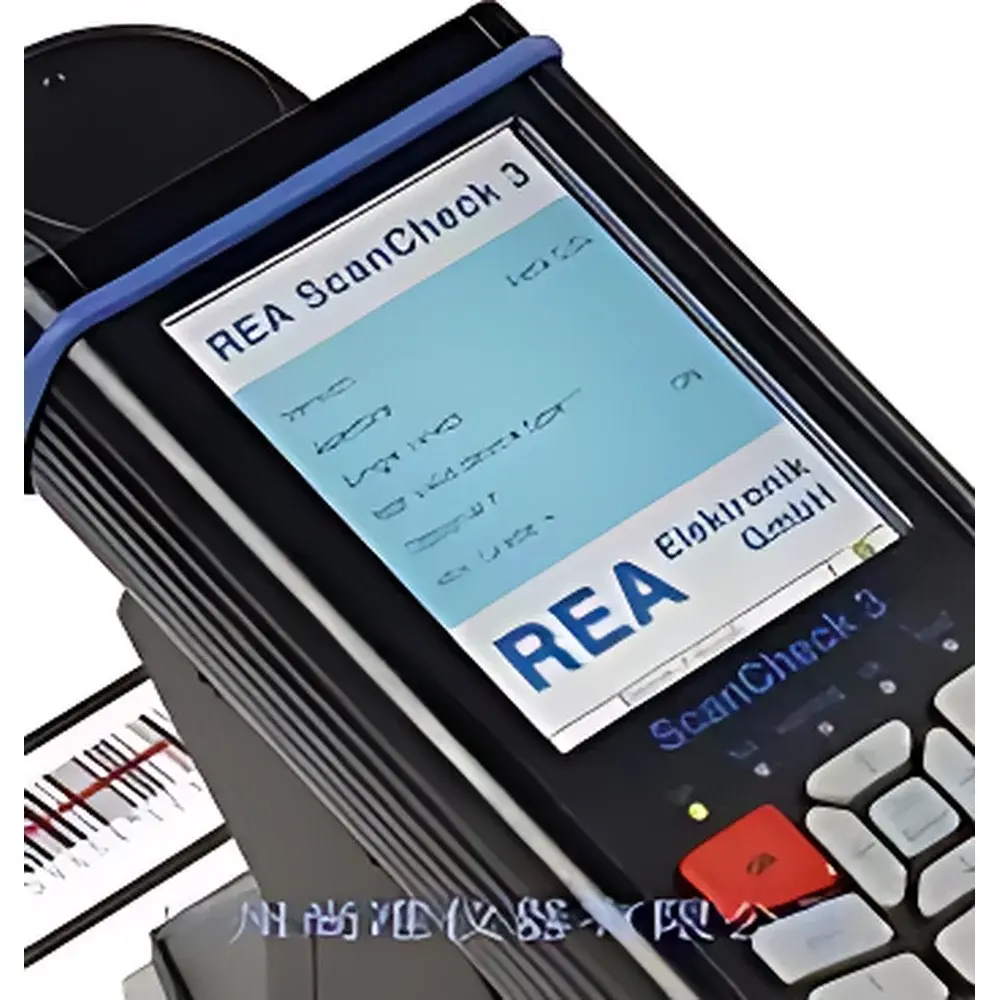
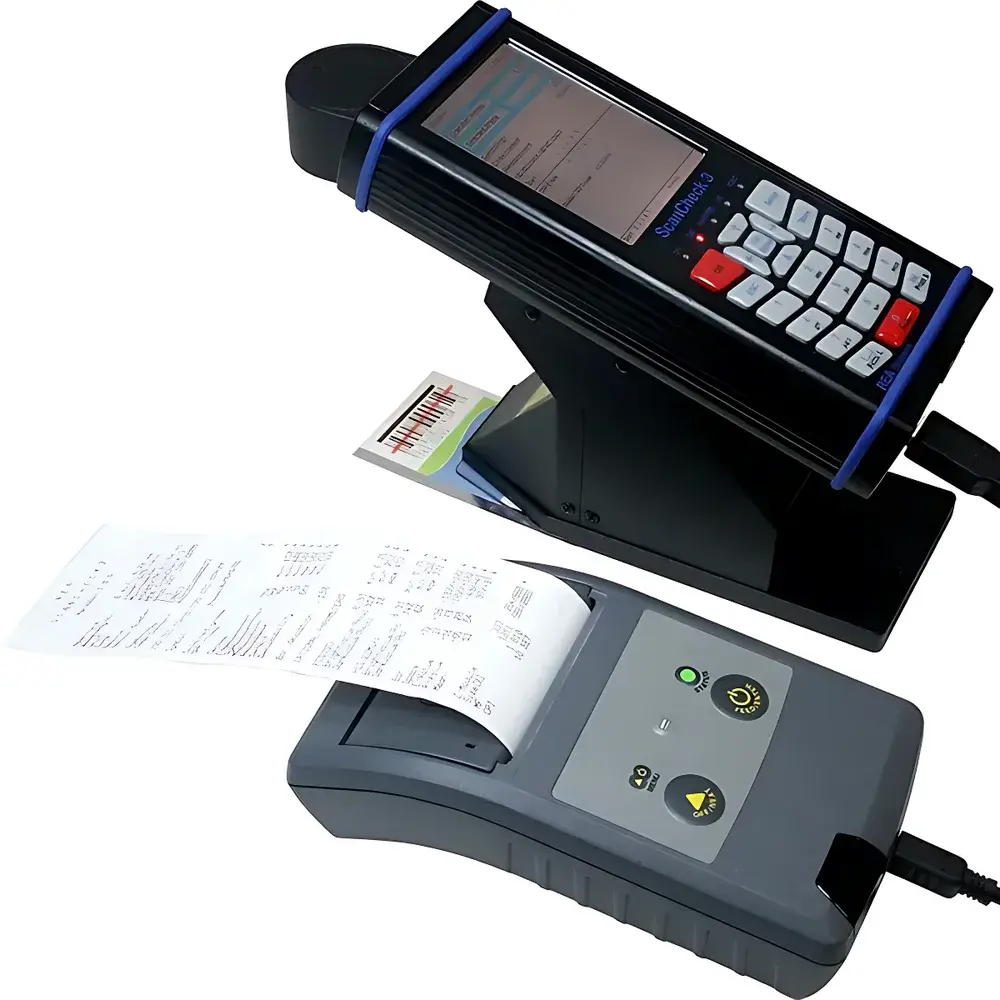
REA ScanCheck 3n Barcode Inspection Instrument
| Brand | REA |
|---|---|
| Origin | Germany |
| Model | ScanCheck 3n |
| CPU | ARM9® @ 180 MHz |
| Memory | 32 MB RAM |
| Flash Storage | 16 MB (MMC card expandable) |
| Real-Time Clock | Yes |
| Aperture Options | 6, 8, 10 mil (20 mil optional) |
| Light Source | 670 nm Class II laser |
| Display | 320 × 240 pixel color LCD |
| Weight | 1.115 kg |
| Dimensions | 222 × 85 × 134 mm (L×W×H) |
| Power | 4 × AA NiMH rechargeable batteries or external adapter |
| Interface | USB 2.0 |
| Compliance | ISO/IEC 15416, ISO/IEC 15415, ANSI X3.182, CEN/TS 14001 |
| Symbol Support | EAN-13, UPC-A/E, EAN-8 (+2/+5), Interleaved 2 of 5, ITF-14, Code 39/32/128, EAN-128 (with data content verification), MSI, PZN, Frachtpost, RSS, Pharma Code, Codabar (ANSI/Monarch), HIBC |
| Evaluation Modes | PCS-based contrast analysis, edge detection, bar-width-to-space-width ratio (for dual-length symbologies), multi-scan averaging (up to 10 scans), decode failure statistics, automatic aperture and symbol size identification |
| Indicators | Green (Pass), Yellow (Warning), Red (Fail) |
| Data Storage | 100 internal test records (expandable via MMC) |
Overview
The REA ScanCheck 3n Barcode Inspection Instrument is a portable, high-precision optical measurement system engineered for compliance-driven barcode quality assurance in regulated manufacturing, logistics, and pharmaceutical packaging environments. Based on Class II 670 nm laser scanning technology, it performs non-contact, repeatable assessments of linear (1D) barcode symbols in accordance with ISO/IEC 15416 (for linear symbologies) and ISO/IEC 15415 (for 2D symbols where applicable), as well as ANSI X3.182 and CEN/TS 14001 standards. Its core measurement architecture employs photometric analysis of reflected laser intensity profiles across user-selectable apertures (6, 8, 10 mil standard; 20 mil optional), enabling accurate determination of minimum reflectance, modulation, defects, decodability, and symbol contrast—parameters directly traceable to print quality, substrate uniformity, and scanner interoperability. Designed for integration into GLP- and GMP-aligned workflows, the instrument delivers objective, operator-independent pass/fail grading without subjective interpretation.
Key Features
- ARM9® 32-bit microprocessor (180 MHz) with real-time operating system for deterministic scan processing and low-latency evaluation
- Auto-identifying laser scanning engine that detects symbology type, nominal X-dimension, and required aperture prior to measurement
- Full ISO/IEC 15416-compliant grading engine—including PCS (Print Contrast Signal) analysis, edge determination, and bar/space width ratio calculation for dual-length codes (e.g., ITF-14, EAN-128)
- Multi-scan statistical aggregation: up to 10 consecutive scans per symbol, reporting average grade, worst-case deviation, and decode failure rate
- Visual status feedback via tri-color LED indicators (green = Grade A/B, yellow = Grade C/D, red = Grade F or non-decodable)
- On-device storage for 100 test records (expandable via MMC card); timestamped results with embedded aperture, symbology, and grade metadata
- Password-protected configuration settings and firmware upgrade access via encrypted service codes
- Multi-language UI (English, German, French, Dutch) supporting global deployment in multinational production facilities
Sample Compatibility & Compliance
The ScanCheck 3n accommodates a broad range of linear barcode applications—from high-density pharmaceutical labels (Pharma Code, HIBC, Codabar ANSI/Monarch) to retail EAN/UPC and logistics ITF-14 symbols. Its adjustable aperture selection ensures metrological validity across varying X-dimensions (0.15–0.51 mm typical), while its 670 nm laser source provides optimal contrast response on matte, glossy, and metallized substrates. All measurement algorithms are validated against ISO/IEC 15416 Annex B reference procedures and support audit-ready documentation for FDA 21 CFR Part 11–aligned environments when used with TransWin32 software. Optional Article Look Up functionality enables date-field validation against EAN-128 Application Identifiers (e.g., AI 10 “Batch/Lot”, AI 17 “Expiration Date”), providing automated compliance checks for “use-by” labeling requirements under EU FMD and US DSCSA frameworks.
Software & Data Management
TransWin32, the Windows-based companion software, enables full traceability: raw scan profiles, decoded data strings, grade reports, and pass/fail histograms are exportable in CSV, PDF, and XML formats. It supports configurable report templates compliant with internal QA protocols and external regulatory submissions. Audit trail functionality logs all user actions—including parameter changes, calibration events, and result exports—with timestamps and operator IDs. When paired with REA TD-GPT-U thermal printers, certified hardcopy reports can be generated onsite with embedded QR-coded result identifiers for batch-level traceability. Firmware updates and option activation (e.g., Pharma Code, RSS, comparator mode) are delivered via signed binary packages, ensuring integrity and version control across fleets of instruments.
Applications
- Pre-shipment verification of GS1-compliant barcodes on pharmaceutical primary and secondary packaging
- In-line quality gate checks during label printing, die-cutting, and carton erecting operations
- Supplier qualification audits requiring documented evidence of ISO/IEC 15416 conformance
- Root-cause analysis of scanner read failures through detailed reflectance profile visualization
- Validation of thermal transfer, flexographic, and inkjet print processes across variable substrates (paper, film, foil)
- Regulatory submission support for EMA, FDA, and PMDA dossier requirements related to UDI and serialization
FAQ
Does the ScanCheck 3n support GS1 DataBar (RSS) symbologies?
Yes—RSS-14, RSS Limited, and RSS Expanded are fully supported under the optional RSS symbol set license.
Can measurement data be exported to LIMS or ERP systems?
Yes—TransWin32 supports ODBC-compliant database connectivity and structured XML output compatible with common LIMS interfaces.
Is the instrument suitable for cleanroom environments?
The ScanCheck 3n meets IP54 ingress protection specifications and contains no moving parts beyond the laser diode assembly, making it appropriate for ISO Class 7/8 cleanrooms when operated with appropriate gowning protocols.
How is calibration maintained over time?
The device uses factory-traceable reference standards; periodic verification is performed using NIST-traceable test charts (e.g., REA BC-STD-01), with results logged in TransWin32’s calibration history module.
What happens if a scanned symbol contains an invalid EAN-128 Application Identifier?
When Article Look Up is enabled, the instrument compares decoded AIs against configured business rules (e.g., expiration date validity windows) and flags mismatches with a Grade F designation and descriptive error code.





