
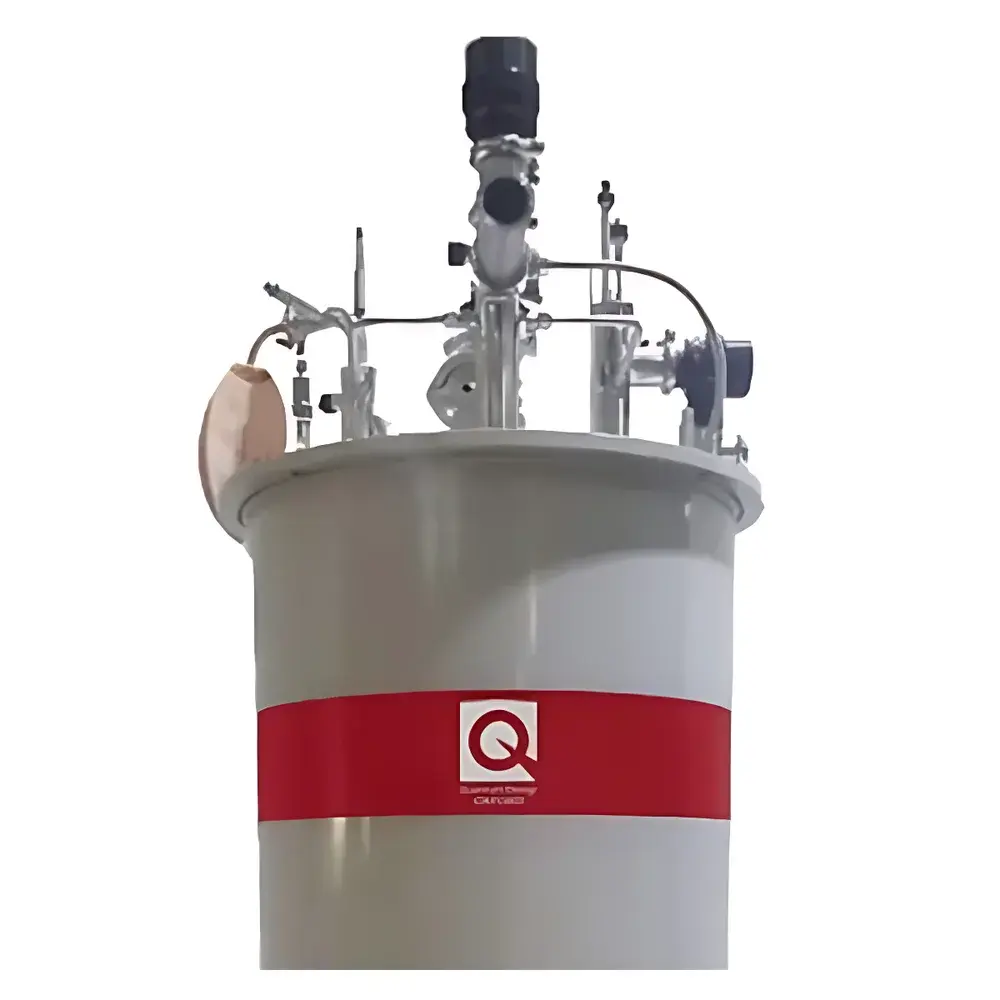
Quantum Design Integra Wet Superconducting Magnet System
| Brand | Quantum Design |
|---|---|
| Origin | USA |
| Manufacturer Type | Manufacturer |
| Origin Category | Imported |
| Model | Integra |
| Pricing | Upon Request |
Overview
The Quantum Design Integra Wet Superconducting Magnet System is a high-stability, cryogenically cooled platform engineered for precision magneto-transport, quantum transport, and low-temperature scanning probe measurements. It operates on the wet (liquid cryogen) superconducting magnet principle, utilizing liquid helium (LHe) as the primary coolant to sustain persistent magnetic fields up to 20 T, with optional integration of ultra-low-temperature refrigeration stages. The system features a low-loss dewar with an integrated liquid nitrogen (LN₂) radiation shield, significantly reducing LHe boil-off and extending operational duty cycles. Its base temperature environment reaches 4.2 K in standard configuration; when equipped with compatible dilution or ³He insert options—such as the Kelvinox™ TLM—the sample stage achieves sub-15 mK temperatures. The magnet’s warm bore design (52 mm clear aperture) accommodates a wide range of experimental configurations, including electrical transport wiring, optical access, and multi-probe measurement platforms. This architecture ensures mechanical stability and minimal thermal drift—critical for long-duration quantum Hall effect, Shubnikov–de Haas oscillation, and spin-polarized tunneling experiments.
Key Features
- Configurable superconducting magnet options: 18 T or 20 T at 4.2 K, with persistent mode operation and field homogeneity < ±100 ppm over 1 cm³
- Low-evaporation dewar featuring dual-stage cooling: LN₂-shielded outer jacket + LHe-cooled inner coil assembly
- Integrated variable temperature insert (VTI) offering precise thermal control from 1.5 K to 300 K (30 mm sample space) or 1.5 K to 200 K (37 mm sample space)
- Modular cryostat interface supporting direct coupling with ³He refrigerators or dilution refrigerators (e.g., Kelvinox™ TLM), enabling base temperatures below 15 mK
- Optimized mechanical design minimizing micro-vibrations—validated for compatibility with atomic force microscopy (AFM), scanning tunneling microscopy (STM), and magnetic force microscopy (MFM)
- Standard electrical feedthroughs rated for DC and low-frequency AC measurements up to 10 A, with optional high-frequency or fiber-optic signal lines
Sample Compatibility & Compliance
The Integra system supports diverse sample geometries—including chip-based devices, bulk single crystals, thin-film heterostructures, and mesoscopic Hall bars—via customizable sample holders and wiring harnesses. All cryogenic components comply with ASME BPVC Section VIII, Div. 1 pressure vessel standards. Dewar vacuum integrity meets ISO 27893:2016 requirements for cryogenic containment systems. Electrical safety conforms to IEC 61010-1 for laboratory equipment. When operated with MercuryiPS and MercuryiTC controllers (see Software section), the system supports audit-trail-enabled operation aligned with GLP and GMP documentation practices per FDA 21 CFR Part 11 guidelines.
Software & Data Management
The Integra platform is fully compatible with Quantum Design’s MercuryiPS intelligent power supply and MercuryiTC temperature controller. MercuryiPS delivers bipolar, four-quadrant current regulation with < 10 ppm/h long-term stability and active quench protection via real-time inductance monitoring. Its embedded TCP/IP, USB, RS232, and optional GPIB interfaces enable seamless integration into LabVIEW, Python (PyVISA), or MATLAB automation frameworks. MercuryiTC provides high-resolution (≤10 mK) temperature sensing across RuO₂, Cernox®, silicon diode, Pt100, thermocouple, and RhFe sensor types. Its PID algorithm supports ramp-and-soak profiles, dual-sensor averaging, and programmable heater limits—essential for reproducible quantum phase mapping. Both instruments log timestamped parameter sets with user-defined metadata, satisfying traceability requirements for peer-reviewed publication and regulatory audits.
Applications
- Quantum transport characterization: integer and fractional quantum Hall effects, Landau level spectroscopy, and Berry phase analysis under high-field, ultra-low-T conditions
- Spintronics and topological matter studies: detection of skyrmion lattices, chiral edge states, and spin-momentum locking in 2D materials (e.g., graphene, TMDs, magnetic heterostructures)
- Low-noise electrical transport: resistivity, Hall coefficient, magnetoresistance, and critical current measurements down to sub-20 mK
- Scanning probe nanoscale imaging: STM/STS, AFM, and MFM under applied magnetic fields up to 20 T, with vibration amplitudes < 5 nm RMS
- Magnetic phase diagram construction: field- and temperature-dependent studies of superconducting transitions, quantum critical points, and magnetic ordering
FAQ
What is the difference between “wet” and “dry” superconducting magnet systems?
A wet system uses liquid cryogens (LHe/LN₂) for direct cooling of the superconducting coil, enabling higher field stability and lower operating costs for extended runs. Dry systems rely on pulse-tube cryocoolers and typically exhibit higher base temperatures and greater thermal fluctuations.
Can the Integra system be upgraded to reach sub-10 mK temperatures?
Yes—when interfaced with a commercial dilution refrigerator insert (e.g., Kelvinox™ TLM), the system achieves base temperatures < 15 mK. Integration requires custom flange adaptation and thermal anchoring verification.
Is remote operation supported for unattended overnight measurements?
Yes—MercuryiPS and MercuryiTC support full script-driven control via Ethernet or USB, including automated field sweeps, temperature ramps, and interlocked safety shutdowns.
What electrical noise specifications apply to transport measurements?
With proper grounding, RF filtering, and twisted-pair cabling, typical voltage noise floors are ≤5 nV/√Hz at 1 Hz and ≤0.5 nV/√Hz above 10 Hz, measured in 4-wire configuration at 4.2 K.
Does Quantum Design provide application-specific sample probes or wiring kits?
Yes—customizable probe assemblies (e.g., Hall bar mounts, RF-compatible coaxial carriers, optical-fiber-integrated holders) are available upon technical consultation and mechanical drawing submission.



