
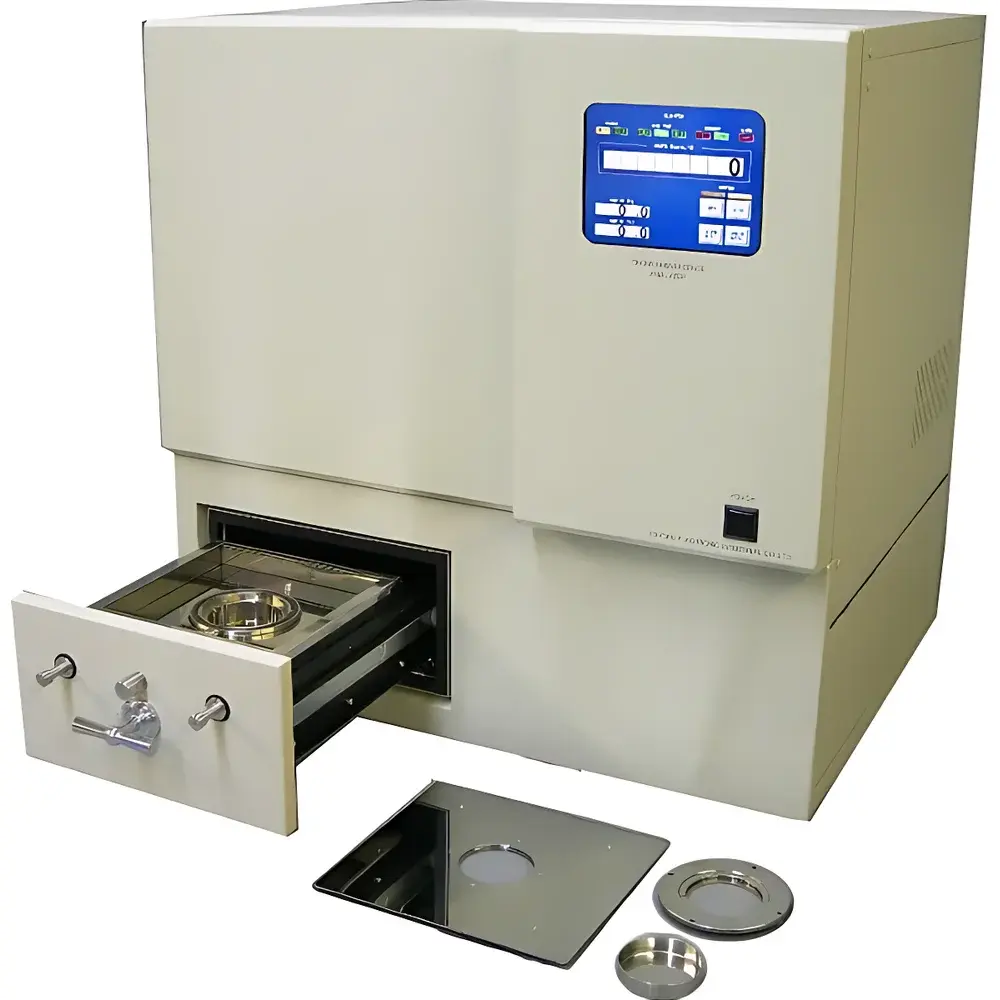
Tohuko Electronic CLA High-Sensitivity Chemiluminescence Analyzer for Oxidation Kinetics
| Brand | Tohuko Electronic |
|---|---|
| Origin | Japan |
| Model | CLA |
| Type | Chemiluminescence-based Oxidation Analysis System |
| Compliance | Designed for ASTM D3876, ISO 11346, ISO 13743, and USP <1058> analytical instrument qualification frameworks |
| Software | CL-Analyzer v4.2 with 21 CFR Part 11-compliant audit trail, electronic signatures, and GLP/GMP-ready data archiving |
Overview
The Tohuko Electronic CLA High-Sensitivity Chemiluminescence Analyzer is an engineered platform for quantitative detection of ultra-weak photon emission arising from oxidative degradation processes in organic materials. Operating on the principle of chemiluminescence (CL) — the non-thermal light emission resulting from chemical reactions involving reactive oxygen species (ROS), peroxyl radicals (ROO•), and hydroperoxide decomposition — the CLA system captures transient luminescent signals at intensities as low as 10−16 W/cm². Unlike conventional thermal or spectroscopic methods, chemiluminescence analysis provides real-time, label-free, and non-destructive insight into early-stage oxidation kinetics — often before measurable changes in mass, viscosity, or carbonyl index occur. The instrument is purpose-built for laboratories engaged in polymer stabilization research, antioxidant efficacy screening, food lipid oxidation monitoring, and biomedical oxidative stress profiling. Its optical architecture features a thermoelectrically cooled photomultiplier tube (PMT) with spectral response optimized for 300–650 nm, coupled to a vacuum-tight, nitrogen-purged sample chamber to eliminate ambient photon interference and atmospheric quenching.
Key Features
- Sub-picowatt photon detection sensitivity: Achieved via low-noise PMT amplification and multi-stage electromagnetic shielding, enabling reliable quantification of oxidation onset in UHMWPE, epoxy resins, and elastomers within minutes of thermal or photochemical initiation.
- In-situ, real-time kinetic profiling: Continuous acquisition mode supports uninterrupted monitoring across temperature ramps (25–250 °C), isothermal holds, or light-exposure cycles — delivering time-resolved CL intensity curves directly correlated with peroxide accumulation and decomposition pathways.
- Modular thermal and environmental control: Interchangeable sample holders accommodate solid films, powders, liquid suspensions, and coated substrates; optional O2/N2/air gas mixing module enables controlled atmosphere studies per ISO 13743 Annex A.
- Minimal maintenance architecture: Solid-state optical path with no moving parts in the detection train; PMT lifetime >5 years under standard operating conditions; calibration traceable to NIST-traceable luminance standards.
- Multi-parameter experimental design: Simultaneous logging of sample temperature (±0.1 °C), chamber pressure (±0.5 kPa), gas flow rate (0–100 mL/min), and photon count rate (0.1–10⁶ cps) with synchronized timestamping.
Sample Compatibility & Compliance
The CLA analyzer accommodates diverse material classes without derivatization or labeling: thermoplastics (e.g., polyethylene, polypropylene), thermosets (epoxy, phenolic resins), elastomers (natural rubber, silicone, MR elastomers), coatings, adhesives, pharmaceutical excipients, edible oils, and biological membranes. Sample mass requirements range from 1 mg (powders) to 100 mg (films), with minimal preparation — typically cutting or pelletizing under inert atmosphere. All hardware and firmware comply with IEC 61010-1 safety standards. Data acquisition and reporting modules are validated for GLP and GMP environments, supporting full 21 CFR Part 11 compliance including role-based access control, electronic signature capture, and immutable audit trails. Instrument qualification follows IQ/OQ/PQ protocols aligned with ASTM E2500 and ISO/IEC 17025 requirements.
Software & Data Management
CL-Analyzer v4.2 software provides integrated control, visualization, and kinetic modeling. Real-time plots display photon count rate vs. time/temperature with dual-axis overlays (e.g., CL intensity + derivative dI/dt). Built-in algorithms support peak deconvolution (Gaussian/Lorentzian fitting), induction period calculation (IP), activation energy estimation via Ozawa-Flynn-Wall method, and comparative antioxidant efficiency ranking (e.g., DBA vs. DPA in UHMWPE). Raw data are stored in vendor-neutral HDF5 format with embedded metadata (user, date, method ID, calibration status). Export options include CSV, Excel, and XML for integration with LIMS or statistical platforms (JMP, MATLAB, Python pandas). Audit logs record every parameter change, file export, and user login — fully compliant with FDA and EMA expectations for regulated analytical workflows.
Applications
- Quantitative evaluation of antioxidant performance in polymer formulations — determining induction periods, propagation rates, and synergistic effects.
- Mechanistic study of thermal and photo-oxidation pathways in epoxy resins and composites, correlating CL peaks with FTIR-identified peroxide and carbonyl formation.
- Stability assessment of lipid-containing foods and nutraceuticals under accelerated shelf-life testing (ASLT) protocols.
- Oxidative stress profiling in biomimetic membranes and liposomal drug carriers exposed to ROS-generating stimuli.
- Quality-by-Design (QbD) support for pharmaceutical polymer excipients where oxidation impacts dissolution kinetics and shelf life.
- Development of self-healing elastomers and magnetorheological materials, where embedded nanoparticles (e.g., Fe3O4) modulate radical scavenging behavior.
FAQ
What detection limit does the CLA achieve for hydroperoxide-derived chemiluminescence?
The system reliably detects photon fluxes corresponding to ~1010 photons/sec — equivalent to sub-nanomolar hydroperoxide decomposition rates under controlled thermal conditions.
Can the CLA be used for aqueous-phase samples?
Yes, with optional quartz cuvette holder and inert gas sparging to minimize water vapor interference and quenching; recommended for micellar or liposomal dispersions.
Is method validation support available?
Tohuko Electronic provides IQ/OQ documentation templates, reference standard protocols (e.g., cumene hydroperoxide calibration), and on-site PQ assistance for regulated labs.
How is temperature uniformity ensured across the sample chamber?
Precision PID-controlled heating blocks with dual thermocouple feedback ensure ±0.3 °C spatial uniformity over 20 mm × 20 mm active area.
Does the system support automated multi-sample sequencing?
Via optional auto-sampler module (CLA-AS8), enabling unattended analysis of up to eight pre-loaded samples with programmable dwell times and gas switching between runs.
Related Products





