
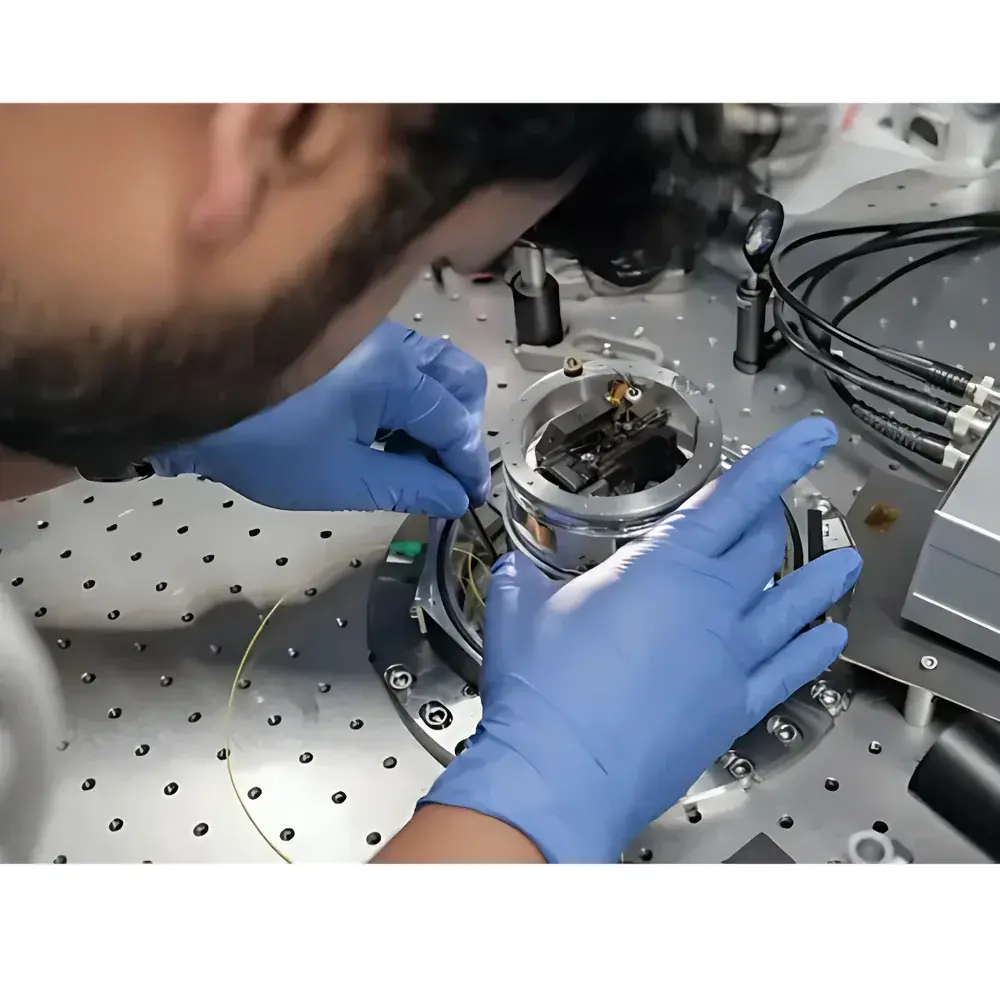
Qlibri Microcavity Platforms – High-Finesse Fabry–Pérot Optical Microcavities for Quantum Light–Matter Interaction
| Brand | Qlibri |
|---|---|
| Origin | Germany |
| Manufacturer Type | Authorized Distributor |
| Product Category | Imported Optical Instrument Component |
| Model | Microcavity Platforms |
| Component Type | Tunable Fabry–Pérot Microcavity System |
| Finesse | F > 10⁵ |
| Quality Factor | Q > 10⁶ |
| Stability | < 10 pm (in closed-cycle cryostats) |
| Mode Volume | V < 2λ³ |
| Spectral Bandwidth | Δλ > 150 nm |
| Operating Temperature Range | < 10 K |
| Magnetic Field Compatibility | up to 150 mT (with optional Helmholtz coils) |
| Spectral Coverage | 350–2000 nm (VIS–NIR, mirror-swappable) |
| Room-Temperature Scan Range | 100 × 100 µm² |
| Cryogenic Scan Range | 10 × 10 µm² |
Overview
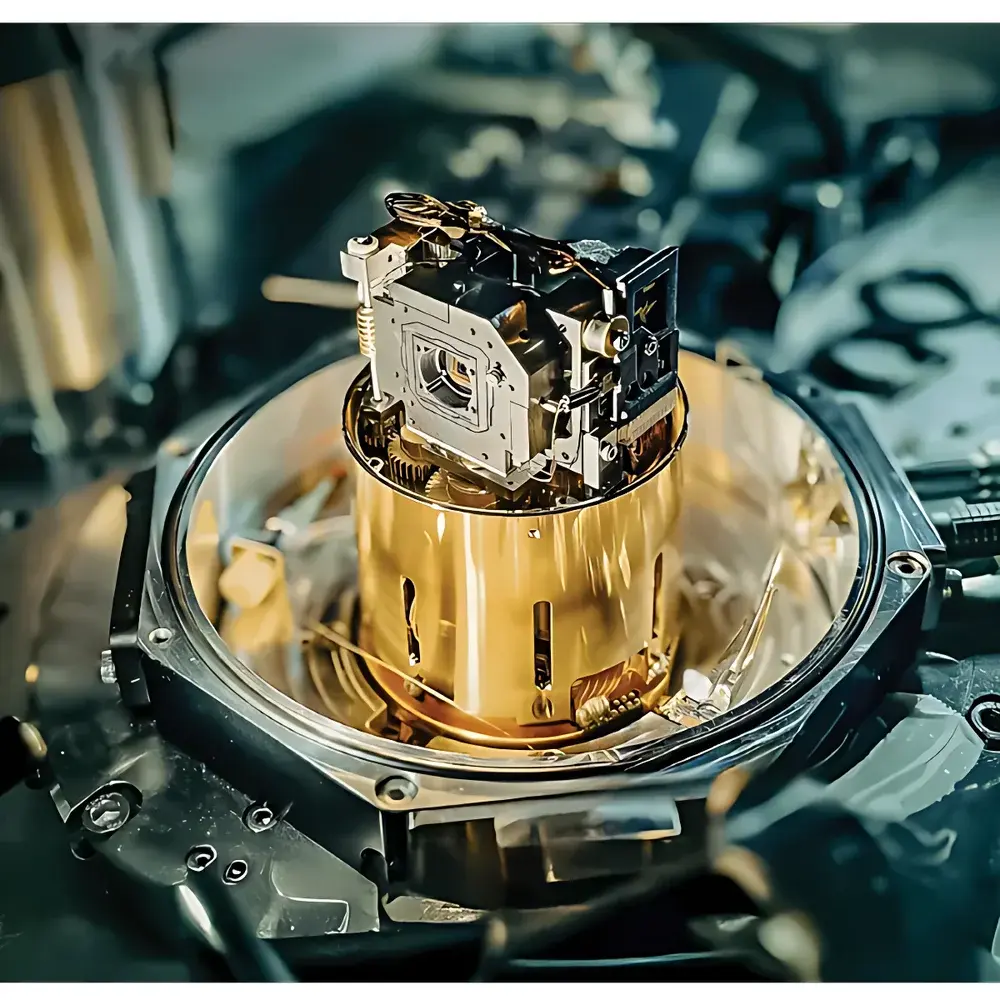
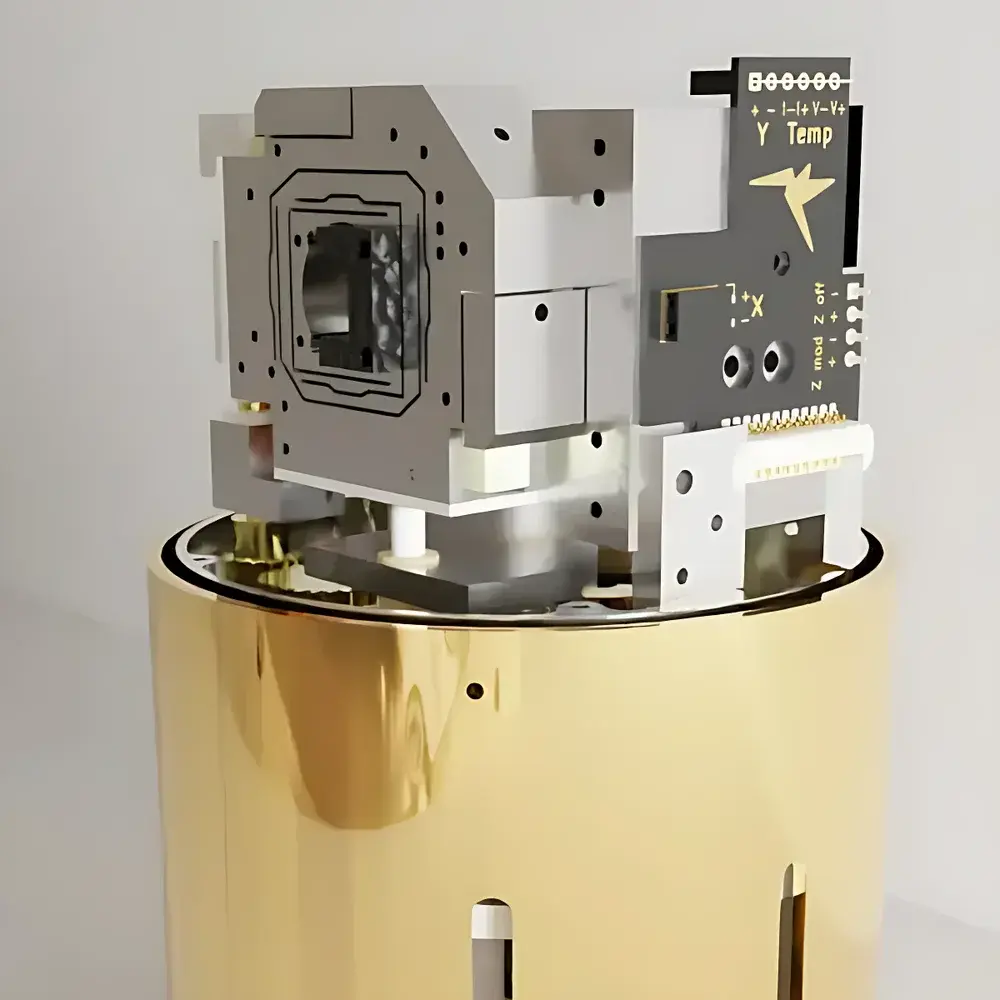
The Qlibri Microcavity Platforms are engineered high-finesse, open-access Fabry–Pérot optical microcavities designed for precision quantum optics experiments requiring strong and controllable light–matter coupling. Built upon a plane–concave resonator architecture—where one mirror is a custom-fabricated concave fiber facet and the other a macroscopic flat substrate serving as both cavity mirror and sample carrier—the system enables direct integration of solid-state emitters (e.g., NV⁻ centers, quantum dots, TMD monolayers, erbium-doped nanoparticles) into the cavity mode with sub-wavelength spatial control. The microcavity operates on the principle of coherent interference within a low-loss, ultra-stable resonant structure, supporting Purcell enhancement, polariton formation, collective emission, and photon indistinguishability measurements under both ambient and cryogenic conditions. Its mechanical design decouples optical alignment from environmental vibration via passive damping platforms and ultra-rigid nanopositioning stages, ensuring long-term phase stability essential for interferometric and spectroscopic applications in quantum photonics labs.
Key Features
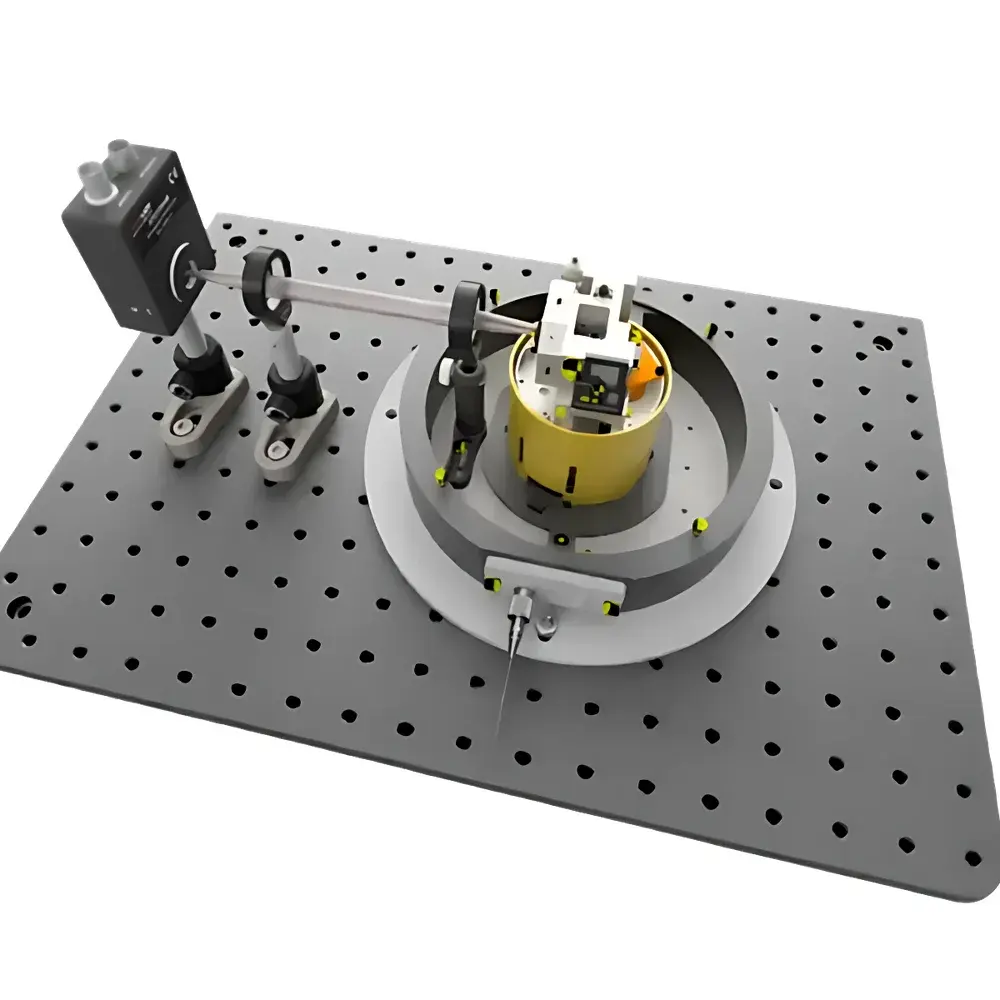
- Complete turnkey microcavity system: includes optomechanical mount, low-noise FPGA-based cavity controller, alignment-free coupling optics, and Python-based measurement suite.
- Sub-10 pm cavity length stability—even inside closed-cycle cryostats operating below 10 K—enabling long-coherence quantum optical measurements.
- Millimeter-range continuous cavity length tuning and lateral scanning (100 × 100 µm² at RT; 10 × 10 µm² at cryogenic temperatures) with nanometer-scale repeatability.
- Modular mirror architecture: interchangeable high-reflectivity dielectric coatings (R > 99.99%) spanning 350–2000 nm, optimized for specific emitter transitions (e.g., NV⁻ zero-phonon line at 637 nm, telecom C-band at 1550 nm).
- FPGA-driven real-time cavity locking: supports edge-locking for narrow-linewidth lasers and dynamic cavity length modulation at kHz bandwidths for time-resolved Purcell control.
- Integrated magnetic field compatibility: optional Helmholtz coil module delivers up to 150 mT perpendicular to the cavity axis for spin-resolved spectroscopy and magneto-optic studies.
Sample Compatibility & Compliance
The Qlibri Microcavity Platforms support heterogeneous sample integration across multiple material systems without vacuum or cleanroom dependency. Emitters—including diamond nitrogen-vacancy (NV), silicon-vacancy (SiV), tin-vacancy (SnV) centers; colloidal and epitaxial quantum dots; monolayer transition metal dichalcogenides (MoS₂, WS₂); and rare-earth-doped nanoparticles—are directly placed onto the planar mirror substrate. The cavity’s low mode volume (150 nm) accommodates heterogeneous emitter ensembles. All mechanical components comply with ISO 2768-mK general tolerances and are compatible with standard cryostat flanges (CF-63, CF-100). The system meets laboratory safety standards for Class 1 laser operation when used with integrated fiber-coupled excitation paths and adheres to electromagnetic compatibility (EMC) Directive 2014/30/EU.
Software & Data Management
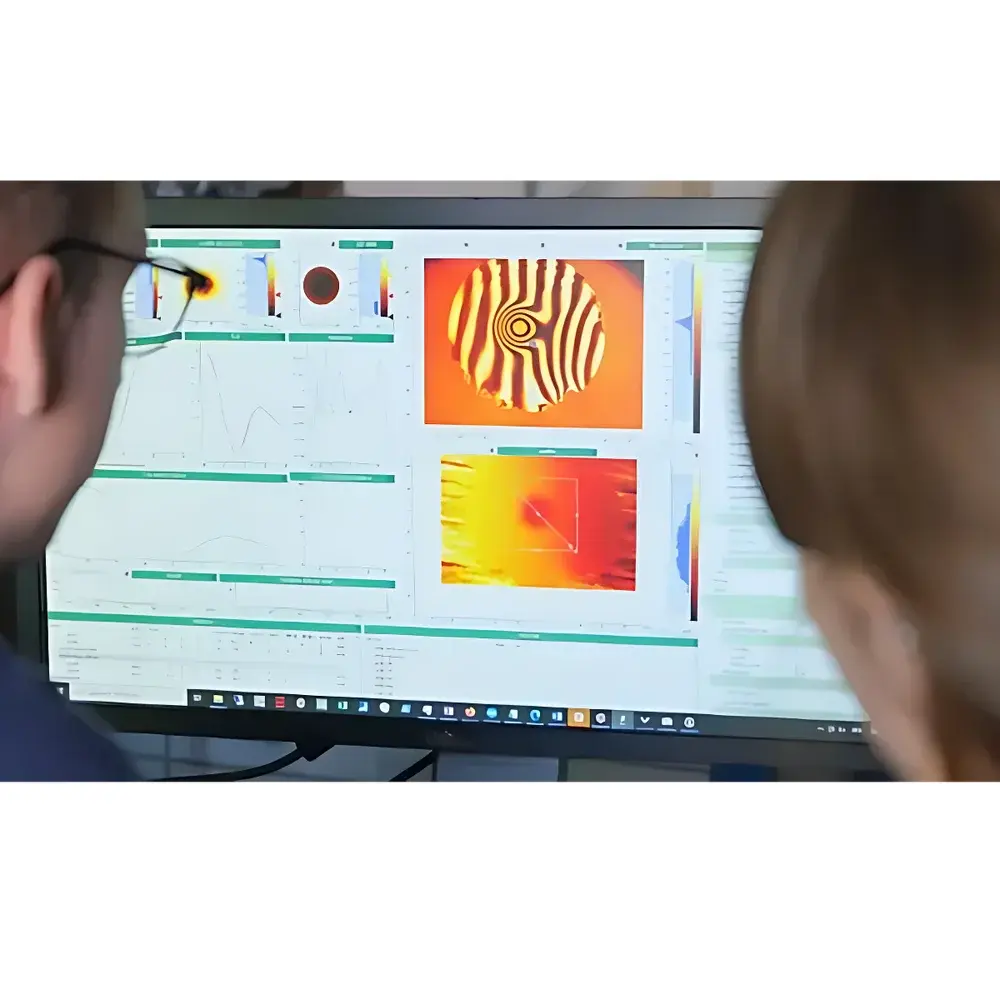
Control and analysis are implemented via a modular Python framework (compatible with Python 3.8+), offering native integration with common scientific libraries (NumPy, SciPy, Matplotlib, PyVISA). Core modules include cavity resonance tracking, hyperspectral cavity scan acquisition, time-tagged photon correlation (g²(τ)), and real-time feedback loops for active stabilization. The software architecture supports hardware abstraction layers (HALs) for seamless interfacing with external instruments—including spectrometers (Andor, Horiba), lock-in amplifiers (Zurich Instruments HF2LI), and arbitrary waveform generators (Keysight M3201A). Audit trails, parameter versioning, and metadata tagging follow GLP-aligned practices; raw data export conforms to HDF5 format with embedded experimental context (timestamp, temperature, magnetic field, cavity length, laser power). Optional FDA 21 CFR Part 11 compliance packages are available for regulated environments.
Applications
- Quantum emitter–cavity strong coupling: Observation of Rabi splitting and polariton dispersion in monolayer TMDs (e.g., WS₂) and semiconductor nanocrystals.
- Room-temperature quantum photonics: Demonstration of photon indistinguishability (>98% Hong–Ou–Mandel visibility) from carbon nanotube defects at telecom wavelengths without cryogenic cooling.
- Collective quantum phenomena: Cavity-mediated superradiance from sparse, inhomogeneously broadened NV ensembles in diamond membranes—verified via superlinear intensity scaling and multi-timescale g²(τ) signatures.
- Dynamical quantum control: Sub-nanosecond Purcell factor modulation (median PF = 15) in erbium-doped nanoparticles by active cavity length tuning faster than the natural radiative lifetime.
- Cavity-enhanced spectroscopy: Ultra-sensitive extinction mapping of optically active defects in 2D materials with detection limits approaching single-exciton absorption cross-sections.
FAQ
Is the system compatible with standard closed-cycle cryostats?
Yes—the platform is mechanically and thermally engineered for integration with commercial cryostats (e.g., BlueFors, Janis, Montana Instruments), maintaining sub-10 pm stability below 10 K.
Can I use my existing laser sources and detectors?
Absolutely—the system features free-space and fiber-pigtailed input/output ports, with full compatibility for third-party lasers (CW/pulsed), APDs, SNSPDs, and spectrometers via standardized electrical and optical interfaces.
What level of technical support is provided post-purchase?
Qlibri offers application-specific onboarding, cavity optimization simulations, experimental design consultation, and remote troubleshooting—all included in the standard support package for 24 months.
Are custom mirror coatings available?
Yes—custom high-reflectivity stacks (R > 99.995%) can be fabricated for target wavelengths between 350 nm and 2000 nm, including angle-tuned designs for oblique-incidence configurations.
Can the system be upgraded for active stabilization?
Yes—an optional FPGA-based active stabilization module enables Pound–Drever–Hall locking and real-time cavity length correction with bandwidths exceeding 100 kHz.




