
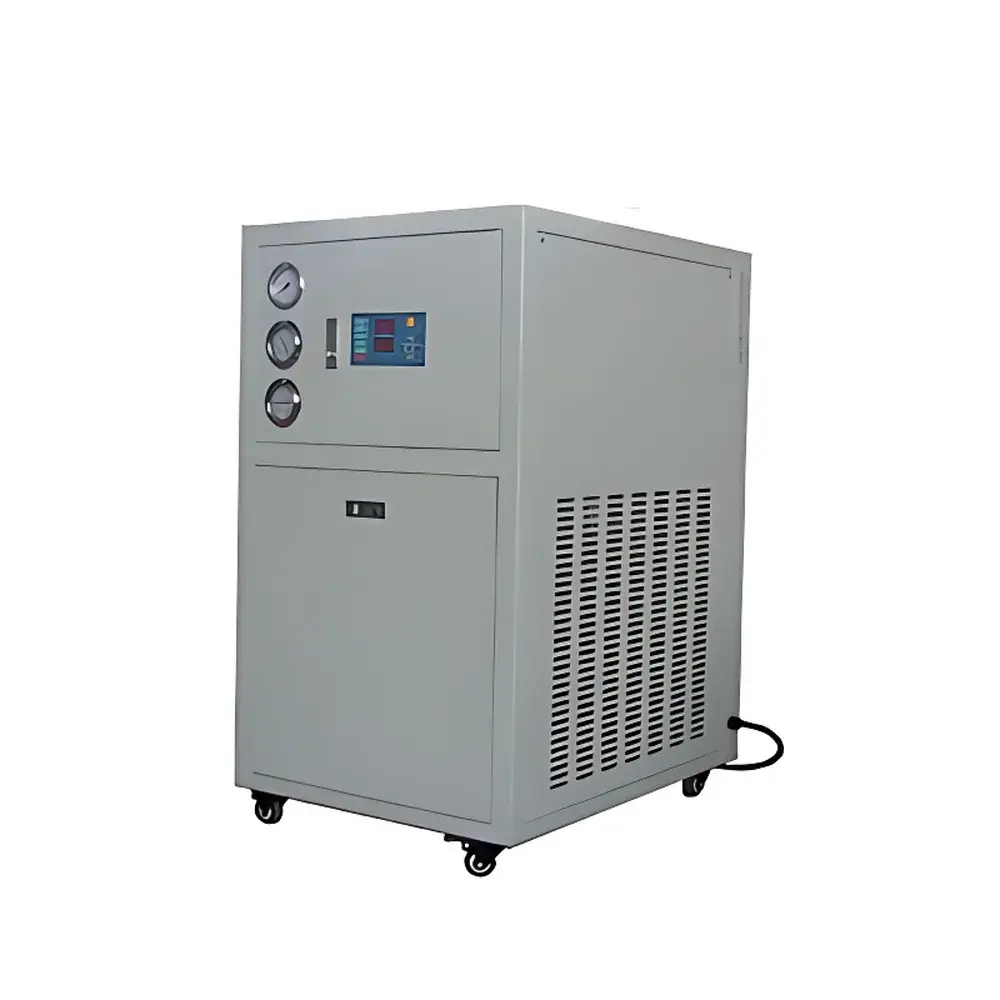
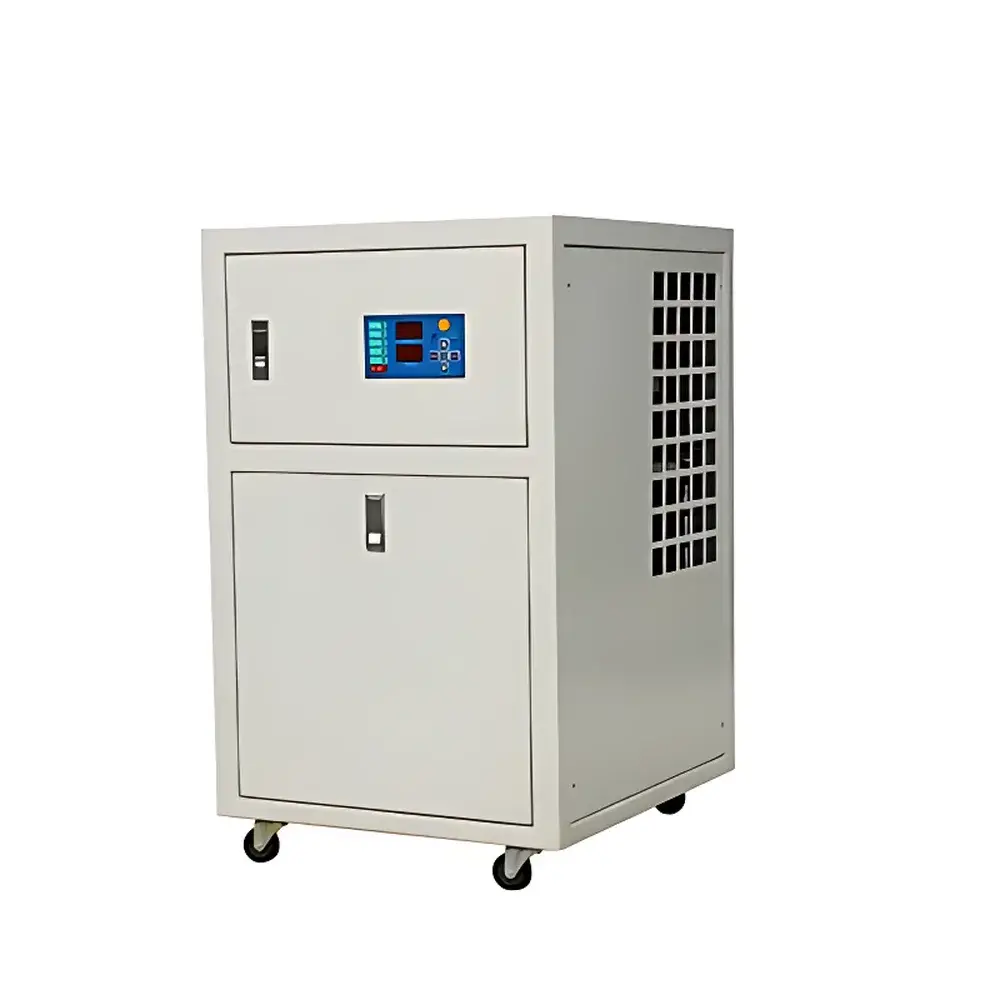
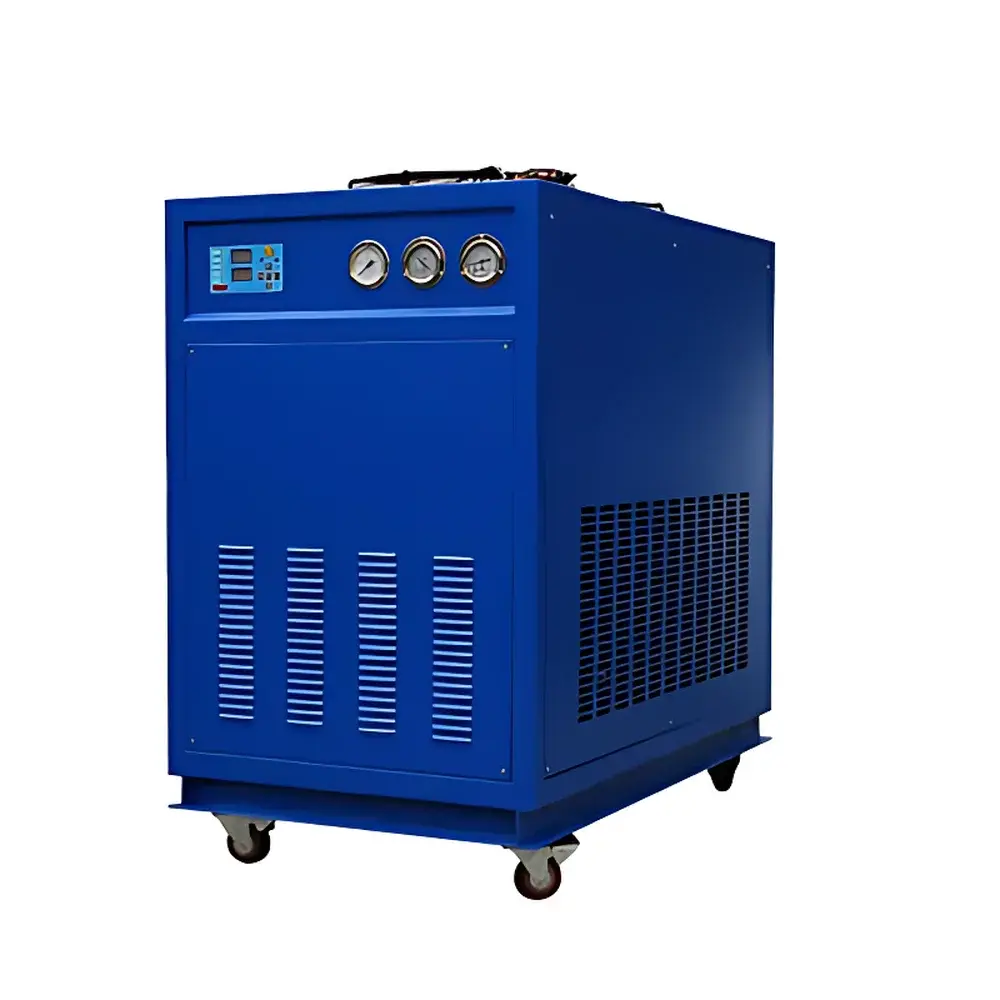
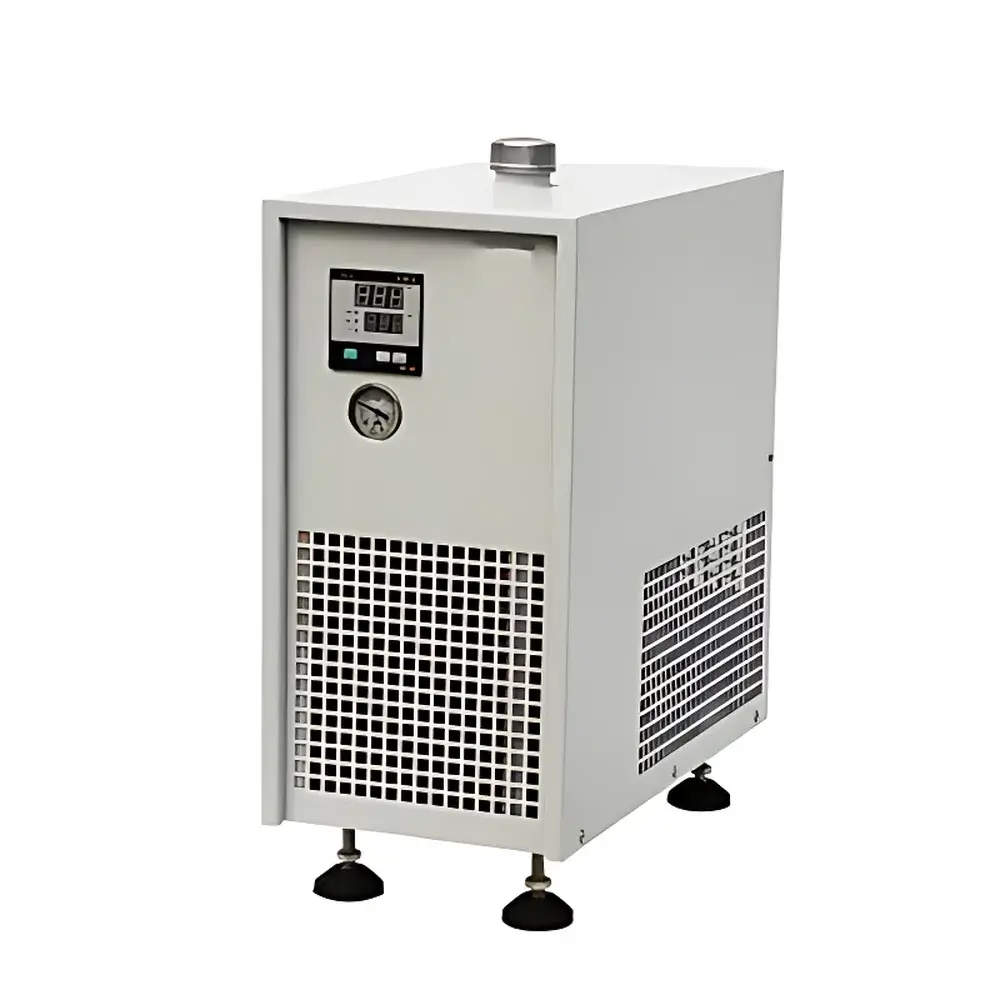
Tianfeng LS-2.33HP Compact Circulating Chiller
| Brand | Tianfeng |
|---|---|
| Origin | Shanghai, China |
| Manufacturer Type | Direct Manufacturer |
| Instrument Type | Integrated Unit |
| Cooling Method | Air-Cooled |
| Temperature Control Range | 0–50 °C |
| Refrigeration Capacity | 7.38 kW |
| Temperature Stability | ±0.1 °C |
| Circulation Pump Pressure | 0–2 bar |
| Circulation Flow Rate | 2 m³/h (33.3 L/min) |
| Reservoir Volume | 45 L |
| Operating Mode | Continuous Duty |
| Compressor | Scroll Type |
| Safety Protections | Compressor Overheat, Overcurrent, High/Low Pressure, and Overtemperature Protection |
| Power Supply | 220 V, 50 Hz |
| Dimensions (L×W×H) | 800 × 600 × 1065 mm |
| Noise Level | Low |
| Construction | Stainless Steel Reservoir & Pump |
| Controller | Digital PID Temperature Controller (Optional RKC from Japan) |
| Electrical Components | Siemens, Schneider, Omron |
| Expansion Valve & Solenoid Valve | Imported (Italy/Germany) |
| Certifications | ISO 9001:2000 Certified |
Overview
The Tianfeng LS-2.33HP Compact Circulating Chiller is an integrated, air-cooled recirculating cooling system engineered for precision thermal management in laboratory and light industrial environments. It operates on a vapor-compression refrigeration cycle using a high-efficiency scroll compressor, delivering stable, continuous cooling across a wide operational range of 0–50 °C. Designed for applications requiring tight temperature control—such as analytical instrumentation, laser systems, and vacuum equipment—the unit maintains ±0.1 °C thermal stability under dynamic load conditions. Its compact footprint (800 × 600 × 1065 mm), stainless steel reservoir, and corrosion-resistant internal wetted parts ensure long-term reliability in demanding lab settings. Unlike batch or immersion-based cooling solutions, this chiller provides closed-loop circulation with adjustable flow and pressure, enabling consistent heat extraction from critical components such as optical benches, plasma sources, X-ray tubes, and semiconductor process tools.
Key Features
- Integrated air-cooled architecture with no external water supply or drainage required
- Precision digital PID temperature controller with real-time display and programmable setpoint adjustment
- Stainless steel reservoir (45 L) and pump housing resistant to chemical degradation and microbial growth
- Scroll compressor delivering high volumetric efficiency, low vibration, and extended service life
- Adjustable circulation pressure (0–2 bar) and flow rate (up to 2 m³/h) via calibrated bypass and pump speed regulation
- Comprehensive safety suite: compressor overheat protection, high/low refrigerant pressure cutoffs, overcurrent detection, and system overtemperature lockout
- CE-compliant electrical design with industrial-grade components (Siemens, Schneider, Omron)
- Imported thermostatic expansion valve and solenoid valves (Italy/Germany) for precise refrigerant metering and system responsiveness
- ISO 9001:2000 certified manufacturing process ensuring traceability and consistency across production batches
Sample Compatibility & Compliance
The LS-2.33HP is compatible with a broad spectrum of laboratory instruments requiring active cooling, including graphite furnace atomic absorption spectrometers (GFAAS), inductively coupled plasma optical emission spectrometers (ICP-OES), ICP-mass spectrometers (ICP-MS), X-ray fluorescence (XRF) analyzers, X-ray diffractometers (XRD), scanning electron microscopes (SEM), and transmission electron microscopes (TEM). It meets general requirements for GLP-compliant laboratories when deployed with appropriate calibration and maintenance records. While not inherently 21 CFR Part 11 compliant, its digital controller supports audit-ready logging when interfaced with external data acquisition systems. The unit adheres to IEC 61000-6-3 (EMC emissions) and IEC 61000-6-2 (immunity) standards. All refrigerant circuits are sealed and pressure-tested per ASHRAE Standard 15 guidelines.
Software & Data Management
The chiller features a standalone embedded controller with no proprietary software dependency. Temperature setpoints, real-time outlet temperature, flow status, and fault codes are displayed on a backlit LCD interface. Optional analog (4–20 mA) and digital (RS-485 Modbus RTU) outputs enable integration into centralized building management systems (BMS) or laboratory information management systems (LIMS). Data logging requires external hardware; however, the controller supports configurable alarm thresholds with relay dry-contact outputs for automated shutdown or notification sequences. For regulated environments, users may implement periodic verification protocols aligned with ISO/IEC 17025 clause 6.4.10 (equipment monitoring) and ASTM E2912–22 (standard practice for temperature-controlled equipment qualification).
Applications
- Laboratory instrumentation cooling: stabilizing detector temperatures in spectroscopic and microscopic platforms to minimize thermal drift and signal noise
- Laser system thermal management: maintaining diode-pumped solid-state (DPSS) and fiber laser head temperatures within optimal operating bands
- Vacuum chamber and coating system support: regulating substrate cooling stages during sputtering or e-beam evaporation processes
- Materials testing equipment: providing consistent coolant supply to tensile testers, rheometers, and differential scanning calorimeters (DSC)
- Pharmaceutical R&D: controlling jacketed reactor temperatures during small-scale synthesis and lyophilization development
- Electronics reliability testing: conditioning environmental chambers and burn-in racks with stable chilled water loops
FAQ
What is the recommended maximum return water temperature for continuous operation?
For sustained compressor longevity and refrigeration efficiency, the return fluid temperature should not exceed 40 °C. Higher inlet temperatures increase condensing pressure and reduce system COP.
Can this chiller be used with deionized or glycol-water mixtures?
Yes—provided fluid conductivity remains below 5 µS/cm and glycol concentration does not exceed 30% by volume. Stainless steel wetted parts ensure compatibility, but fluid chemistry must be validated for long-term corrosion resistance.
Is remote monitoring supported out of the box?
The standard unit includes RS-485 Modbus RTU for integration with third-party SCADA or LIMS platforms. No cloud connectivity or onboard web server is included.
How often should preventive maintenance be performed?
Biannual inspection is recommended: checking refrigerant charge integrity, cleaning condenser coils, verifying pump seal integrity, and calibrating temperature sensors against NIST-traceable references.
Does the unit comply with RoHS or REACH directives?
All electrical and mechanical components meet RoHS 2011/65/EU requirements. Material declarations are available upon request for REACH SVHC screening.



