
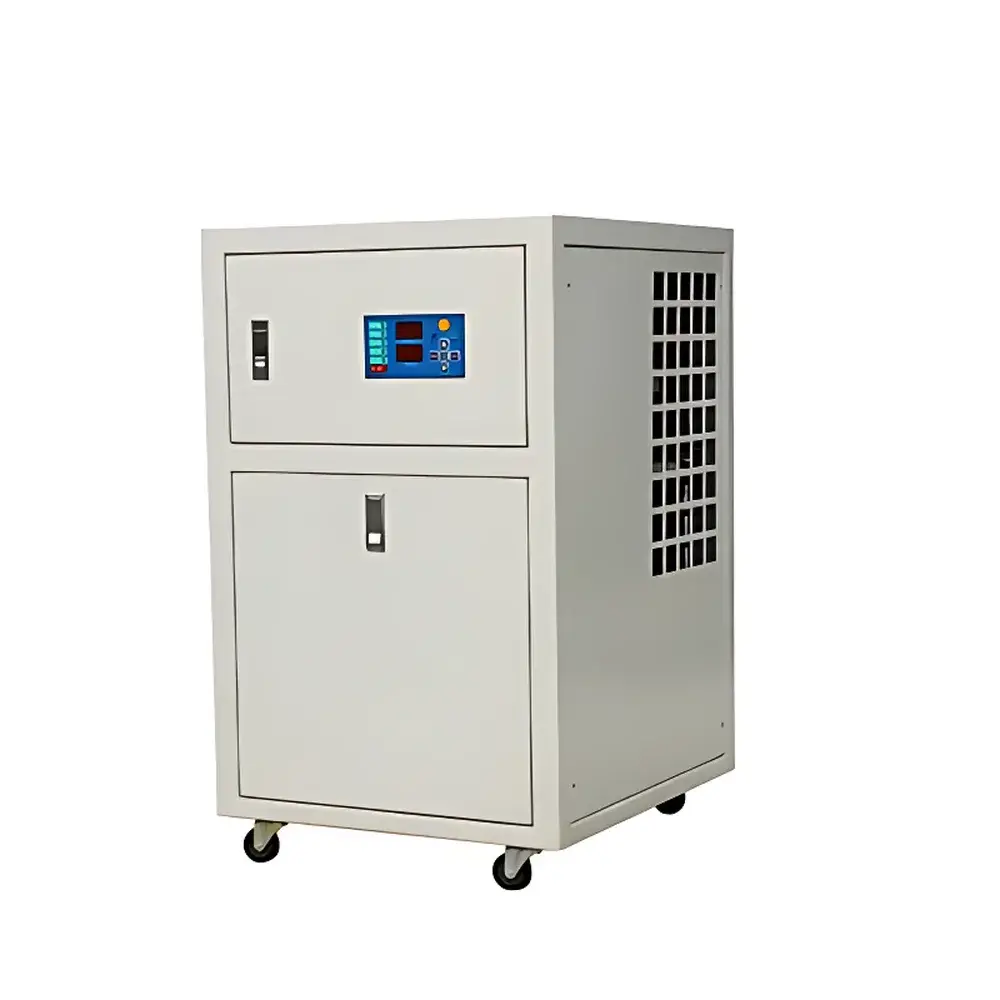
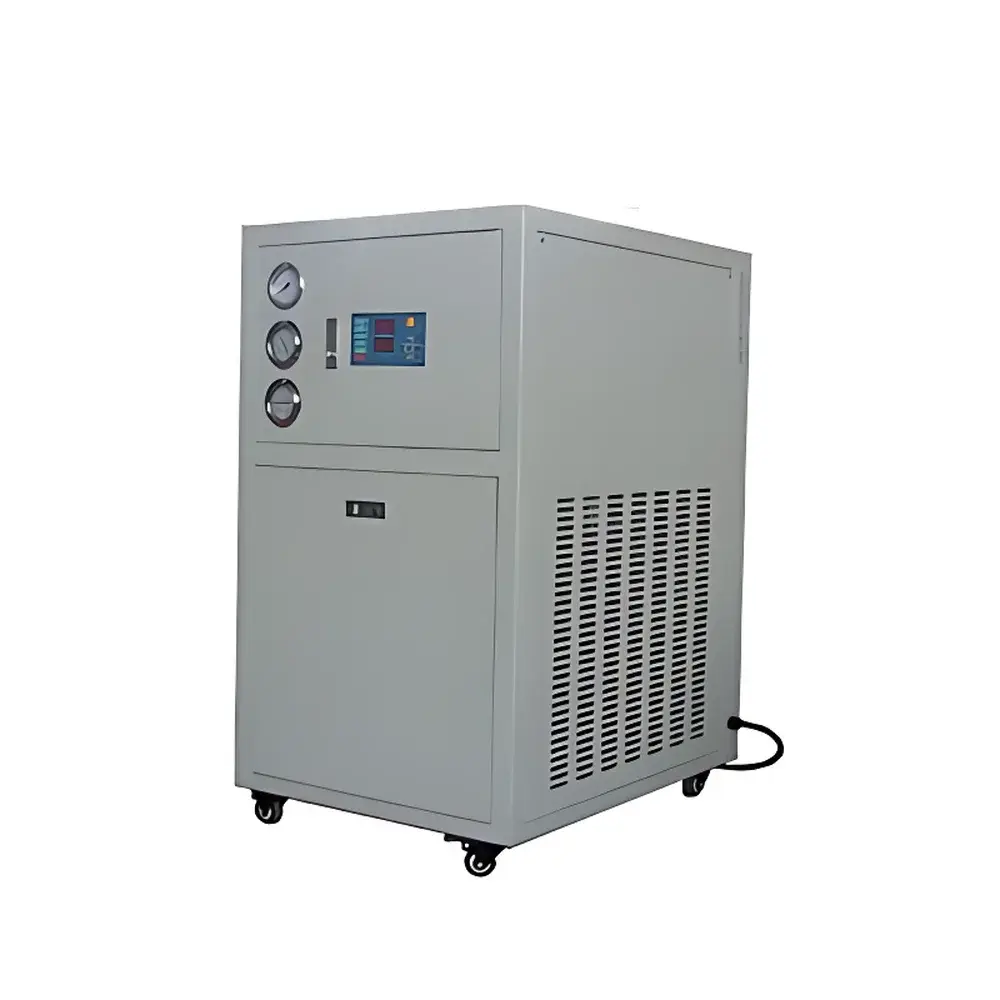
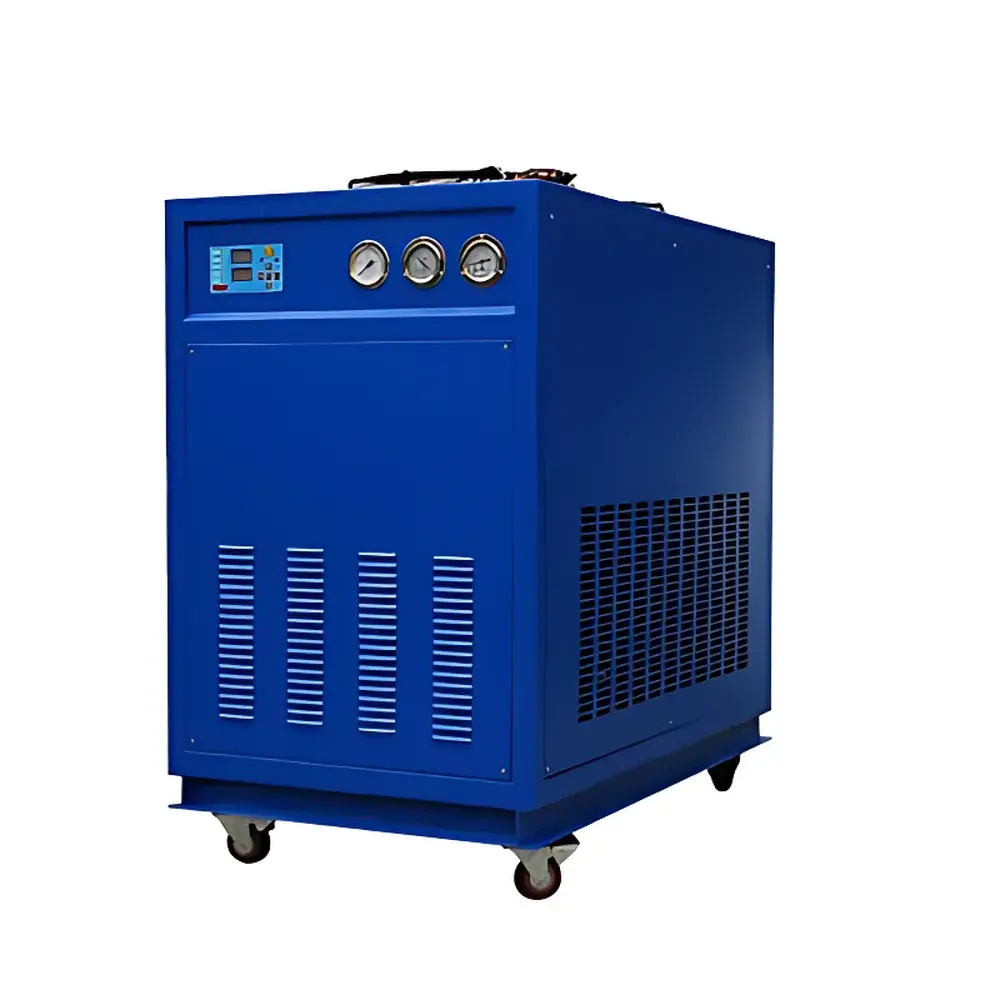
Tianfeng LS-1500W Integrated Circulating Chiller
| Brand | Tianfeng |
|---|---|
| Origin | Shanghai, China |
| Manufacturer Type | Direct Manufacturer |
| Instrument Type | Integrated Unit |
| Cooling Method | Water-Cooled |
| Temperature Control Range | 0–10 °C |
| Cooling Capacity | 1.5 kW |
| Temperature Stability | ±0.1 °C |
| Circulation Pump Pressure | 2.0 bar |
| Circulation Flow Rate | 2 L/min |
| Reservoir Volume | 15 L |
| Duty Cycle | Continuous Operation |
| Power Supply | 220 V, 50 Hz |
| Compressor | Scroll Type |
| Safety Protections | Compressor Overheat Protection, Overcurrent Protection, High/Low Pressure Switches, Overtemperature Alarm |
| Construction | Stainless Steel Reservoir & Pump |
| Controller | Digital PID Temperature Controller (Optional RKC Japan Model) |
| Electrical Components | Siemens / Schneider / Omron |
| Refrigeration Components | Imported Expansion Valve & Solenoid Valve (Italy/Germany) |
| Noise Level | Low |
| Dimensions (L×W×H) | 650 × 500 × 765 mm |
| Weight | Approx. 85 kg |
Overview
The Tianfeng LS-1500W Integrated Circulating Chiller is a precision-engineered thermal management system designed for stable, continuous cooling of heat-sensitive laboratory and industrial equipment. It operates on the vapor-compression refrigeration cycle, utilizing a high-efficiency scroll compressor, optimized condenser and evaporator geometry, and a closed-loop circulation circuit to deliver tightly regulated coolant at setpoint temperatures between 0 °C and 10 °C. Its core function is to absorb and dissipate waste heat from critical components—such as laser sources, plasma generators, X-ray tubes, electron optics, and analytical instrument detectors—thereby maintaining thermal equilibrium essential for measurement repeatability, detector longevity, and system reliability. Unlike ambient-air-cooled units, this water-cooled chiller transfers heat via an external cooling water circuit, enabling consistent performance even in environments with elevated ambient temperatures or limited ventilation.
Key Features
- Precision temperature control with ±0.1 °C stability over full operating range (0–10 °C), achieved via digital PID algorithm and high-resolution PT100 sensor feedback.
- Integrated architecture with compact footprint (650 × 500 × 765 mm) and stainless steel reservoir/pump assembly for corrosion resistance and long-term fluid integrity.
- Low-noise scroll compressor delivering stable 1.5 kW refrigeration capacity at nominal conditions, engineered for >10,000 hours MTBF under continuous duty.
- Dual-mode operation: fixed-setpoint constant-temperature mode and adaptive intelligent temperature regulation that dynamically adjusts coolant output based on real-time load demand.
- Comprehensive safety suite including compressor overheat protection, high/low refrigerant pressure cutoffs, overcurrent detection, and overtemperature alarm with relay output for external interlock integration.
- Digitally displayed water temperature and status indicators; front-panel interface supports manual flow/pressure adjustment within rated limits (0–2 bar, 0–6 L/min).
- Configurable electrical architecture compliant with IEC 61000-6-2/6-4 EMC standards; uses UL/CE-certified Siemens, Schneider, and Omron contactors, relays, and power supplies.
Sample Compatibility & Compliance
The LS-1500W is compatible with a broad spectrum of analytical and process instrumentation requiring precise coolant delivery—including graphite furnace atomic absorption spectrometers (GFAAS), inductively coupled plasma optical emission spectrometers (ICP-OES), inductively coupled plasma mass spectrometers (ICP-MS), X-ray fluorescence (XRF) and X-ray diffraction (XRD) systems, scanning and transmission electron microscopes (SEM/TEM), and high-power laser systems (e.g., marking, cutting, welding). Its stainless steel wetted path ensures compatibility with deionized water and common glycol-water mixtures (up to 30% v/v). The unit complies with GB/T 10870–2014 (Chinese national standard for liquid chillers), ISO 5171:2018 (performance testing of refrigerating appliances), and meets essential requirements of the EU Machinery Directive 2006/42/EC and Low Voltage Directive 2014/35/EU. Optional documentation packages support GLP/GMP validation protocols, including IQ/OQ templates and traceable calibration certificates for temperature and flow sensors.
Software & Data Management
While the LS-1500W operates as a standalone hardware-controlled system, its analog and digital I/O interfaces (0–10 V, 4–20 mA, RS485 Modbus RTU) enable seamless integration into centralized facility monitoring platforms. External SCADA or LIMS systems can read real-time temperature, flow status, fault codes, and compressor run-hours. Optional RKC controller variants support data logging to SD card (up to 30 days of 1-second interval records) and configurable alarm thresholds with email/SMS notification via gateway module. All firmware adheres to secure boot principles; no remote cloud connectivity is enabled by default—ensuring compliance with internal IT security policies and FDA 21 CFR Part 11 requirements when deployed in regulated laboratories.
Applications
This chiller serves as a critical thermal stabilization subsystem across multiple domains: In analytical laboratories, it maintains detector and source temperatures in ICP-MS and XRD systems to minimize spectral drift and peak broadening. In materials science, it cools electron beam columns in SEM/TEM to reduce thermal lensing and improve imaging resolution. In laser processing, it stabilizes diode-pumped solid-state (DPSS) and fiber laser heads to preserve beam quality and wavelength fidelity. Industrial applications include mold temperature control in injection molding (reducing part warpage and cycle time), hydraulic oil cooling in CNC machining centers (limiting thermal expansion-induced positioning errors), and vacuum chamber temperature regulation in PVD/CVD coating systems. Its 15 L reservoir and 2 L/min flow rate are optimized for mid-power instruments with moderate thermal loads—making it especially suitable for benchtop and floor-standing analytical platforms requiring reliable, low-maintenance cooling.
FAQ
What is the minimum inlet water temperature required for the water-cooled condenser?
The recommended cooling water inlet temperature is 10–32 °C. Inlet temperatures exceeding 35 °C may reduce refrigeration efficiency and increase compressor discharge pressure.
Can the chiller operate continuously for 24/7 applications?
Yes—the LS-1500W is rated for uninterrupted operation under nominal load conditions and includes thermal overload protection to ensure safe long-term duty cycles.
Is the unit compatible with deionized (DI) water?
Yes, provided conductivity remains above 1 µS/cm to prevent galvanic corrosion; use of corrosion-inhibiting additives is recommended for extended DI water service.
Does the chiller meet international electrical safety standards?
It conforms to IEC 61000-6-2 (immunity) and IEC 61000-6-4 (emissions), and carries CE marking per applicable EU directives.
What maintenance intervals are recommended?
Condenser cleaning every 6 months (depending on water quality), refrigerant leak check annually, and filter replacement every 12 months—documented in the user manual’s preventive maintenance schedule.



