
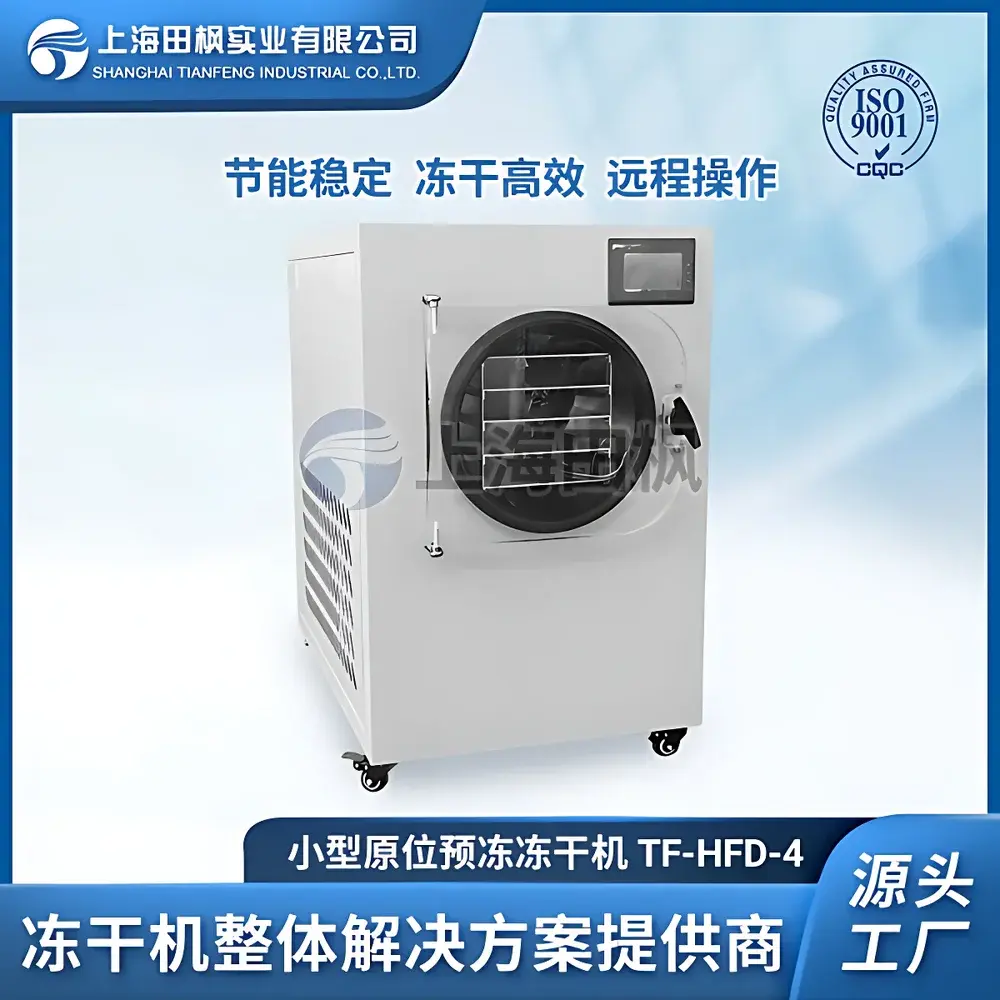
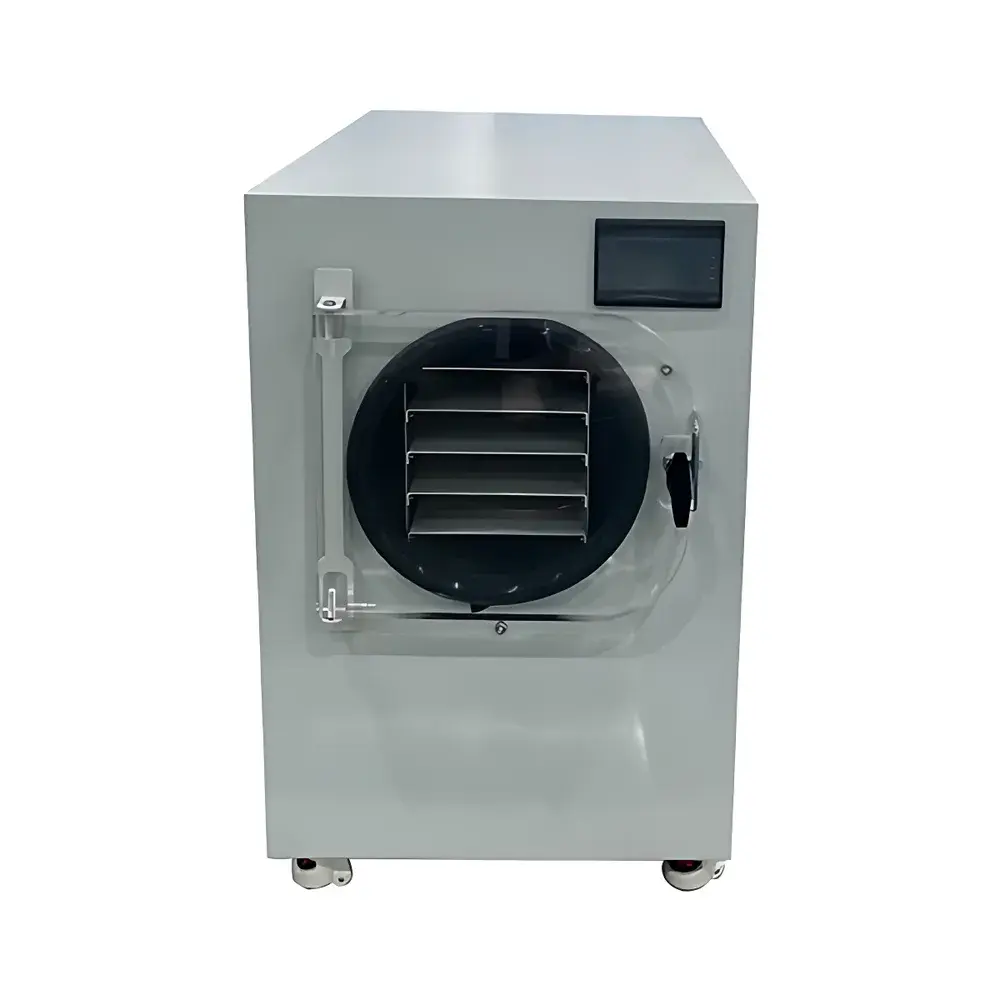
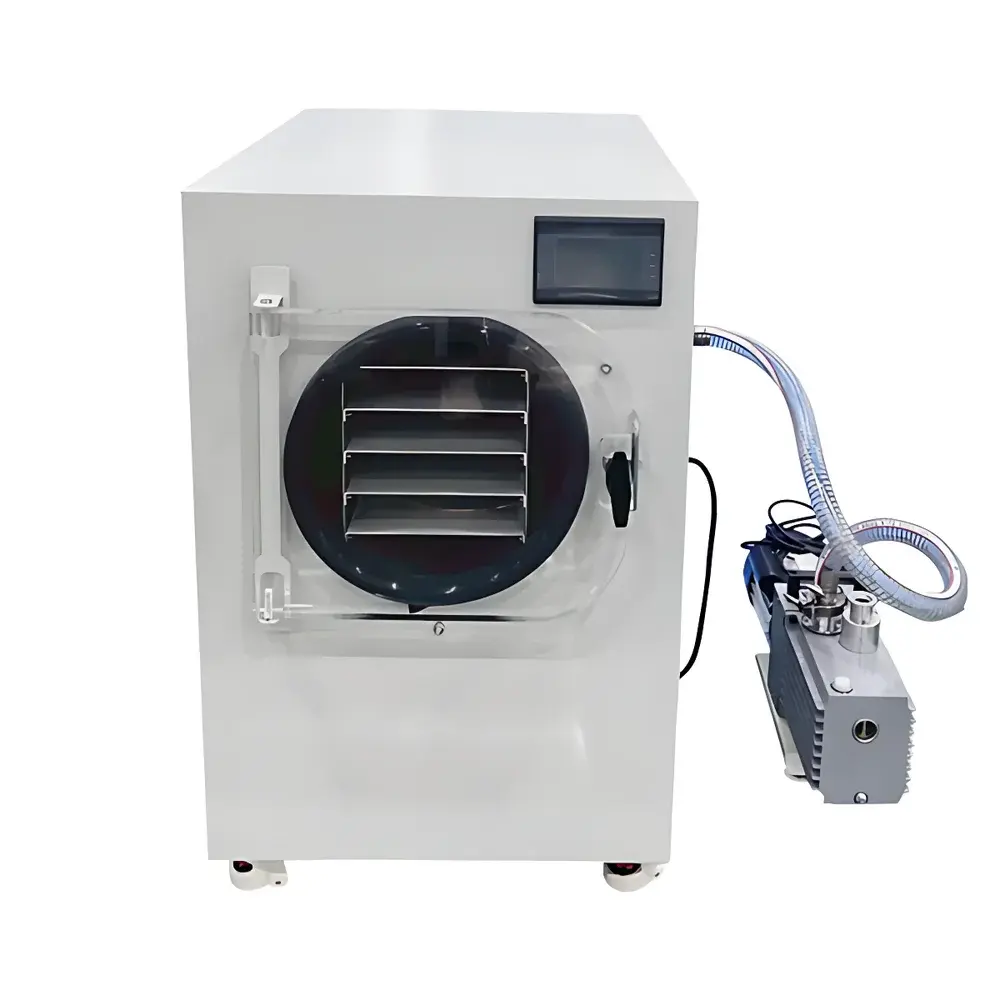
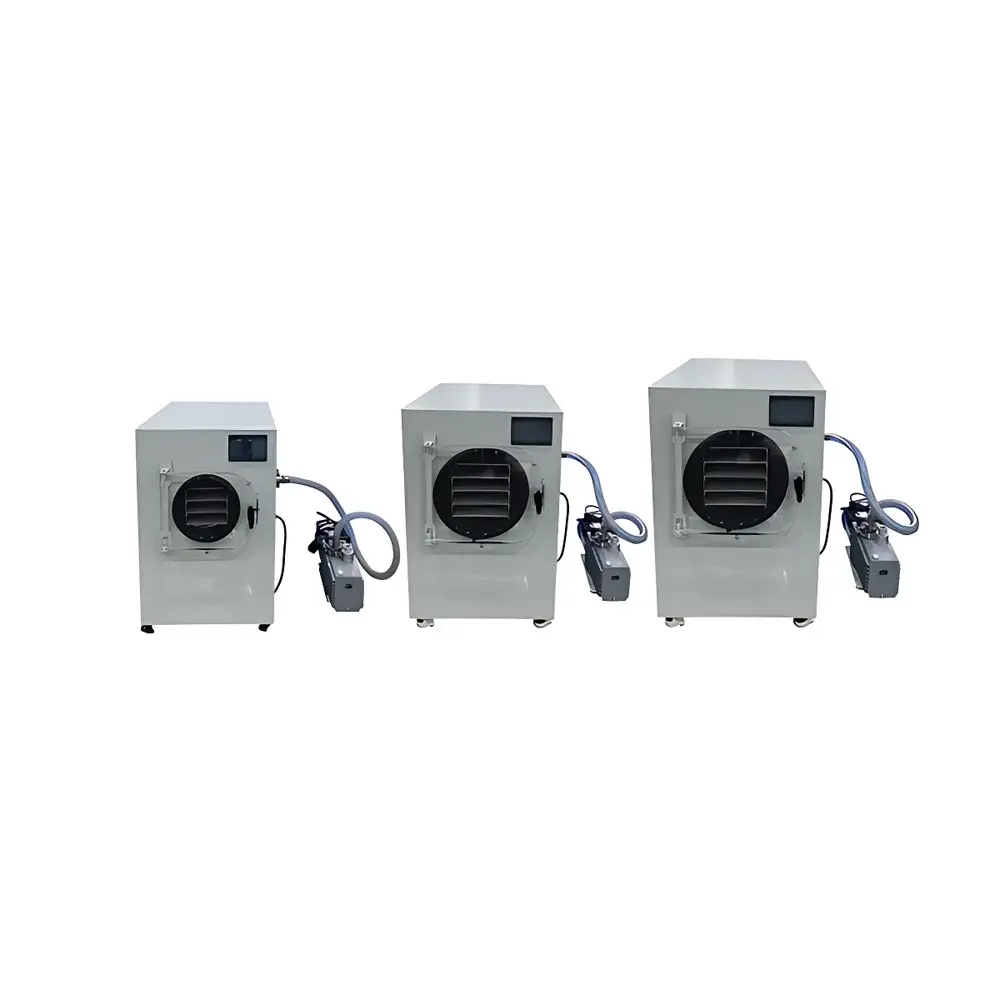
Tianfeng TF-HFD-4 Benchtop In-Situ Freeze Dryer
| Brand | Tianfeng |
|---|---|
| Origin | Shanghai, China |
| Manufacturer Type | Direct Manufacturer |
| Product Category | Domestic |
| Model | TF-HFD-4 |
| Instrument Type | Standard Shelf-Type Freeze Dryer |
| Application Scope | Laboratory Use |
| Lyophilization Area | 0.4 m² |
| Ultimate Vacuum | 10 Pa (at no-load) |
| Condenser Temperature | −40 °C |
| Water Capture Capacity | 6 kg/24 h |
| Overall Dimensions | 550 mm × 885 mm × 865 mm |
| Power Supply | 220 V, 50 Hz |
| Rated Power | 1700 W |
| Shelf Tray Size | 195 mm × 445 mm × 20 mm |
| Construction Material | SUS304 Stainless Steel Interior & Trays |
| Viewing Window | Transparent Organic Glass Door |
| Control Interface | Touchscreen with Real-Time Graphical Data Display |
| Defrosting | One-Touch Automatic Defrost |
| Compliance | Designed for GLP-aligned laboratory environments |
Overview
The Tianfeng TF-HFD-4 is a compact, benchtop in-situ freeze dryer engineered for precision lyophilization in research and quality control laboratories. It operates on the fundamental principle of sublimation—removing water from frozen samples under vacuum while maintaining low thermal stress on thermolabile compounds. Unlike conventional freeze dryers requiring manual transfer between freezing and drying chambers, the TF-HFD-4 integrates pre-freezing, primary drying, and secondary drying within a single, sealed chamber—eliminating sample exposure to ambient conditions and minimizing contamination risk. Its modular architecture features a high-efficiency dual-stage refrigeration system, a stainless steel condenser coil rated for continuous operation at ≤−40 °C, and a robust vacuum system capable of achieving ≤10 Pa under no-load conditions. The unit is designed for reproducible cycle development, method transfer, and small-batch processing across pharmaceutical, biotechnology, food science, and natural product research applications.
Key Features
- In-situ freezing and drying in one chamber ensures sterility preservation and eliminates handling-related variability.
- Intuitive 7-inch color touchscreen interface with real-time graphical display of shelf temperature, condenser temperature, chamber pressure, and time-stamped drying curves.
- Programmable multi-step lyophilization protocols—including ramp rate control, hold duration, and pressure modulation—enabling full customization of primary and secondary drying phases.
- SUS304 stainless steel interior chamber and sample trays comply with ISO 14644-1 Class 5 cleanroom compatibility requirements and support routine sanitization.
- Transparent organic glass door permits direct visual monitoring of ice sublimation, cake formation, and structural integrity without interrupting vacuum integrity.
- One-touch automatic defrost function minimizes downtime between cycles and prevents ice buildup that could compromise vacuum stability or condenser efficiency.
- Low-noise, energy-optimized refrigeration system draws <8.5 A at 220 V / 50 Hz, supporting sustainable lab operations without sacrificing performance.
Sample Compatibility & Compliance
The TF-HFD-4 accommodates standard stainless steel trays (195 mm × 445 mm × 20 mm) and supports vial, bulk, and slurry formats typical in preformulation studies, enzyme stabilization, probiotic preservation, and botanical extract processing. Its 0.4 m² effective lyophilization area enables batch processing of up to 2–3 L of aqueous solution (assuming 5–10 mm fill depth). The system meets mechanical and electrical safety standards per GB 4793.1–2019 (equivalent to IEC 61010-1) and is compatible with laboratory quality management frameworks including GLP and GMP Annex 11. While not inherently 21 CFR Part 11 compliant out-of-the-box, its data logging functionality—including timestamped, non-editable CSV export of all critical parameters—provides foundational traceability required for audit readiness.
Software & Data Management
Embedded firmware records all operational variables—including shelf temperature setpoints and actuals, chamber pressure (via Pirani gauge), condenser temperature, and elapsed time—at user-configurable intervals (1–60 seconds). Data is stored internally and exportable via USB to standard spreadsheet formats. No cloud connectivity or proprietary software installation is required. All logs include digital signatures confirming data origin and integrity. Optional RS-485 or Ethernet interfaces (available upon request) enable integration into centralized lab information management systems (LIMS) for automated report generation and long-term trend analysis.
Applications
- Stabilization of monoclonal antibodies, vaccines, and recombinant proteins during formulation development.
- Drying of microbial cultures, lactic acid bacteria, and yeast for strain banking and shelf-life extension.
- Processing of heat-sensitive nutraceuticals, herbal extracts, and functional food ingredients while preserving bioactive compounds.
- Preparation of calibration standards and reference materials for analytical chemistry workflows.
- Method optimization and scalability studies preceding pilot-scale or manufacturing freeze drying.
FAQ
What is the maximum sample volume this unit can process in a single cycle?
Based on a typical fill depth of 8 mm and the 0.4 m² shelf area, the TF-HFD-4 supports up to approximately 3.2 L of aqueous solution per batch.
Does the system support controlled nucleation or annealing steps?
No—the TF-HFD-4 does not include hardware for controlled ice nucleation or programmable annealing; it is optimized for standard shelf-controlled freezing and drying protocols.
Is the vacuum pump included with the system?
Yes—a dedicated oil-lubricated rotary vane vacuum pump is integrated into the base frame and pre-connected to the chamber.
Can the unit operate continuously for extended periods?
Yes—the condenser and refrigeration system are rated for uninterrupted 24-hour operation, provided ambient temperature remains below 28 °C and adequate ventilation is maintained.
How is data integrity ensured during power interruption?
Internal non-volatile memory retains all active protocol settings and logged data points; upon restart, the system resumes from the last validated checkpoint if configured for auto-recovery.
Related Products



