
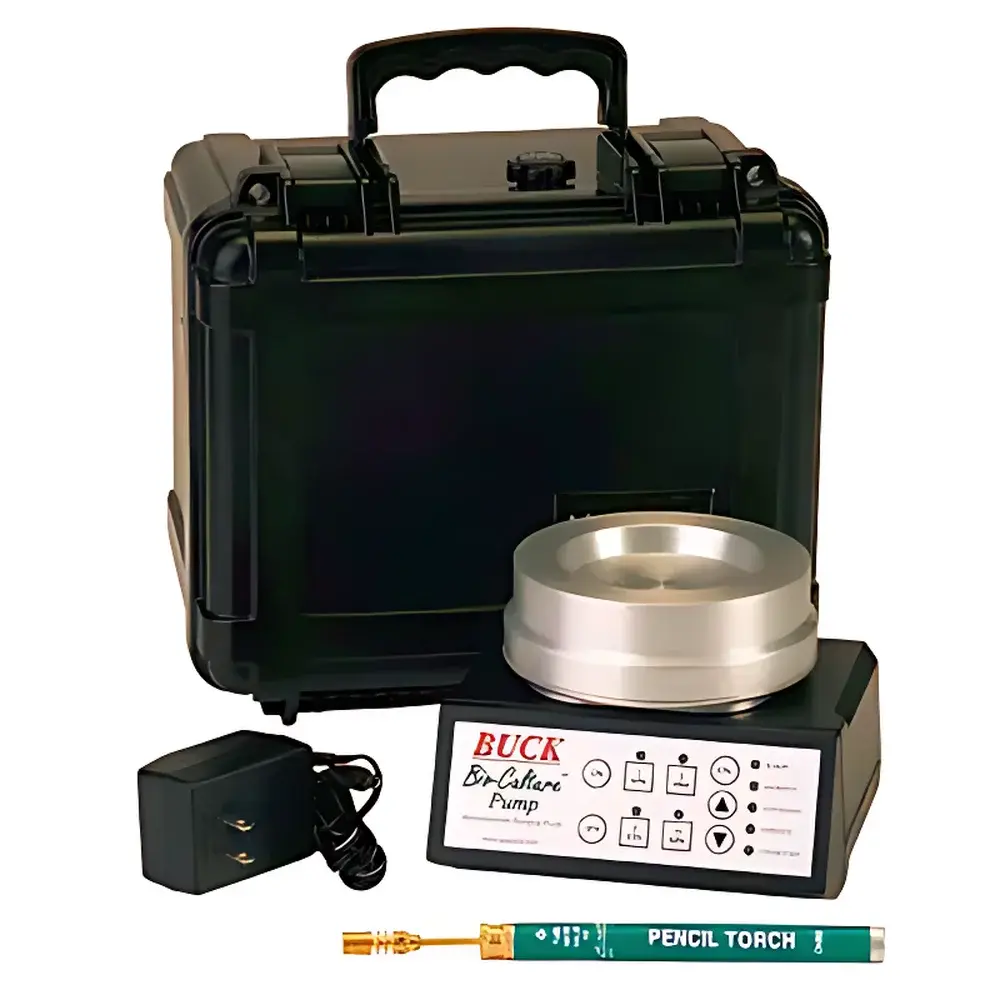
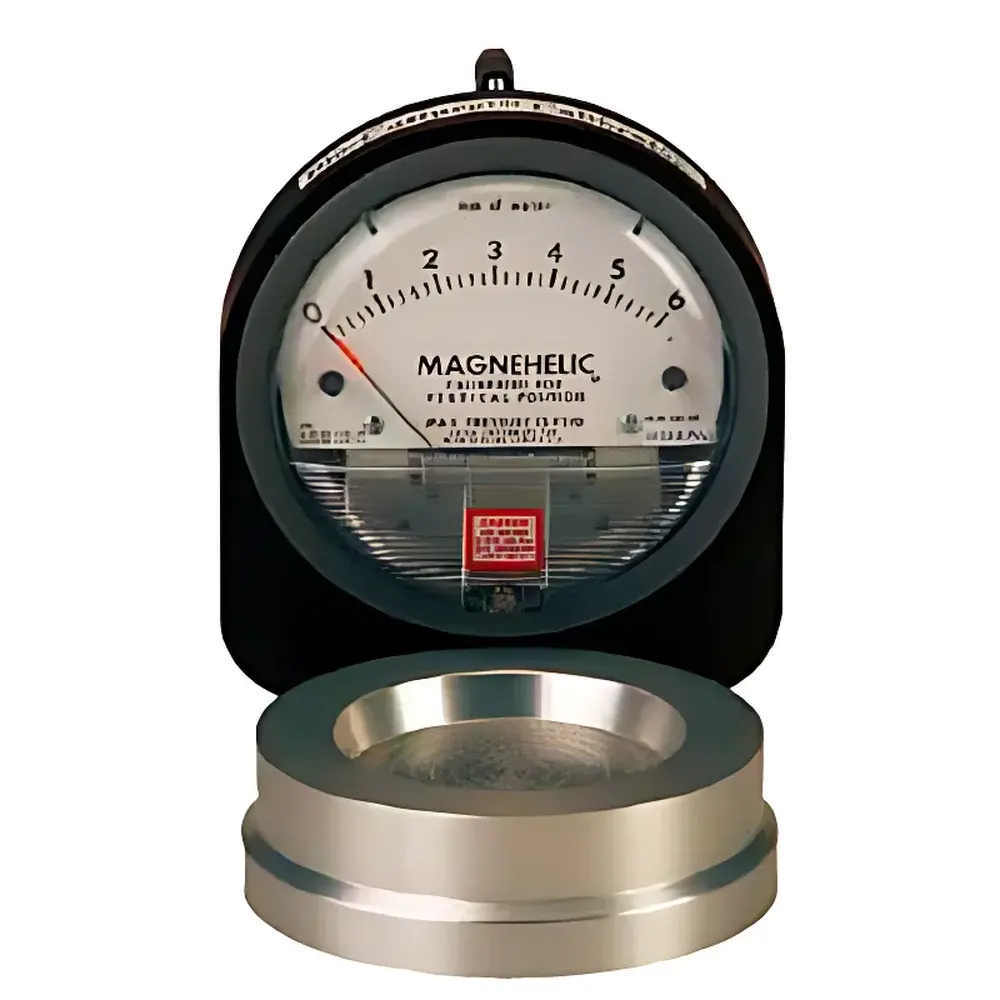
Zefon Bio-Culture Air Microbial Sampler
| Brand | Zefon |
|---|---|
| Origin | USA |
| Model | Bio-Culture |
| Sampling Principle | Impaction-Based Active Air Sampling |
| Flow Range | 30–120 LPM |
| Timer Options | 1, 2, 5, and 10 minutes |
| Petri Dish Compatibility | Standard 90 mm × 15 mm |
| Nozzle Array | 380 × 1 mm diameter orifices |
| Battery Life | 6–8 hours (rechargeable) |
| Mounting | Integrated 1/4"-20 tripod thread |
| Sterilization | Autoclavable sampling head |
| Calibration Option | NIST-traceable venturi flow calibrator (±1% accuracy) |
Overview
The Zefon Bio-Culture Air Microbial Sampler is a portable, impaction-based active air sampler engineered for quantitative collection of viable airborne microorganisms—including bacteria, yeasts, and molds—onto standard 90 mm × 15 mm agar plates. It operates on the principle of inertial impaction: aerosolized particles are drawn at controlled, laminar flow rates through a precisely engineered stainless-steel sampling head containing 380 uniformly distributed 1 mm orifices. Particles with sufficient aerodynamic mass (>0.8 µm aerodynamic diameter) impact onto the nutrient surface of the agar medium with high collection efficiency, preserving viability for subsequent colony-forming unit (CFU) enumeration under appropriate incubation conditions. Designed for compliance-critical environments—including cleanrooms (ISO 14644-1 Class 5–8), pharmaceutical manufacturing suites, hospital isolation rooms, and biosafety laboratories—the Bio-Culture delivers reproducible, traceable, and auditable microbial air monitoring data aligned with ISO 14698-1, EU GMP Annex 1, and USP .
Key Features
- Adjustable volumetric flow control from 30 to 120 LPM, maintained with high stability across variable backpressure and battery discharge cycles
- Autoclavable stainless-steel sampling head (up to 121°C, 15 psi, 20 min) ensuring full decontamination between sampling events without compromising orifice geometry or flow calibration
- Integrated programmable timer with four preset durations (1, 2, 5, and 10 minutes) and audible end-of-cycle alert; no external controller required
- Rechargeable lithium-ion battery providing 6–8 hours of continuous operation per charge—ideal for multi-point surveys in large facilities or remote locations
- Universal 1/4″-20 tripod mounting interface enabling vertical, horizontal, or angled orientation to match ISO 14644-1 sampling height requirements (e.g., 1 m above floor for Grade A/B zones)
- Compact form factor (17.8 cm H × 12.7 cm W × 12.7 cm D) and lightweight design (<1.8 kg) facilitating rapid deployment and routine environmental monitoring workflows
Sample Compatibility & Compliance
The Bio-Culture is validated for use with conventional tryptic soy agar (TSA), Sabouraud dextrose agar (SDA), and other microbiological media cast in standard 90 mm × 15 mm Petri dishes. Its impaction geometry and flow profile meet the performance criteria specified in ISO 14698-2 for viable particle samplers, including ≥90% collection efficiency for 1.0 µm polystyrene latex (PSL) particles at 100 LPM. All units ship with documentation supporting installation qualification (IQ) and operational qualification (OQ) protocols. Optional NIST-traceable venturi calibrators (model APB-708500) provide field-verifiable flow accuracy within ±1% of reading, satisfying FDA 21 CFR Part 11 audit trail requirements when paired with calibrated logbooks and electronic calibration records.
Software & Data Management
While the Bio-Culture operates as a standalone hardware device without embedded firmware or cloud connectivity, its deterministic mechanical design ensures full compatibility with laboratory information management systems (LIMS) and electronic batch record (EBR) platforms via manual data entry or barcode-assisted logging. Each sampling event is uniquely identifiable by operator ID, location tag, time stamp, duration, and flow setting—enabling structured metadata capture essential for trend analysis, CAPA investigations, and regulatory submissions. The optional calibration kit includes a certificate of conformance traceable to NIST Standard Reference Material (SRM) 1691, supporting GLP/GMP-compliant instrument qualification and periodic verification per ASTM E2994-22.
Applications
- Environmental monitoring (EM) programs in sterile manufacturing facilities per EU GMP Annex 1 and FDA guidance on aseptic processing
- Routine surveillance of HVAC system efficacy and filter integrity testing in critical process areas
- Investigation of microbial excursions and root cause analysis in cleanroom contamination events
- Validation and requalification of isolators, RABS, and laminar airflow workstations
- Research-grade airborne bioaerosol characterization in hospital epidemiology, infection control, and indoor air quality studies
- Compliance support for ISO 14698-1 risk-based microbial monitoring strategies
FAQ
What is the recommended maintenance schedule for the Bio-Culture sampling head?
The stainless-steel sampling head should be autoclaved after each use or at minimum daily in high-risk environments. Visual inspection for orifice blockage or corrosion is advised before each sampling session.
Can the Bio-Culture be used in explosive or hazardous atmospheres?
No. The device is not rated for Class I, Division 1 or ATEX/IECEx environments. It is intended for use in general laboratory and controlled non-hazardous industrial settings.
Is the flow calibration valid across all operating voltages (e.g., 110V vs. 230V)?
Yes. Flow performance is independent of input voltage; calibration is conducted at the sampling head inlet under defined pressure and temperature conditions per ISO 14698-2 Annex B.
Does Zefon provide IQ/OQ documentation templates?
Yes. Zefon supplies a comprehensive qualification toolkit—including test protocols, acceptance criteria, and blank execution records—compatible with common pharmaceutical validation frameworks.
How often should the NIST-traceable calibrator be recertified?
Annual recalibration against NIST SRM is recommended, or per internal quality policy—whichever occurs first—to maintain metrological traceability.







