
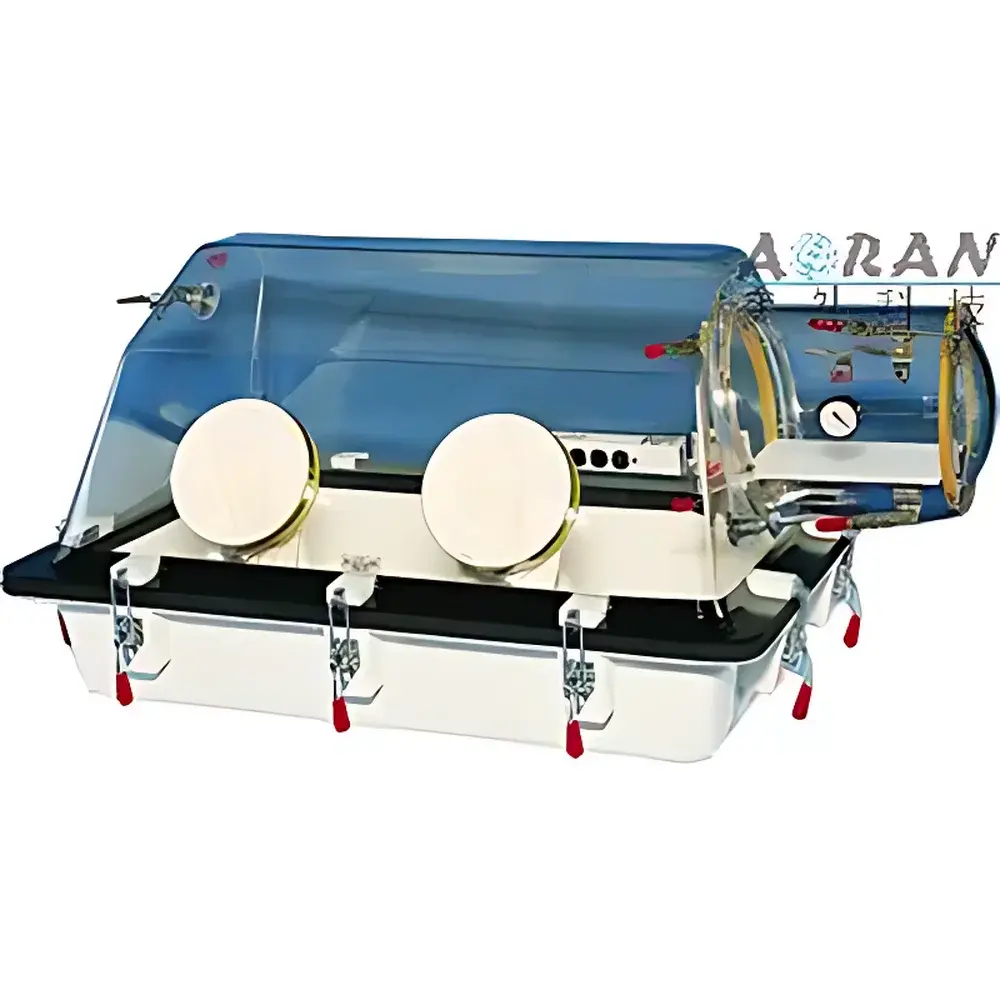
Plas-Labs 818-GB Basic Glove Box
| Brand | Plas-Labs |
|---|---|
| Origin | USA |
| Model | 818-GB |
| Cabinet Material | Acrylic (PMMA) |
| Dimensions (L×W×H) | 1040 × 712 × 660 mm |
| Cabinet Volume | 489 L |
| Transfer Chamber Volume | 19 L |
| Glove Ports | 1 pair |
| Glove Port Diameter | 165 mm |
| Transfer Chamber Dimensions (L×D) | 300 × 280 mm |
| External Dimensions (L×H×W) | 1400 × 685 × 890 mm |
| Leak Rate | Ultra-low, monolithic acrylic construction |
| Humidity Control | None |
| Oxygen Control | Dependent on purge gas purity |
| Temperature Control | None |
| Compliance | UL/CSA-certified power outlets (220 V, 60 Hz) |
| Accessories | Vacuum gauge (on transfer chamber), one pair of Hypalon gloves, four stainless-steel isolation valves, multi-outlet medical-grade power strip |
Overview
The Plas-Labs 818-GB Basic Glove Box is an entry-level inert-atmosphere workstation engineered for reliable physical isolation in research laboratories where moisture- and oxygen-sensitive procedures are routinely conducted. Designed using monolithic acrylic (polymethyl methacrylate, PMMA) construction, the system eliminates structural seams and gasket interfaces that commonly serve as leakage pathways—resulting in a demonstrably low intrinsic leak rate. Unlike modular or aluminum-framed glove boxes, the 818-GB relies on seamless, solvent-welded acrylic walls to maintain integrity under continuous positive or negative pressure differential during inert gas purging (e.g., N₂ or Ar). Its operational principle centers on passive atmospheric displacement: ambient air is evacuated via integrated vacuum-assisted transfer chamber cycling, followed by controlled backfilling with high-purity inert gas to achieve and sustain low-oxygen environments. While it lacks active humidity or oxygen monitoring and regulation, its robust sealing architecture makes it suitable for applications requiring only gross exclusion of ambient moisture and oxygen—such as preliminary handling of air-sensitive reagents, pre-weighing of hygroscopic compounds, or sterile sample staging prior to downstream processing.
Key Features
- Monolithic acrylic cabinet with solvent-welded joints—eliminates gasket-based failure points and enables rapid decontamination via non-abrasive cleaning agents.
- Gel-sealed top-and-bottom interface between main chamber and transfer chamber—utilizes non-silicone, non-microbial gel formulation compliant with ISO 14644-1 Class 5 cleanroom compatibility requirements.
- Optically clear 19-mm-thick acrylic viewing panels—minimizes visual distortion during manipulation; includes integrated analog hygrometer for qualitative humidity trend observation (non-calibrated, for situational awareness only).
- Dedicated transfer chamber (19 L volume) with dual-valve stainless-steel isolation system—equipped with vacuum gauge for real-time evacuation status verification and mechanical lockout to prevent simultaneous valve actuation.
- Medical-grade UL/CSA-listed power distribution module (220 V, 60 Hz, 15 A)—features multiple grounded outlets compatible with analytical balances, orbital shakers, peristaltic pumps, and other Class I laboratory equipment.
- Large-diameter (305 mm) circular side port with clamp-sealed valve—enables introduction of oversized instrumentation or substrates without compromising chamber integrity.
Sample Compatibility & Compliance
The 818-GB accommodates a broad range of solid, liquid, and powder samples typical in pharmaceutical preformulation, microbiological culture maintenance, electrochemical cell assembly, and nanomaterial synthesis workflows. Its acrylic construction is chemically resistant to alcohols, acetone, chlorinated solvents, and dilute aqueous acids/bases—though prolonged exposure to aromatic hydrocarbons or strong oxidizers is not recommended. The system complies with UL 61010-1 and CSA C22.2 No. 61010-1 for electrical safety in laboratory environments. All metallic components—including isolation valves and clamps—are electropolished 304 stainless steel, meeting ASTM A967 standards for corrosion resistance. While the unit itself does not include built-in sensors for regulatory-grade environmental logging, its architecture supports third-party integration of validated O₂/H₂O analyzers for GLP/GMP-aligned workflows requiring audit trails per FDA 21 CFR Part 11.
Software & Data Management
The Plas-Labs 818-GB operates as a hardware-only platform with no embedded microcontroller, firmware, or proprietary software interface. All operational parameters—including purge cycle timing, pressure differentials, and gas flow rates—are manually managed via external mass flow controllers, pressure regulators, and vacuum gauges. This design philosophy prioritizes mechanical reliability, serviceability, and long-term calibration stability over digital automation. Users retain full control over data acquisition by interfacing industry-standard sensors (e.g., Michell Easidew, Systech Illinois) directly into their existing LIMS or SCADA infrastructure. The absence of firmware mitigates cybersecurity risks and eliminates obsolescence concerns associated with discontinued software support cycles.
Applications
- Preparation and storage of moisture-sensitive catalysts (e.g., Grignard reagents, organolithium compounds) prior to reaction initiation.
- Handling of anaerobic bacterial cultures under nitrogen-enriched atmospheres for microbiome isolation studies.
- Staging of sterile surgical instruments or tissue-engineered constructs before transfer to biosafety cabinets or laminar flow hoods.
- Encapsulation of OLED precursor materials in low-humidity environments to prevent premature hydrolysis.
- Initial screening of battery electrode slurries under inert conditions prior to coin-cell fabrication.
- Controlled atmosphere conditioning of reference standards used in gravimetric calibration protocols (e.g., USP ).
FAQ
Does the 818-GB include automated oxygen or humidity control?
No. It is a passive isolation system requiring external gas supply and manual purge protocol execution.
Can the unit be upgraded with real-time O₂/H₂O sensors?
Yes—via optional feedthrough ports (not included standard); sensor integration must comply with Class I, Division 2 hazardous location requirements if used with flammable gases.
What is the maximum operating pressure differential the cabinet can withstand?
Rated for ±0.5 psi (±3.4 kPa) differential pressure; sustained operation above this threshold may compromise gel seal integrity.
Are replacement Hypalon gloves available through Plas-Labs?
Yes—standard 165-mm-diameter Hypalon gloves (PN: GB-GLOVE-HYP-165) are stocked and ship within 5 business days from the US distribution center.
Is the acrylic chamber resistant to gamma irradiation sterilization?
No—PMMA undergoes chain scission under ionizing radiation; autoclaving or ethylene oxide treatment is recommended for terminal sterilization of internal surfaces.



