
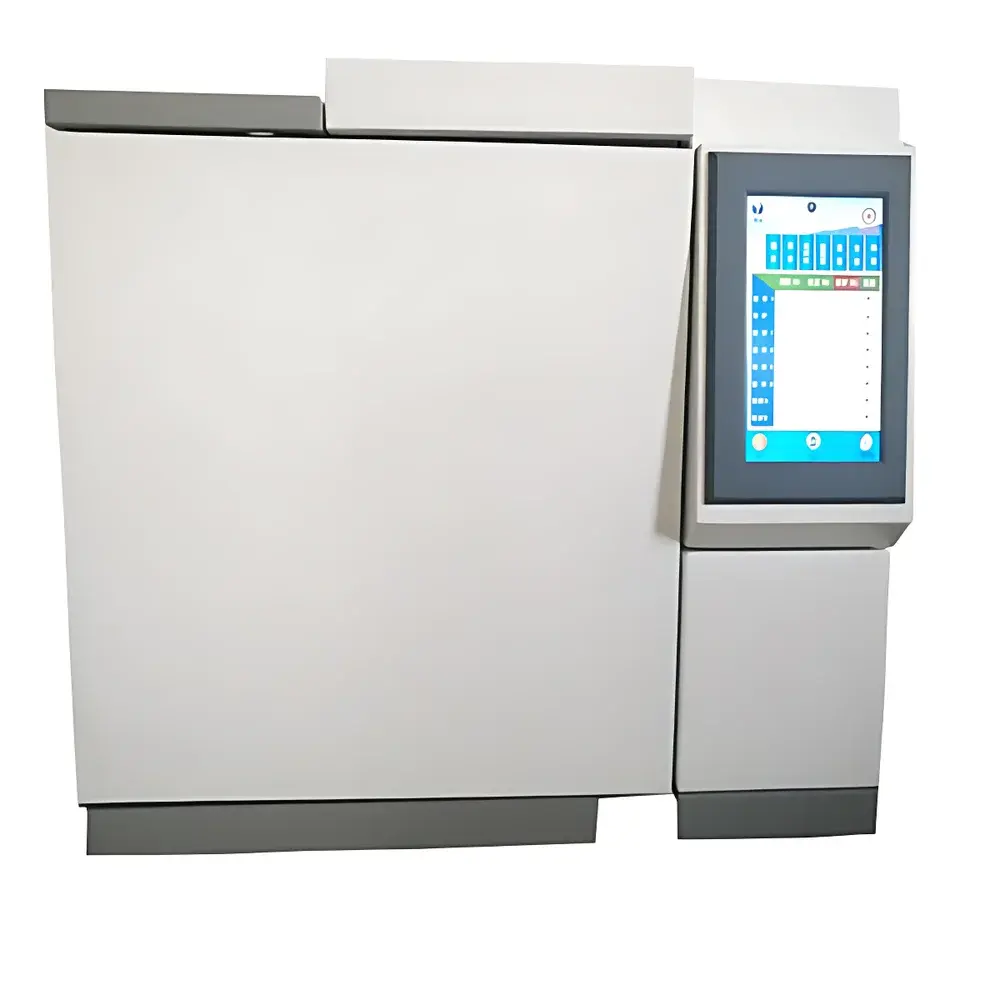
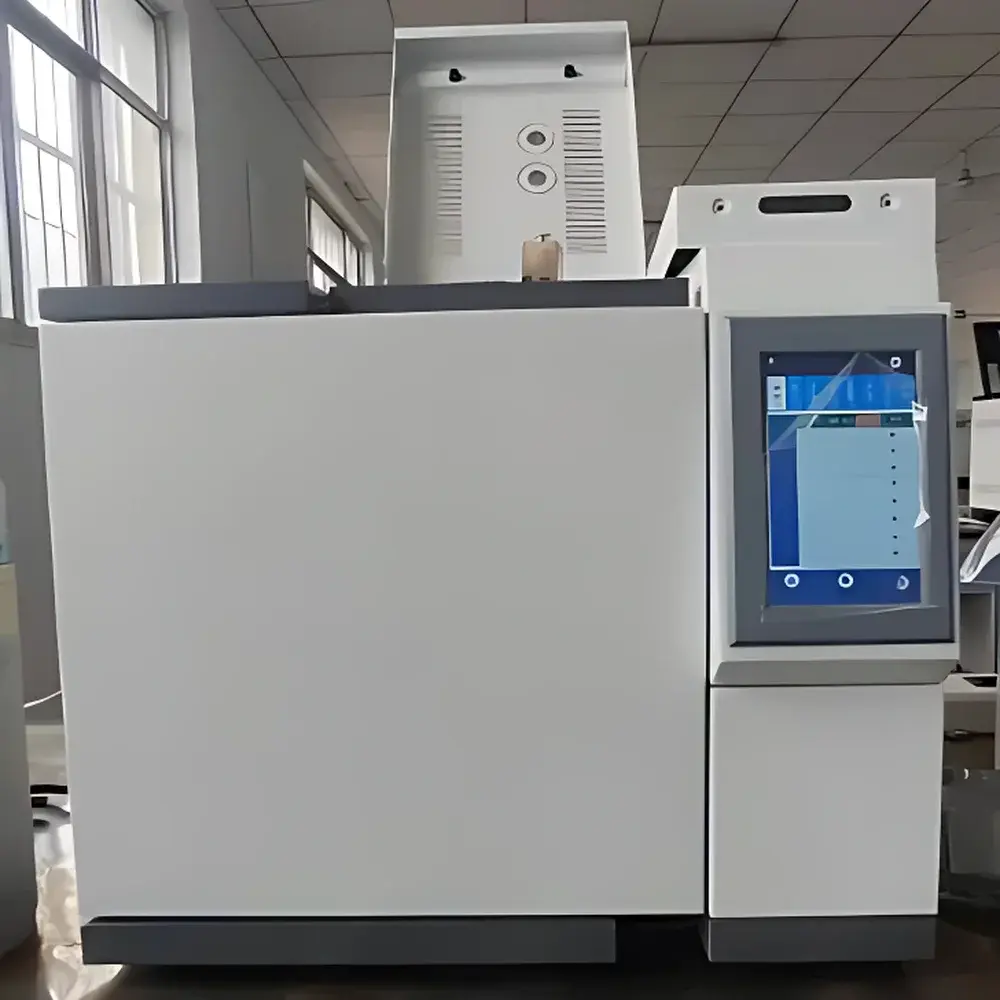
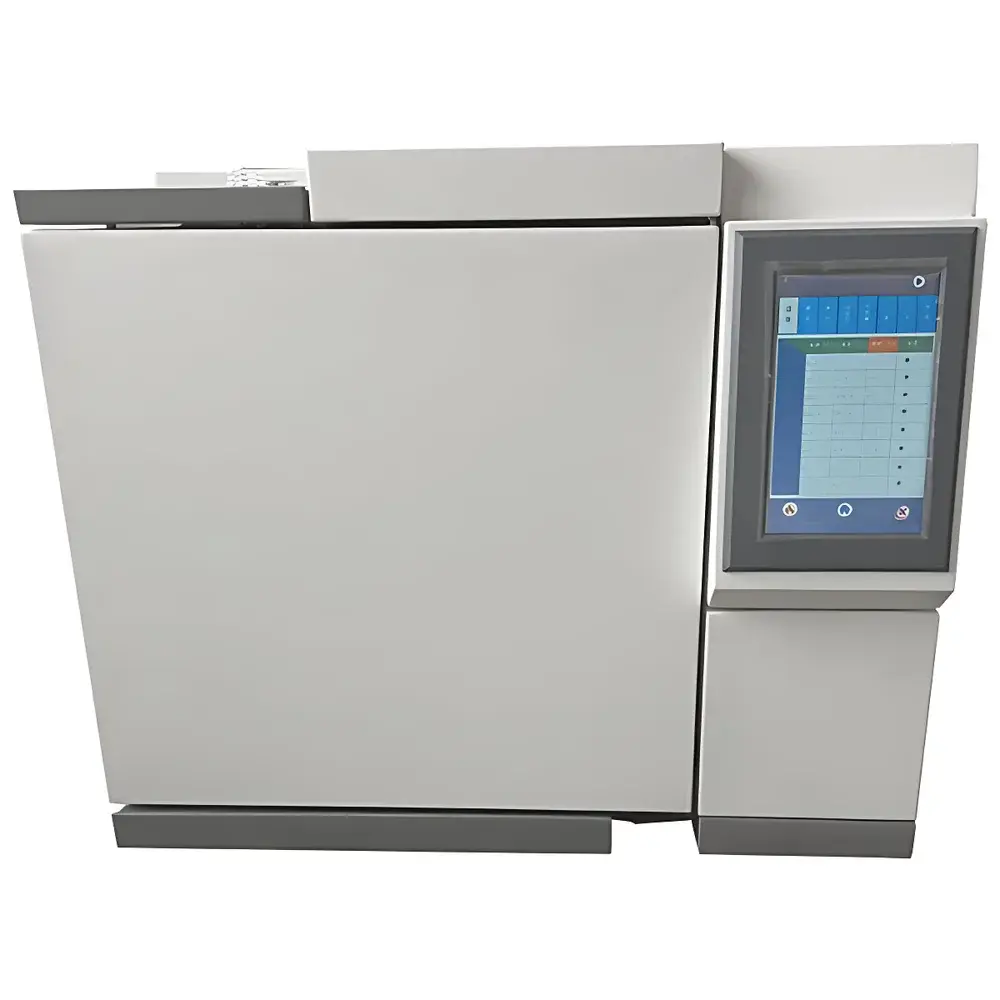
Jinpu GC-8890SD Transformer Oil Dissolved Gas Analysis (DGA) Gas Chromatograph
| Brand | Jinpu |
|---|---|
| Origin | Shandong, China |
| Model | GC-8890SD |
| Instrument Type | Laboratory Gas Chromatograph |
| Application Field | Power Industry Dedicated |
| Temperature Control Range | Ambient +6°C to 399°C (adjustable in 1°C increments) |
| Ramp Rate | 0–40°C/min (adjustable in 0.1°C increments) |
| Cooling Rate | ≤3 min (from 200°C to 100°C) |
| Carrier Gas Flow Range & Control | 0–1200 mL/min, 7-step programmable |
| Carrier Gas Pressure Range & Control | 0–970 kPa |
| Injector Maximum Operating Temperature | 450°C |
| Injector Pressure Setting Range | 0–970 kPa |
| Injector Total Flow Setting Range | 0–1200 mL/min |
Overview
The Jinpu GC-8890SD is a purpose-built gas chromatograph engineered for dissolved gas analysis (DGA) of transformer insulating oil in electric power systems. It operates on the principle of capillary or packed-column gas chromatography with dual-detector configuration—thermal conductivity detection (TCD) for permanent gases (H₂, O₂, N₂) and flame ionization detection (FID) for hydrocarbons (CH₄, C₂H₆, C₂H₄, C₂H₂) and CO/CO₂ (after nickel-catalyzed methanation). The system implements a single-injection, multi-valve switching flow path compliant with GB/T 7252–2001, DL/T 722–2000, and GB/T 17632–1998—key Chinese national and industry standards governing DGA methodology, calibration, reporting, and fault diagnosis in high-voltage equipment maintenance. Its architecture integrates temperature-stabilized oven zones, precision gas flow and pressure control, and real-time data acquisition optimized for trace-level quantification of nine critical fault gases at sub-ppm (v/v) sensitivity.
Key Features
- Dual-detection architecture: TCD (S ≥ 10,000 mV·mL/mg for n-hexadecane) and FID (detection limit ≤1×10⁻¹² g/s for n-C₁₆), enabling simultaneous, non-interfering quantification of H₂, O₂, N₂, CO, CO₂, CH₄, C₂H₆, C₂H₄, and C₂H₂ in one injection.
- Programmable temperature control: 7-stage oven ramping (0–40°C/min, 0.1°C resolution); column oven stability ≤±0.1°C over ±10°C ambient fluctuation; rapid cooling (≤3 min from 200°C to 100°C).
- Advanced gas control: Optional electronic pressure/flow control (EPC/EFC) supporting constant-flow, constant-pressure, and split modes; pressure accuracy ±0.01 kPa; flow resolution 0.01 sccm; 4-step pressure programming.
- Intelligent injection system: Dual-FID design separates low-concentration acetylene and ethylene from high-concentration CO/CO₂ via selective methanation and differential detection, eliminating co-elution artifacts.
- Human-machine interface: 5.7-inch color LCD display showing dual chromatograms in real time; optional resistive touch screen upgrade; embedded Ethernet (10/100 Mbit/s) for LAN deployment and remote instrument control.
- Robust hardware platform: 65 kg operational mass; 565 × 505 × 500 mm footprint; 2500 W max power draw; designed for continuous operation in ISO 17025-compliant electrical testing laboratories.
Sample Compatibility & Compliance
The GC-8890SD is validated for use with degassed transformer oil samples prepared per IEC 60567 and ASTM D3612 procedures. It supports headspace sampling via automatic or manual syringe injection and accommodates standard 1/8″ or 1/4″ packed columns (e.g., molecular sieve 5A + GDX-502 dual-column configuration) specified in GB/T 7252–2001. All operational parameters—including temperature programs, detector gains, valve timing, and integration settings—are configurable to meet GLP documentation requirements. Data integrity is maintained through audit-trail-capable software that logs user actions, method changes, and calibration events—fully compatible with FDA 21 CFR Part 11 readiness when deployed with qualified IT infrastructure.
Software & Data Management
The dedicated DGA workstation employs a 24-bit USB data acquisition card (input range ±2 V, resolution 1 µV) and supports automated peak identification, retention time locking, and multi-point calibration curve generation. It includes interference-triggered acquisition, device-specific sample registration (with asset ID tagging), and customizable report templates compliant with DL/T 722–2000 diagnostic formats. Diagnostic modules implement the Duval triangle, Rogers ratio, IEC 60599 key-gas method, and Doernenburg three-ratio analysis—all auto-calculated with visual trend overlays. Historical concentration tracking enables longitudinal analysis across multiple transformers, with graphical export (PNG, SVG) and CSV database export for LIMS integration.
Applications
This instrument is deployed in provincial power research institutes, substation maintenance centers, and third-party electrical testing laboratories for routine monitoring of dissolved gases in mineral oil-filled power transformers, reactors, and bushings. Typical use cases include early detection of thermal faults (>700°C), partial discharge, arcing, and cellulose insulation degradation. Its validated performance supports condition-based maintenance (CBM) strategies aligned with IEEE C57.104 and IEC 60599. The system also supports alternative insulating fluids (e.g., natural esters, synthetic esters) when paired with appropriate column chemistry and method validation per ASTM D8332.
FAQ
Does the GC-8890SD comply with international DGA standards such as IEC 60599?
Yes—the hardware configuration, column selection, detector sensitivity, and reporting outputs are fully aligned with IEC 60599 requirements when operated using validated methods referencing GB/T 7252–2001 and DL/T 722–2000.
Can the instrument be integrated into an existing laboratory network with centralized data management?
Yes—it features native Ethernet connectivity supporting up to 5000 instruments per subnet and interoperability with common LIMS platforms via CSV/Excel export and structured XML reports.
Is EPC/EFC functionality standard or optional?
Electronic pressure and flow control is an optional module; base configuration uses mechanical flow controllers with digital readout and software-setpoint regulation.
What is the minimum detectable concentration for acetylene (C₂H₂)?
≤0.1 ppm (v/v) under standard operating conditions with nickel methanator and FID, verified per GB/T 7252–2001 Annex B.
Does the system support 21 CFR Part 11 compliance for regulated environments?
The software provides full audit trail, electronic signature capability, and role-based access control—enabling Part 11 compliance when implemented with validated IT infrastructure and procedural controls.





