
SBI ID•Developer Kit Non-Invasive Culture Medium Monitoring System
| Origin | USA |
|---|---|
| Manufacturer Type | Distributor |
| Origin Category | Imported |
| Model | ID•Developer Kit |
| Price | USD 4,000 |
| Temperature Control Range & Accuracy | +5 °C to 50 °C |
Overview
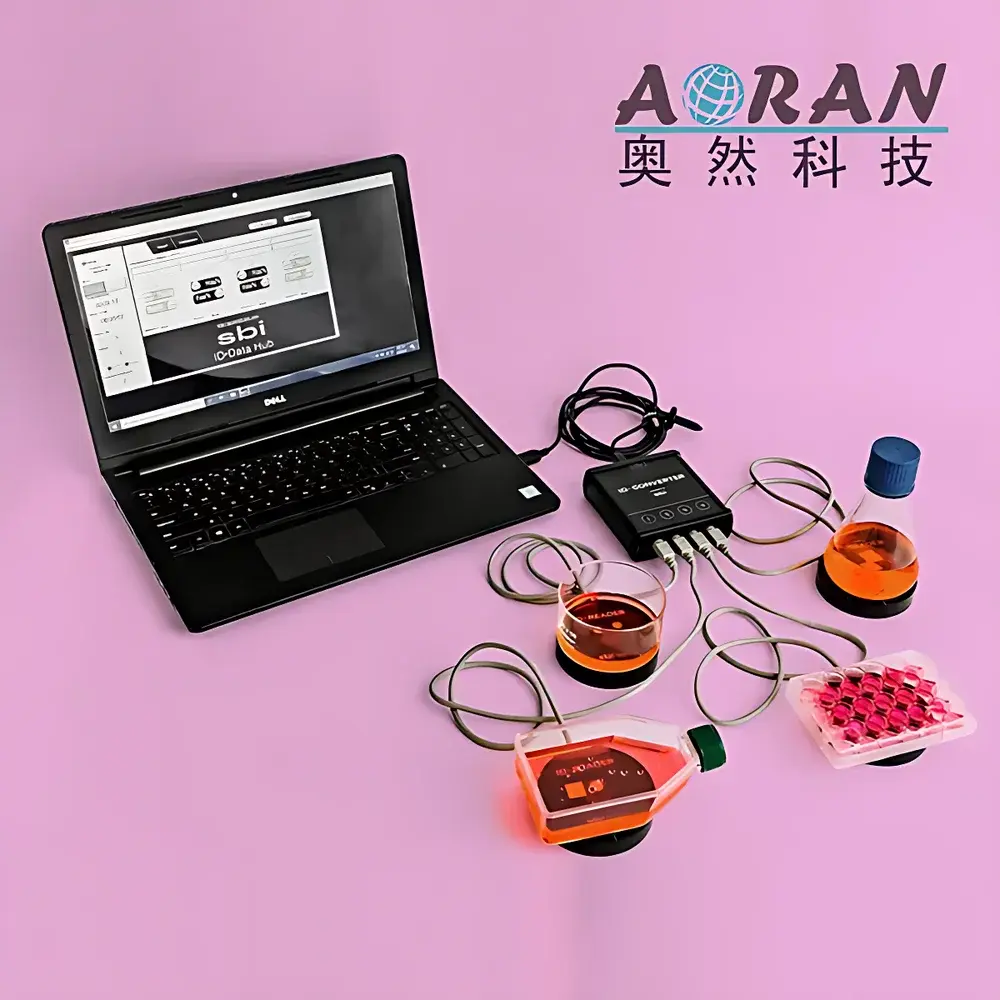
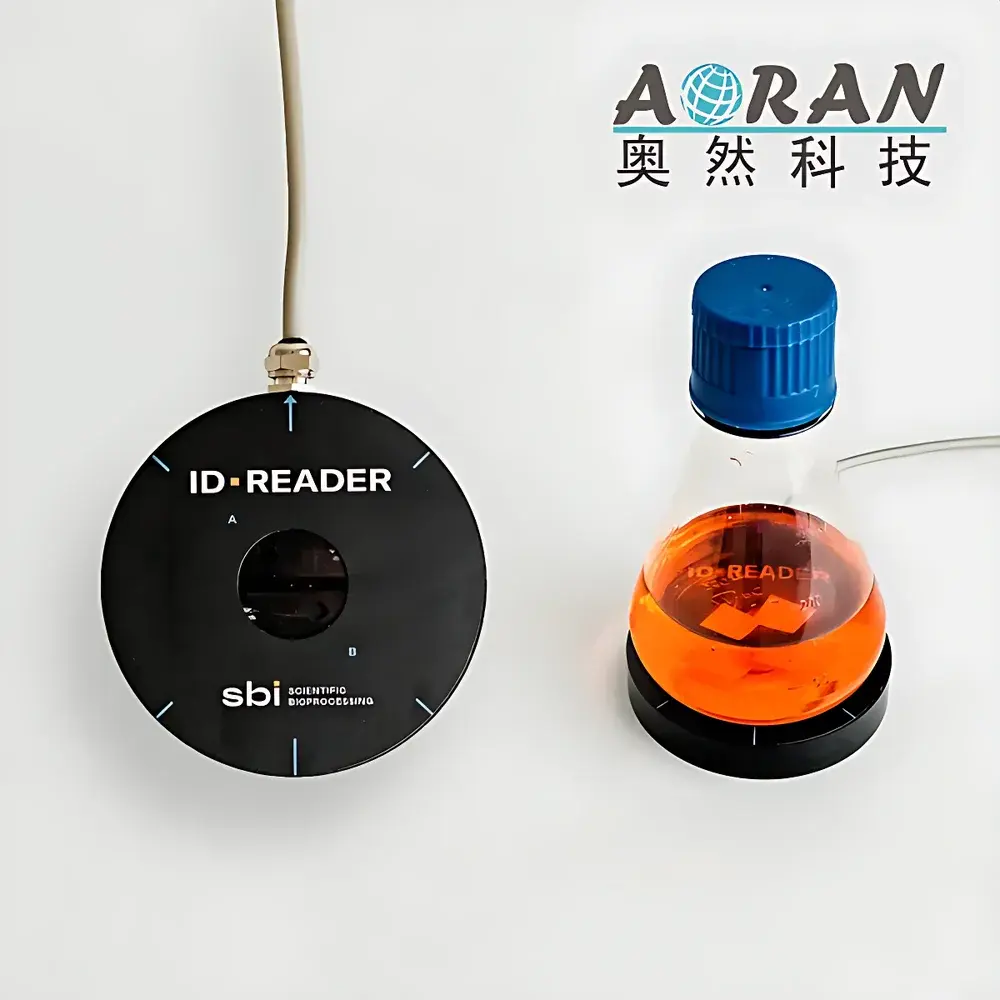
The SBI ID•Developer Kit is a non-invasive, optical-based culture monitoring system engineered for real-time, label-free measurement of pH and dissolved oxygen (DO) in bioprocess vessels without physical intrusion into the medium. Leveraging advanced fluorescence lifetime sensing technology, the system employs miniature, adhesive-backed optical sensors (ID•Sensor) that are affixed to the inner bottom surface of standard culture containers—including Petri dishes, multi-well plates, Erlenmeyer flasks, and microfluidic organ-on-chip devices. These sensors operate via oxygen-quenched and proton-sensitive fluorophores embedded in biocompatible hydrogel matrices. When excited by LED light from the cup-style ID•Reader, the emitted fluorescence decay kinetics are precisely measured to derive absolute pH (6.0–8.0) and DO (0–100% air saturation) values with high temporal resolution (as low as 10-second intervals). Designed for integration within CO2 incubators, tri-gas incubators, shakers, and bioreactors, the system enables continuous metabolic profiling under physiologically relevant conditions—supporting process understanding, critical quality attribute (CQA) definition, and regulatory-compliant cell culture process development per ICH Q5, Q8, and FDA Guidance for Industry on Process Validation.
Key Features
- Non-invasive, sterile-compatible sensing: Sensors remain external to the medium—eliminating contamination risk, shear stress, and calibration drift associated with immersed electrodes.
- Pre-calibrated, sterilizable sensors: Each ID•Sensor is factory-calibrated and validated for autoclaving (1×), ethylene oxide (EtO), or gamma irradiation; post-sterilization recalibration is supported via ID•Data Hub.
- Compact, modular architecture: Cup-style ID•Reader (Ø90 mm × H15 mm) features splash-resistant housing rated for humid incubator environments; up to four readers connect simultaneously to one ID•Converter for parallel vessel monitoring.
- Rapid response and high stability: DO response time <15 s; pH drift <0.005 units/day at pH 7; resolution ±0.01 pH unit and ±0.01% O2 at 21% air saturation.
- Flexible sensor format: Standard 10 × 10 mm square sensors; custom dimensions available upon request for specialized vessel geometries or microphysiological systems.
Sample Compatibility & Compliance
The ID•Developer Kit supports a broad range of static and dynamic culture formats, including adherent monolayer cultures (e.g., CHO, HEK293, iPSCs), suspension mammalian and microbial cultures (e.g., Sf9, E. coli), and 3D tissue models in perfused microfluidic chips. Sensor adhesion is compatible with polystyrene, glass, cyclic olefin copolymer (COC), and other optically transparent substrates. All hardware and software components comply with ISO 13485 design controls and support GLP/GMP-aligned documentation workflows. ID•Data Hub includes audit trail functionality compliant with FDA 21 CFR Part 11 requirements for electronic records and signatures. Sensor materials meet USP Class VI biocompatibility standards; sterilization protocols align with ISO 11135 (EtO), ISO 11137 (gamma), and ISO 17665 (steam).
Software & Data Management
ID•Data Hub is a Windows-native (7/8/10) application providing synchronized, timestamped visualization of pH and DO trends across multiple vessels. It supports real-time overlay of dual-parameter curves, configurable alarm thresholds, automated data export (CSV, Excel), and metadata tagging for experimental traceability. The software logs all user actions, calibration events, and sensor lifecycle data—including sterilization history and operational duration—to facilitate regulatory submissions. Raw fluorescence decay data is retained for retrospective reprocessing. Integration with LIMS and MES platforms is enabled via OPC UA and RESTful API extensions (available under enterprise licensing).
Applications
- Cell line development and clone selection through metabolic phenotyping
- Bioreactor process characterization and scale-down model validation
- Regenerative medicine: Real-time monitoring of stem cell differentiation and organoid maturation
- Vaccine and viral vector production: Optimization of harvest timing based on metabolic exhaustion signals
- ATMP manufacturing: CQA monitoring for CAR-T, MSC, and gene-edited cell therapies per EMA CAT guidelines
- QbD-driven media formulation studies using multivariate pH/DO response surfaces
FAQ
Can ID•Sensors be reused after sterilization?
Yes—sensors tolerate single-cycle autoclaving (121 °C, 15 psi, 15 min), EtO, or gamma irradiation; however, recalibration is required post-sterilization.
What is the maximum continuous monitoring duration per sensor?
45 days under continuous operation at 37 °C; intermittent use extends functional lifespan to several months.
Is the system compatible with hypoxic or anaerobic culture conditions?
Yes—DO measurement range spans 0–100% air saturation, enabling accurate quantification down to 0.1% O2 in nitrogen-purged or 5% CO2/5% O2/90% N2 atmospheres.
How does temperature variation affect measurement accuracy?
ID•Reader incorporates integrated temperature compensation; measurements remain valid across the full +5 °C to 50 °C operating range with built-in thermal drift correction.
Does the system require consumable calibration buffers during routine use?
No—factory calibration is stable for initial deployment; optional on-site recalibration uses two-point reference solutions (pH 6.0 and 7.4) and zero-oxygen and air-saturated standards.




