
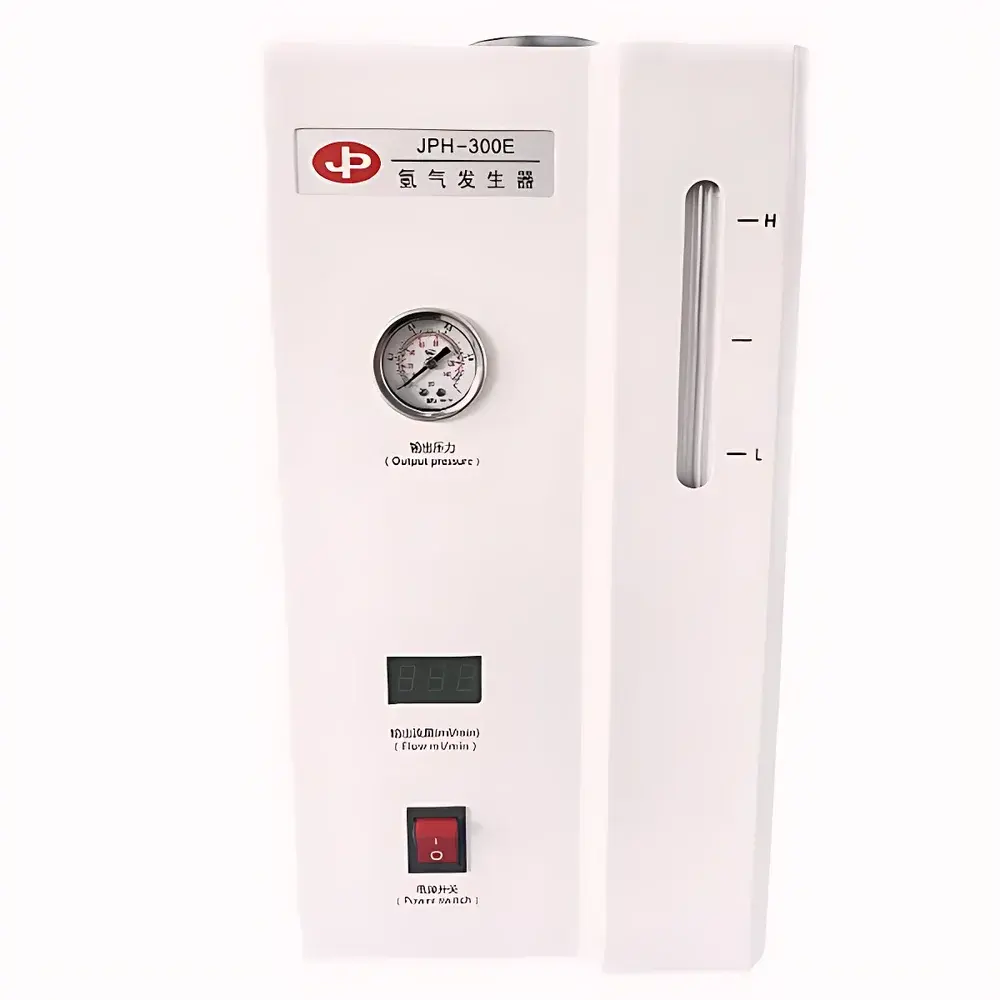
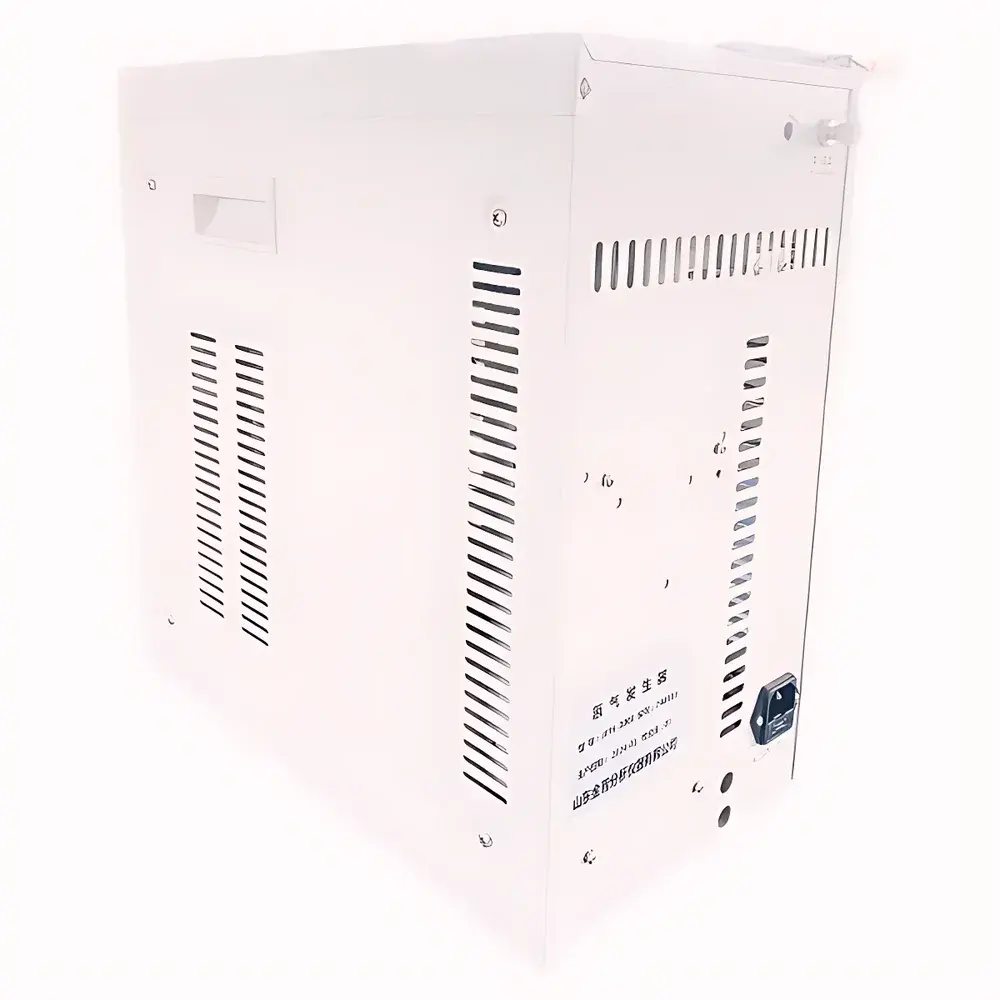
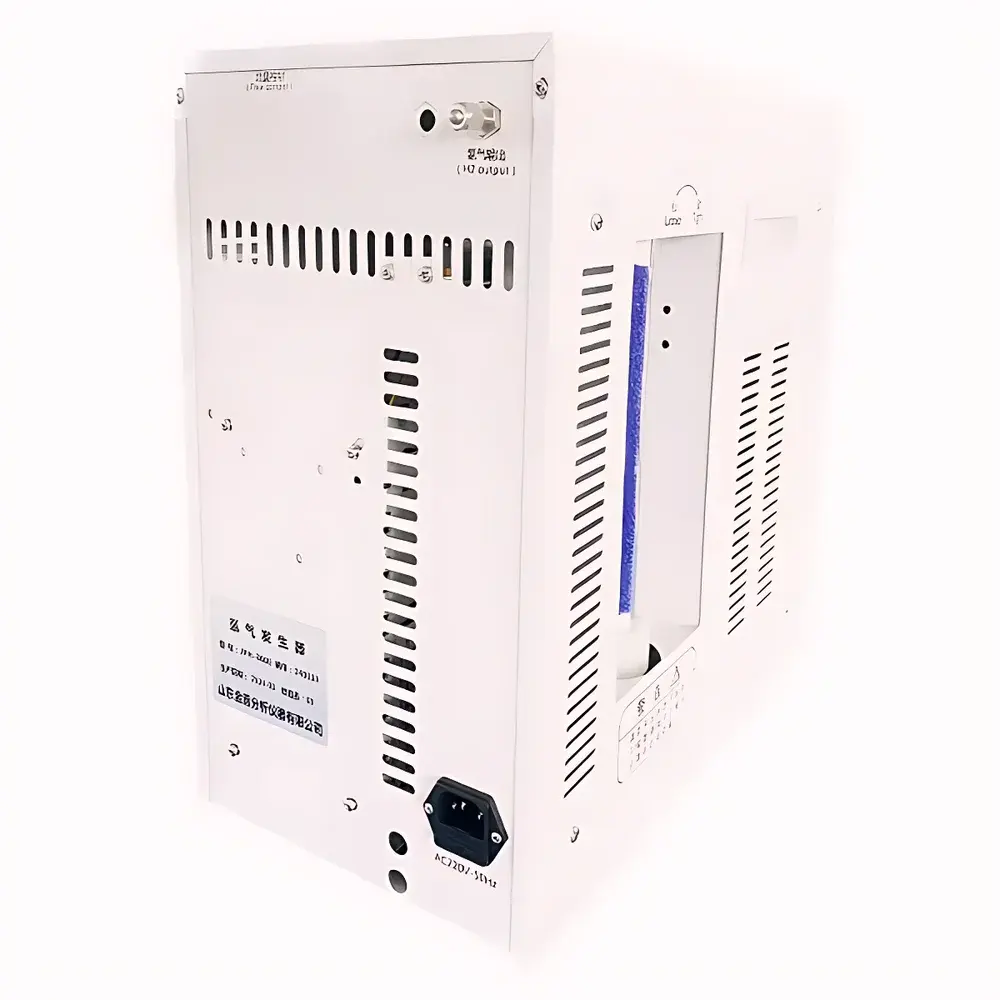
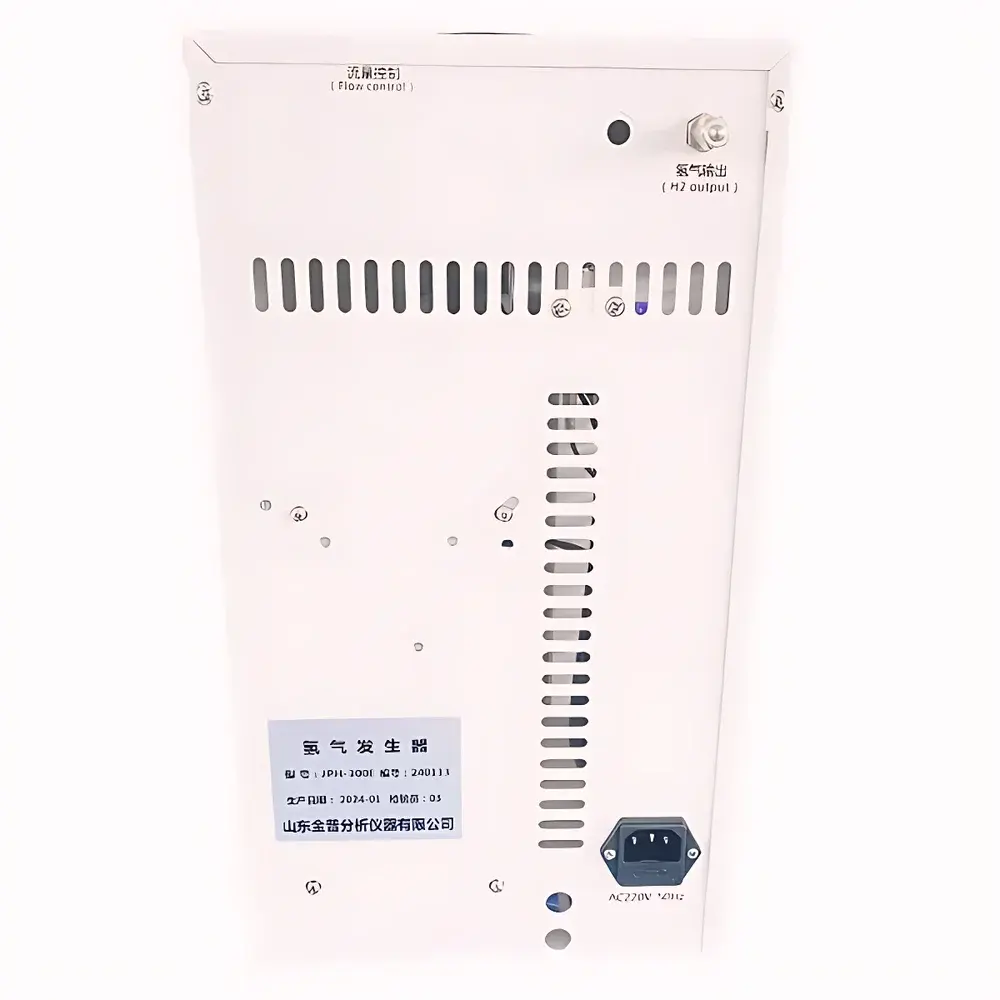
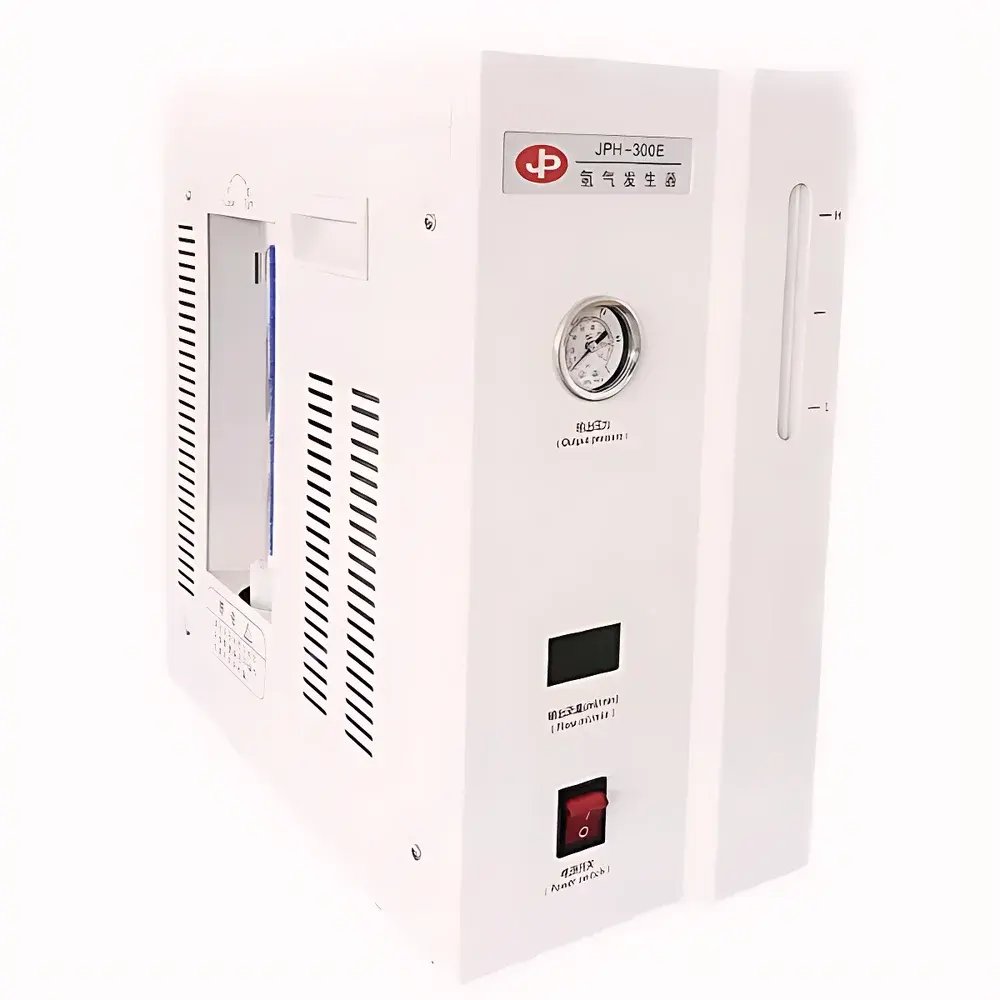
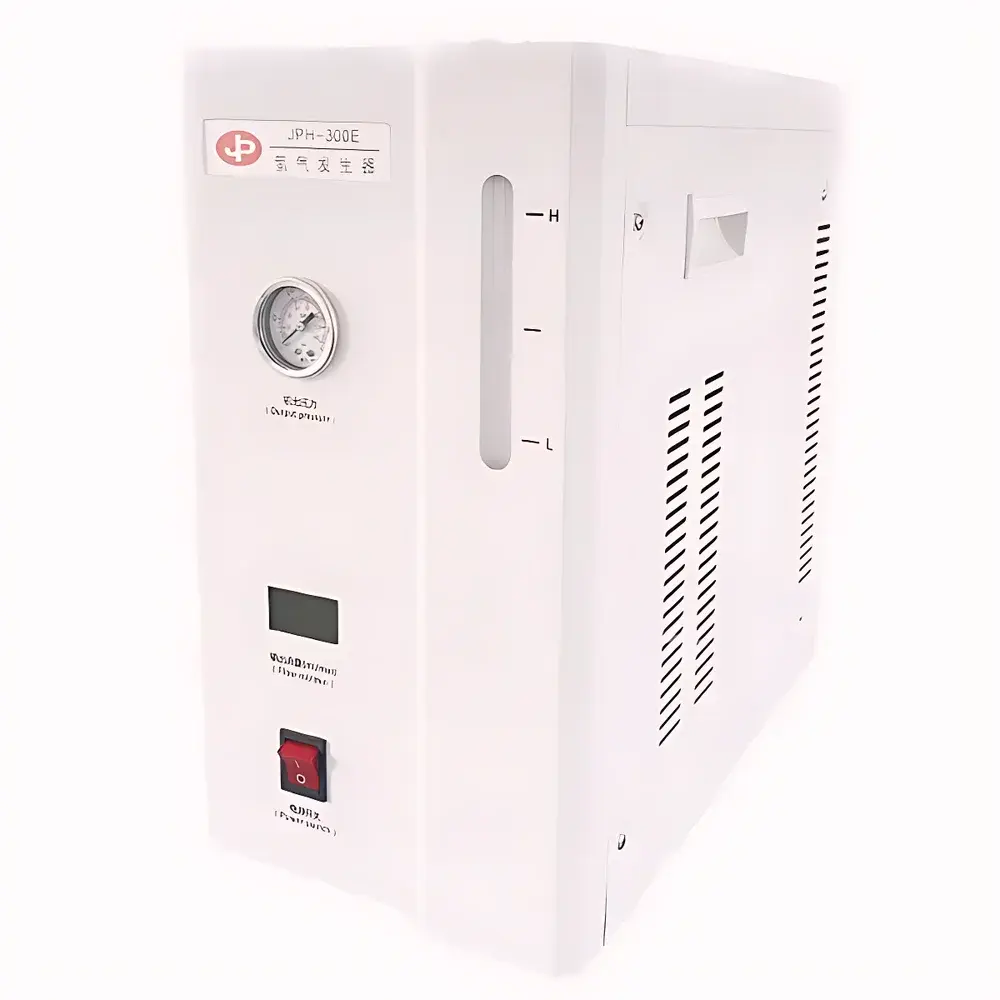
Jinpu JPH-300E Hydrogen Generator
| Brand | Jinpu |
|---|---|
| Origin | Shandong, China |
| Model | JPH-300E |
| Output Flow Rate | 0–300 mL/min |
| Output Pressure | 0–0.3 MPa |
| Hydrogen Purity | 99.999% |
| Power Consumption | 120 W |
| Dimensions (L×W×H) | 395 × 210 × 380 mm |
| Weight | 13 kg |
| Input Voltage | 220 V ±10%, 50/60 Hz |
Overview
The Jinpu JPH-300E Hydrogen Generator is a compact, membrane-based alkaline electrolysis system engineered for continuous, on-demand hydrogen supply in laboratory environments. It operates via the electrochemical decomposition of aqueous potassium hydroxide (KOH) solution—utilizing a catalyzed nickel electrode assembly and a proprietary diaphragm to separate gaseous products. This process yields high-purity hydrogen (≥99.999%) without requiring external gas cylinders or compressed gas infrastructure. Designed for integration with analytical instruments—including gas chromatographs (GC), GC–MS systems, and hydrogenation reactors—the JPH-300E delivers stable flow and pressure control across its full operational range (0–300 mL/min at up to 0.3 MPa), while maintaining low thermal load and minimal maintenance intervals. Its modular architecture incorporates real-time pressure regulation, integrated moisture removal, and fail-safe electronic monitoring to ensure compliance with standard laboratory safety protocols.
Key Features
- Alkaline electrolysis cell with large active electrode surface area and optimized thermal management, enabling sustained operation at low cell temperature (<45 °C) and enhanced long-term stability.
- Dual-stage purification system: integrated desiccant column followed by a palladium-doped molecular sieve filter, achieving residual oxygen <0.1 ppm and total hydrocarbon content <0.01 ppm.
- Intelligent pressure regulation with automatic cut-off at 0.32 MPa—preventing over-pressurization and eliminating risk of backflow through patented liquid return suppression design.
- Digital flow indication with analog calibration capability; linear response across entire 0–300 mL/min range, traceable to NIST-traceable reference standards.
- Low-power consumption architecture (120 W nominal), compliant with IEC 61000-3-2 harmonic emission limits; CE-marked power supply with reinforced insulation and double protection against electric shock.
- Front-panel LED indicators for power status, pressure readiness, electrolyte level, and fault conditions—enabling rapid visual diagnostics without software dependency.
Sample Compatibility & Compliance
The JPH-300E is compatible with all standard 1/8″ and 1/4″ stainless-steel or copper tubing interfaces used in analytical laboratories. It meets ISO 8573-1:2010 Class 1 air quality equivalency for hydrogen purity (≤0.1 ppm O₂, ≤0.01 ppm total hydrocarbons, dew point ≤−70 °C). While not certified to UL 2208 or EN 60079 for hazardous-area installation, it is suitable for use in general laboratory spaces meeting NFPA 55 and CGA G-13 ventilation guidelines. The unit supports GLP-compliant operation when paired with external audit-log-capable controllers and satisfies baseline requirements for USP , ICH Q5C, and ASTM D7522–19 for hydrogen purity verification in pharmaceutical and polymer analysis applications.
Software & Data Management
The JPH-300E operates as a standalone instrument with no embedded firmware or network interface. All operational parameters—including runtime hours, cumulative gas output, and fault event timestamps—are recorded mechanically via internal non-volatile EEPROM and accessible via front-panel display navigation. For laboratories requiring electronic data capture, optional analog 0–5 VDC output signals (pressure and flow) are available for connection to SCADA, LIMS, or chromatography data systems (CDS). When integrated with validated CDS platforms supporting FDA 21 CFR Part 11, these analog outputs may be configured to support electronic signatures, audit trails, and user-access controls—provided the host system implements appropriate security and validation protocols.
Applications
- Fuel gas source for flame ionization detectors (FID) and thermal conductivity detectors (TCD) in gas chromatography.
- Carrier and make-up gas for GC–MS systems where ultra-high hydrogen purity minimizes background noise and column degradation.
- Reducing atmosphere generation in catalytic testing rigs and material synthesis gloveboxes.
- Inert carrier replacement in hydrogenation reaction monitoring setups requiring precise stoichiometric control.
- Calibration gas generation for hydrogen sensors and leak detection equipment in metrology labs.
- On-site hydrogen supply for portable fuel cell test benches and electrochemical impedance spectroscopy (EIS) stations.
FAQ
What electrolyte is used, and how often does it require replacement?
The JPH-300E uses a 25–30% aqueous potassium hydroxide (KOH) solution. Under normal operation (8 h/day, 5 days/week), electrolyte replenishment is required every 6–8 months; full replacement is recommended annually or after 2,000 operating hours.
Is deionized water sufficient for electrolyte preparation?
Yes—resistivity ≥1 MΩ·cm (ASTM D1193 Type II) deionized water is required. Tap water or distilled water alone must not be used due to ionic contamination risks.
Can the generator be operated continuously for 24/7 duty cycles?
Yes—the system is rated for continuous operation under ambient temperatures of 15–35 °C and relative humidity ≤80% non-condensing, provided adequate ventilation is maintained per CGA G-13.
Does the unit include an internal hydrogen sensor for purity verification?
No—purity is ensured through validated electrolysis kinetics and dual-stage purification. Optional external hydrogen analyzers (e.g., thermal conductivity or laser-based sensors) may be connected downstream for real-time verification.
What safety certifications does the JPH-300E hold?
It carries CE marking per EMC Directive 2014/30/EU and Low Voltage Directive 2014/35/EU. It is not ATEX- or IECEx-certified and must not be installed in Zone 1 or Zone 2 classified areas without additional explosion-proof enclosures.



