
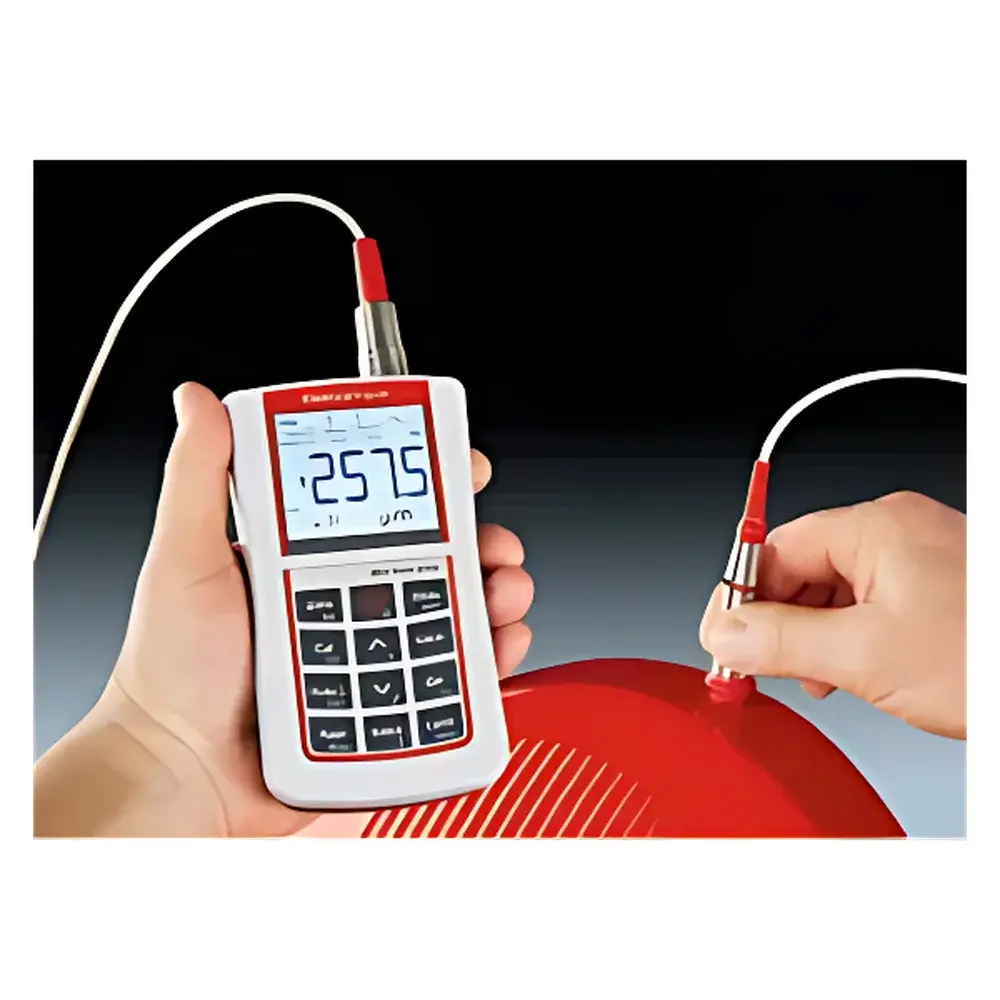
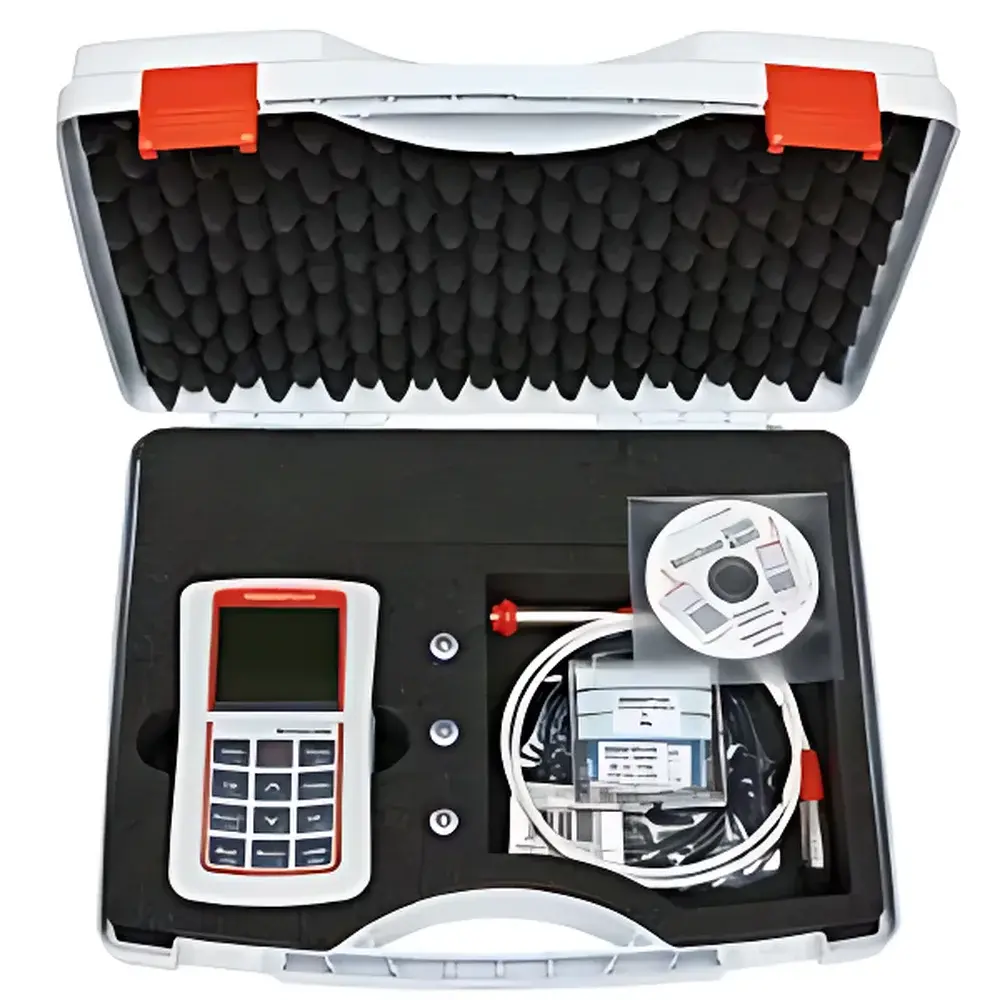
EPK MiniTest 4500 Electromagnetic Eddy Current & Magnetic Induction Coating Thickness Gauge
| Brand | EPK |
|---|---|
| Origin | Germany |
| Model | MiniTest 4500 |
| Measurement Principle | Dual-mode (magnetic induction for ferrous substrates |
| Storage Capacity | 2,000,000 readings |
| Batch Groups | >9,500 |
| Calibration Sets per Application | 99 |
| Statistical Functions per Batch | kvar, n, min, max, CP, CPK |
| Units | µm, mm, mils, inch, cm |
| Interface | USB + Bluetooth 4.0 |
| Optional I/O | Alarm output, footswitch trigger, RS-232 |
| Power | 3 × AA (LR06) |
| Standards Compliance | DIN EN ISO 1461, 2064, 2178, 2360, 2808, 3882 |
| Display | 53 × 46 mm backlit LCD |
| Operating Temp | –10 °C to +60 °C |
| Storage Temp | –20 °C to +70 °C |
| Dimensions/Weight | 153 × 89 × 36 mm / 320 g (incl. batteries) |
| rubber protective sleeve | +90 g |
| Ingress Protection | IP65 |
Overview
The EPK MiniTest 4500 is a dual-principle, handheld coating thickness gauge engineered for high-precision, non-destructive measurement of non-conductive coatings on conductive metallic substrates. It operates simultaneously via magnetic induction (for ferromagnetic base materials such as steel and iron) and electromagnetic eddy current (for non-ferrous conductive substrates including aluminum, copper, zinc, and stainless steel). This dual-sensor architecture enables seamless transition between substrate types without manual mode switching—critical for quality control in multi-material production environments. Designed and manufactured in Germany under stringent DIN EN ISO 9001-certified processes, the MiniTest 4500 delivers traceable accuracy aligned with international metrological standards including ISO 2178 (magnetic method), ISO 2360 (eddy current), and ASTM B499. Its compact, ergonomic form factor and IP65-rated enclosure ensure reliable field use in industrial settings ranging from automotive paint shops to aerospace component finishing lines.
Key Features
- Dual-sensor probe integration enabling automatic substrate recognition and real-time method selection—no user intervention required for ferrous vs. non-ferrous measurements
- High-resolution backlit LCD display (53 × 46 mm) with intuitive icon-based navigation and multilingual UI support (English, German, French, Spanish, Chinese)
- Onboard statistical engine supporting full batch-level analysis: mean, standard deviation (kvar), sample count (n), min/max, and process capability indices (CP, CPK)—calculated per stored group
- Configurable alarm thresholds with simultaneous visual (LED flash) and audible (buzzer) alerts when readings exceed user-defined upper/lower limits
- Comprehensive calibration flexibility: factory calibration, zero-point adjustment, up to four user-defined calibration points, and CTC (Calibration on Coating) functionality for applications where bare substrate access is unavailable
- Ruggedized housing with integrated rubber protective sleeve; meets IP65 rating for dust-tightness and resistance to low-pressure water jets
Sample Compatibility & Compliance
The MiniTest 4500 measures coatings—including paint, enamel, plastic, lacquer, chrome, zinc, and anodized layers—on metallic substrates with thickness ranges typically spanning 0–2,500 µm (dependent on probe type and material combination). It supports both flat and curved surfaces (minimum radius ≥ 5 mm), with automatic curvature compensation algorithms embedded in firmware. All measurement protocols adhere strictly to internationally recognized test standards: DIN EN ISO 2178 for magnetic induction on ferrous metals; DIN EN ISO 2360 for eddy current on non-ferrous metals; ISO 19840 for multi-layer organic coating systems on steel structures; and ASTM D7091 for field-use verification of protective coatings. Device firmware and calibration records are fully compatible with GLP/GMP documentation workflows and satisfy audit requirements under FDA 21 CFR Part 11 when used with validated data export procedures.
Software & Data Management
Data acquisition and reporting are supported via native USB and Bluetooth 4.0 connectivity, enabling direct transfer to Windows-based PCs or mobile devices running EPK’s proprietary WinFTM software (Windows 10/11 compatible). The instrument stores up to 2,000,000 individual readings across more than 9,500 independent batch groups. Each application can store up to 99 distinct calibration configurations, and each calibration set may be assigned to up to 99 unique batch groups—ideal for multi-product manufacturing facilities maintaining segregated QC databases. Export formats include CSV, XLSX, and PDF reports with embedded metadata (timestamp, operator ID, location tag, calibration ID). Optional RS-232 and alarm output interfaces allow integration into automated line monitoring systems and PLC-controlled inspection stations.
Applications
- Automotive OEM and Tier-1 suppliers performing final inspection of electrocoat, primer, basecoat, and clearcoat layers on stamped steel and aluminum body panels
- Aerospace maintenance, repair, and overhaul (MRO) facilities verifying anodized oxide layer thickness on aluminum airframes per AMS-A-8625
- Galvanizing plants validating zinc coating mass on structural steel per ASTM A123 and ISO 1461
- Powder coating lines monitoring film build consistency across conveyorized curing ovens
- Quality assurance labs conducting interlaboratory comparison studies under ISO/IEC 17025-accredited methods
- Third-party inspection agencies performing NDT audits for infrastructure projects governed by ISO 12944 corrosion protection specifications
FAQ
Does the MiniTest 4500 require annual recalibration?
No mandatory annual recalibration is specified by EPK; however, periodic verification against certified reference standards (e.g., NIST-traceable foils or step wedges) is recommended before each shift or at least daily in regulated environments.
Can it measure coatings on stainless steel?
Yes—provided the stainless steel grade exhibits sufficient magnetic permeability (e.g., ferritic or martensitic grades); austenitic stainless steels (e.g., 304, 316) require eddy current mode and yield reliable results down to ~0.5 µm resolution.
Is Bluetooth pairing secure and stable in industrial RF environments?
Bluetooth 4.0 implementation complies with FCC Part 15 and CE RED directives; adaptive frequency hopping minimizes interference from variable-frequency drives and welding equipment commonly found in manufacturing facilities.
What happens if the battery dies mid-measurement?
All unsaved readings in volatile memory are retained for up to 72 hours after power loss due to onboard capacitor-backed RAM; full data integrity is preserved upon battery replacement and restart.
Are calibration certificates included with shipment?
Each unit ships with a factory calibration certificate referencing traceable standards per ISO/IEC 17025-accredited laboratory practices; optional UKAS or DAkkS-certified certificates are available upon request.



