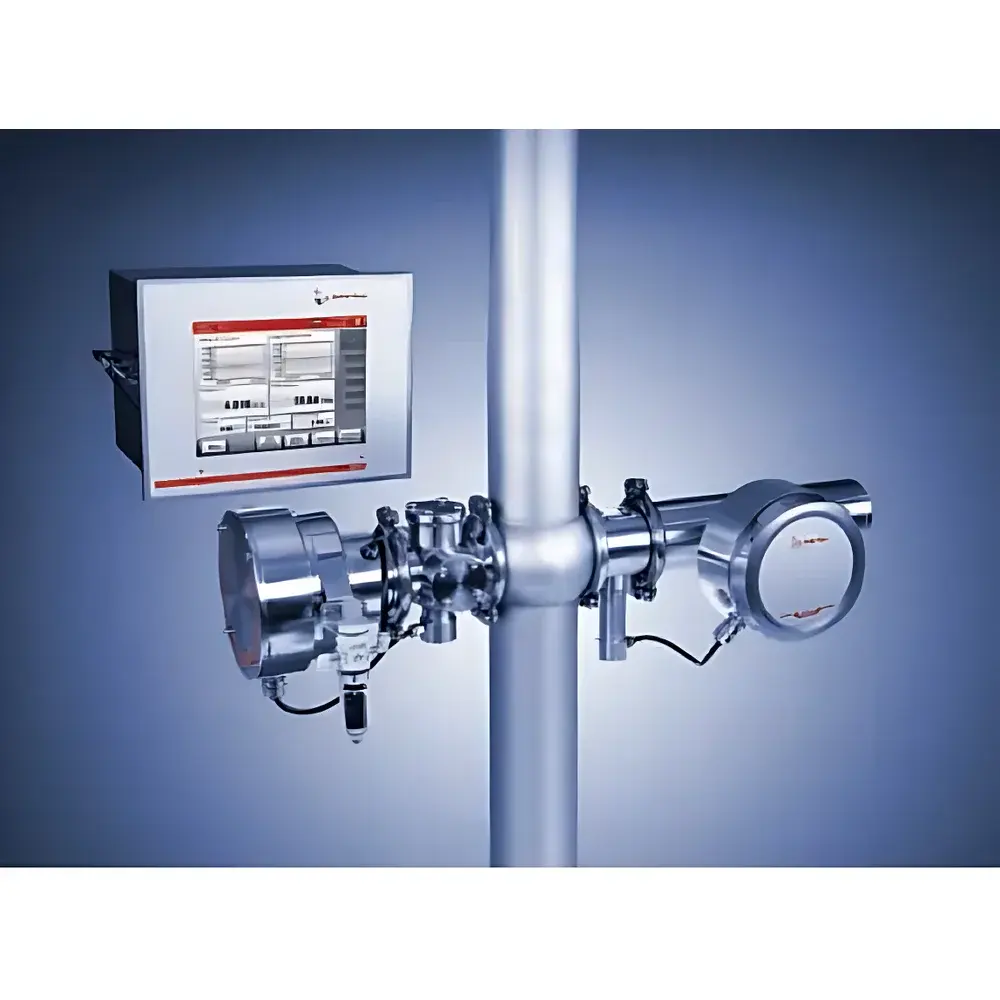
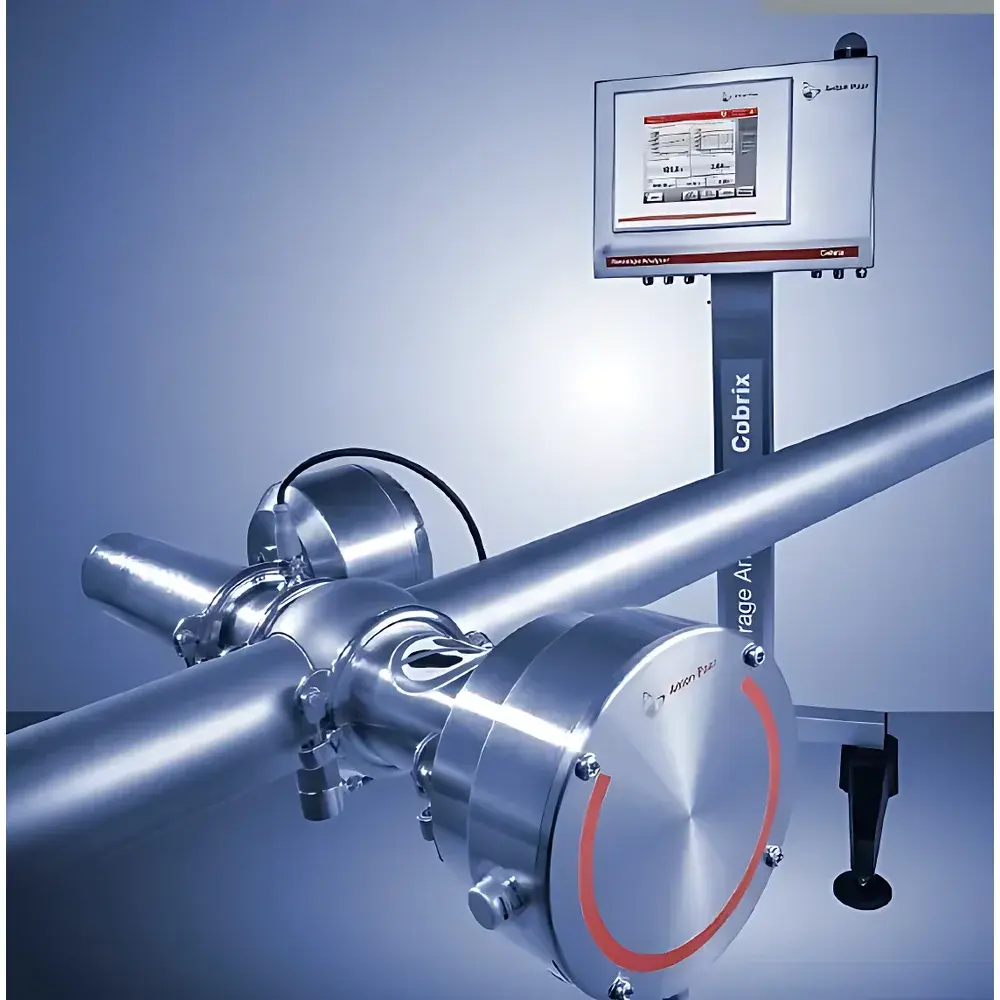
Anton Paar Beer Monitor 5501/5601 Online Brewery Process Analyzer
| Brand | Anton Paar |
|---|---|
| Origin | Austria |
| Manufacturer Type | Original Equipment Manufacturer (OEM) |
| Product Origin | Imported |
| Model | Beer Monitor 5501/5601 |
| Pricing | Available Upon Request |
| Alcohol Content Range | 0–10 % w/w (0–12 % v/v) |
| Real Extract | 0–100 °P |
| Original Extract | 0–300 °P |
| Accuracy (Alcohol) | ±0.02 % w/w (repeatability ±0.01 % w/w) |
| Accuracy (Real Extract) | ±0.02 °P (repeatability ±0.01 °P) |
| Accuracy (Original Extract) | ±0.04 °P (repeatability ±0.01 °P) |
| Operating Temperature | −25 to +125 °C |
Overview
The Anton Paar Beer Monitor 5501/5601 is a fully integrated, in-line process analyzer engineered for continuous, real-time measurement of critical quality parameters in beer and malt-based beverages throughout the brewing and packaging chain. Based on high-precision oscillating U-tube density measurement combined with integrated temperature-controlled refractometry and CO2 analysis via pressure-temperature-dissolved gas correlation, the system delivers traceable, metrologically robust data without sample diversion or dilution. Designed specifically for hygienic food-grade environments, it operates directly in pressurized, flowing product streams—enabling closed-loop control of alcohol content, real extract (°P), original extract (°P), apparent attenuation, degree of fermentation, and dissolved CO2. Its core function is not merely data acquisition but process assurance: by delivering certified measurements compliant with OIML R 22, ISO 20483, and ASBC Methods of Analysis, it supports regulatory alignment across global markets including EU, US, and APAC jurisdictions.
Key Features
- True in-line operation with sanitary tri-clamp (DIN 11851 / SMS 1144) process connection; no bypass loops or flow cells requiring recalibration
- Simultaneous multi-parameter output: alcohol (% w/w and % v/v), real extract, original extract, CO2 (g/L), apparent extract, and fermentation degree—all derived from primary density and refractive index measurements
- Integrated Pt100 Class A temperature sensor with active thermal stabilization, ensuring measurement stability across dynamic process conditions (−25 to +125 °C operating range)
- Self-diagnostic firmware with automated zero-point verification during CIP/SIP cycles; full recovery within <90 seconds post-clean without manual intervention
- Hygienic stainless-steel (1.4435 / SS316L) wetted parts, FDA-compliant elastomers, and IP69K-rated housing suitable for washdown environments
- No consumables, no reagents, no moving parts in contact with product—engineered for >10-year operational lifetime with zero scheduled maintenance
Sample Compatibility & Compliance
The Beer Monitor 5501/5601 is validated for direct measurement of filtered and unfiltered lagers, ales, stouts, low-alcohol (<0.5 % ABV), non-alcoholic, and alcohol-free beers, as well as wort, high-gravity blends, and post-dilution mixes. It meets EN 15712:2009 for brewery instrumentation and supports compliance with GMP, HACCP, and ISO 22000 frameworks. Measurement uncertainty budgets are documented per ISO/IEC 17025:2017 requirements, and audit trails—including calibration events, cleaning logs, and parameter deviations—are timestamped and exportable in CSV or XML format for FDA 21 CFR Part 11–compliant environments. All firmware updates are digitally signed and version-controlled to ensure traceability during regulatory inspections.
Software & Data Management
The instrument interfaces natively with industry-standard SCADA, DCS, and MES platforms via Modbus TCP, PROFIBUS DP, or OPC UA (UA PubSub over MQTT). The embedded web server provides secure HTTPS access for real-time visualization, alarm configuration (e.g., alcohol drift >±0.03 % w/w), and historical trend review over configurable time windows (1 min to 30 days). Data export supports batch-level reporting aligned with BRCGS and SQF Code Edition 9 requirements. Optional integration with Anton Paar’s mPMS (Measurement Process Management System) enables centralized fleet monitoring, predictive diagnostics, and automated certificate generation (including ISO/IEC 17025-compliant calibration reports).
Applications
- Front-end wort blending control to achieve target original gravity prior to fermentation
- Real-time alcohol monitoring during high-gravity brewing and water dilution (HG/D) processes
- Final product verification pre-packaging—ensuring label compliance for ABV and carbohydrate claims
- CO2 stabilization control in bright beer tanks to prevent under- or over-carbonation
- QC release testing replacement in high-volume packaging lines where offline lab analysis introduces latency
- Process deviation root-cause analysis using synchronized multi-parameter correlation (e.g., alcohol vs. CO2 vs. temperature)
FAQ
Does the Beer Monitor require periodic recalibration?
No—its oscillating U-tube density sensor is drift-free by design and certified for long-term stability. Only annual verification against NIST-traceable standards is recommended for audit readiness.
Can it be installed in sterile filtration or pasteurization lines?
Yes—the 5501/5601 variant features SIP-rated electronics and withstands steam sterilization up to 140 °C for 30 minutes; the 5601 includes additional pressure rating (up to 10 bar) for hot-side applications.
Is CO2 measurement independent of beer composition?
Yes—CO2 concentration is calculated using the thermodynamic Henry’s law model with real-time density and temperature inputs, eliminating interference from ethanol, hop oils, or dextrins.
How does it handle particulates or yeast carryover?
The flow path geometry and ultrasonic anti-fouling mode (standard on both models) prevent sediment accumulation; validation data confirms stable performance at turbidity levels up to 400 NTU.
What cybersecurity protocols are implemented?
TLS 1.2 encryption, role-based user access control (admin/operator/viewer), disabled default credentials, and firmware signature verification meet IEC 62443-3-3 SL2 requirements for industrial control systems.