
Anton Paar HTR 7000 Desktop Fully Automated Rheometer
| Brand | Anton Paar |
|---|---|
| Origin | Austria |
| Manufacturer Type | Original Equipment Manufacturer (OEM) |
| Origin Category | Imported |
| Model | HTR 7000 |
| Instrument Type | Rotational Rheometer |
| Sample Viscosity Range | Low-viscosity, paste-like, and dispersible solid samples |
| Drive Motor | Brushless DC Permanent Magnet Synchronous EC Motor |
| Maximum Torque | 230 mNm |
| Minimum Torque (Rotational Mode) | 1 nNm |
| Minimum Torque (Oscillatory Mode) | 0.05 nNm |
| Maximum Angular Velocity | 314 rad/s |
| Maximum Angular Frequency | 628 rad/s |
| Normal Force Range | 0.005 N to 50 N |
| Dimensions (W × D × H) | Approx. 1650 mm × 1500 mm × 1980 mm |
| Weight (Net) | ~1000 kg |
| Power Supply | 400 V, 16 A, 50/60 Hz |
| Interface | Ethernet |
| Pneumatic Interface | Compressed air |
| Fluid Interface | Solvent supply & waste drainage |
| Safety | Integrated safety door, ventilation monitoring, optional explosion-proof configuration |
Overview
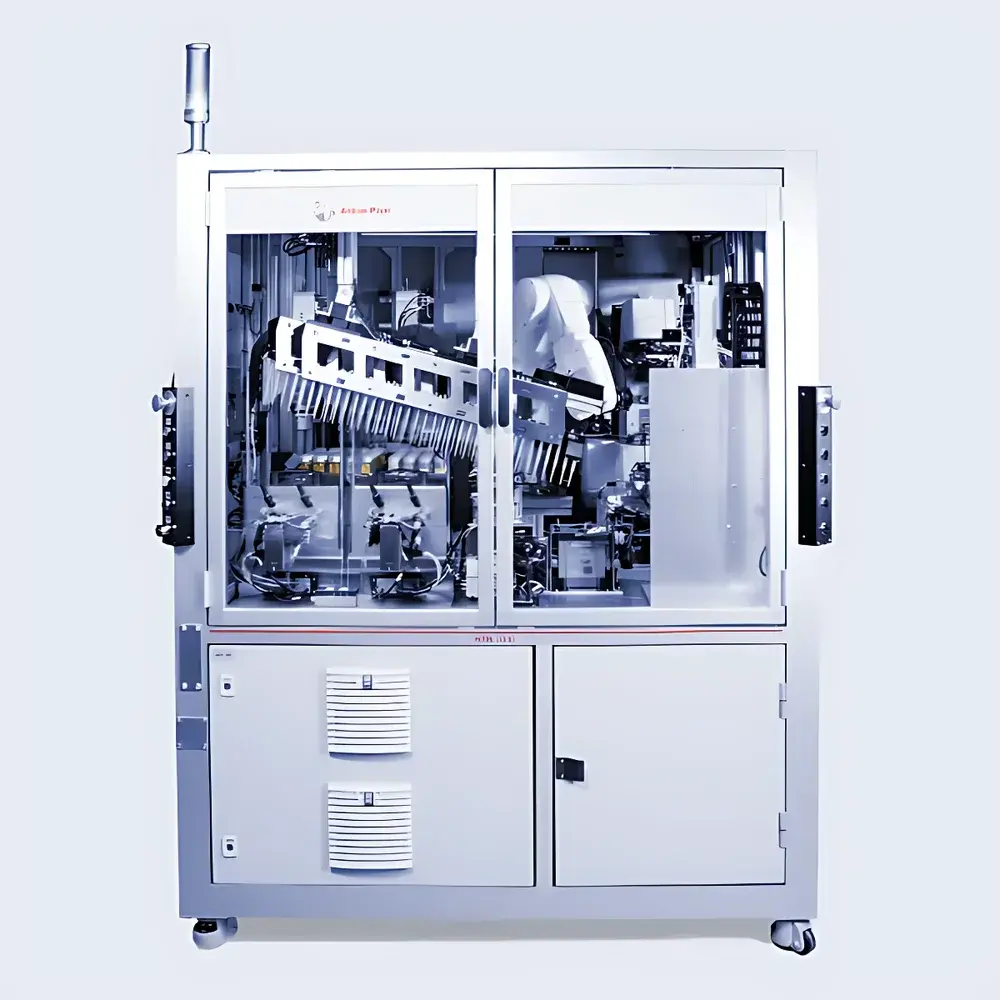
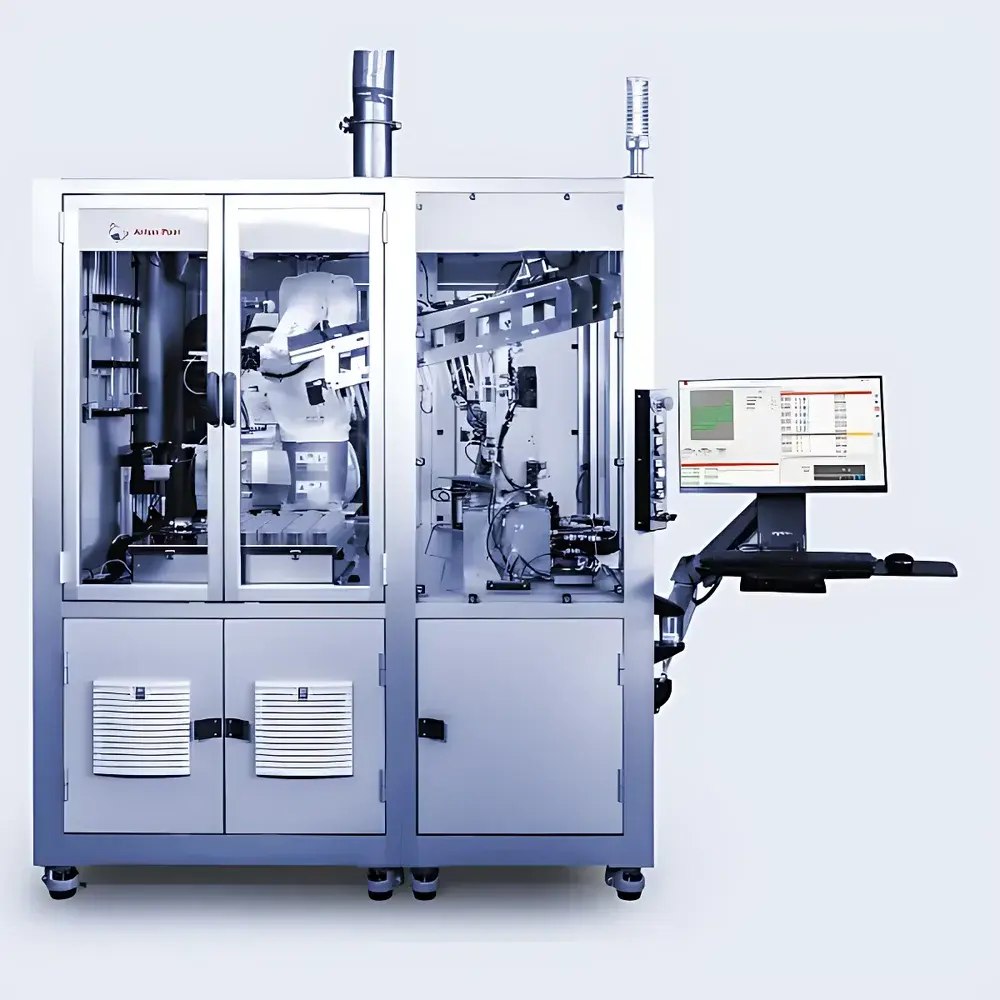
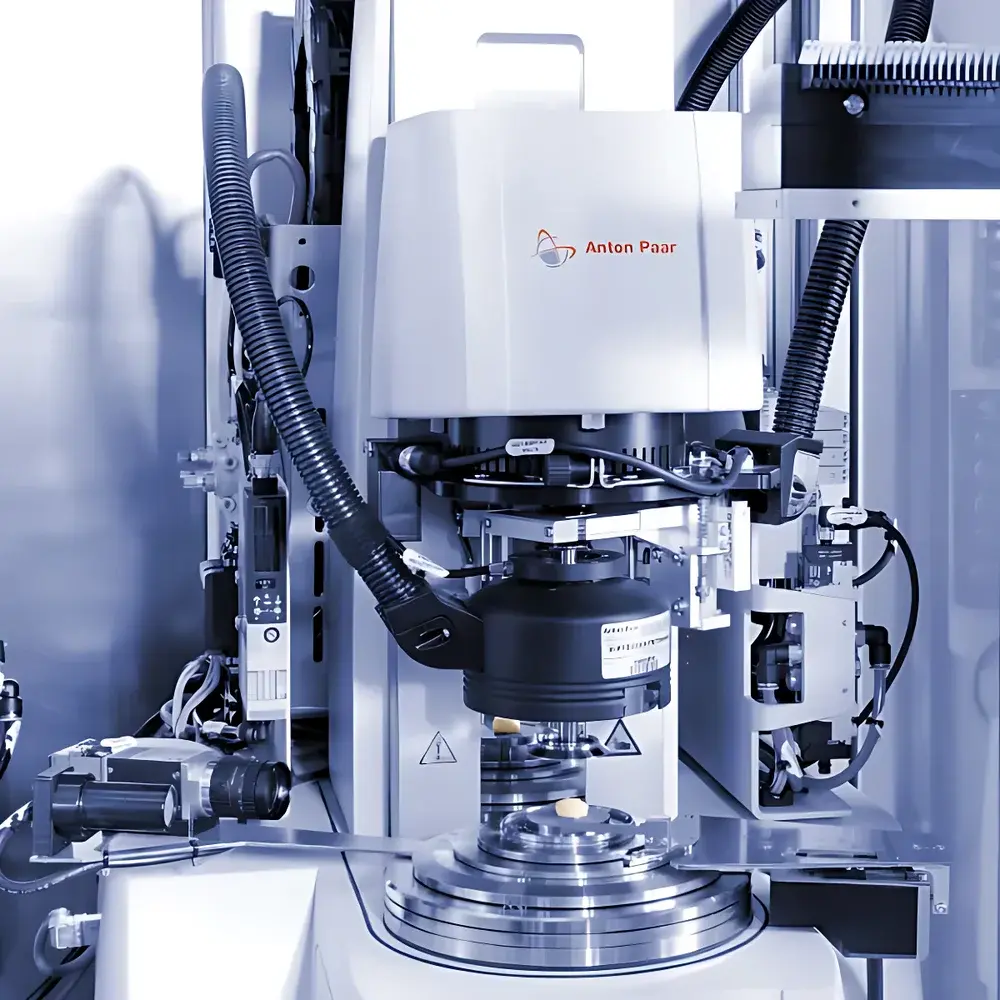
The Anton Paar HTR 7000 is a fully automated, benchtop rotational rheometer engineered for high-throughput, traceable rheological characterization of low-viscosity liquids, pastes, and dispersible solids. It operates on the principle of controlled shear deformation—applying precise torque and angular displacement via a high-resolution EC motor—and measures material response in both steady-state (flow curves, yield stress) and dynamic oscillatory modes (G′, G″, tan δ). Unlike conventional rheometers requiring manual sample loading, gap setting, cleaning, and calibration, the HTR 7000 integrates robotic sample handling, automatic geometry alignment, in situ solvent dispensing, and programmable thermal conditioning—enabling end-to-end automation of up to 60 samples per unattended run. Its architecture conforms to ISO 17025–aligned laboratory practices and supports regulatory compliance workflows under GLP and GMP frameworks, particularly where audit trails, electronic signatures, and instrument qualification (IQ/OQ/PQ) are mandatory.
Key Features
- Fully automated workflow covering sample introduction, geometry positioning, temperature equilibration, measurement execution (rotational & oscillatory), post-measurement cleaning, and data export—eliminating up to 14 manual intervention steps.
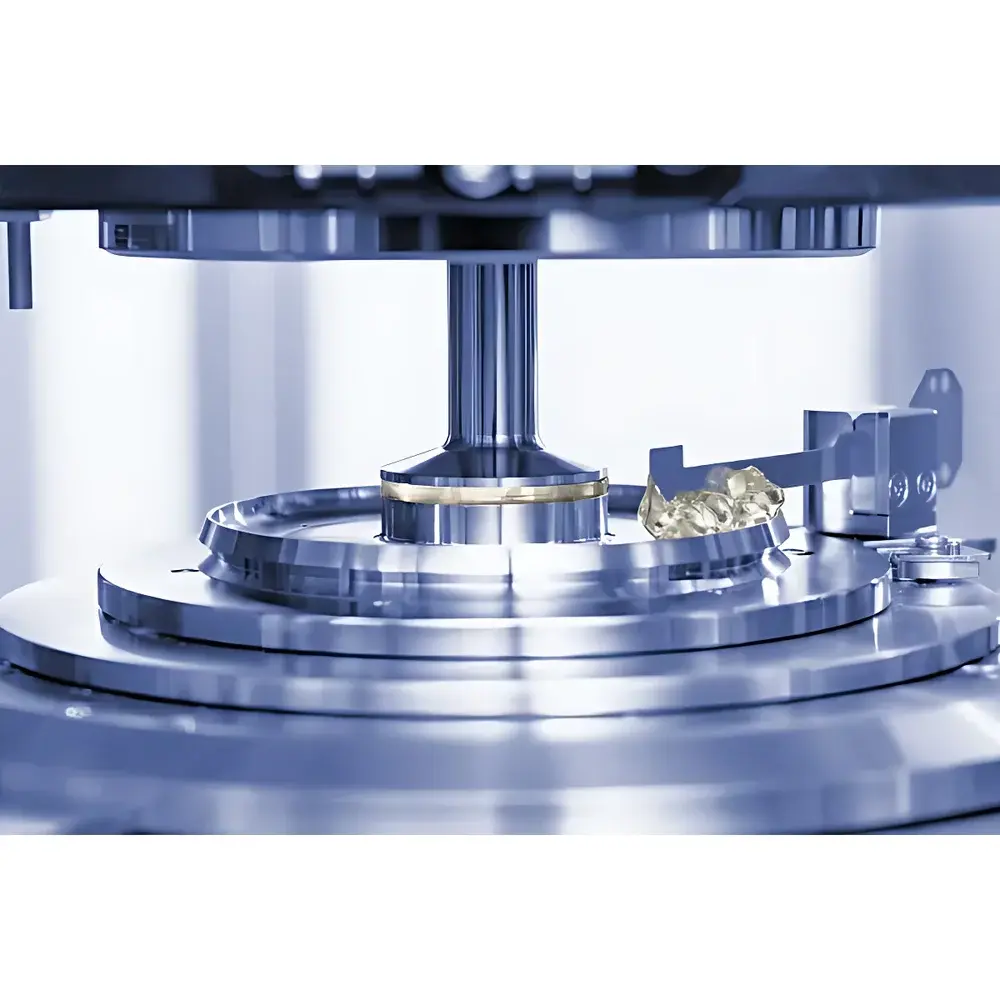
- Modular platform supporting interchangeable measuring geometries (cone-plate and parallel-plate), integrated cleaning station, multi-position sample racks, and optional thermostatted sample holders for precise temperature control (−10 °C to 120 °C with external circulator).
- High-fidelity torque sensing with a maximum torque of 230 mNm and resolution down to 0.05 nNm in oscillatory mode—ensuring sensitivity across wide dynamic ranges from dilute polymer solutions to structured gels.
- EC motor-driven system delivering exceptional speed stability (±0.01% of setpoint) and minimal thermal drift, critical for long-duration time-sweep or frequency-sweep experiments.
- Integrated safety architecture including interlocked safety door, real-time ventilation status monitoring, and optional ATEX-certified explosion-proof configuration for volatile or hazardous sample environments.
- Comprehensive traceability: barcode-based sample identification, synchronized image capture before/after measurement, and full digital log of all instrument parameters, environmental conditions, and operator actions.
Sample Compatibility & Compliance
The HTR 7000 accommodates heterogeneous sample forms—including aqueous and organic low-viscosity fluids, shear-thinning suspensions, thermally sensitive pastes, and re-dispersible powders—using standardized cone-plate (CP) or parallel-plate (PP) geometries. All sample handling protocols comply with ASTM D4402 (viscosity of asphalt binders), ISO 3219 (rheological properties of polymer solutions), and USP (rheology of pharmaceutical gels and semisolids). The system supports 21 CFR Part 11–compliant electronic records through optional software modules, enabling secure user authentication, immutable audit trails, and electronic signature capability. LIMS integration via ASTM E1578-compliant interfaces ensures seamless data routing into enterprise quality management systems.
Software & Data Management
Controlled by Anton Paar’s RheoCompass™ software, the HTR 7000 provides a unified interface for method development, sequence programming, real-time visualization, and post-processing. Method templates adhere to SOP-defined measurement sequences, with version-controlled protocol libraries accessible across networked instruments. Raw data files (RDF format) include embedded metadata (geometry ID, temperature history, torque calibration coefficients) and are exportable in CSV, TXT, or HDF5 formats for third-party analysis (e.g., Python-based ML pipelines). The system logs every action—including failed clean cycles, out-of-tolerance temperature deviations, or geometry misalignment events—into a tamper-evident database compliant with ALCOA+ principles (Attributable, Legible, Contemporaneous, Original, Accurate, Complete, Consistent, Enduring, Available).
Applications
- Pharmaceutical formulation: Characterization of injectable hydrogels, ophthalmic solutions, and topical emulsions under physiologically relevant shear rates and temperatures.
- Food R&D: Quantification of yield behavior in plant-based dairy alternatives, texture profiling of sauces and dressings, and shelf-life prediction via time-dependent thixotropy analysis.
- Coatings & inks: Evaluation of sag resistance, leveling performance, and pigment dispersion stability using controlled stress ramps and recovery tests.
- Materials science: High-throughput screening of nanocomposite suspensions, battery electrode slurries, and 3D-printing resins—generating datasets suitable for training physics-informed machine learning models.
- Quality control labs: Routine batch release testing with auto-pass/fail logic based on pre-defined rheological thresholds (e.g., G′ > X Pa at 1 Hz, η* < Y mPa·s at 10 s⁻¹).
FAQ
What sample volume is required for reliable measurements on the HTR 7000?
Typical sample volumes range from 0.1 mL (cone-plate, 25 mm diameter) to 1.5 mL (parallel-plate, 40 mm diameter), depending on geometry selection and gap height. The system automatically verifies sample presence via optical detection prior to measurement initiation.
Can the HTR 7000 perform temperature sweeps in automated mode?
Yes—when equipped with an external temperature-controlled bath or Peltier-based sample holder, the instrument executes programmed temperature ramps (e.g., 5 °C/min) with real-time feedback control and stabilization verification before each measurement point.
Is remote monitoring and troubleshooting supported?
All units feature embedded Ethernet connectivity with TLS-secured remote access. Anton Paar’s Remote Service Portal enables diagnostic telemetry, firmware updates, and collaborative live support without compromising network security or data integrity.
How does the system ensure measurement reproducibility across operators and shifts?
By eliminating manual variables—gap setting, torque calibration, solvent delivery volume, and cleaning cycle duration—the HTR 7000 achieves inter-operator repeatability better than ±2% (CV) for complex viscoelastic parameters such as complex modulus G*, validated per ISO 16520-1.
What maintenance intervals are recommended for sustained compliance?
Preventive maintenance is scheduled every 12 months or after 2,000 measurement cycles, including motor encoder recalibration, geometry wear inspection, and pneumatic line integrity testing—documented in accordance with ISO/IEC 17025 Clause 6.4.1.



