
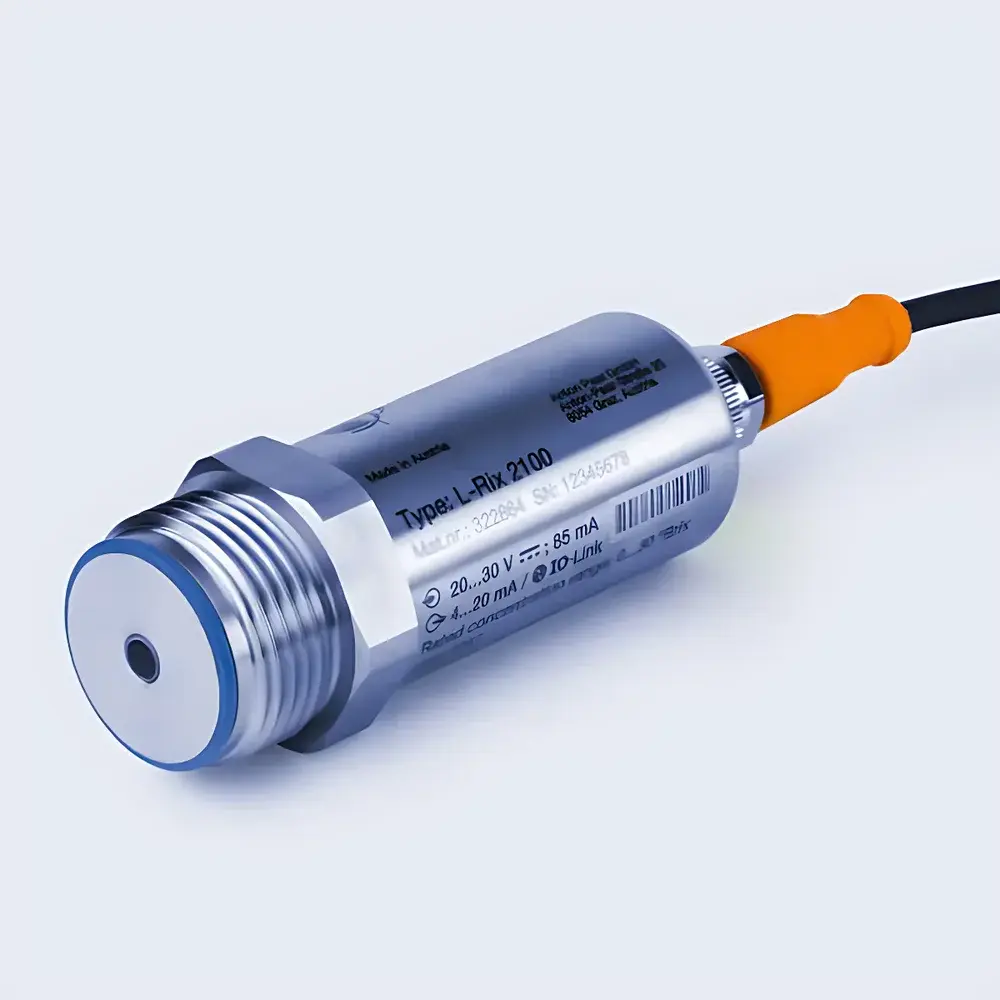
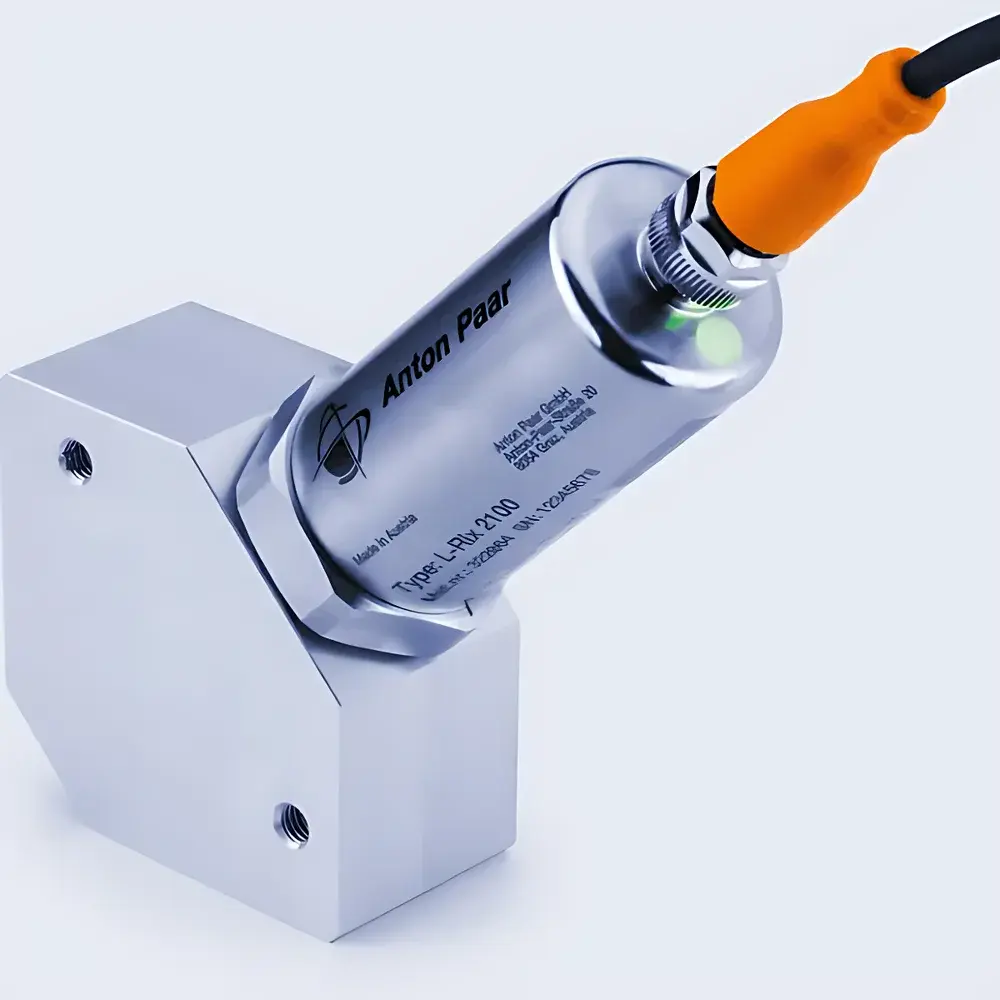

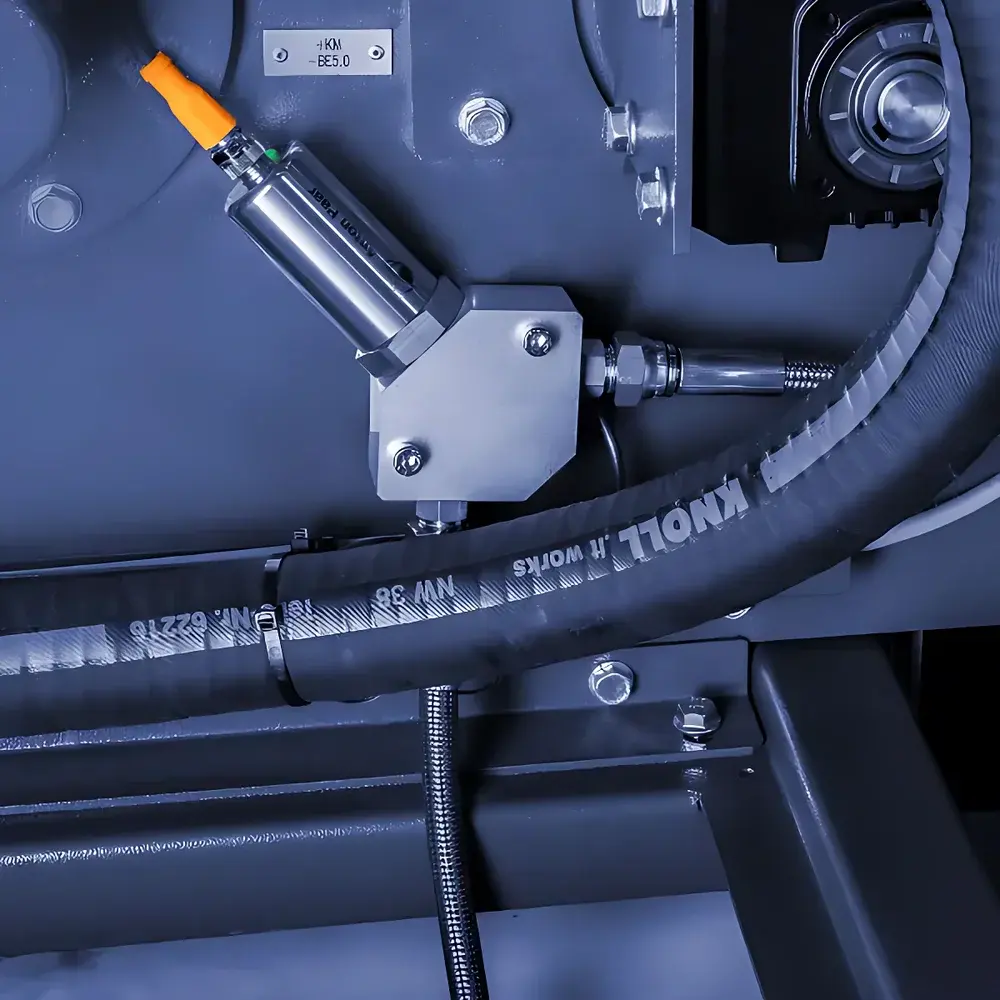
Anton Paar L-Rix 2100/3100 In-Line Refractometer Sensor
| Brand | Anton Paar |
|---|---|
| Origin | Austria |
| Manufacturer Type | Manufacturer |
| Product Origin | Imported |
| Model | L-Rix 2100/3100 |
| Price | Upon Request |
| Refractive Index Range (L-Rix 2100) | 1.3268–1.3830 nD (0–30 °Brix) |
| Refractive Index Range (L-Rix 3100) | 1.3268–1.4215 nD (0–50 °Brix) |
| Accuracy | ±0.20 °Brix (L-Rix 2100), ±0.15 °Brix (L-Rix 3100) |
| Repeatability | ±0.10 °Brix (L-Rix 2100), ±0.075 °Brix (L-Rix 3100) |
| Process Temperature | 0–60 °C |
| Process Pressure | 0–10 bar |
| Ambient Temperature | −5 to +55 °C |
| Housing Material | Stainless Steel 1.4305 (L-Rix 2100), 1.4404 (L-Rix 3100), and Engineering Plastic |
| Wetted Parts | Sapphire (Al₂O₃, 99.997%), Stainless Steel, VICTREX® FG 200 |
| Process Connection | G1" male (DIN/ISO 228) |
| Protection Rating | IP65 / IP67 |
| Output Signals | Analog (4–20 mA or 0–10 V) and IO-Link v1.1 |
| Power Supply | DC 24 V (20–30 V), SELV/PELV compliant |
| Cleaning Compatibility | Water or certified cleaning agents (≤60 °C, ≤5 bar) |
| Certifications | CE, UL, FCC, 3-A Sanitary Standard (when used with VARIVENT® adapter) |
Overview
The Anton Paar L-Rix 2100/3100 is a high-performance in-line refractometer sensor engineered for continuous, real-time measurement of refractive index and derived Brix concentration in demanding industrial process streams. Based on the principle of critical-angle refractometry—where a collimated light beam reflects at the interface between sapphire and the process medium—the sensor delivers stable, drift-free readings without moving parts or consumables. Its optical path is defined by a monolithic sapphire prism (99.997% Al₂O₃), manufactured in cleanroom conditions to eliminate particulate contamination and ensure long-term optical integrity. Designed specifically for integration into metalworking fluid systems (e.g., coolants, aqueous polymer quenchants) and food processing lines (e.g., fruit/vegetable washing, syrup dilution, brine preparation), the L-Rix series provides traceable, temperature-compensated Brix output compliant with ISO 2150 and AOAC Official Method 932.12 for sucrose solutions. The dual-model architecture—L-Rix 2100 (0–30 °Brix) and L-Rix 3100 (0–50 °Brix)—enables application-specific range optimization while maintaining identical mechanical footprint and mounting interfaces.
Key Features
- Monolithic sapphire measuring prism (99.997% Al₂O₃) with atomic-level surface finish for exceptional chemical resistance and abrasion immunity in abrasive or high-velocity flows
- Hermetically sealed optical head with no internal seals or O-rings exposed to process media—eliminates leakage paths and calibration drift
- Integrated Pt1000 RTD for simultaneous, co-located temperature measurement (±0.2 °C accuracy), enabling real-time refractive index compensation per ISO 2150 Annex A
- IO-Link v1.1 interface providing bidirectional communication for parameter configuration, firmware updates, diagnostic data (e.g., signal quality, prism fouling index, thermal stress alerts), and event logging
- Robust mechanical design: stainless steel 1.4305 (L-Rix 2100) or corrosion-resistant 1.4404 (L-Rix 3100) housing; IP65/IP67-rated enclosure suitable for washdown and outdoor installations
- Pre-calibrated at factory against NIST-traceable sucrose standards; zero-point stability verified over 15,000 operating hours under accelerated aging tests
- G1″ male process connection (DIN/ISO 228) compatible with standard sanitary adapters—including VARIVENT®—and optional AP cleaning adapters for CIP/SIP integration
Sample Compatibility & Compliance
The L-Rix 2100/3100 is validated for use with aqueous-based process fluids including water-miscible coolants, polymer quenchants, brines, sugar syrups, fruit juice concentrates, and vegetable blanching solutions. It is not intended for hydrocarbon solvents, highly viscous non-Newtonian fluids (>500 mPa·s), or suspensions containing >0.5% undissolved solids without upstream filtration. When mounted with VARIVENT® sanitary adapters, the sensor meets 3-A Sanitary Standards 14-05 (for dairy and beverage applications) and complies with EC 1935/2004 for materials in contact with foodstuffs. Electrical safety conforms to UL 61010-1, IEC 61000-6-2/6-4 (EMC), and IEC 61010-2-040 (process control equipment). All firmware and configuration data adhere to FDA 21 CFR Part 11 requirements when integrated with compliant SCADA or MES platforms supporting electronic signatures and audit trails.
Software & Data Management
The sensor operates autonomously but interfaces seamlessly with industry-standard control systems via analog outputs (4–20 mA or 0–10 V, user-selectable) and IO-Link. Configuration and diagnostics are managed using Anton Paar’s free L-Rix Configuration Tool, a Windows-based utility that supports device parameterization (e.g., Brix range, temperature compensation curve, alarm thresholds), data export (CSV), and firmware version verification. For enterprise-scale deployment, the sensor integrates with Siemens Desigo CC, Rockwell FactoryTalk, or Emerson DeltaV via IO-Link masters supporting IODD v1.1. All diagnostic events—including prism contamination warnings, thermal gradient exceedance, and power supply anomalies—are timestamped and stored in non-volatile memory for retrieval during routine maintenance audits. Raw refractive index (nD) and compensated Brix values are logged at configurable intervals (1–60 s), enabling statistical process control (SPC) and trend analysis per ISO 7870-2.
Applications
- Metalworking Fluid Management: Real-time monitoring of coolant concentration to prevent tool wear, thermal cracking, and poor surface finish—reducing unplanned downtime by up to 37% in benchmark machining cells
- Food & Beverage Processing: Continuous control of syrup dilution ratios in confectionery lines, brine strength in pickling tanks, and sugar content in fruit puree homogenization—ensuring batch-to-batch consistency and minimizing giveaway
- Pharmaceutical Excipient Preparation: Verification of sucrose or dextrose solution concentrations during wet granulation or coating suspension preparation, supporting GMP documentation requirements
- Biotechnology Fermentation Support: Indirect monitoring of carbon source depletion in non-invasive, sterile-compatible configurations (with VARIVENT®)
- Chemical Intermediate Synthesis: Endpoint detection in hydrolysis or condensation reactions where refractive index correlates with conversion degree
FAQ
What is the maximum allowable process temperature and pressure?
The sensor is rated for continuous operation at 0–60 °C and 0–10 bar gauge pressure. Short-term excursions up to 70 °C are permissible if duration remains below 30 minutes per day.
Can the L-Rix be cleaned in place (CIP)?
Yes—when equipped with an Anton Paar AP cleaning adapter, it supports automated CIP cycles using water or approved alkaline/acidic cleaners at ≤60 °C and ≤5 bar pressure. Validation protocols for CIP efficacy are available upon request.
How often does the sensor require recalibration?
Under normal operating conditions, factory calibration remains valid for ≥24 months. Recalibration is recommended after mechanical shock, prism replacement, or if diagnostic flags indicate optical degradation (e.g., sustained signal noise >0.02 °Brix RMS).
Is the sapphire prism replaceable in the field?
No—the sapphire prism is permanently bonded to the sensor body during cleanroom assembly. Replacement requires return to an Anton Paar service center to maintain optical alignment and metrological traceability.
Does the L-Rix support hazardous area certifications?
Not natively. However, explosion-proof enclosures (e.g., ATEX II 2G Ex db IIB T4 Gb) can be integrated upstream of the sensor housing for Zone 1/2 deployments; consult Anton Paar Application Engineering for certified system configurations.



