
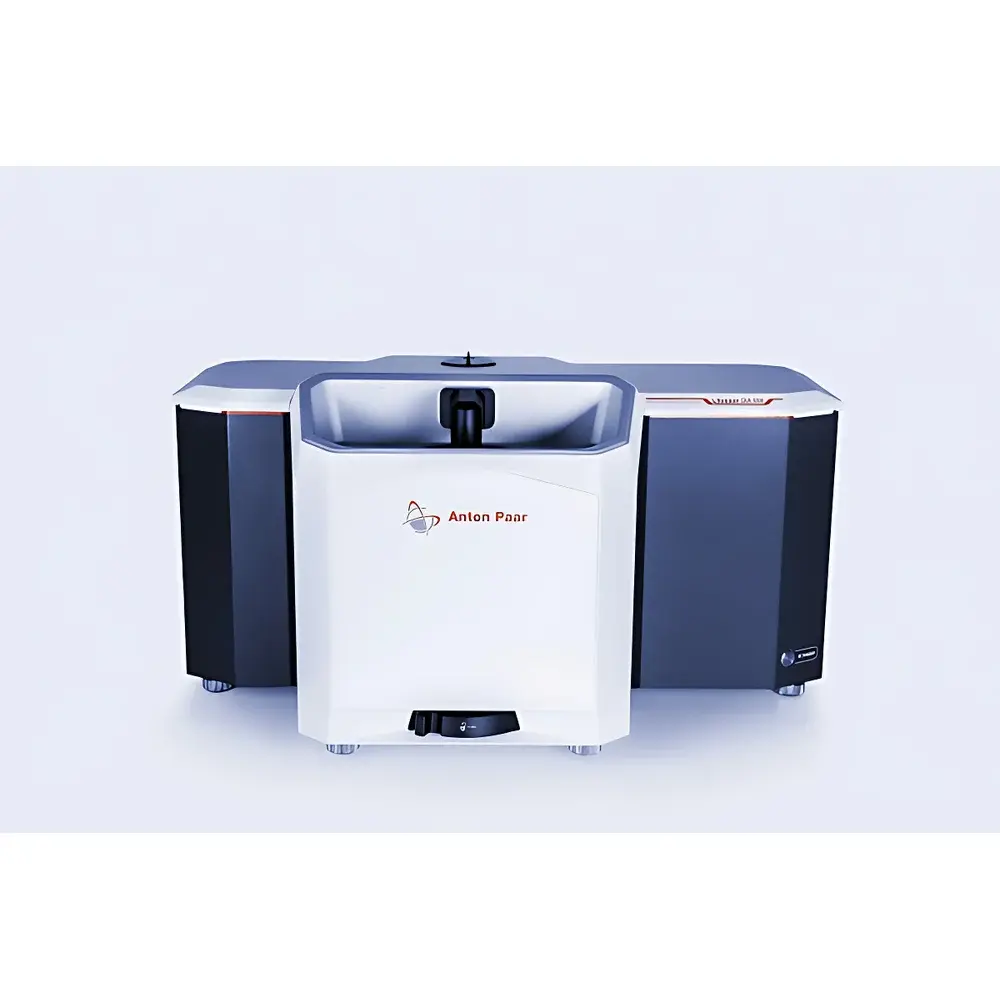
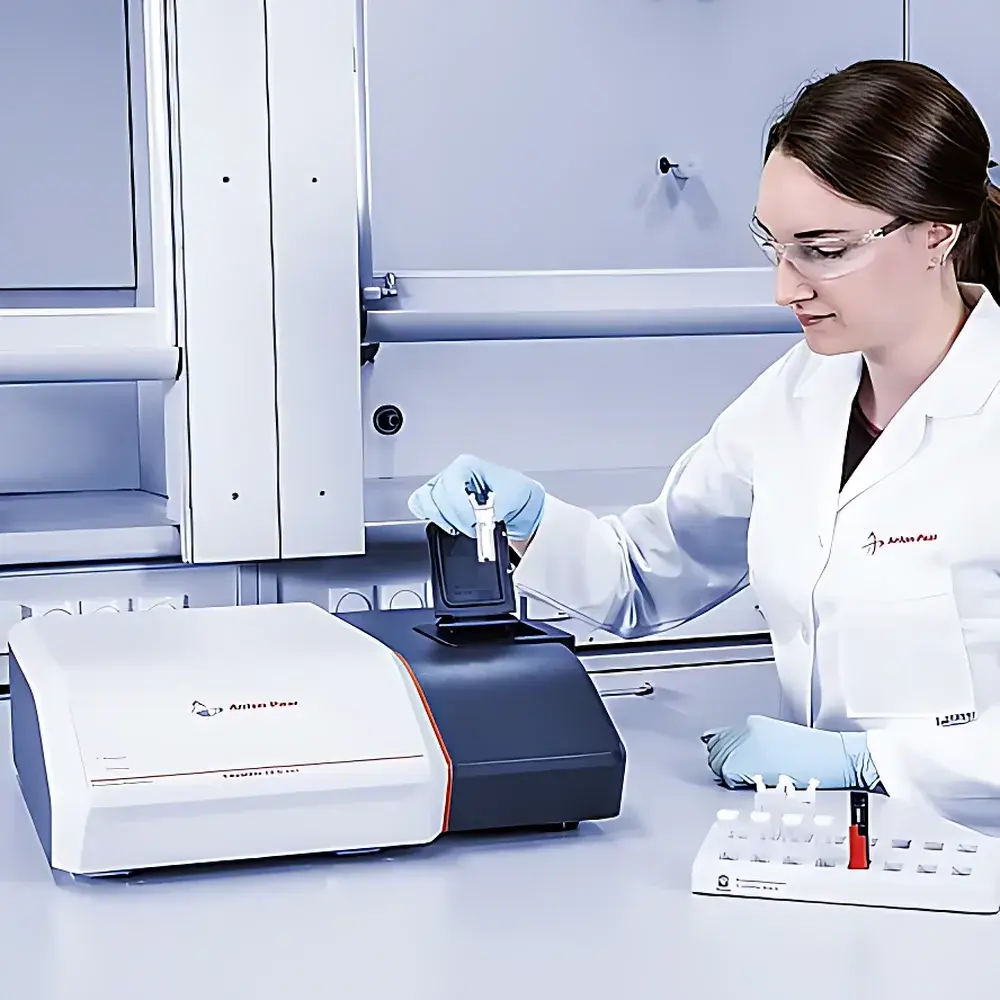
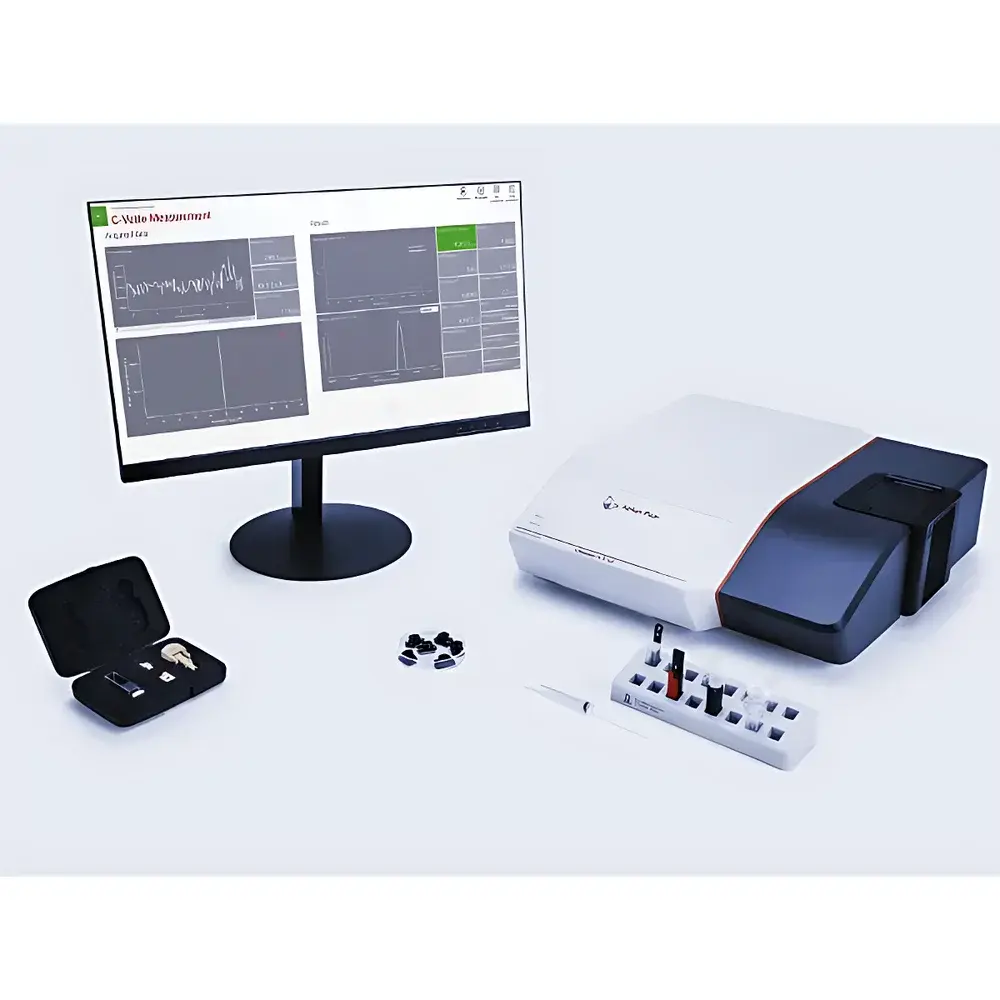
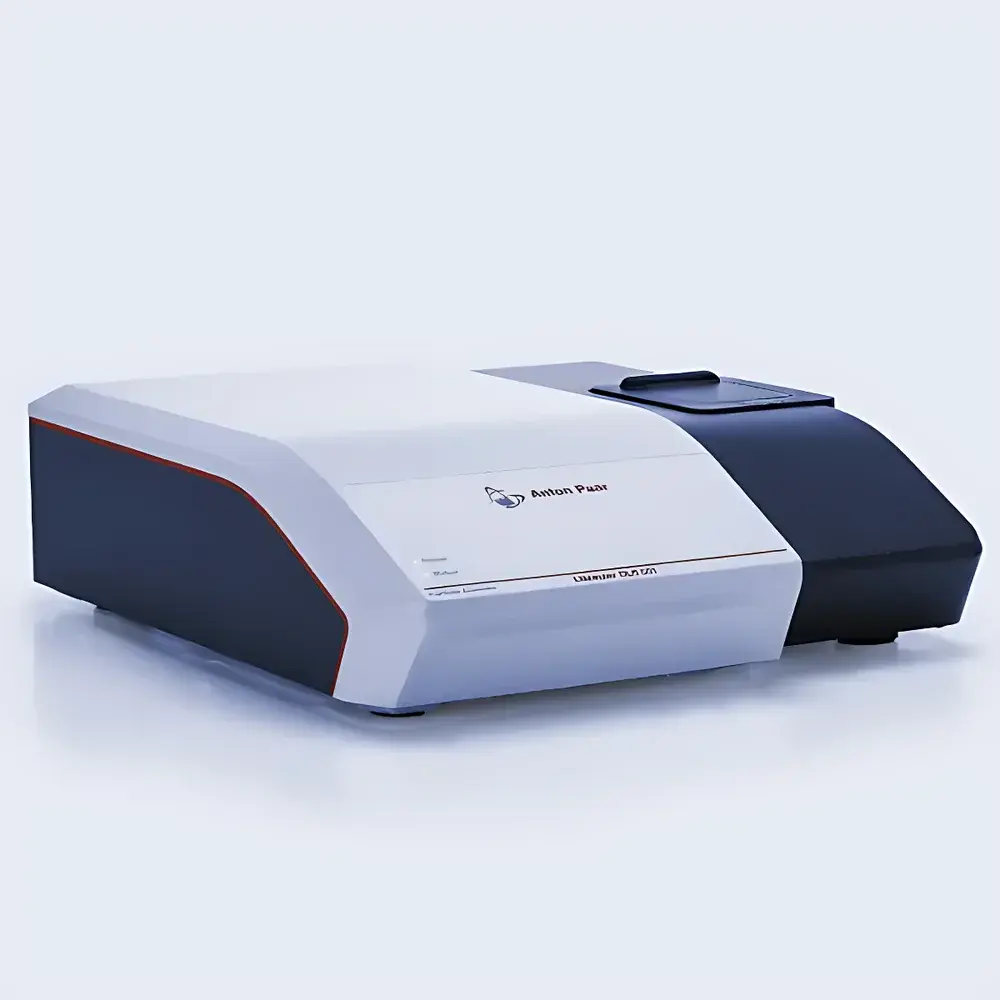
Anton Paar Litesizer DLS 501 Nanoparticle Size and Zeta Potential Analyzer
| Brand | Anton Paar |
|---|---|
| Origin | Austria |
| Manufacturer | Anton Paar GmbH |
| Type | Imported Instrument |
| Model | Litesizer DLS 501 |
| Zeta Potential Range | ±1000 mV |
| pH Range | 2–12 |
| Temperature Range | 0–120 °C |
| pH Resolution | 0.01 |
| Temperature Resolution | 0.01 |
| Accuracy | ±3% (Zeta), ±2% (DLS), ±10% (Molecular Weight) |
| Repeatability | ±3% (Zeta), ±2% (DLS), ±5% (Molecular Weight) |
Overview
The Anton Paar Litesizer DLS 501 is a high-precision, dual-function nanoparticle characterization system engineered for simultaneous dynamic light scattering (DLS), electrophoretic light scattering (ELS), and static light scattering (SLS) measurements. It operates on the physical principles of Brownian motion analysis (for hydrodynamic diameter determination), laser Doppler microelectrophoresis with patented cmPALS (combined Phase Analysis Light Scattering) technology (for Zeta potential quantification), and angular-dependent intensity integration (for molecular weight estimation). Designed for R&D laboratories, QC environments, and regulatory-compliant facilities, the instrument delivers traceable, reproducible data across an exceptionally broad size range—from 0.3 nm to 12 µm for DLS, 1.3 nm to 100 µm for Zeta potential, and 300 Da to 20 MDa for molecular weight—without requiring dilution or sample fractionation in most cases.
Key Features
- Triple-angle detection geometry (15°, 90°, 175°) with intelligent auto-angle selection algorithm, dynamically optimizing signal-to-noise ratio based on sample turbidity, concentration, and polydispersity.
- Real-time transmittance monitoring throughout measurement cycles, enabling immediate detection of sedimentation, aggregation, or instability events during analysis.
- cmPALS technology: significantly enhances ELS sensitivity by minimizing electrode polarization artifacts and Joule heating effects, reducing measurement time by up to 50% while preserving sample integrity—critical for thermally labile biomolecules and colloidal nanomaterials.
- Omega cell design: features a symmetric, low-gradient electric field configuration that minimizes electro-osmotic flow and improves Zeta potential accuracy and repeatability (±3%) under variable conductivity conditions (up to 200 mS/cm).
- Integrated optical filtering options: interchangeable fluorescence and polarization filters (vertical/horizontal) eliminate background interference from fluorescent dyes or anisotropic scattering, enabling reliable characterization of quantum dots, liposomes, and rod-shaped nanoparticles.
- Laser source: temperature-stabilized 658 nm diode (40 mW), pre-heated in <6 minutes, with built-in beam alignment diagnostics and automatic power calibration.
Sample Compatibility & Compliance
The Litesizer DLS 501 accommodates aqueous and organic dispersions—including proteins, polymers, liposomes, exosomes, metal oxides, and semiconductor nanocrystals—with minimal sample volume requirements (as low as 1.5 µL for DLS, 50 µL for Zeta). Its wide operational pH range (2–12) and temperature control (0–120 °C, ±0.01 °C resolution) support stability studies under accelerated aging or physiological conditions. The system complies with ISO 22412:2017 (DLS), ISO 13099-2:2012 (Zeta potential), and ASTM E2490-15 (nanoparticle size distribution). All measurement data are generated in accordance with ALCOA+ principles; Kalliope software provides full 21 CFR Part 11 compliance, including electronic signatures, audit trails, role-based access control, and immutable data archiving.
Software & Data Management
Kalliope software features a single-page, workflow-driven interface that enables complete measurement setup, real-time signal visualization, and result interpretation in ≤3 clicks. Predefined SOP templates ensure method consistency across operators and shifts. Analytical outputs include intensity-, volume-, and number-weighted size distributions; Zeta potential histograms with mobility conversion; molecular weight estimates via Debye plot or Zimm extrapolation; and transmittance/refractive index logs. Advanced reporting supports customizable PDF/Excel exports, statistical batch comparison (ANOVA, t-test), and MAPS (Multi-Angle Polarization Scattering) analysis for anisotropy assessment. Raw data files (.kld) are stored in vendor-neutral HDF5 format, ensuring long-term readability and third-party interoperability.
Applications
- Colloidal stability assessment of drug delivery systems (e.g., PEGylated liposomes, polymeric micelles) via Zeta potential trend analysis across pH and ionic strength gradients.
- Aggregation kinetics monitoring during formulation development using time-resolved DLS coupled with transmittance tracking.
- Quality control of nanomedicine batches per ICH Q5A(R2) and USP guidelines, with automated pass/fail evaluation against predefined size and charge specifications.
- Molecular weight determination of monodisperse biopolymers without column calibration, leveraging SLS at 90° angle.
- Characterization of photonic nanomaterials (e.g., upconversion nanoparticles, perovskite QDs) where fluorescence quenching or depolarization effects would otherwise compromise conventional DLS.
- Regulatory submissions requiring full traceability: Kalliope’s embedded metadata (instrument ID, calibration history, environmental logs) satisfies GLP/GMP documentation requirements.
FAQ
What is the minimum detectable particle size for DLS on the Litesizer DLS 501?
The lower detection limit is 0.3 nm (hydrodynamic diameter) for highly scattering standards such as gold nanoparticles or polystyrene latex under optimal signal conditions.
Can the instrument measure samples with high ionic strength?
Yes—Zeta potential measurements remain robust up to 200 mS/cm conductivity, enabled by the Omega cell’s low-field gradient design and cmPALS signal processing.
Is refractive index measurement required for accurate size calculation?
While not mandatory, inputting the sample’s refractive index (range: 1.28–1.50) improves DLS size accuracy, especially for non-aqueous or high-concentration systems.
How does the system handle polydisperse or multimodal samples?
The instrument applies CONTIN and NNLS algorithms with regularization constraints, and supports manual peak deconvolution in Kalliope for resolving overlapping populations.
Does the Litesizer DLS 501 support automated cleaning and validation protocols?
Yes—integrated fluidic routines include automatic cell rinsing, blank subtraction, and NIST-traceable standard verification (e.g., NIST SRM 1963) with pass/fail reporting.



