
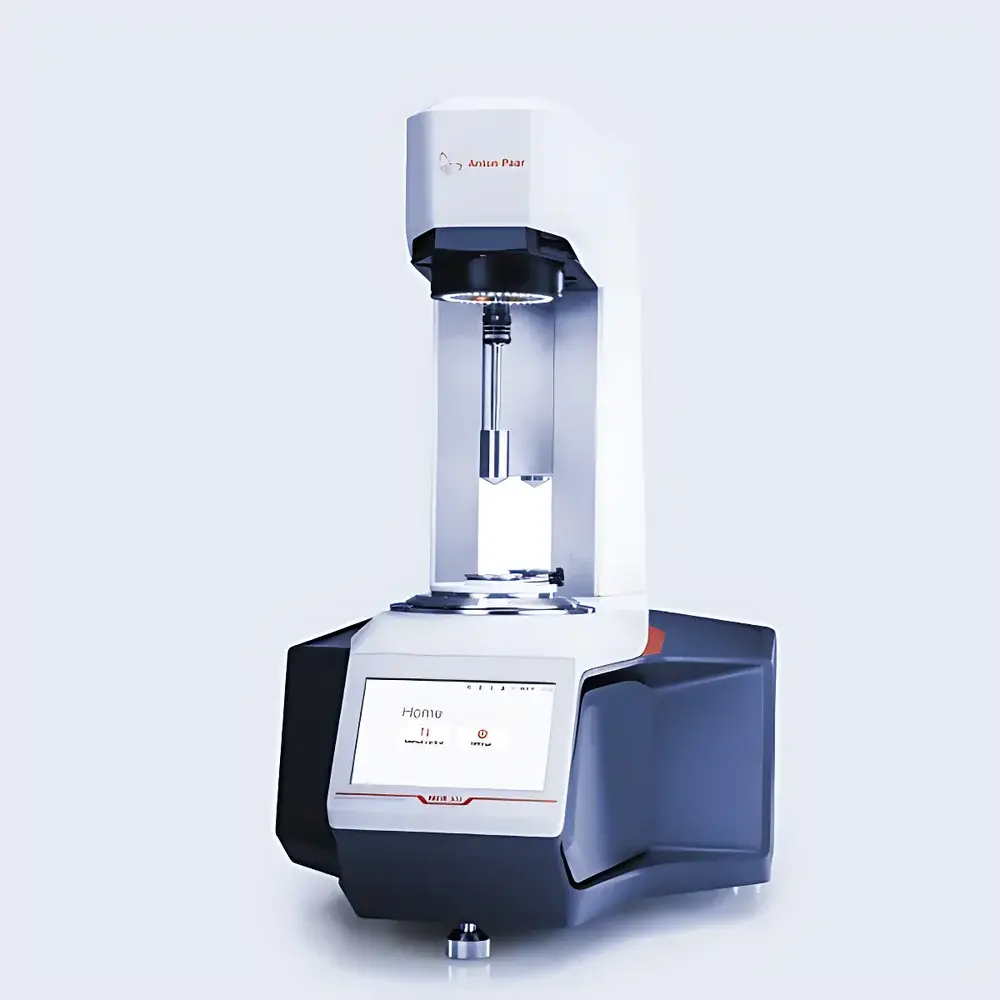
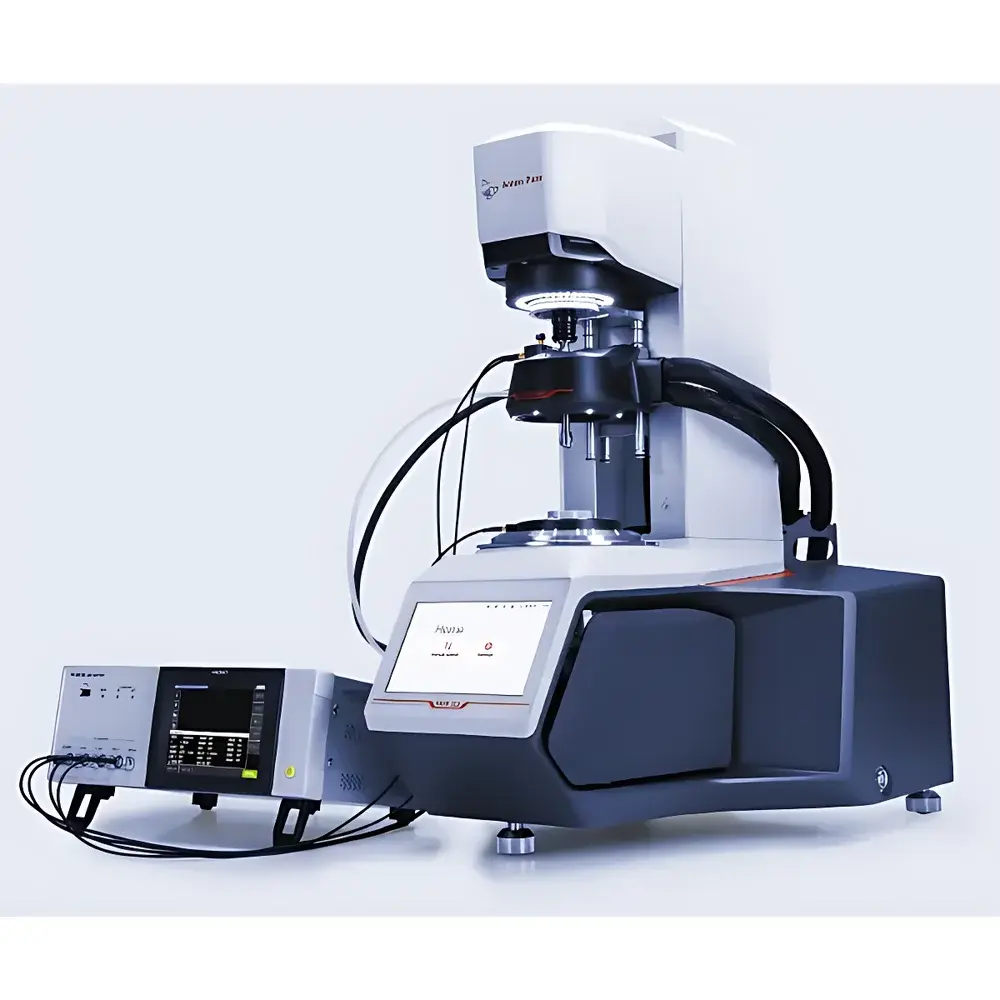
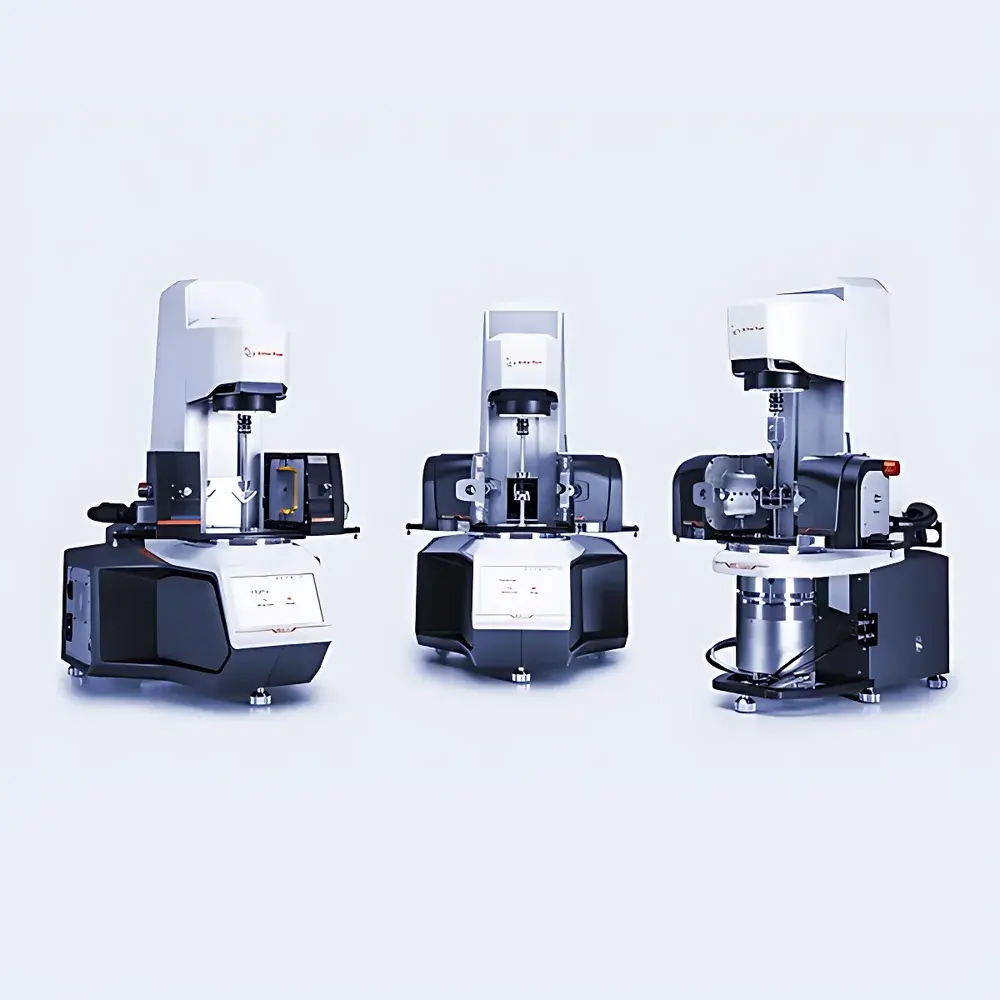
Anton Paar MCR 303 / MCR 503 / MCR 503 Power Modular Intelligent Advanced Rotational Rheometer
| Brand | Anton Paar |
|---|---|
| Origin | Austria |
| Manufacturer Type | Original Equipment Manufacturer (OEM) |
| Product Origin | Imported |
| Model | MCR 303 / MCR 503 / MCR 503 Power |
| Instrument Type | Rotational Rheometer |
| Sample Viscosity Range | High-Viscosity Fluids |
| Sample State | Liquid |
| Motor Bearing | Precision Porous Carbon Air Bearing |
| Temperature Range | –160 °C to 1000 °C |
| Frequency Range | 2 × 10⁻⁸ Hz to 200 Hz |
| Minimum Rotational Speed | 0 rpm |
| Maximum Torque | 300 mNm |
| Maximum Rotational Speed | 3000 rpm |
| Torque Resolution | 0.05 nNm |
Overview
The Anton Paar MCR 303, MCR 503, and MCR 503 Power are high-performance modular rotational rheometers engineered for precision viscoelastic characterization across research, quality control, and industrial development environments. Based on Couette-type flow geometry and torque-controlled or strain-controlled rotational mechanics, these instruments apply controlled shear stress or shear rate to liquid and soft-solid samples while measuring the resulting deformation response—enabling quantification of complex viscosity, storage/loss moduli (G′/G″), yield stress, thixotropy, and time-dependent relaxation behavior. The platform’s core architecture integrates a precision porous carbon air bearing motor system with optical encoder-based angular displacement detection and fully integrated capacitive normal force sensing—ensuring nanoradian angular resolution, sub-nN normal force sensitivity, and true zero-torque baseline stability. Designed for compliance-critical workflows, the MCR series supports ASTM D4402, ISO 6721, ISO 3219, USP , and ISO 17025-aligned calibration traceability.
Key Features
- Modular platform architecture enabling seamless upgrades from basic rheometry to advanced material characterization—including optional Linear Drive 20 for entry-level dynamic mechanical analysis (DMA) in tension, bending, and compression modes
- TruStrain™ technology (patented, US 9,574,983 & 10,908,058) delivering real-time, distortion-free strain control during large-amplitude oscillatory shear (LAOS) experiments
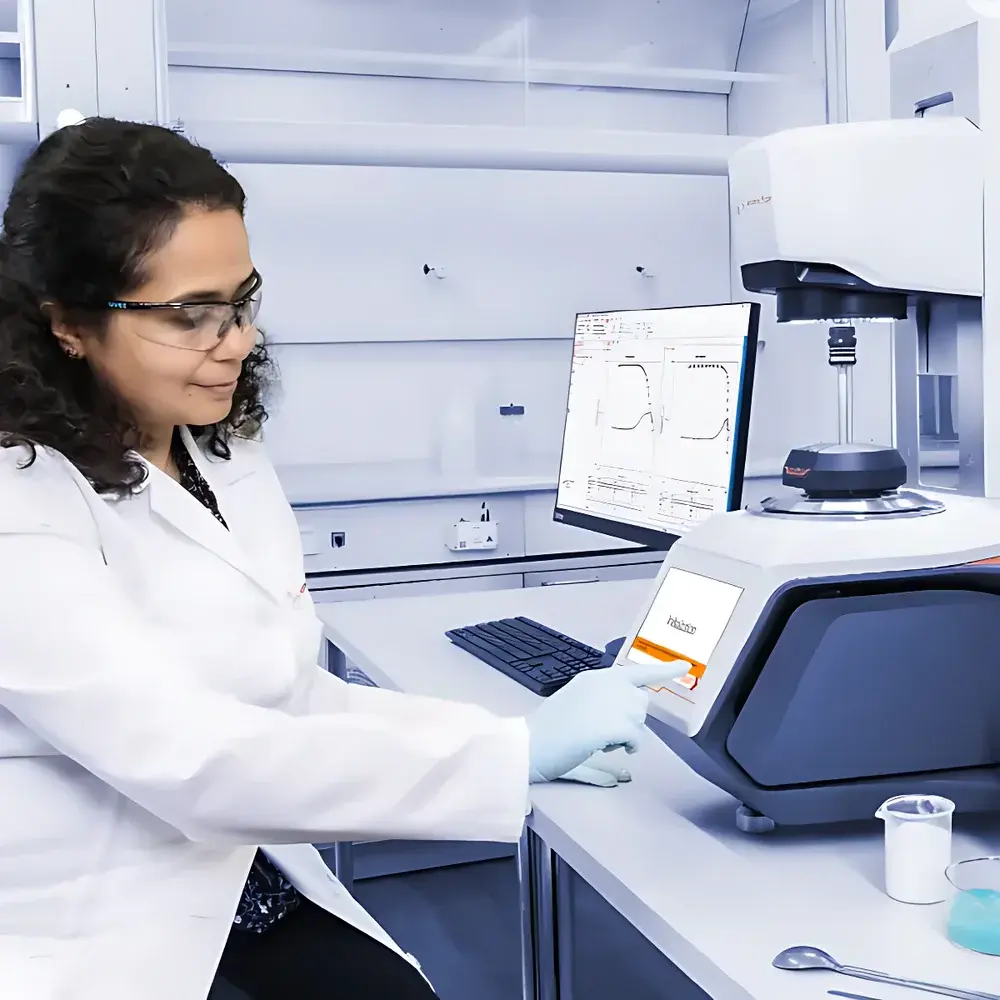
- 7-inch full-color capacitive touchscreen with RheoCompass 2.0 software interface—supporting multilingual operation, guided workflow navigation, and instrument-level sample preparation without PC dependency
- Integrated electronic level sensor eliminating measurement artifacts caused by mechanical misalignment
- High-speed electronics enabling up to 60% faster frequency sweeps (0.1–100 Hz) and 50% acceleration in amplitude sweeps versus prior-generation systems
- Ultra-low torque resolution down to 0.05 nNm (MCR 503 Power), with minimum measurable torque of 0.2 nNm in oscillatory mode and 1 nNm in rotational mode (with TruStrain enabled)
- Extended temperature capability via interchangeable Peltier (H-PTD 200/Air), liquid nitrogen cryo, and high-temperature furnace modules covering –160 °C to 1000 °C
Sample Compatibility & Compliance
The MCR series accommodates liquid-phase samples ranging from low-viscosity solvents to highly structured polymer melts, suspensions, gels, and emulsions—with no requirement for solvent dilution or sample pre-conditioning. All models support standard cone-plate, parallel-plate, and concentric cylinder geometries; optional powder rheology cells and tribological fixtures extend applicability to dry particulate flow and interfacial friction studies. Regulatory compliance is embedded at the firmware and software layers: RheoCompass 2.0 includes audit trail functionality compliant with FDA 21 CFR Part 11, electronic signature support, and GLP/GMP-ready reporting templates. Calibration certificates are NIST-traceable and include uncertainty budgets per ISO/IEC 17025 requirements.
Software & Data Management
RheoCompass 2.0 serves as the unified control, acquisition, and analysis environment—featuring over 250 preconfigured method templates for routine QC (e.g., viscosity vs. shear rate, temperature ramps, yield point determination) and advanced research protocols (e.g., LAOS, creep-recovery, multi-step thixotropy). All templates support parameter validation, interlock checks, and automatic pass/fail evaluation against user-defined specification limits. Raw data are stored in HDF5 format with embedded metadata (instrument ID, operator, timestamp, environmental conditions, geometry ID), ensuring FAIR (Findable, Accessible, Interoperable, Reusable) data principles. Export options include CSV, ASCII, and universal .rhe formats compatible with third-party analysis tools (e.g., MATLAB, Python SciPy, OriginLab). Optional database integration enables centralized method library management and cross-instrument protocol synchronization.
Applications
- Pharmaceutical formulation: Gelation kinetics of thermosensitive hydrogels, injectability profiling of biopolymer suspensions, and USP compliance testing for semi-solid dosage forms
- Polymers & composites: Melt rheology of engineering thermoplastics, crosslinking kinetics of epoxy resins, and filler dispersion assessment in conductive pastes
- Food science: Structure recovery after shear breakdown in dairy gels, starch retrogradation monitoring, and mouthfeel prediction via small-strain oscillatory metrics
- Electronics & energy: Slurry rheology for battery electrode coating, thermal interface material (TIM) viscoelastic stability under thermal cycling, and solder paste slump resistance
- Academic research: Fundamental studies of soft glassy materials, jamming transitions in colloidal dispersions, and nonlinear viscoelastic signatures in biological extracellular matrices
FAQ
What distinguishes the MCR 503 Power from the MCR 503?
The MCR 503 Power features an enhanced torque motor delivering 300 mNm maximum torque and improved low-torque performance (0.05 nNm resolution), optimized for high-force applications such as filled polymer melts, cementitious pastes, and abrasive slurries.
Can the MCR series perform extensional rheology?
No—extensional deformation requires dedicated filament stretching or capillary breakup devices (e.g., CaBER, FiSER). The MCR platform is strictly rotational/torsional; however, LAOS data can be used to infer extensional signatures indirectly via Fourier transform rheology (FT-Rheology) post-processing.
Is RheoCompass 2.0 validated for GxP environments?
Yes—RheoCompass 2.0 includes configurable electronic signatures, role-based access control, immutable audit trails, and IQ/OQ documentation packages supporting qualification under ISO 13485, ICH Q5, and 21 CFR Part 11.
How is temperature accuracy maintained across the full –160 °C to 1000 °C range?
Each temperature module employs independent Pt100 or thermocouple sensors with active feedback control; calibration is performed using certified reference materials (e.g., indium, zinc, aluminum melting points) and documented per ISO 17025.
Are geometry calibration routines automated?
Yes—Toolmaster™ auto-detection identifies geometry type, dimensions, and material properties upon mounting; gap calibration is executed via motor-driven approach with real-time normal force feedback to ensure reproducible sample loading.



