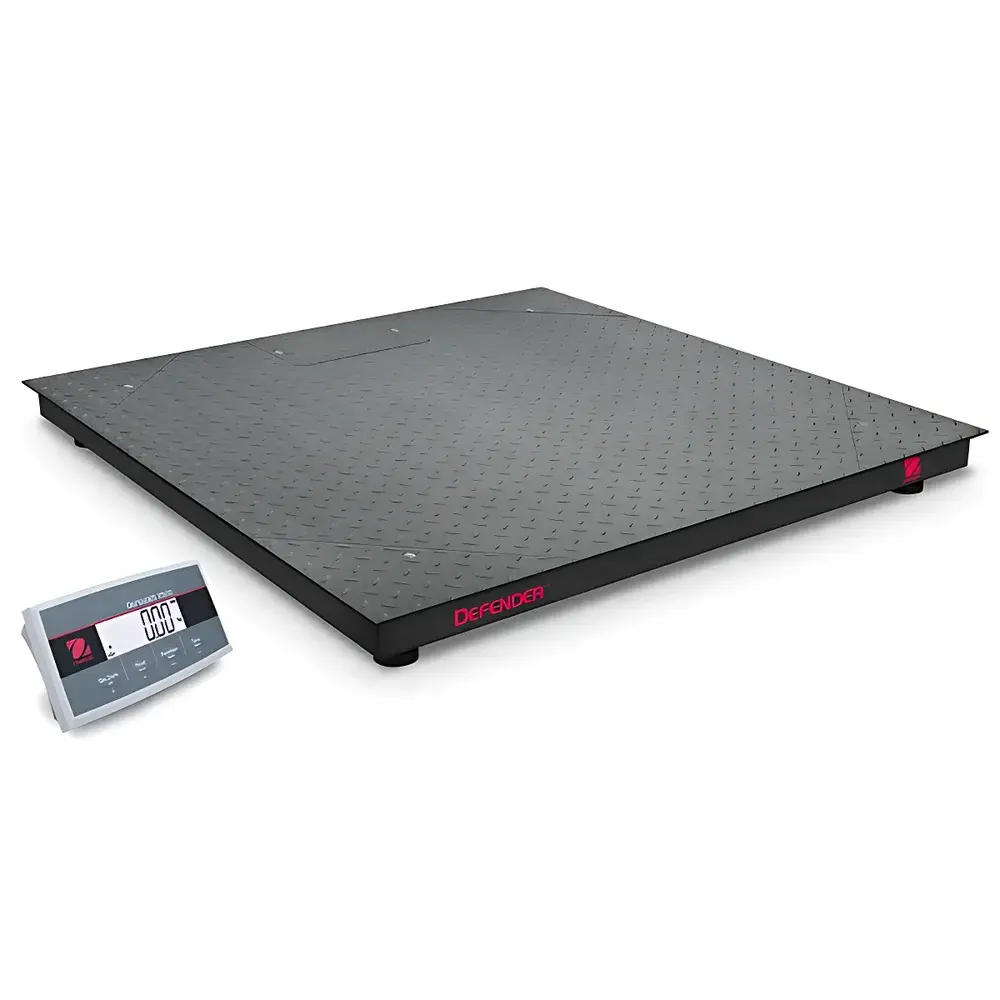
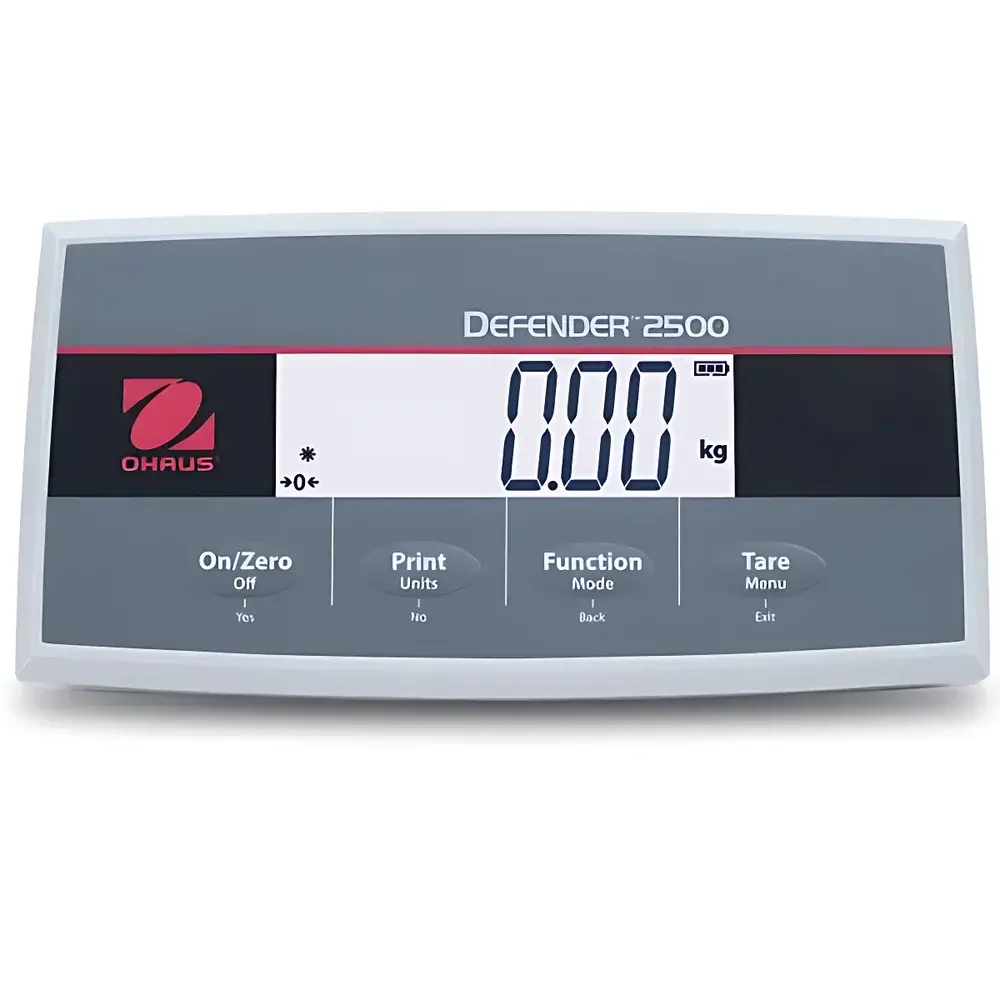
OHAUS Defender™ 2500 i-DF25 Industrial Floor Scale
| Brand | OHAUS |
|---|---|
| Capacity Options | 1000 kg / 1500 kg / 3000 kg / 5000 kg |
| Platform Dimensions | 0.8 × 0.8 m to 2.0 × 2.0 m (5 standard sizes) |
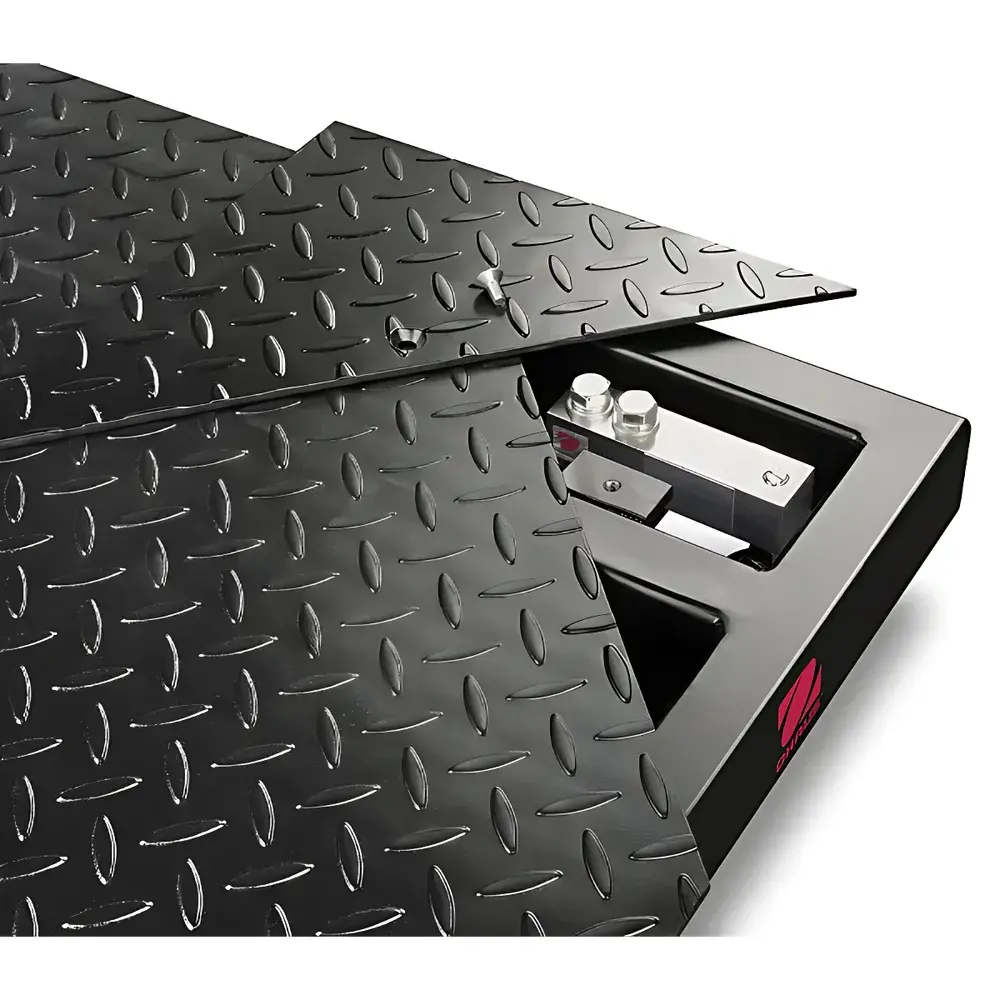
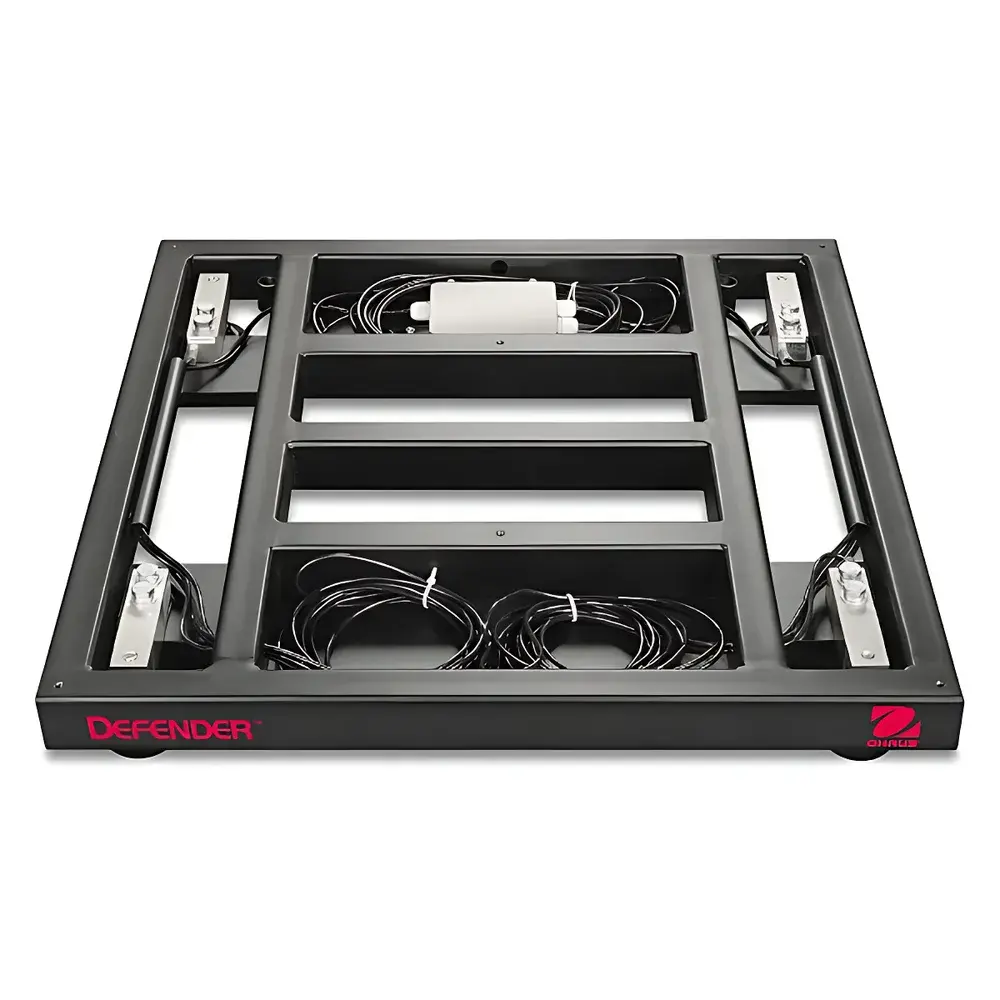
| Sensor Type | 4 × OIML C3 stainless steel load cells, IP67 rated |
| Junction Box | Stainless steel, IP65 rated |
| Platform Material | Textured steel plate, 5 mm thick |
| Operating Temperature | –10 °C to +40 °C |
| Relative Humidity | 0%–85%, non-condensing |
| Feet | 4 × threaded carbon steel feet with rubber caps, height-adjustable |
| Indicator | i-DT25P terminal, ABS housing |
| Display | 6-digit, 7-segment LCD, 28 mm digit height, white backlight |
| Power | AC adapter with USB-C cable (included) or 4 × AA batteries (not included) |
| Communication | RS232 and USB-C |
| Weighing Modes | Standard weighing, counting, dynamic weighing, hold, peak hold, accumulation |
| Units | kg, g, lb, oz, lb:oz |
| Compliance | OIML R76, NTEP Class III (for applicable models), IP65 (terminal), IP67 (load cells) |
Overview
The OHAUS Defender™ 2500 i-DF25 Industrial Floor Scale is an engineered solution for high-reliability weighing in demanding production, warehousing, logistics, and quality control environments. Built upon the proven Defender platform architecture, this floor scale integrates precision metrology with industrial-grade durability. Its measurement principle relies on four high-stability OIML C3-certified stainless steel load cells operating under the principles of strain gauge transduction—ensuring linearity, repeatability, and long-term stability across its full capacity range. Designed for static and semi-dynamic applications—including palletized goods handling, ingredient batching, and inventory reconciliation—the i-DF25 delivers consistent performance under variable ambient conditions, from chilled distribution centers to humid manufacturing floors.
Key Features
- Four OIML C3-rated stainless steel load cells with IP67 ingress protection, delivering robust resistance to moisture, dust, and mechanical shock during daily industrial use.
- Stainless steel junction box rated IP65, housed within a sealed enclosure and supplied with a standard 5-meter shielded cable for reliable signal integrity over extended distances.
- Heavy-duty textured steel platform (5 mm thickness) with reinforced perimeter and optional anti-slip surface treatment—optimized for forklift and pallet jack compatibility.
- i-DT25P indicator featuring a 28 mm high-contrast 6-digit LCD with white backlight, enabling legible readings under low-light or high-glare conditions.
- Modular mounting system with four threaded carbon steel leveling feet, each fitted with replaceable rubber caps for vibration damping and floor protection.
- Dual power configuration: integrated USB-C AC adapter (included) for continuous operation or field-deployable 4×AA battery option (batteries not included) for temporary or mobile setups.
Sample Compatibility & Compliance
The i-DF25 accommodates diverse load configurations—from compact crates and tote bins to full-size ISO pallets—across five standardized platform footprints (0.8 × 0.8 m up to 2.0 × 2.0 m). Its structural design conforms to OIML R76-1:2021 for non-automatic weighing instruments and meets NTEP Class III accuracy requirements where certified configurations are deployed in U.S. commercial applications. The load cell assembly complies with IP67 environmental protection standards per IEC 60529, while the indicator housing satisfies IP65 rating for operational resilience in washdown-prone areas. All firmware and calibration procedures support traceable documentation in accordance with GLP and GMP-aligned quality systems.
Software & Data Management
The i-DT25P terminal supports bidirectional data exchange via RS232 and USB-C interfaces, enabling seamless integration with enterprise resource planning (ERP), warehouse management systems (WMS), and laboratory information management systems (LIMS). ASCII-based output protocols allow direct mapping of weight values, units, and mode identifiers into external databases without proprietary drivers. Audit trail functionality records time-stamped events—including zeroing, calibration, unit changes, and mode selection—for internal quality audits. Optional OHAUS Logger software (v3.0+) provides real-time graphing, statistical analysis (mean, SD, CV%), and export to CSV or Excel formats—supporting ISO/IEC 17025-compliant reporting workflows.
Applications
- Manufacturing: In-line checkweighing of assembled components, raw material intake verification, and batch dispensing control.
- Logistics & Distribution: Pallet weighing prior to shipment, dimensional weight calculation, and freight class determination.
- Food & Beverage: Dry ingredient batching, yield monitoring, and sanitation compliance checks requiring IP-rated hardware.
- Recycling & Waste Management: Load verification at transfer stations, scrap metal sorting, and container tare management.
- Education & Vocational Training: Hands-on instruction in metrology fundamentals, calibration practices, and industrial instrumentation safety standards.
FAQ
Is the i-DF25 certified for legal-for-trade use in the United States?
Yes—select capacity and configuration variants are NTEP-approved as Class III devices. Certification documentation is provided with NTEP-configured units and must be verified against current NTEP Certificate of Conformance (CoC) listings.
Can the i-DT25P indicator store calibration records internally?
No—the terminal does not retain historical calibration logs. However, all calibration actions trigger timestamped event flags visible on-screen and transmitted via serial/USB output for external logging.
What is the maximum cable length supported between the indicator and junction box?
The standard 5-meter shielded cable is optimized for noise immunity; extension beyond 10 meters requires consultation with OHAUS Technical Support to ensure signal integrity and compliance with EMC directives.
Does the scale support external printers or barcode scanners?
Yes—RS232 interface enables direct connection to serial receipt printers and 1D/2D barcode scanners using standard ASCII command sets; USB-C supports HID-class peripherals when configured accordingly.
How often should routine verification be performed under ISO 9001 requirements?
Verification frequency depends on usage intensity and risk assessment; OHAUS recommends daily zero checks, weekly span verification with certified test weights, and full recalibration annually—or after impact, relocation, or environmental exposure exceeding specified operating limits.