
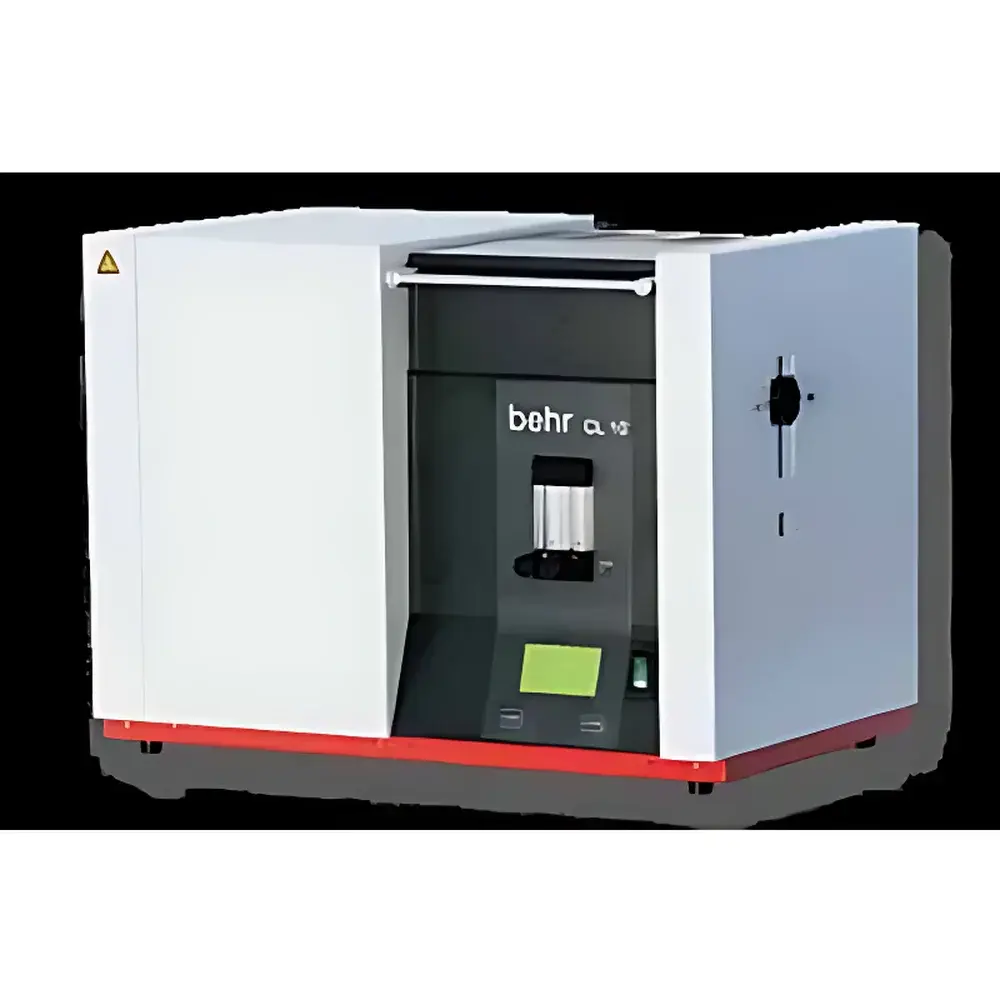
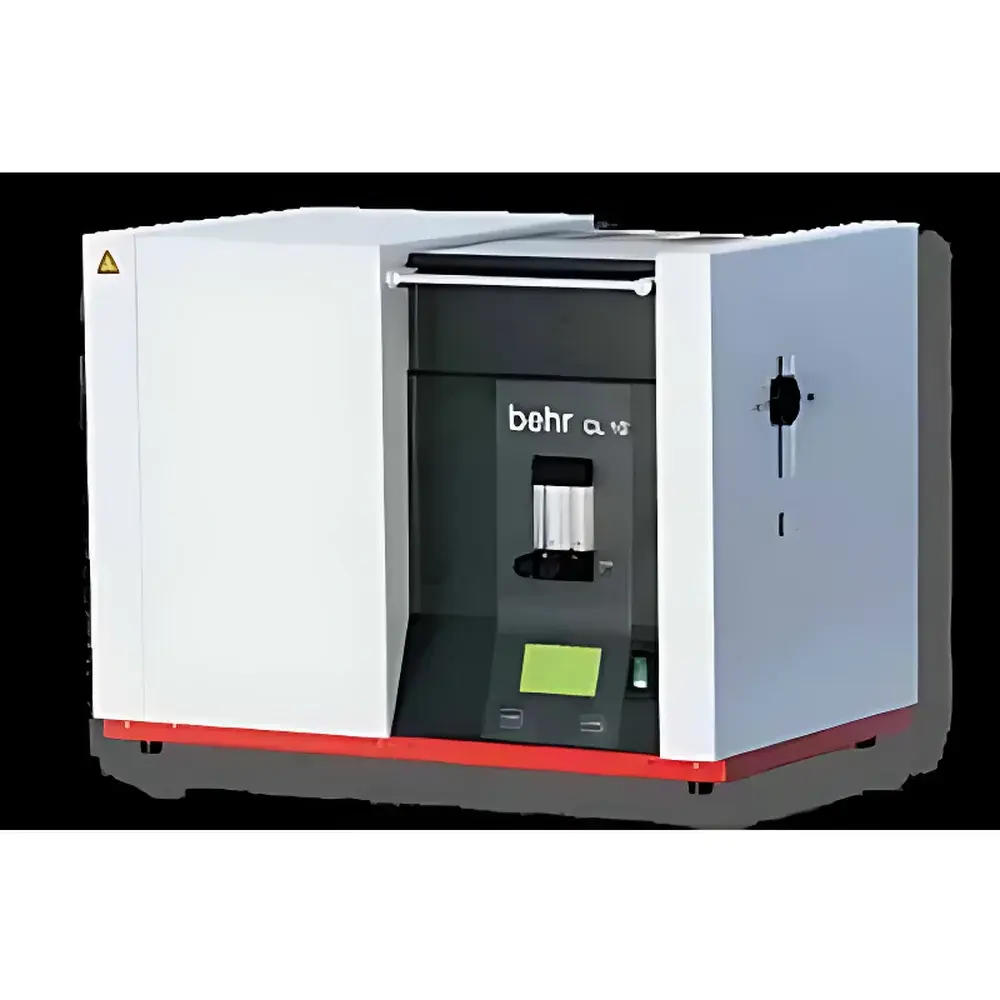
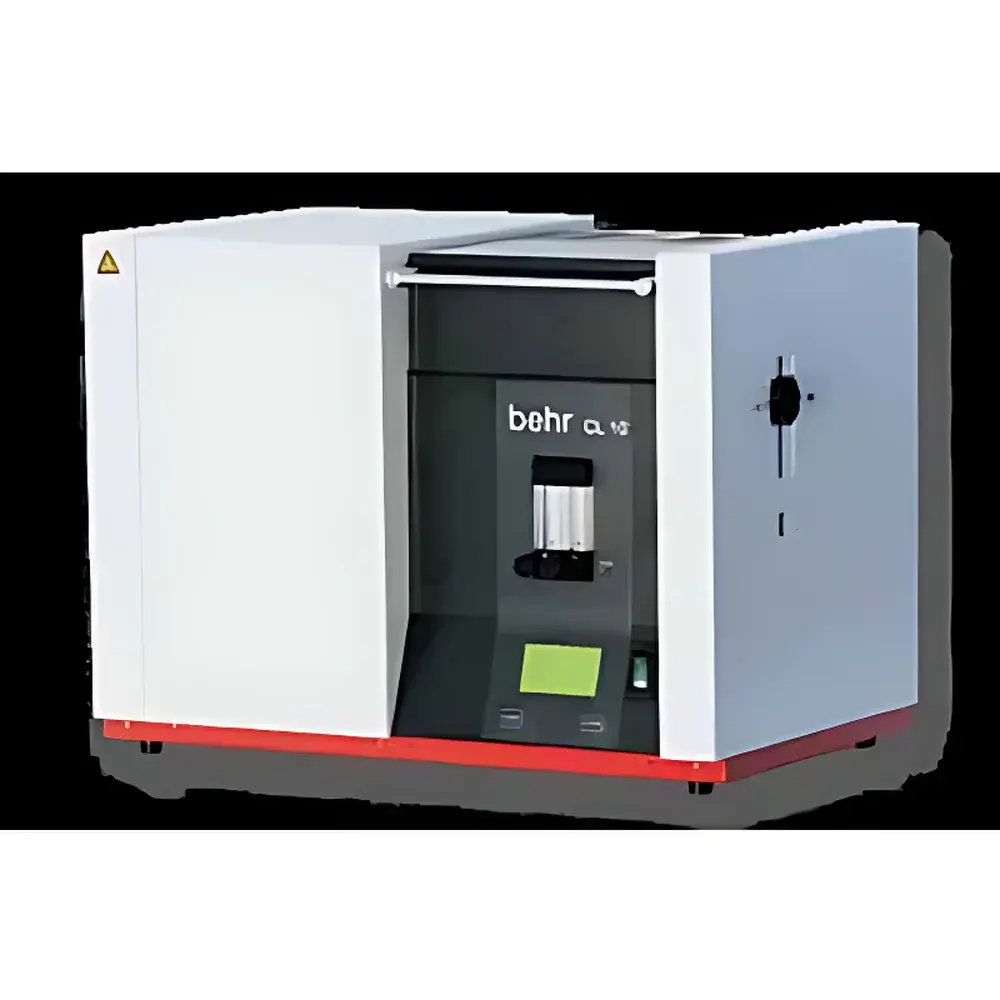
Behr CL10 AOX/EOX/POX Halogen Analyzer (Total Organic Chlorine, Extractable Organic Halogens, and Peroxy Halogens in Water, Oil, and Solid Matrices)
| Origin | Germany |
|---|---|
| Manufacturer Type | Authorized Distributor |
| Origin Category | Imported Instrument |
| Model | Behr CL10 (AOX/EOX/POX) |
| Measurement Principle | Combustion–Microcoulometric Titration |
| Measurement Range | 0.1–3000 mg/L Cl (as Cl⁻ equivalent) |
| Accuracy | <1% RSD |
| Repeatability | <1% RSD |
| Detection Limit | 0.1 µg Cl absolute |
| Resolution | 0.01 µg Cl |
| Carrier Gases | O₂ (99.95%), Ar (99.95% for EOX) |
| IR Furnace Max Temp | 1000 °C |
| Resistive Downstream Furnace Max Temp | 1000 °C |
| Sample Capacity | AOX—up to 200 mL aqueous |
| Analysis Time | 5–10 min per sample (halogen-content dependent) |
| Titration Current Range | 2–450 µA |
Overview
The Behr CL10 is a fully integrated, microcoulometric halogen analyzer engineered for the precise quantification of adsorbable organic halogens (AOX), extractable organic halogens (EOX), and peroxy halogens (POX) in diverse environmental matrices—including aqueous samples, hydrocarbon oils, and solid-phase materials such as soils, sediments, and sludges. Based on high-temperature catalytic combustion followed by selective electrochemical detection via microcoulometric titration, the CL10 delivers trace-level halogen determination with metrological rigor required for regulatory compliance and research-grade data integrity. Its dual-furnace architecture—comprising a programmable infrared heating unit and a thermally stabilized downstream resistive furnace—ensures complete and reproducible oxidative decomposition of organohalogen compounds across complex sample types, minimizing char formation and maximizing halogen recovery efficiency.
Key Features
- Dual-zone combustion system: An IR furnace (0–1000 °C, rapid ramp/cool via heat-pipe technology) coupled with a precision-controlled resistive furnace (0–1000 °C) enables optimized thermal decomposition profiles for AOX, EOX, and POX protocols.
- Smoke-free, low-background combustion: Integrated oxygen flow management and inert gas (Ar) purging for EOX analysis suppress carbonaceous residue and minimize interference from non-halogenated organics.
- Patented gas outlet design: Condensation-prevention geometry at the combustion tube exit eliminates water vapor condensation in transfer lines—critical for preventing halogen adsorption losses and ensuring inter-sample consistency.
- Corrosion-resistant fluidic path: Integrated check valve isolates sulfuric acid electrolyte from the hot zone, protecting furnace components and enabling straightforward maintenance without disassembly of gas lines.
- Optically accessible titration cell: Brown glass coulometric cell (no external shielding required) allows real-time visual inspection of electrode condition and electrolyte stability during operation.
- Low operational cost architecture: Consumables—including quartz combustion tubes, silver catalyst beds, and electrolyte solutions—are standardized, widely available, and engineered for extended service life (>500 analyses per set under routine use).
Sample Compatibility & Compliance
The CL10 supports standardized methodologies aligned with ISO 9562 (AOX in water), DIN 38409-H11 (AOX), EPA Method 1650 (AOX), and ASTM D5907 (EOX in wastewater and solids). It accommodates direct aqueous injection (up to 200 mL), micro-syringe delivery of oil extracts (10–500 µL), and solid-phase combustion of dried, homogenized samples (≤1 g). All hardware and software components comply with IEC 61326-1 (EMC for laboratory equipment) and meet mechanical safety requirements per EN 61010-1. Data handling workflows support audit-trail generation and electronic signature capability in accordance with FDA 21 CFR Part 11 when integrated with validated LIMS environments.
Software & Data Management
The CL10 operates under Behr’s proprietary HALO-Soft v5.x platform—a Windows-based application providing full instrument control, method sequencing, real-time coulometric current monitoring, and automated calibration curve generation. Software features include batch processing, QC flagging (e.g., drift detection, baseline deviation), and export of raw and processed results in CSV, XML, and PDF formats. Optional LIMS integration modules enable bidirectional data exchange using ASTM E1394 or HL7-compliant interfaces. All analytical events—including method parameters, operator ID, calibration history, and raw titration curves—are timestamped and stored locally with configurable retention policies.
Applications
- Regulatory monitoring of AOX in industrial effluents (pulp & paper, chlor-alkali, textile dyeing)
- EOX screening in transformer oils, lubricants, and hydraulic fluids per IEC 61619
- POX quantification in ozone-treated wastewater and advanced oxidation process (AOP) streams
- Halogen speciation support in contaminated soil remediation projects (e.g., legacy pesticide residues, PCB degradation products)
- Method validation and reference material certification in national metrology institutes and accredited environmental labs
FAQ
What sample preparation is required for solid matrices?
Solid samples must be dried, homogenized, and weighed precisely (≤1 g); no acid digestion or solvent extraction is needed—combustion occurs directly in the quartz boat.
Can the CL10 differentiate between chlorine, bromine, and iodine?
No—the system reports total halogen content as chloride-equivalent (Cl⁻); speciation requires coupling with IC-MS or HR-GC/MS downstream.
Is method validation documentation provided?
Yes—Behr supplies IQ/OQ documentation packages, certified reference material test reports (e.g., SRM 2822), and uncertainty budget templates compliant with ISO/IEC 17025.
What maintenance intervals are recommended?
Routine checks every 50 runs (combustion tube inspection, catalyst activity verification); full preventive maintenance annually or after 500 analyses—typically completed in <2 hours by trained personnel.
Does the system support unattended overnight operation?
Yes—automated sample carousel compatibility (optional) and software-based run scheduling enable 24/7 batch processing with email alerting for completion or error conditions.







