
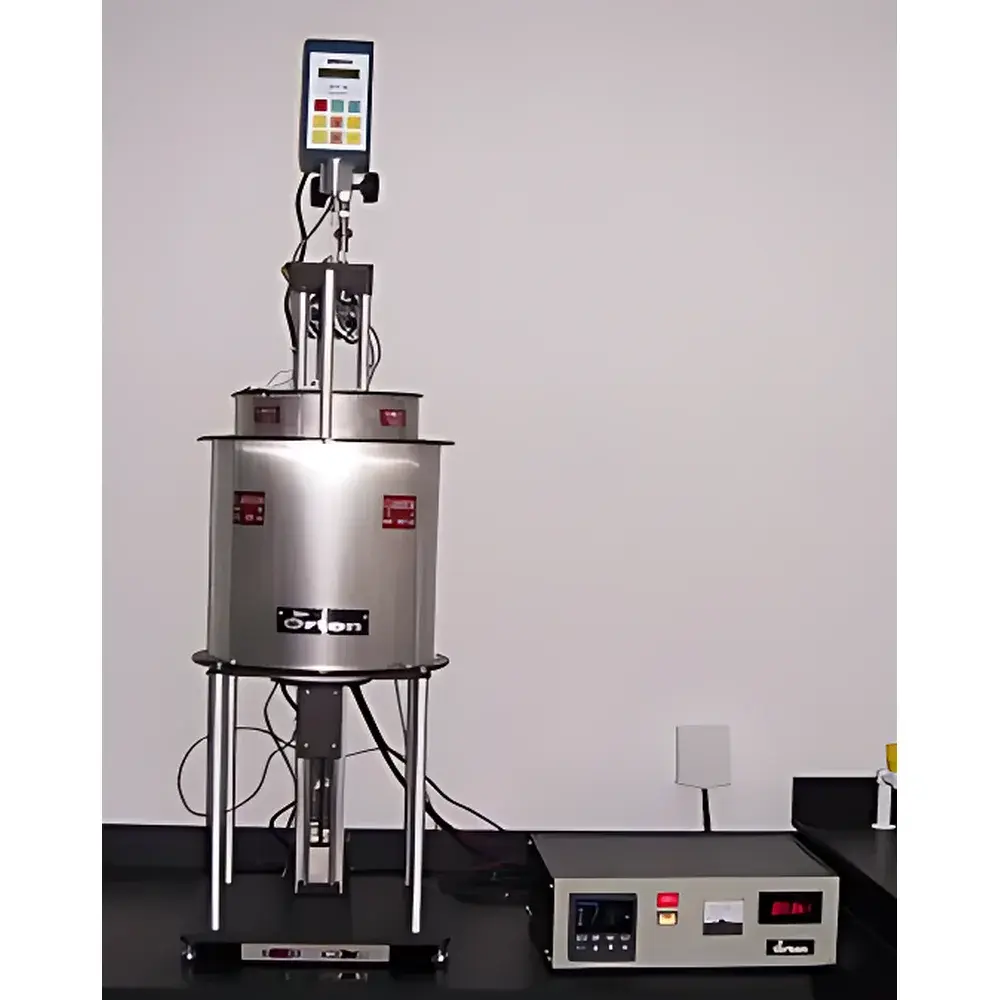
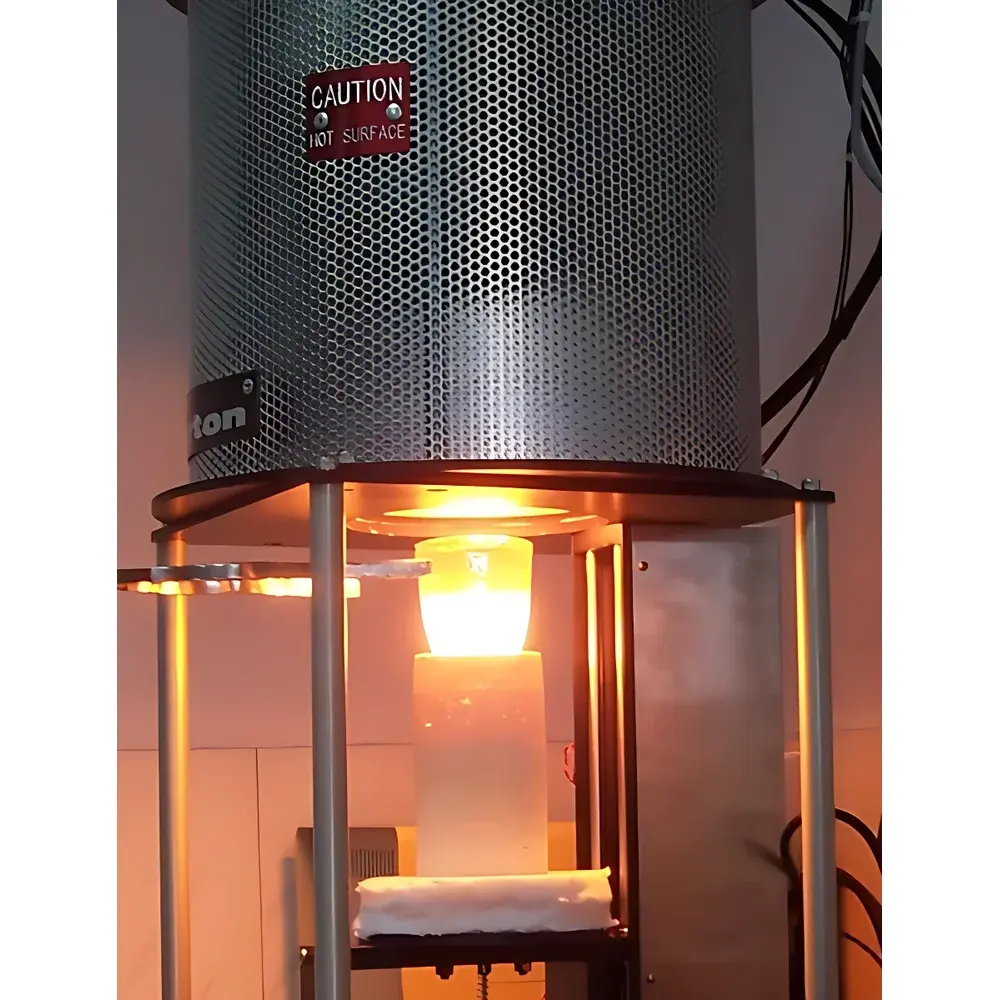
Orton RSV-1600 / RSV-1700 High-Temperature Rotational Viscometer
| Brand | Orton |
|---|---|
| Origin | USA |
| Model | RSV-1600, RSV-1700 |
| Viscosity Range | 10–3×10⁵ Poise |
| Max Operating Temperature | 1600 °C or 1700 °C |
| Compliance | ASTM C-965 (Method A), ASTM C-1276, ISO 7884-2 |
| Measurement Principle | Constant Angular Velocity (Couette Flow) |
| Sample Environment Options | Air, Vacuum, Inert Gas (N₂, Ar) |
| Crucible Capacity | 20–1000 g |
| Rotor & Crucible Materials | Pt/Rh alloy, Alumina, Graphite |
| Control System | PID Programmable Temperature Controller with Over-Temp Protection |
| Data Acquisition | Real-time torque, viscosity, temperature logging via VISCO software |
| Calibration Traceability | NIST SRM 717A certified reference glass |
Overview
The Orton RSV-1600 and RSV-1700 High-Temperature Rotational Viscometers are engineered for precise, reproducible measurement of dynamic viscosity in molten inorganic materials under controlled thermal conditions. Based on the Couette flow principle, these instruments employ a rotating spindle immersed in a sample held within a high-temperature furnace—enabling direct determination of shear viscosity at defined angular velocities and temperatures. Designed explicitly for industrial and research applications involving silicate melts, coal ash slags, volcanic lavas, and other refractory liquids, the system delivers quantitative viscosity–temperature profiles essential for process optimization in glass manufacturing, coal gasification, metallurgy, and geoscience. Both models conform to ASTM C-965 (Method A) for molten glass, ASTM C-1276 for slag systems, and ISO 7884-2 for high-viscosity liquids, ensuring regulatory alignment across global laboratories and production facilities operating under GLP, GMP, or ISO/IEC 17025 frameworks.
Key Features
- Two configurable platforms: RSV-1600 (max 1600 °C) and RSV-1700 (max 1700 °C), with optional extended-temperature configurations available upon request
- Modular crucible lift mechanism enabling safe, repeatable insertion and removal of pre-loaded crucibles without furnace disassembly
- PID-based programmable temperature controller with ramp/soak capability, real-time thermocouple feedback (Type S or B), and hardware-level over-temperature cutoff
- Interchangeable rotor–crucible assemblies fabricated from Pt/Rh (90/10), high-purity alumina (Al₂O₃ ≥ 99.8%), or high-density graphite—selected per chemical compatibility and thermal stability requirements
- Atmosphere control integration supporting ambient air, vacuum (≤10⁻² mbar), or inert gas purging (N₂ or Ar) to prevent oxidation or volatilization during testing
- Brookfield DVNext-compatible torque sensor head, delivering high-resolution rotational torque measurement with ≤±0.2% full-scale repeatability
- Motorized or manual vertical positioning of the viscometer head, accommodating custom crucible geometries and sample volumes from 20 g to 1000 g
Sample Compatibility & Compliance
The RSV series is validated for use with chemically aggressive, high-melting-point systems including soda-lime-silica and borosilicate glasses, coal-derived ash slags (e.g., Fe-rich or CaO–Al₂O₃–SiO₂ compositions), basaltic and rhyolitic lavas, phosphate-based melts, and ceramic frits. All measurements adhere to standardized test protocols: ASTM C-965 Method A (isothermal and dynamic cooling modes), ASTM C-1276 (for slag viscosity characterization), and ISO 7884-2 (rotational method for viscous liquids). Instrument calibration is traceable to NIST Standard Reference Material 717A (SRM 717A), with documented agreement between measured log(η) values and certified reference data across the 931–1560 °C range (±0.06–0.16 log units). The system supports audit-ready data integrity per FDA 21 CFR Part 11 when configured with VISCO software’s electronic signature, user access control, and immutable audit trail functions.
Software & Data Management
VISCO software provides dual operational modes: isothermal equilibrium testing and dynamic cooling-rate profiling. In isothermal mode, the furnace stabilizes at a user-defined setpoint; the rotor immerses automatically or manually, and viscosity is recorded continuously until thermal and mechanical equilibrium is confirmed. In dynamic mode, the furnace follows a programmed linear or stepwise cooling profile (e.g., 1–10 °C/min), while synchronized acquisition logs torque, temperature (via embedded crucible thermocouple), rotational speed, and calculated viscosity at sub-second intervals. Raw data export is supported in CSV and XML formats; post-processing includes Füchtbauer–Wagner (FURCHER) equation fitting, Arrhenius modeling, and extrapolation of viscosity behavior beyond measured ranges. All datasets include timestamped metadata (operator ID, instrument serial number, calibration date, atmosphere type), satisfying ISO/IEC 17025 clause 7.7 and internal quality system requirements.
Applications
- Glass industry: Determination of working point, softening point, annealing point, and strain point via viscosity–temperature curves; optimization of forming schedules and annealing lehrs
- Coal gasification & slag management: Prediction of slag mobility and fouling thresholds in entrained-flow and fixed-bed gasifiers; correlation of ash fusion behavior with operational temperature windows
- Volcanology & planetary science: Quantification of magma rheology under simulated crustal or mantle conditions; modeling of lava flow emplacement dynamics
- Advanced ceramics & nuclear waste vitrification: Assessment of melt homogeneity, crystallization onset, and canister-filling viscosity limits for borosilicate and phosphate-based waste forms
- Refractory development: Evaluation of binder burnout kinetics and green-body sintering behavior through transient viscosity monitoring
FAQ
What temperature accuracy and stability does the RSV system achieve?
Temperature stability is ±0.5 °C over 30 minutes at setpoints ≥1200 °C, verified using calibrated Type S thermocouples traceable to NIST. Furnace uniformity across crucible height is ±3 °C (measured per ASTM C714).
Can the system operate under reducing atmospheres?
Yes—graphite crucibles and Mo/SiC heating elements support H₂/N₂ mixtures up to 5% H₂; Pt/Rh rotors remain stable under mildly reducing conditions. Full hydrogen service requires optional quartz-lined furnace tubes.
Is third-party validation of calibration possible?
Orton provides factory calibration certificates with uncertainty budgets compliant with ISO/IEC 17025. Independent verification using NIST SRM 717A or custom reference melts is supported via built-in calibration routines in VISCO software.
How is data security ensured during long-duration tests?
VISCO implements local RAID-1 storage mirroring, automatic hourly backup to network drives, and write-once-read-many (WORM) archival options. All data files carry SHA-256 checksums and embedded digital signatures.
Are custom rotor geometries available for non-standard melts?
Yes—custom spindles (cylindrical, vane, or conical) can be fabricated in Pt/Rh, Ir, or TZP zirconia upon submission of rheological specifications and chemical exposure profiles.



