
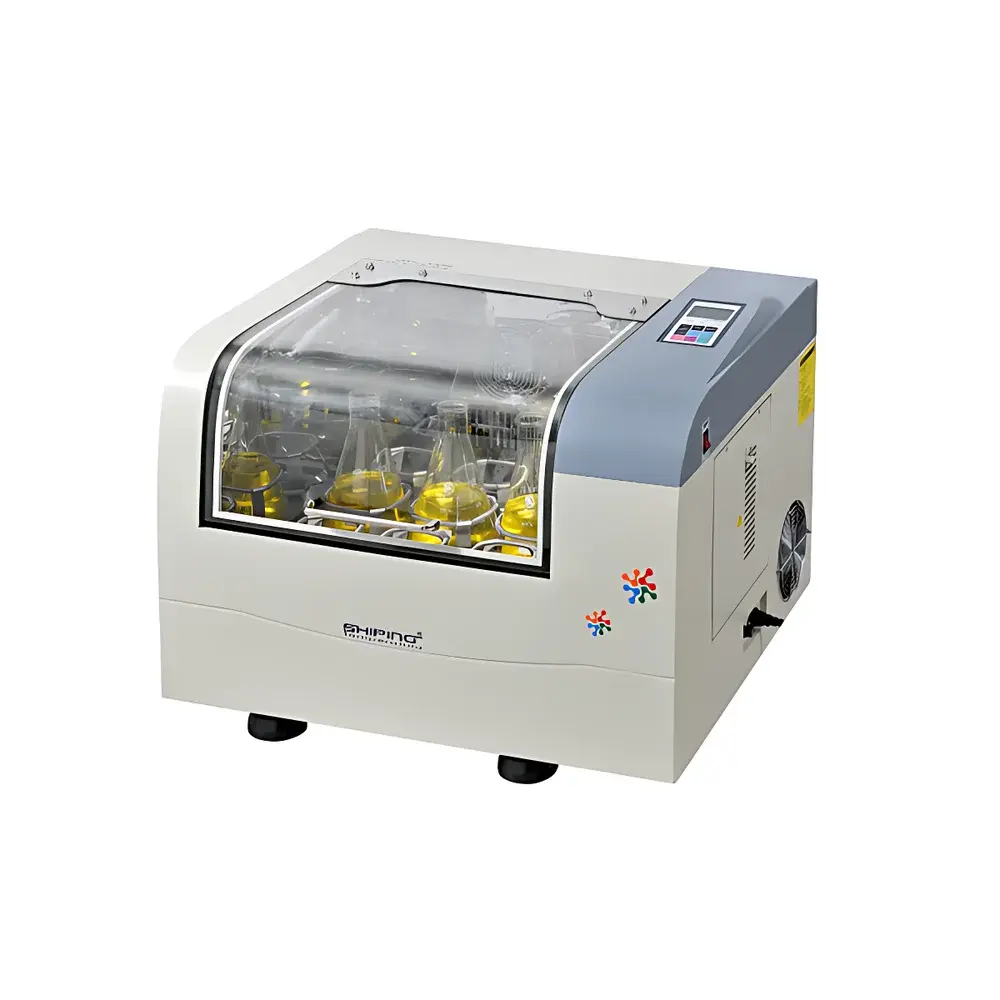
Shanghai Shiping GS-200B Benchtop Temperature-Controlled Orbital Shaker
| Brand | Shanghai Shiping |
|---|---|
| Origin | Shanghai, China |
| Manufacturer Type | Direct Manufacturer |
| Instrument Type | Full-Temperature Orbital Shaker |
| Timer Range | 0–999.59 min |
| Oscillation Speed | 30–1000 rpm |
| Orbit Diameter | 3 mm |
| Temperature Range | 4–60 °C |
| Shelf Quantity | 1 |
| Chamber Volume | 83 L |
| External Dimensions (W×D×H) | 778 × 685 × 600 mm |
| Internal Dimensions (W×D×H) | 490 × 470 × 360 mm |
| Platform Size | 420 × 400 mm |
| Max Load Capacity | 2000 mL × 5 |
| Power Supply | AC 200–240 V, 50–60 Hz |
| Total Power Consumption | 706 W |
| Net Weight | 83 kg |
| Noise Level | <45 dB(A) |
| Temp. Uniformity | ±1 °C |
| Temp. Accuracy | ±0.1 °C |
| Speed Accuracy | ±1 rpm |
| Cooling Medium | R134a (CFC-free) |
| Drive System | Single-axis parallellogram dynamic balance mechanism |
| Bearing | Imported double-row precision bearing (rated service life ≥100,000 h) |
| Display | 7-inch true-color capacitive touchscreen |
| Control Algorithm | PID microprocessor-based environmental scanning control |
| Programmability | 5 programs × 30 segments |
| Safety Features | Dual-limit temperature/speed alarm, independent over-temperature cutoff, leakage/overcurrent protection, sensor fault detection, door-open stop, auto-restart after power recovery |
| Compliance Support | Audit trail, user-level permissions (3-tier), parameter memory, real-time curve logging, historical data & alarm review, time-stamped event logging |
Overview
The Shanghai Shiping GS-200B Benchtop Temperature-Controlled Orbital Shaker is an engineered platform for precise, reproducible cultivation of microbial, mammalian, and hybridoma cell cultures under tightly regulated thermal and mechanical conditions. It operates on the principle of orbital shaking—generating uniform circular motion at controlled frequencies—to ensure homogeneous oxygen transfer, nutrient suspension, and metabolic waste dispersion in liquid-phase bioreactors. Designed for laboratory-scale fermentation, recombinant protein expression, high-throughput screening (HTS), and molecular biology workflows—including plasmid propagation, enzyme kinetics, and hybridization assays—the GS-200B integrates thermostatic control (4–60 °C) with high-resolution speed regulation (30–1000 rpm) and sub-millimeter orbit consistency (Φ3 mm). Its chamber architecture complies with fundamental cleanroom and GMP-aligned design principles, including seamless 304 stainless steel interior surfaces, rounded corners, and non-porous materials that resist biofilm formation and support validated cleaning protocols.
Key Features
- Single-axis parallellogram dynamic balance drive system: Eliminates mechanical friction and torque deviation; enables continuous operation with noise <45 dB(A) and long-term speed stability (±1 rpm).
- PID microprocessor-based environmental scanning control: Delivers ±0.1 °C temperature accuracy and ±1 rpm speed resolution via real-time feedback from dual platinum RTD sensors.
- Full-temperature refrigeration system: Uses R134a refrigerant with inverter-driven compressor; maintains frost-free evaporator operation across the entire 4–60 °C range while reducing energy consumption by >30% versus fixed-speed systems.
- 7-inch true-color capacitive touchscreen interface: Supports multi-segment programmable curves (5 programs × 30 segments), real-time graphical trend display, clock-synchronized event logging, and one-touch parameter locking.
- GMP-ready mechanical construction: 304 stainless steel mirror-finish inner chamber (rounded corners), electropolished bottle clamps (hardness 420 HBW, elasticity 360°), and imported double-row angular contact bearings rated for ≥100,000 hours MTBF.
- Triple-layer safety architecture: Includes hardware-independent over-temperature cutoff, dual-limit speed alarms, door-interlock shutdown, ground-fault circuit interruption, and automatic restart after power interruption with configurable delay.
Sample Compatibility & Compliance
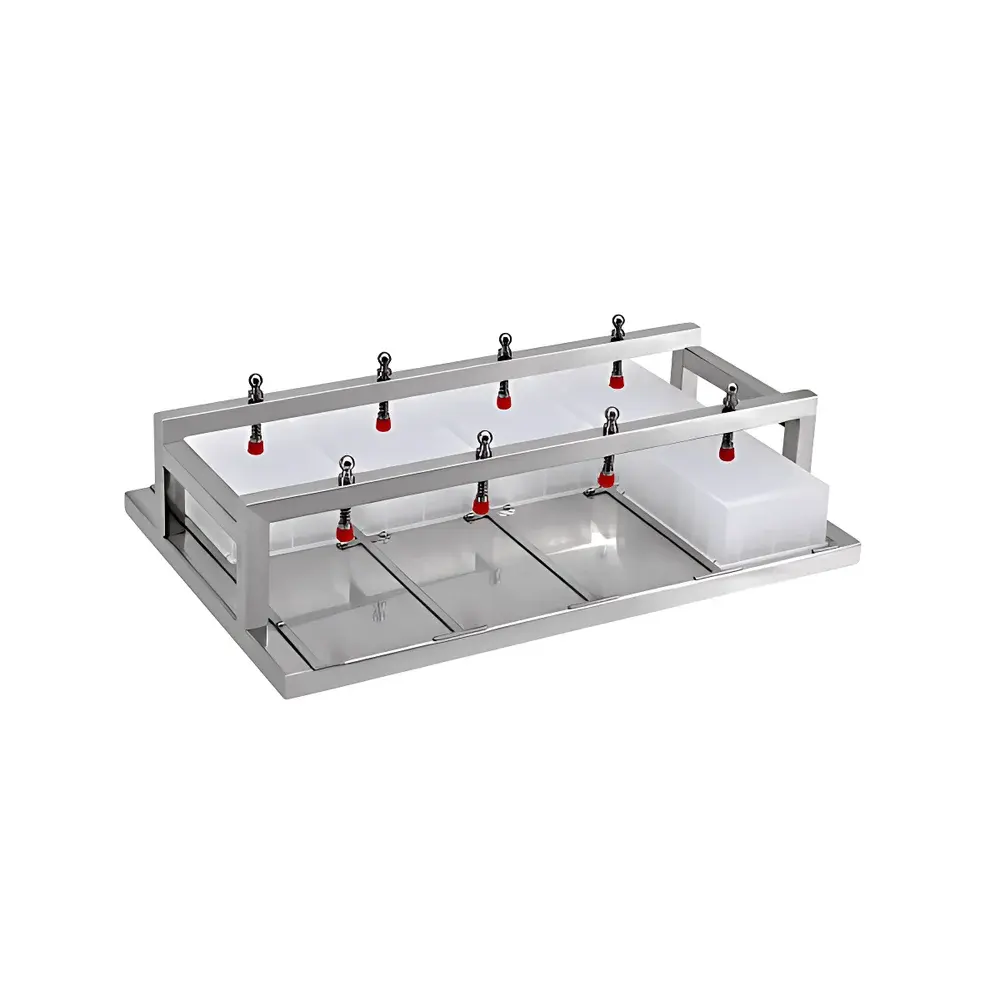
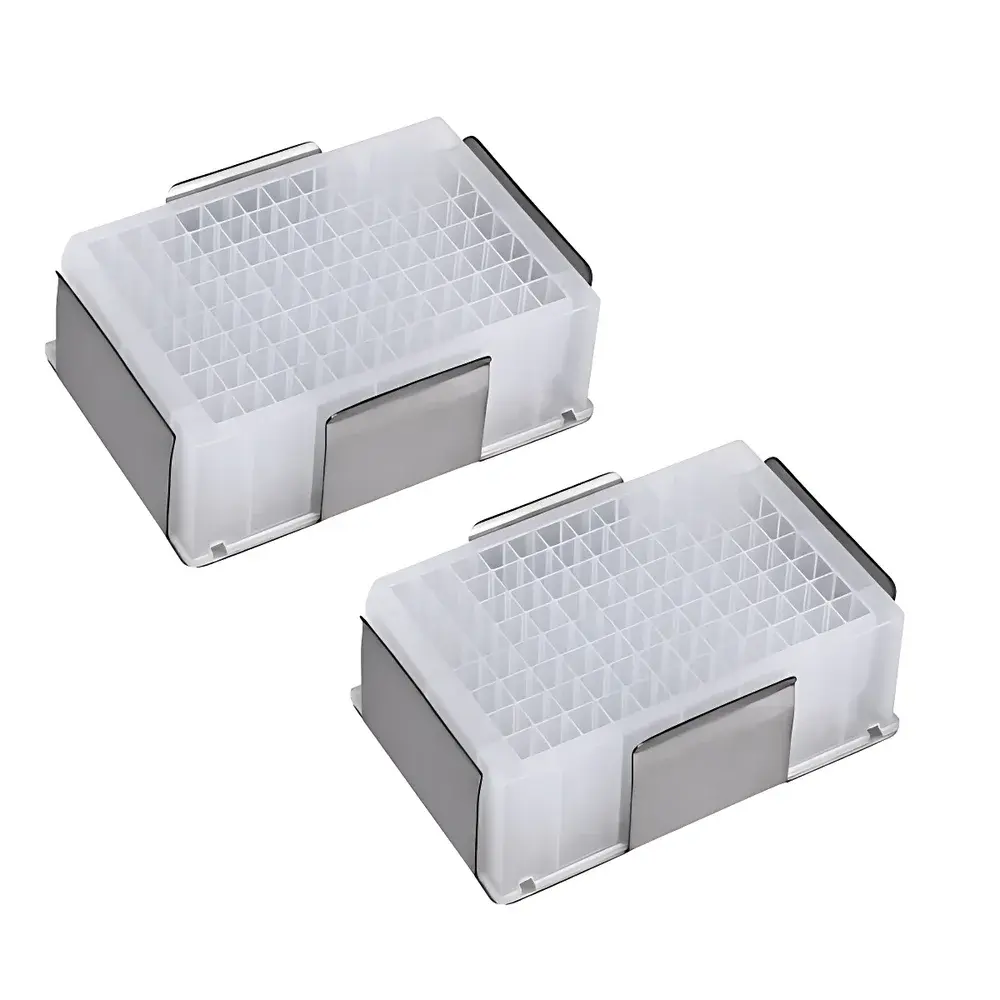
The GS-200B accommodates diverse vessel formats without adapter modification: standard Erlenmeyer flasks (50–2000 mL), test tubes, microcentrifuge tubes, deep-well plates, and 96-/384-well microtiter plates (up to 12 plates using optional dual microplate carriers). Its 420 × 400 mm platform supports flexible fixture configurations—including spring-loaded platforms, universal bottle clamps, enzyme-linked immunosorbent assay (ELISA) plate holders, and adhesive silicone mats—for secure retention under high-speed agitation. From a regulatory standpoint, the system supports GLP/GMP documentation requirements through built-in audit trail functionality (time-stamped, user-identified actions), three-tier permission management (administrator/operator/visitor), and encrypted historical data storage. While not pre-certified to ISO 13485 or FDA 21 CFR Part 11, its architecture aligns with validation prerequisites for IQ/OQ/PQ execution in pharmaceutical QC labs and academic core facilities.
Software & Data Management
All operational parameters—including setpoints, actual values, alarms, and user actions—are logged automatically with UTC timestamps and immutable identifiers. The embedded firmware enables export of CSV-formatted datasets via USB 2.0 port for offline analysis in MATLAB, Python (Pandas), or commercial LIMS platforms. Optional RS-485 Modbus RTU or Ethernet TCP/IP interfaces (available upon request) permit integration into centralized building management systems or SCADA environments. Firmware updates are performed locally via USB; no cloud dependency or vendor-hosted infrastructure is required. Data integrity safeguards include cyclic redundancy checks (CRC-32) on all stored records and write-protection modes for critical configuration files.
Applications
- Bacterial and yeast fermentation: Optimized for aerobic growth of E. coli, S. cerevisiae, and B. subtilis in LB, TB, or defined minimal media.
- Mammalian cell culture: Supports suspension-adapted CHO, HEK293, and hybridoma lines under low-shear conditions (≤150 rpm) with tight temperature homogeneity (±1 °C).
- High-throughput screening: Enables parallel processing of compound libraries in 96-well plates for cytotoxicity, reporter gene, or binding affinity assays.
- Molecular biology workflows: Facilitates DNA ligation, restriction digestion, PCR master mix preparation, and antigen-antibody incubations requiring consistent thermal and kinetic input.
- Environmental microbiology: Used in BOD testing, biodegradation studies, and activated sludge acclimation under controlled aeration and temperature profiles.
FAQ
What is the maximum flask capacity supported on the GS-200B platform?
The unit accommodates up to five 2000 mL Erlenmeyer flasks, nine 1000 mL flasks, sixteen 250 mL flasks, or twenty-five 50 mL flasks—depending on selected clamping configuration.
Does the GS-200B support validation documentation packages (e.g., 3Q, IQ/OQ)?
Yes—while factory-supplied documentation covers mechanical and electrical specifications, users may generate full qualification protocols using the system’s audit trail, calibration traceability features, and programmable test sequences.
Can the shaker operate continuously at 4 °C with full load?
Yes—the inverter-driven refrigeration system maintains stable sub-ambient temperatures without evaporator frosting, even during extended 24/7 operation at maximum payload.
Is remote monitoring via PC or mobile device supported natively?
Native Wi-Fi or cellular connectivity is not integrated; however, optional RS-485/Ethernet modules enable third-party SCADA or LabVIEW integration for remote status polling and parameter adjustment.
What maintenance intervals are recommended for long-term reliability?
Annual verification of temperature and speed calibration is advised; bearing lubrication is not required due to sealed, lifetime-rated construction; routine cleaning of chamber surfaces and air intake filters every 3 months ensures optimal thermal exchange efficiency.





