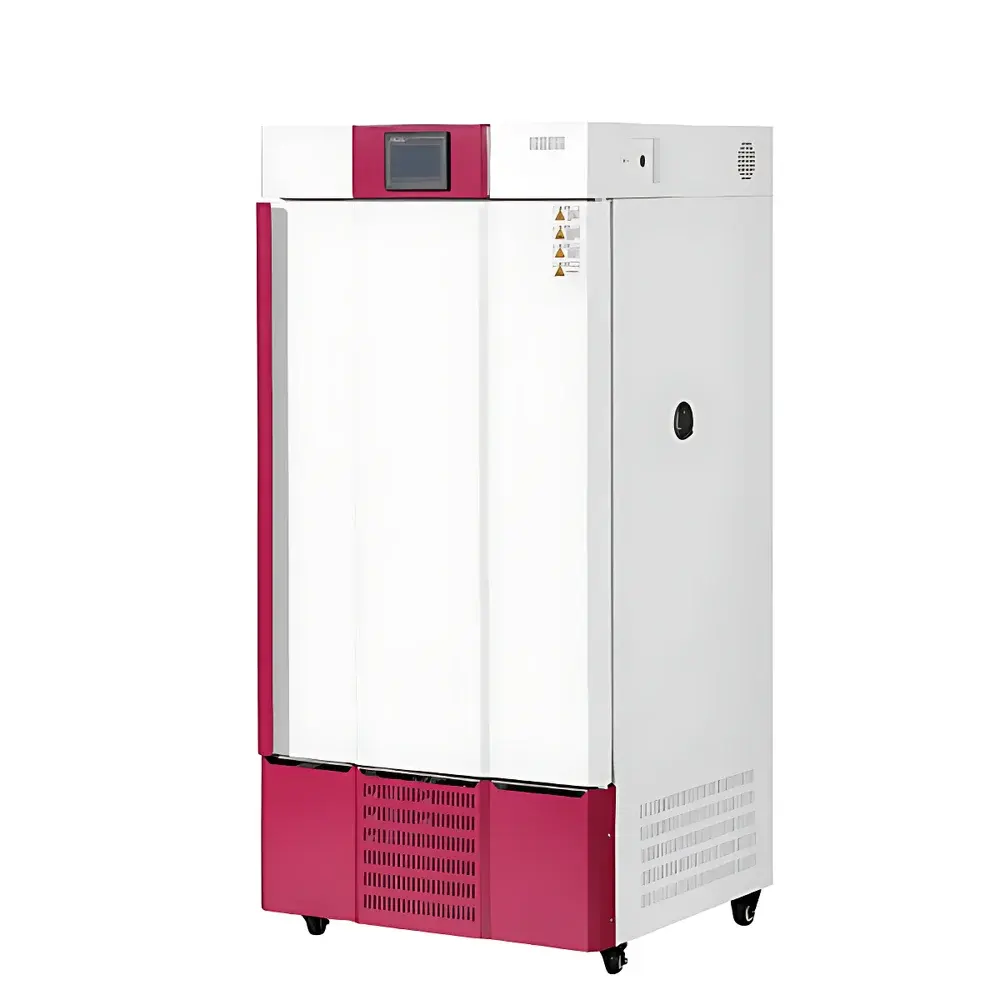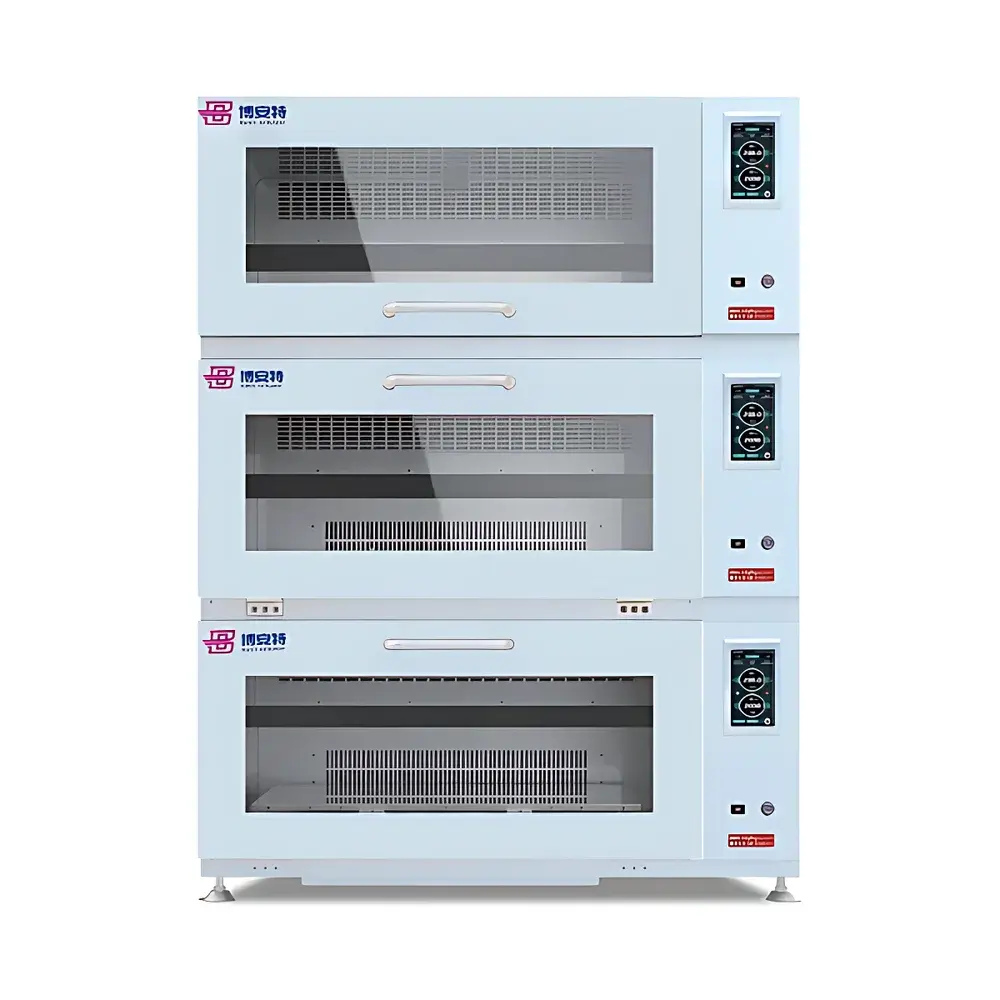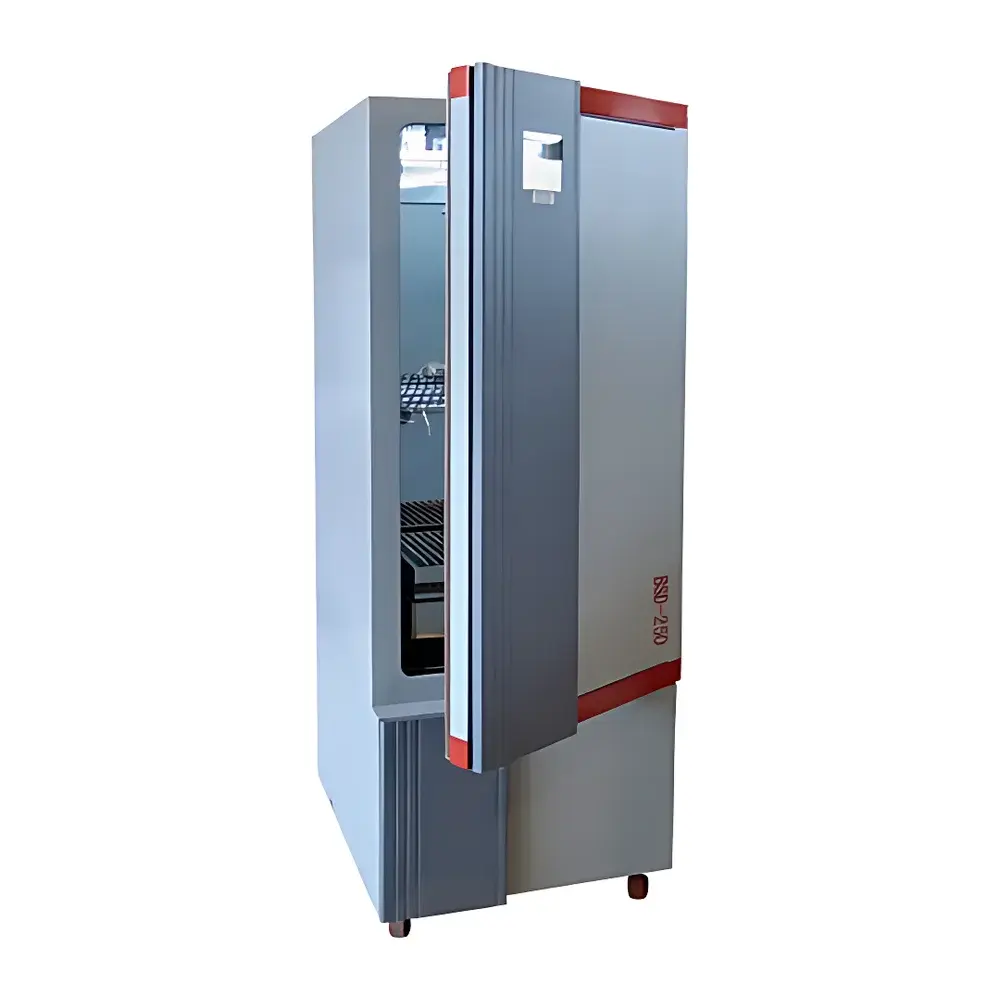
Jihepu BSD-100 Orbital & Reciprocating Shaking Incubator
| Brand | Jihepu |
|---|---|
| Model | BSD-100 |
| Origin | Shandong, China |
| Temperature Range | 0–60 °C |
| Temperature Uniformity | ±1 °C |
| Temperature Fluctuation | ±0.5 °C |
| Resolution | 0.1 °C |
| Humidity Range | 20–90 %RH |
| Chamber Capacity | 108 L |
| Internal Dimensions (W×D×H) | 490×390×610 mm |
| External Dimensions (W×D×H) | 630×680×1250 mm |
| Power Input | 1050 W |
| Timer Range | 0–9999 min |
| Shaking Mode | Orbital (0–220 rpm, 20 mm amplitude) / Reciprocating (0–300 cpm, 30 mm amplitude) |
| Shelf | 1 adjustable stainless steel tray |
| Interface | RS-485 |
| Programmable Cycles | 10 segments × 99 cycles |
Overview
The Jihepu BSD-100 Orbital & Reciprocating Shaking Incubator is an integrated environmental control system engineered for precise temperature-regulated cultivation of microbial, cellular, and botanical samples under dynamic agitation. It combines dual-mode shaking—orbital rotation and linear reciprocation—with a tightly controlled incubation chamber, enabling reproducible growth conditions essential for BOD analysis, aerobic/anaerobic microbiological assays, suspension cell culture, enzyme kinetics studies, and seed germination trials. The unit operates on a thermoelectrically balanced air circulation architecture, featuring an independent fresh-air inlet valve, sealed chamber operation capability, and a patented frost-free refrigeration system using R134a refrigerant. Its microprocessor-based PID temperature controller maintains setpoint stability across the full 0–60 °C range, with real-time monitoring via a backlit LCD interface and built-in overtemperature alarm logic compliant with IEC 61000-4 electromagnetic immunity standards.
Key Features
- Double-shielded observation window with dual-layer door design minimizes thermal leakage while enabling non-intrusive sample inspection
- Modular stainless-steel interior (mirror-finish 304 grade) and cold-rolled steel exterior with epoxy electrostatic coating ensure corrosion resistance and long-term structural integrity
- Dual-mode shaking mechanism supports both orbital (0–220 rpm, 20 mm diameter) and reciprocating (0–300 cpm, 30 mm stroke) motion profiles, selectable via front-panel controls
- Patented integrated refrigeration module with auto-defrost cycle eliminates ice accumulation without interrupting temperature stability or requiring user intervention
- Programmable multi-segment timer (up to 10 segments × 99 cycles) enables unattended overnight or multi-day protocols with automatic transition between temperature and agitation phases
- RS-485 serial interface supports bi-directional communication with laboratory data acquisition systems, SCADA platforms, or validated LIMS environments
- Power-loss recovery function retains all active parameters—including setpoints, elapsed time, and current cycle index—and resumes operation upon grid restoration
Sample Compatibility & Compliance
The BSD-100 accommodates standard microbiological vessels (e.g., Erlenmeyer flasks up to 2 L, test tubes, petri dishes) and plant tissue culture containers on its 370×300 mm oscillating platform. Its humidity control (20–90 %RH) and optional fresh-air modulation support aerobic cultures requiring gas exchange, while sealed operation permits low-O₂ or CO₂-enriched environments when interfaced with external gas manifolds. The device conforms to ISO 13485 manufacturing quality requirements for in vitro diagnostic equipment support systems and meets electrical safety standards per GB 4793.1–2007 (equivalent to IEC 61010-1). Optional GPRS alarm modules provide remote SMS alerts for temperature excursions or power failure events—critical for GLP-compliant environmental monitoring workflows.
Software & Data Management
While the BSD-100 operates as a standalone instrument, its RS-485 port enables integration with third-party software such as LabVIEW, MATLAB, or custom Python-based logging tools using Modbus RTU protocol. Data streams include real-time temperature, setpoint, agitation speed, and operational status flags. When paired with optional accessories—such as thermal printers (supporting time-stamped curve output), PC-based supervision software, or cloud-connected gateways—the system satisfies FDA 21 CFR Part 11 audit trail requirements for electronic records, including user authentication, event timestamping, and immutable parameter change logs. Firmware updates are performed via USB-to-RS485 adapter without hardware modification.
Applications
- Biochemical oxygen demand (BOD5) testing per ASTM D5210 and ISO 5815–1
- Microbial strain maintenance and subculturing under defined aeration and thermal conditions
- Yeast and bacterial fermentation optimization studies requiring simultaneous temperature and mixing control
- Plant tissue culture propagation, callus induction, and secondary metabolite production assays
- Environmental toxicity screening using algal growth inhibition (OECD 201) or Daphnia immobilization (OECD 202) protocols
- Enzyme activity profiling where reaction kinetics depend on consistent suspension homogeneity and thermal stability
FAQ
Does the BSD-100 support continuous operation at 4 °C with active shaking?
Yes—the refrigeration system is rated for sustained operation at 4 °C with orbital shaking up to 200 rpm; however, prolonged use below 10 °C may reduce humidity retention due to condensation dynamics.
Can multiple BSD-100 units be daisy-chained via RS-485 for centralized monitoring?
Yes—each unit supports Modbus RTU addressing (configurable via DIP switches), enabling up to 32 devices on a single bus with standard termination resistors.
Is the internal shelf load-rated, and what is the maximum recommended weight?
The stainless-steel shelf is rated for 15 kg distributed load; exceeding this may affect shaking uniformity and long-term bearing wear.
How does the auto-defrost cycle impact temperature stability during extended runs?
The defrost routine activates only when evaporator coil frost accumulation exceeds threshold; it consumes <2 min and induces <0.3 °C transient deviation, verified per internal validation report #JHP-BSD100-TR-2023-087.
Are calibration certificates traceable to NIM or other national metrology institutes available?
Factory calibration reports (temperature, time, speed) are provided with each unit; NIM-traceable certification is available as a paid service with lead time of 10 working days.