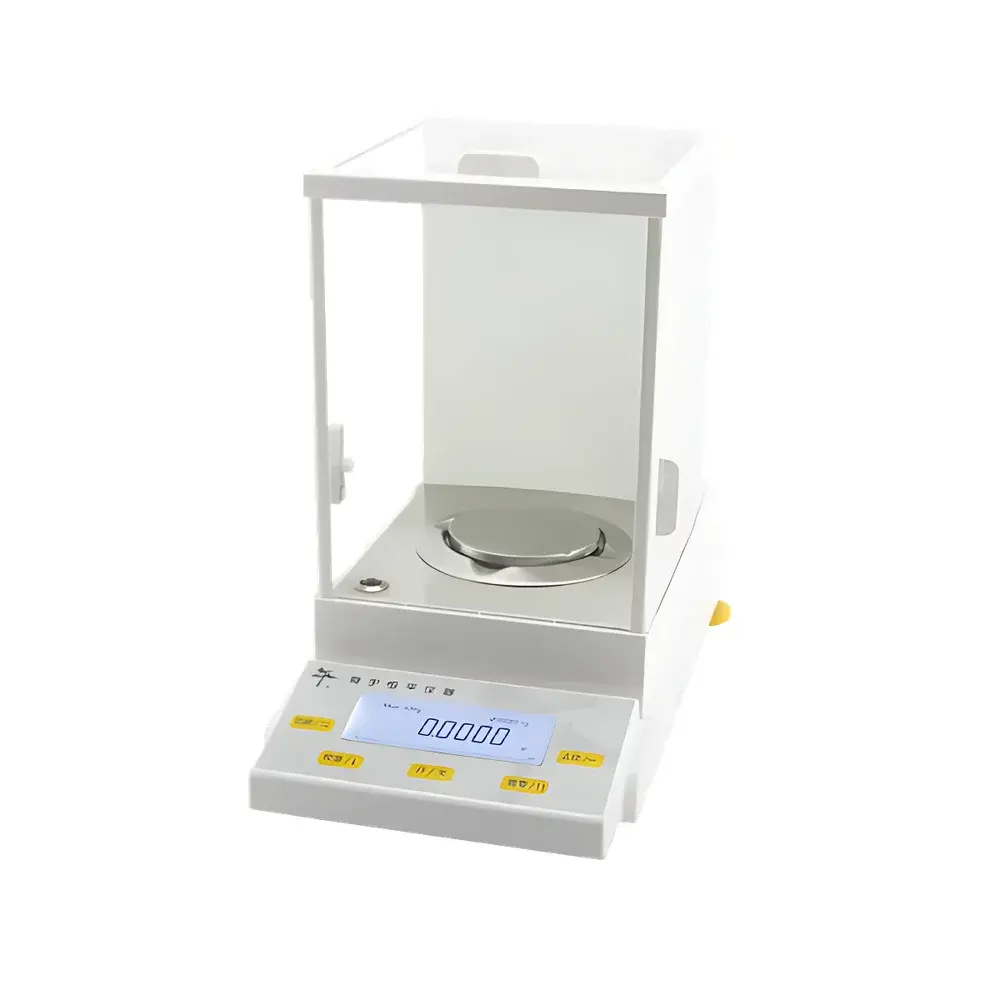
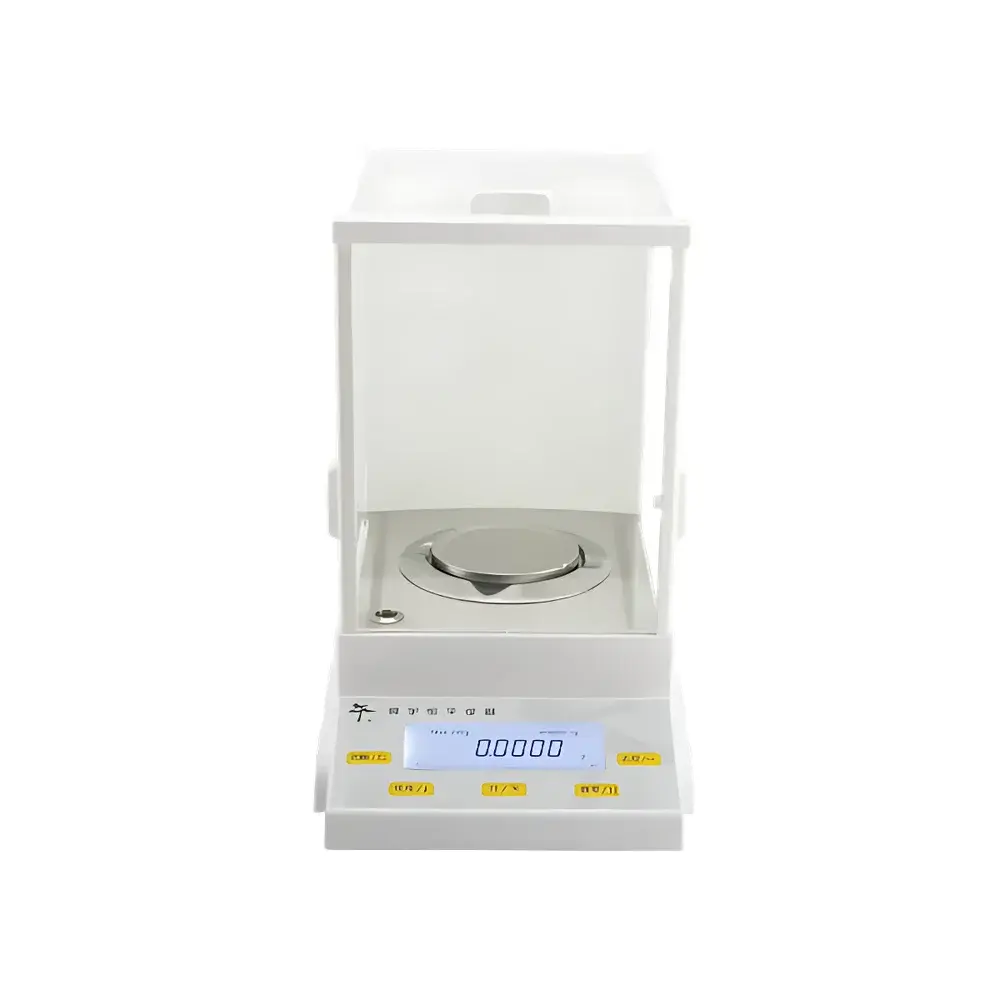
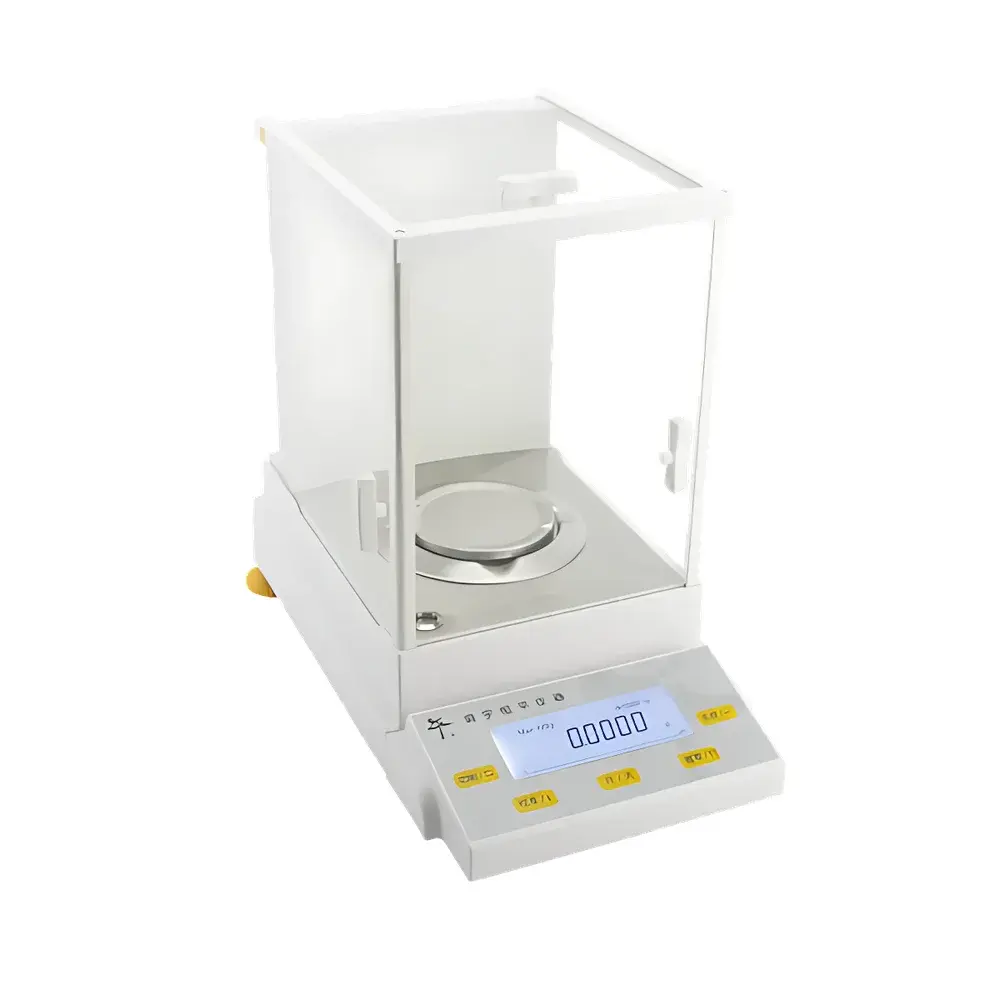
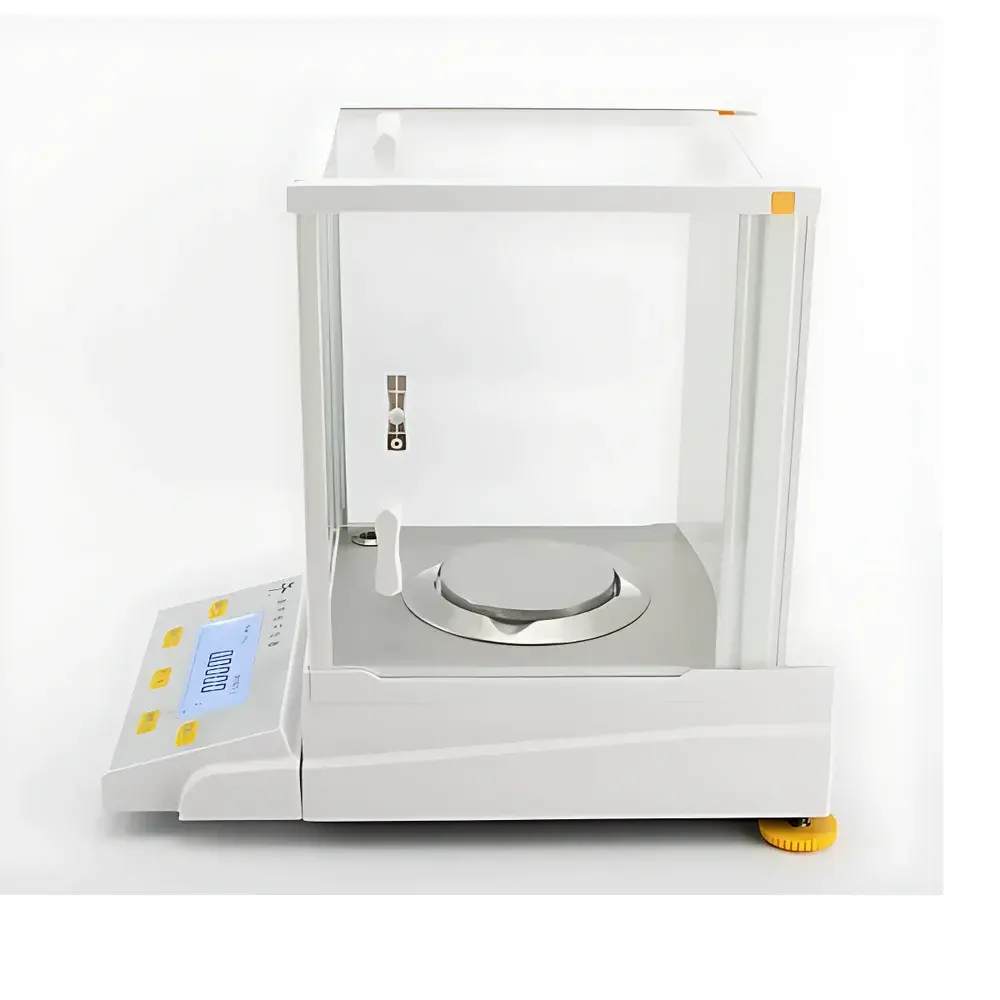
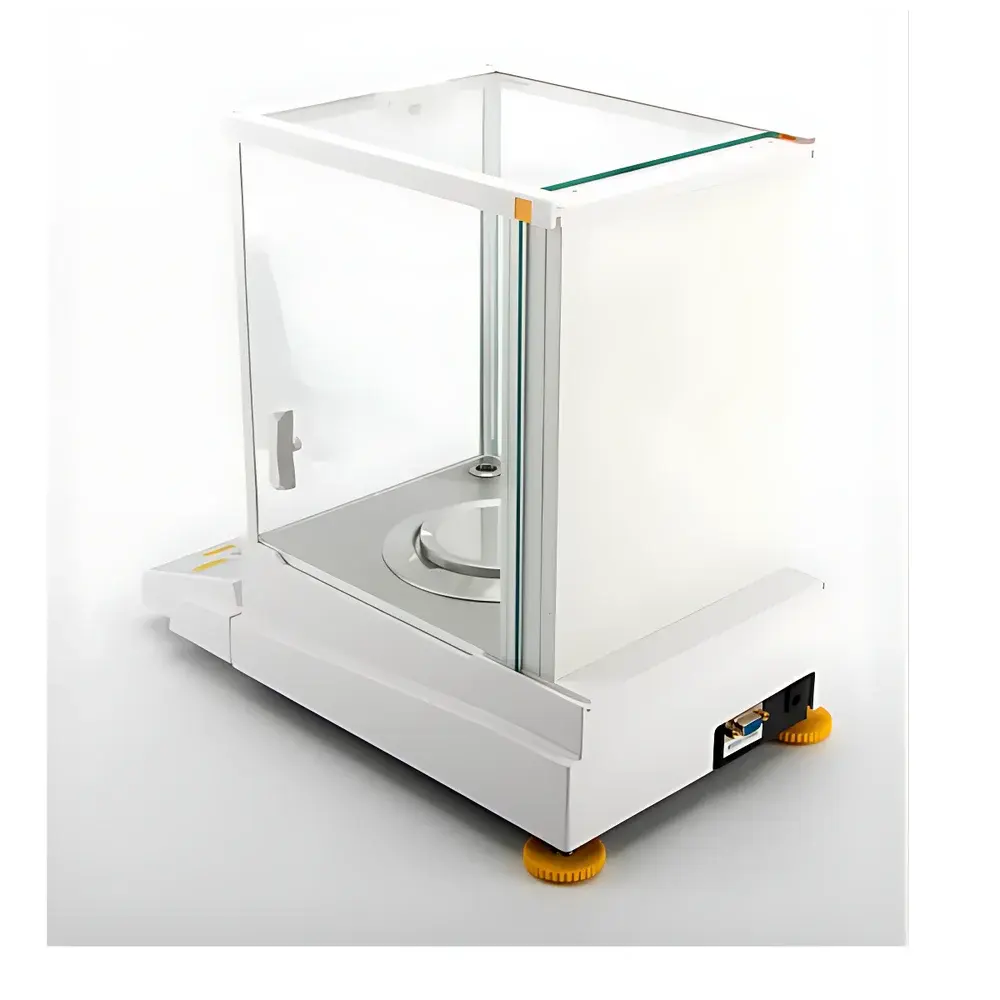

SUNNY HENGPING FA2004 Analytical Balance
| Brand | SUNNY HENGPING INSTRUMENT |
|---|---|
| Origin | Shanghai, China |
| Manufacturer Type | Direct Manufacturer |
| Product Category | Domestic (China-Made) |
| Model | FA2004 |
| Instrument Type | Analytical Balance |
| Maximum Capacity | 200 g |
| Readability | 0.1 mg |
| Repeatability | ±0.1 mg |
| Linearity | ±0.2 mg |
| Calibration Method | External |
| Pan Diameter | Φ90 mm |
| Draft Shield Internal Volume | 165 × 150 × 200 mm (L×W×H) |
| Dimensions (W×D×H) | 365 × 223 × 338 mm |
| Power Supply | 220 V / 50 Hz or 110 V / 60 Hz |
| Power Consumption | 12 W |
| Net Weight | 5.5 kg |
| Operating Temperature | 5–40 °C |
| Relative Humidity | ≤85 % RH (non-condensing) |
Overview
The SUNNY HENGPING FA2004 Analytical Balance is a precision mass measurement instrument engineered for laboratory environments requiring high reproducibility and traceable weighing performance. Based on electromagnetic force compensation (EMFC) transduction technology, it delivers stable, drift-compensated measurements across its full 200 g capacity range with 0.1 mg readability. Designed in strict accordance with ISO 9001 manufacturing protocols and aligned with metrological principles outlined in OIML R76 and ASTM E898, the FA2004 meets foundational requirements for analytical weighing in QC laboratories, academic research settings, and regulated pharmaceutical applications where GLP-compliant documentation and consistent repeatability are essential.
Key Features
- Electromagnetic force compensation sensor architecture ensures long-term stability and minimal thermal drift under ambient laboratory conditions.
- Integrated draft shield with fully transparent tempered glass panels (four-sided vertical access) and aluminum rear panel provides effective air current isolation while maintaining operator visibility and ergonomic access.
- Internal lower-hanging hook assembly enables below-balance weighing for density determination and magnetic susceptibility testing; protected by mechanical overload safeguards.
- ABS engineering plastic housing offers corrosion resistance, impact resilience, and lightweight structural integrity—optimized for benchtop durability without compromising rigidity.
- Aluminum alloy base plate dampens low-frequency environmental vibrations, reducing influence from foot traffic or adjacent equipment operation.
- Four-stage shock absorption system and adjustable weighing speed allow dynamic optimization for varying sample volatility and environmental conditions.
- Programmable auto-zero tracking, full-range tare function, and configurable auto-power-off enhance operational efficiency and data consistency.
- Self-diagnostic firmware continuously monitors sensor status, load cell response, and internal calibration state—flagging anomalies before measurement deviation occurs.
Sample Compatibility & Compliance
The FA2004 accommodates standard laboratory containers—including weighing boats, crucibles, volumetric flasks, and small vials—within its 90 mm diameter stainless-steel weighing pan. Its enclosed draft shield supports accurate weighing of hygroscopic, volatile, or static-prone samples. The balance conforms to international regulatory expectations for routine analytical use: it supports external calibration using certified Class M1 or M2 weights per ISO/IEC 17025 guidelines, and its RS232 serial interface enables connection to validated LIMS or ELN systems compliant with FDA 21 CFR Part 11 when paired with appropriate software controls. While not inherently 21 CFR Part 11–certified as a standalone device, its audit-trail-capable output and deterministic calibration behavior make it suitable for GxP-aligned workflows when implemented within documented SOPs.
Software & Data Management
Equipped with an RS232 interface (no USB or Ethernet), the FA2004 outputs ASCII-formatted weight data at user-selectable baud rates (9600–19200 bps). It supports real-time transmission of gross weight, net weight, tare value, unit identifier, and status flags (e.g., “stable”, “overload”, “calibrating”). When integrated into validated laboratory informatics infrastructure, this stream facilitates automated data capture into electronic lab notebooks (ELNs), chromatography data systems (CDS), or statistical process control (SPC) platforms. Optional terminal emulation software allows manual logging, but full traceability requires integration with time-stamped, user-authenticated acquisition tools meeting ALCOA+ data integrity criteria.
Applications
- Quantitative preparation of reference standards and working solutions in pharmaceutical development and quality control labs.
- Gravimetric analysis including ash content, moisture loss on drying (LOD), and residue-on-ignition (ROI) per USP & EP monographs.
- Formulation support for fine chemical synthesis, catalyst loading, and polymer additive dosing.
- Educational use in undergraduate chemistry and materials science laboratories for teaching metrology fundamentals and uncertainty propagation.
- Environmental testing labs performing filter weighing for total suspended solids (TSS) and particulate matter (PM2.5/PM10) analysis.
- Calibration verification of pipettes and volumetric glassware via water weighing per ISO 8655-6.
FAQ
What calibration standards are recommended for the FA2004?
External calibration must be performed using traceable weights certified to ISO/IEC 17025, typically Class M1 (±0.5 mg tolerance at 100 g) or Class M2 (±1.0 mg tolerance at 200 g), depending on required measurement uncertainty.
Does the FA2004 support internal calibration?
No—the FA2004 relies exclusively on external calibration; no motorized or built-in calibration mass is included.
Can the balance operate in environments with elevated humidity?
It is rated for ≤85% relative humidity non-condensing; prolonged exposure above this threshold may affect sensor longevity and zero stability.
Is the RS232 interface compatible with modern Windows/macOS systems?
Yes—when used with a certified USB-to-RS232 adapter and properly configured terminal software or custom acquisition scripts, data streaming remains fully functional.
How is repeatability verified during routine performance checks?
Repeatability is assessed by repeated weighing of a stable test weight (e.g., 100 g Class M2) under identical environmental conditions; observed standard deviation must remain ≤±0.1 mg across ≥10 consecutive readings.