
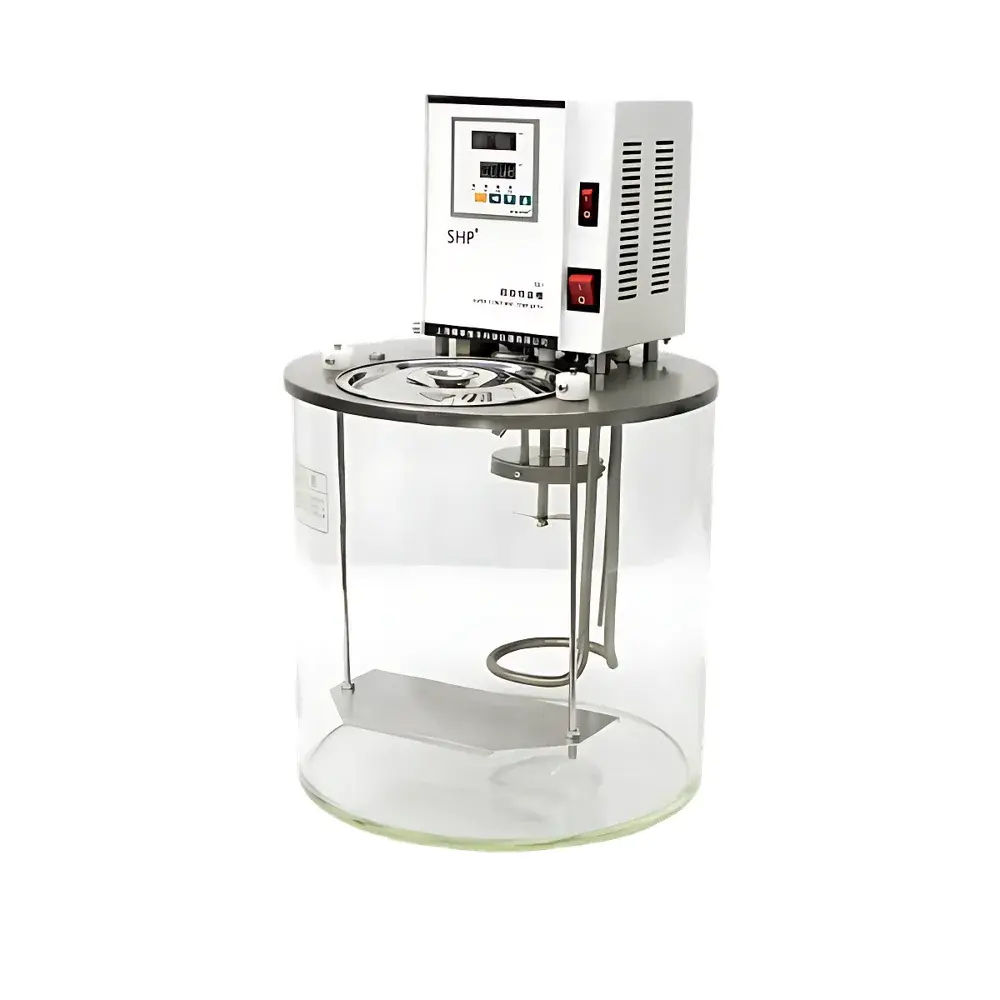
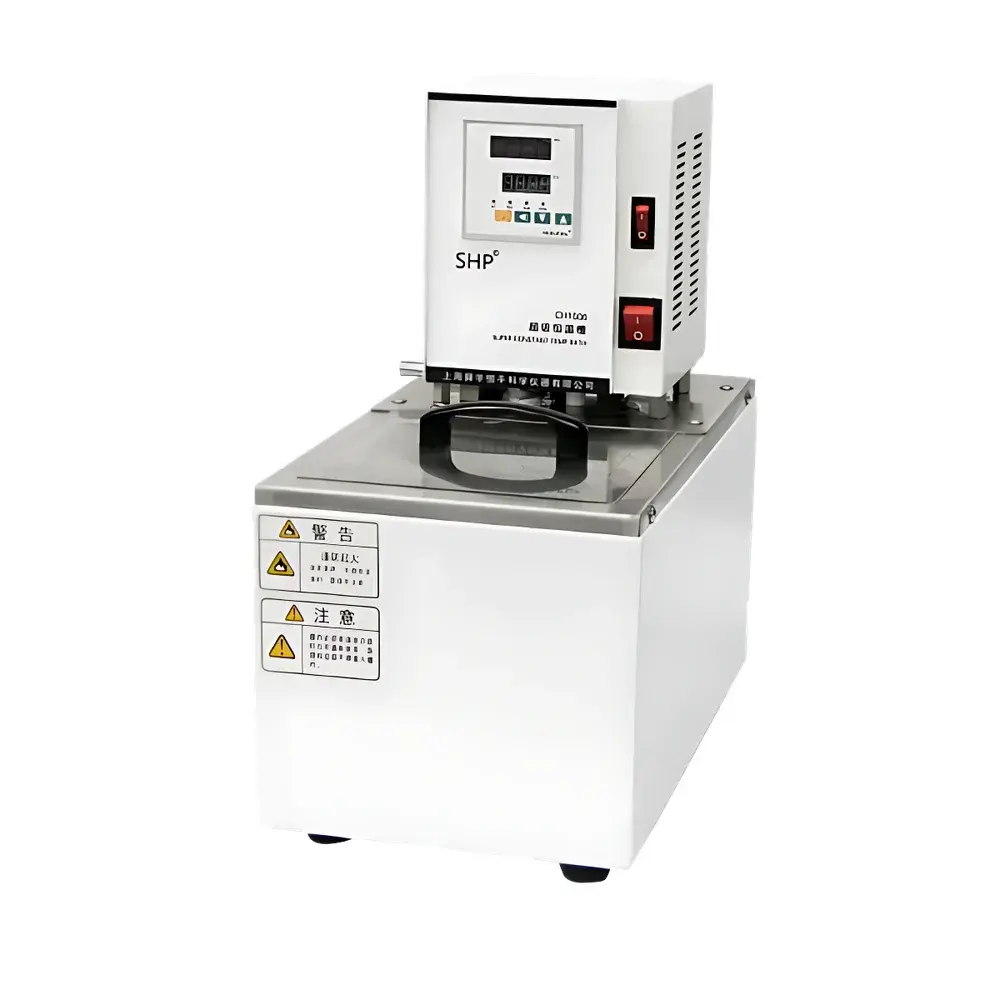
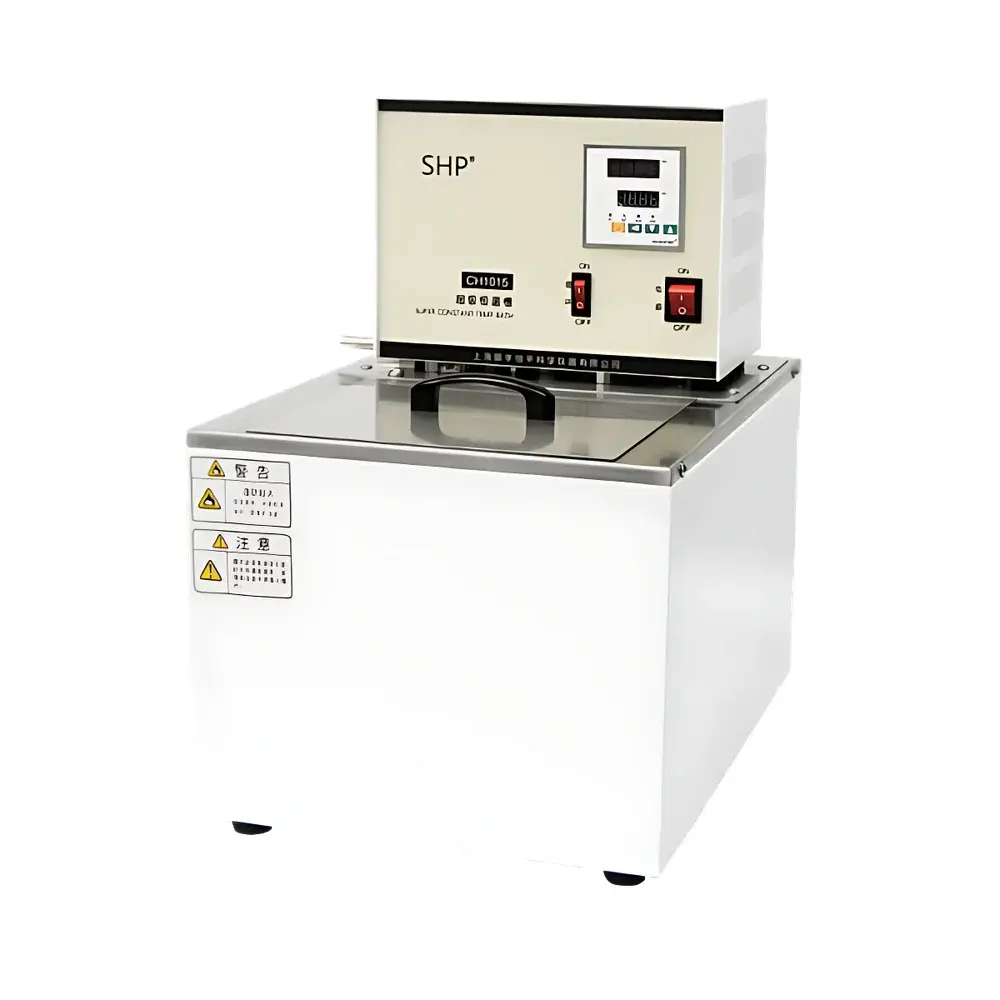
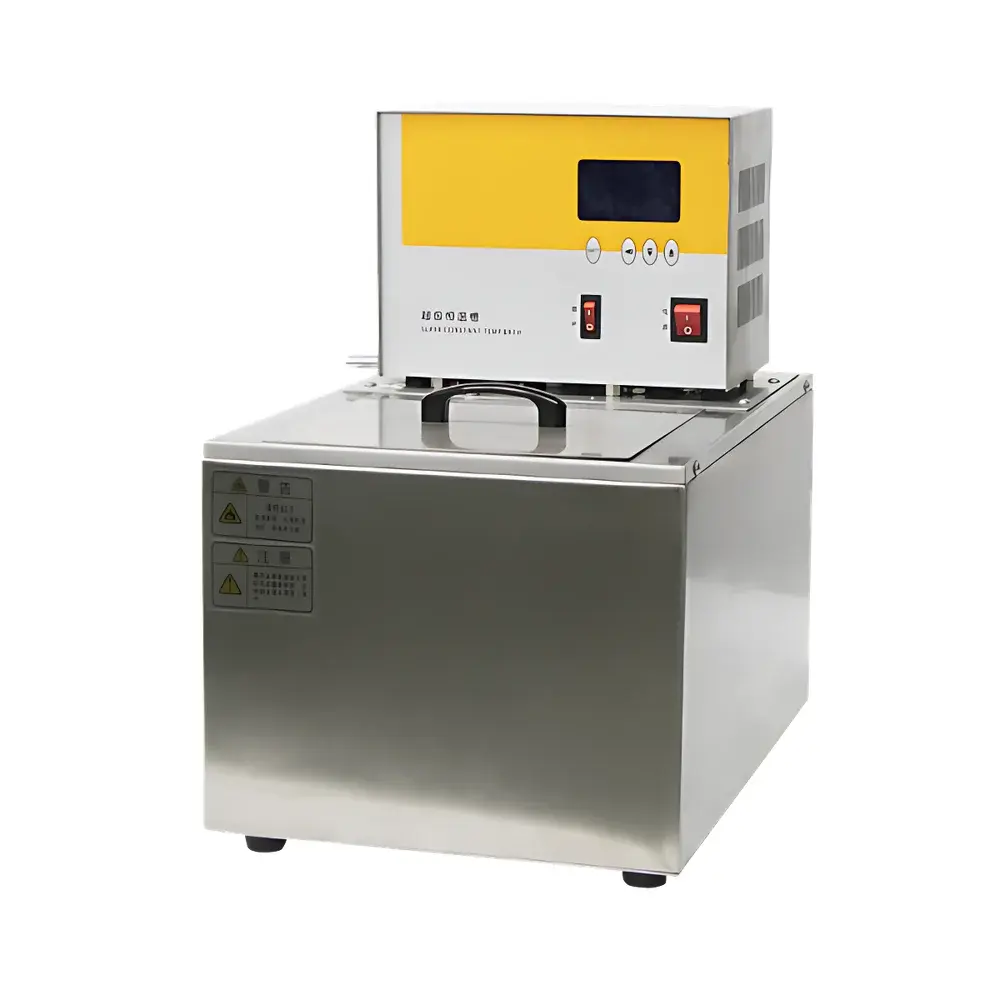
SUNNY HENGPING CHY1015 Advanced Circulating Constant-Temperature Bath
| Brand | SUNNY HENGPING INSTRUMENT |
|---|---|
| Origin | Shanghai, China |
| Manufacturer Type | Direct Manufacturer |
| Country of Origin | China |
| Model | CHY1015 |
| Instrument Type | Circulating Constant-Temperature Bath |
| Circulation Mode | Internal & External Circulation |
| Temperature Control | Heating-Only |
| Bath Volume | 20 L |
| Temperature Range | Ambient +5°C to 95°C |
| Temperature Stability | ±0.05°C |
| Input Power | 1500 W |
| Pump Flow Rate | 8 L/min |
| Display Resolution | 0.1°C |
| Construction Material | Stainless Steel (304) |
| Water Level Alarm | Yes |
| Programmable Function | Yes |
| Sensor Type | Imported Pt100 RTD |
Overview
The SUNNY HENGPING CHY1015 is a high-precision circulating constant-temperature bath engineered for laboratory applications requiring exceptional thermal stability and long-term operational reliability. Utilizing a microcomputer-based PID temperature control system paired with an imported Pt100 platinum resistance thermometer, the CHY1015 achieves a temperature stability of ±0.05°C across its full operating range (ambient +5°C to 95°C), making it suitable for calibration of temperature-sensitive instrumentation, viscometers, spectrophotometers, and other analytical devices requiring stable thermal environments. Its dual-mode circulation architecture—supporting both internal recirculation and external closed-loop circulation via integrated pump and inlet/outlet ports—ensures uniform heat distribution and enables integration with external equipment such as rotary evaporators, reaction jackets, or calorimeters. The unit features a 20-liter stainless steel (AISI 304) inner tank with corrosion-resistant finish, reinforced structural integrity, and a sealed design minimizing evaporation and contamination.
Key Features
- Precision temperature control with ±0.05°C stability and 0.1°C display resolution, validated under steady-state conditions per ISO/IEC 17025-relevant thermal performance protocols
- Dual-circulation capability: configurable internal recirculation for bath homogeneity or external circulation (up to 8 L/min flow rate) for process coupling
- Programmable temperature ramping and soak profiles—supports up to 10-step sequences with user-defined dwell times and target temperatures
- Comprehensive safety architecture including over-temperature cut-off, dry-run protection (via water level sensor), and thermocouple failure detection (break alarm)
- Liquid crystal display (LCD) interface with intuitive menu navigation, real-time temperature graphing, and event logging of critical alarms
- Stainless steel construction (inner tank and exterior housing) compliant with ISO 8502-3 surface cleanliness requirements for lab-grade equipment
- Front-accessible water fill port and drain valve; integrated condensation management system with dedicated cold trap channel
Sample Compatibility & Compliance
The CHY1015 is designed for use with aqueous solutions, silicone oils (within specified viscosity limits), and low-volatility organic heat transfer fluids compatible with 304 stainless steel. It is not intended for flammable solvents or aggressive acids without auxiliary containment. The unit conforms to IEC 61010-1:2010 (Safety Requirements for Electrical Equipment for Measurement, Control, and Laboratory Use) and meets EMC directive 2014/30/EU. Its temperature control algorithm supports traceable calibration using NIST-traceable reference thermometers, facilitating compliance with GLP and ISO/IEC 17025 documentation requirements. While not certified for medical device manufacturing, it is routinely deployed in QC laboratories supporting USP , ASTM E2251, and ISO 17025-accredited testing workflows.
Software & Data Management
The CHY1015 includes optional RS232/RS485 communication interface (standard on firmware v2.3+) for remote monitoring and control via host PC or SCADA systems. Compatible with SUNNY HENGPING’s proprietary LabTemp Control Suite (Windows-based), the software enables automated data logging at user-defined intervals (1s–300s), export to CSV/Excel formats, and generation of calibration certificates with time-stamped audit trails. All parameter changes, alarm events, and temperature deviations are timestamped and stored in non-volatile memory—supporting FDA 21 CFR Part 11-compliant electronic record retention when deployed with validated software configuration and access controls.
Applications
- Thermal conditioning of reference standards prior to metrological verification
- Temperature stabilization of UV-Vis cuvettes, HPLC columns, and capillary electrophoresis modules
- Supporting viscosity measurements in rotational rheometers and capillary viscometers
- Calibration of digital thermometers, thermocouples, and infrared sensors against fixed-point references
- Long-duration stability testing of biological reagents and enzyme formulations at controlled sub-boiling temperatures
- External heat source for jacketed reactors, distillation assemblies, and material aging chambers
FAQ
What is the maximum recommended fluid height for optimal circulation and temperature uniformity?
The working volume should be maintained between 12 L and 20 L to ensure full submersion of the heating element and sensor while allowing adequate headspace for thermal expansion.
Can the CHY1015 operate continuously for 72+ hours without maintenance?
Yes—when filled with deionized water and operated within ambient conditions ≤30°C and relative humidity ≤70%, the unit is rated for unattended operation up to 168 hours per maintenance cycle.
Is external circulation compatible with pressurized systems?
No—the CHY1015 is designed for open-loop or gravity-fed external circuits only; it does not support backpressure exceeding 0.1 MPa.
Does the programmable function support ramp-and-soak cycles with variable rates?
Yes—users may define up to 10 segments with independent ramp rates (0.1–10.0°C/min) and hold durations (1 min–99 h 59 min).
How often should the Pt100 sensor be recalibrated?
Annual verification against a certified reference thermometer is recommended; more frequent checks are advised if used in GxP-regulated environments or after mechanical shock events.



