
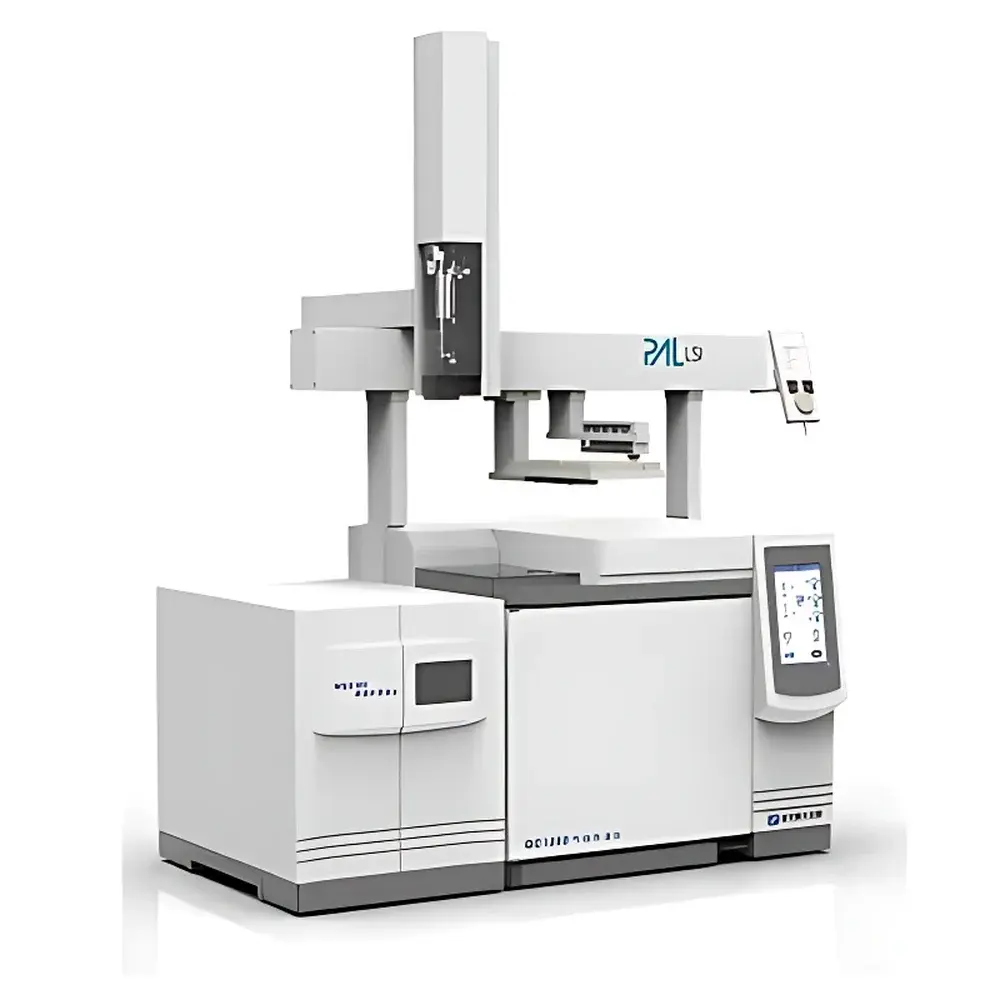
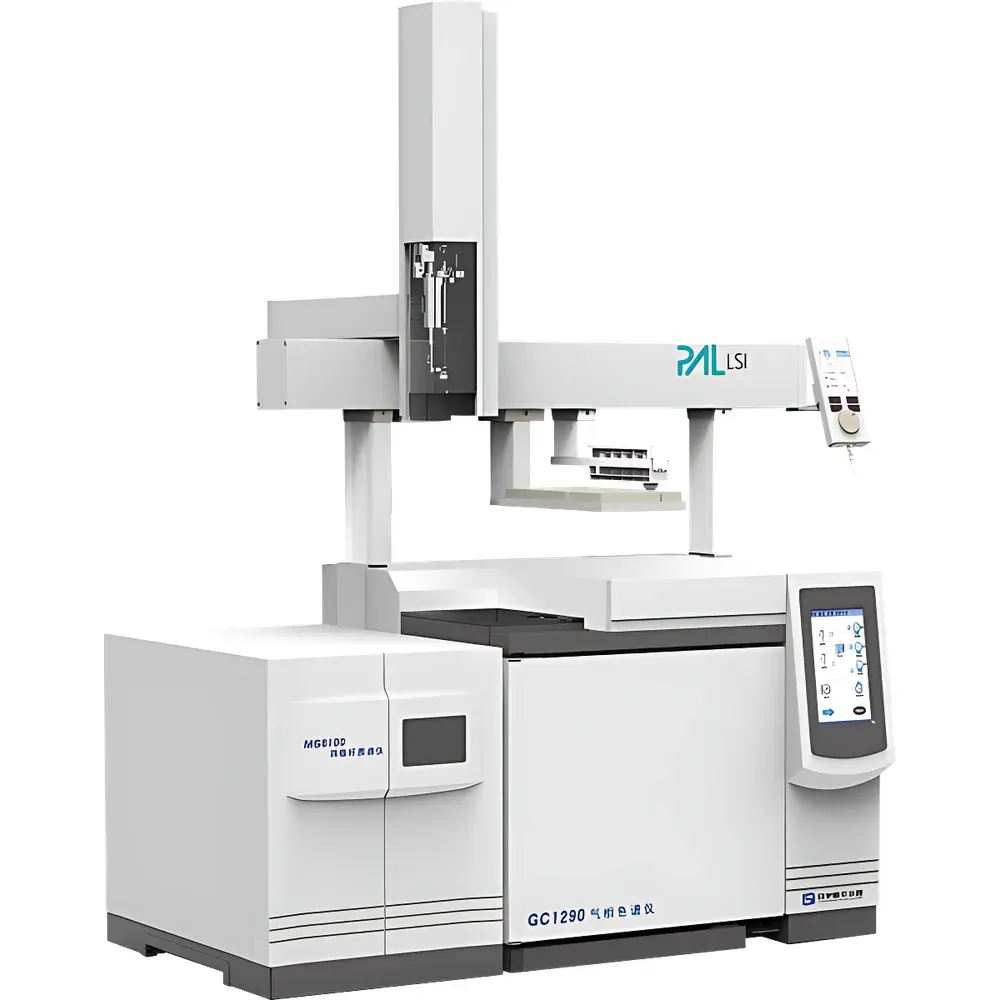
Sunny Hengping GC1290/MS8100 Gas Chromatography-Mass Spectrometry System
| Brand | Sunny Hengping Instrument |
|---|---|
| Origin | Shanghai, China |
| Manufacturer Type | Original Equipment Manufacturer (OEM) |
| Regional Classification | Domestic (PRC) |
| Model | GC1290/MS8100 |
| Instrument Type | Single Quadrupole Mass Spectrometer |
| GC Configuration | Conventional GC-MS |
| Mass Range | 1.5–1100 u |
| Resolution | >1200 (FWHM) |
| Sensitivity | 600:1 (S/N for 1 pg octafluoronaphthalene) |
| Scan Speed | Up to 24,000 u/sec |
| Oven Ramp Rate | 0–80 °C/min |
| Pressure Control Accuracy | 0–100 psi |
Overview
The Sunny Hengping GC1290/MS8100 is a fully integrated gas chromatography-mass spectrometry (GC-MS) system engineered for high-fidelity qualitative and quantitative analysis of volatile and semi-volatile organic compounds. It couples the GC1290 capillary gas chromatograph—featuring precision electronic pressure control (EPC), programmable oven ramping (0–80 °C/min), and thermally stable inlet systems—with the MS8100 single quadrupole mass spectrometer. The system operates on the fundamental principle of compound separation by differential partitioning in a capillary column, followed by electron ionization (EI), mass filtering via a high-stability quadrupole mass analyzer, and detection using a high-gain electron multiplier. Designed for compliance with routine analytical workflows in environmental, food safety, materials, and regulatory testing laboratories, the GC1290/MS8100 delivers robust performance across its full mass range (1.5–1100 u) without compromise in resolution, sensitivity, or scan speed.
Key Features
- Optimized long-rod quadrupole design fabricated under ISO 9001-certified processes, ensuring exceptional mass axis stability and reproducible mass calibration over extended operational periods.
- Curved repeller electrode geometry—developed through finite-element electrostatic field modeling—enhances ion generation efficiency and transmission uniformity compared to conventional planar designs, directly contributing to improved signal-to-noise ratio and long-term intensity stability.
- High-speed acquisition architecture supporting up to 24,000 u/sec scan rate, enabling full-scan acquisition across the entire mass range within standard GC peak widths (e.g., <1 s FWHM), preserving spectral fidelity without resorting to selective ion monitoring (SIM) compromises.
- Integrated EPC module with digital flow/pressure regulation (0–100 psi range, ±0.01 psi repeatability), delivering sub-percent RSD in retention time and peak area across multi-day sequences.
- Vacuum system incorporating dual-stage turbomolecular pumping (≥300 L/s at N₂) and active foreline pressure regulation, maintaining optimal operating pressure (<1×10⁻⁵ Torr) in the ion source and mass analyzer regions during continuous operation.
Sample Compatibility & Compliance
The GC1290/MS8100 supports direct injection, split/splitless, and PTV (programmed temperature vaporizing) inlet configurations, accommodating liquid, headspace, and thermal desorption samples. It is routinely applied to matrices including ambient air (per GB/T 18883–2022), aqueous extracts (EPA Method 524/8260), polymer leachates (RoHS 2.0 phthalates, PBDEs), and cosmetic formulations. Hardware and software are designed to meet GLP and GMP requirements: the system supports audit-trail-enabled user authentication, electronic signatures compliant with FDA 21 CFR Part 11, and instrument qualification documentation packages (IQ/OQ/PQ). All critical parameters—including temperature setpoints, EPC values, tune reports, and calibration logs—are timestamped, immutable, and exportable in CSV/PDF formats for regulatory submission.
Software & Data Management
Clarity™ GC-MS Data System provides a validated, task-driven workflow environment with method templates, sequence scheduling, and automated report generation. Its graphical interface supports drag-and-drop method building, real-time spectral deconvolution (AMDIS-compatible), library search (NIST/EPA/WHO libraries), and quantitative batch processing with internal standard normalization. Raw data files adhere to ANDI/NetCDF format standards for cross-platform compatibility. Software validation documentation—including risk assessment, test scripts, and traceability matrices—is provided as part of the installation qualification package. Remote monitoring and diagnostic telemetry are supported via secure TLS-encrypted Ethernet connection, enabling centralized fleet management in multi-instrument labs.
Applications
- Environmental analysis: VOC profiling in indoor air (22-compound mix per GB/T 18883–2022), groundwater screening (BTEX, chlorinated solvents), and stack emission monitoring.
- Materials compliance: Phthalate quantification (16 analytes) in plastics, textiles, and children’s products; brominated flame retardants (e.g., Deca-BDE) per EU RoHS 2.0 Annex II.
- Food and fragrance: Residual solvent verification (e.g., ethyl acetate, hexane), pesticide residue screening, and essential oil component identification.
- Forensic and clinical toxicology: Rapid confirmation of volatile drugs of abuse (e.g., toluene, xylene, chloroform) in biological headspace samples.
- Method development support: Retention index libraries, spectral matching confidence scoring, and automated calibration curve fitting with weighted linear regression (1/x²).
FAQ
What regulatory standards does the GC1290/MS8100 support for data integrity?
The Clarity software implements full 21 CFR Part 11 compliance, including role-based access control, electronic signatures with biometric or token-based authentication, and immutable audit trails for all data modifications.
Is the quadrupole mass analyzer manufactured in-house?
Yes—the MS8100 quadrupole is precision-machined at Sunny Hengping’s Shanghai facility under the same metrological standards applied to vacuum chamber components, ensuring mechanical and thermal co-expansion alignment.
Can the system perform both full-scan and SIM modes within a single run?
Yes—method programming supports dynamic switching between full-scan and targeted SIM acquisition based on retention time windows, optimizing sensitivity and spectral coverage simultaneously.
What maintenance intervals are recommended for the ion source and detector?
Ion source cleaning is advised every 200–300 sample injections under typical environmental analysis conditions; electron multiplier replacement is typically required after 1–2 years of continuous use, depending on total ion current exposure.
Does the system support third-party autosamplers?
The GC1290 accepts standard RS-232 and Ethernet-based communication protocols and has been validated with CTC Analytics PAL systems for unattended headspace and liquid injection workflows.




