
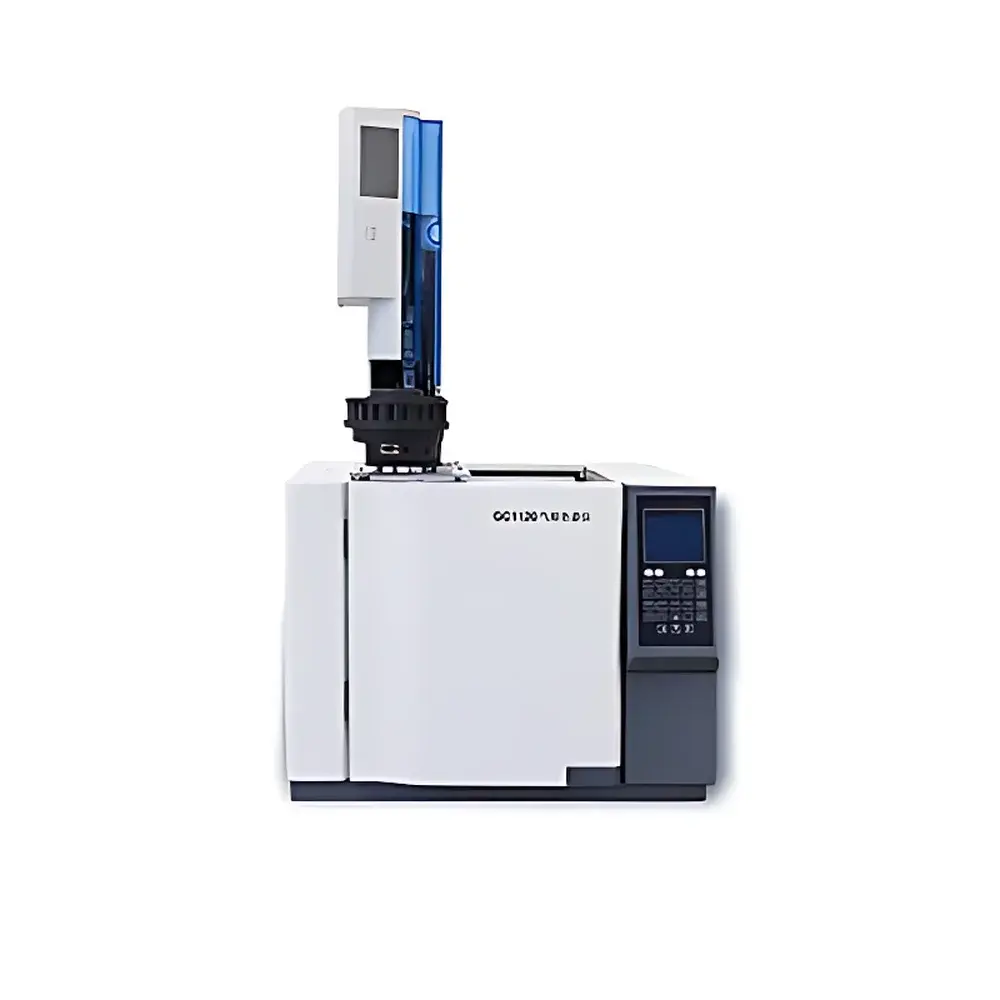
Sunny Hengping GC1120 Non-Methane Hydrocarbons (NMHC) Dedicated Gas Chromatograph
| Brand | Sunny Hengping Instrument |
|---|---|
| Origin | Shanghai, China |
| Manufacturer Type | Original Equipment Manufacturer (OEM) |
| Regional Classification | Domestic (China) |
| Model | GC1120 NMHC-Dedicated Gas Chromatograph |
| Instrument Type | Laboratory Gas Chromatograph |
| Application Field | Environmental Monitoring |
| Oven Temperature Range | Ambient +7 °C to 400 °C |
| Oven Ramp Rate | 0–40 °C/min |
| Oven Cooling Rate | 250 °C to 50 °C in ≤7 min |
| Carrier Gas Flow Range & Control | 0–200 mL/min |
| Carrier Gas Pressure Range & Control | 0–0.3 MPa |
| Injector Maximum Operating Temperature | 420 °C |
| Injector Pressure Setting Range | 0–0.3 MPa |
| Injector Total Flow Setting Range | 0–200 mL/min |
Overview
The Sunny Hengping GC1120 Non-Methane Hydrocarbons (NMHC) Dedicated Gas Chromatograph is a purpose-engineered laboratory-scale analytical system designed for compliant, reproducible quantification of total hydrocarbons excluding methane — a critical parameter in ambient air quality monitoring, stack emission testing, and industrial fugitive emission verification per Chinese EPA standards (e.g., HJ 38-2017, HJ 604-2017) and aligned with international NMHC measurement principles. It operates on the fundamental principle of gas-phase separation via capillary or packed column chromatography, followed by selective detection — most commonly using Flame Ionization Detection (FID), which provides universal, linear, and methane-insensitive response to C₂–C₁₂ hydrocarbons. The instrument integrates a thermally stable, six-zone temperature-controlled architecture, dual-pressure/flow-regulated carrier gas delivery, and modular detector support — enabling method-specific configuration for NMHC analysis without methane interference through backflush, pre-column switching, or methanizer-decoupled FID operation.
Key Features
- Six independently programmable temperature zones (oven, dual injectors, dual detectors, auxiliary heater), each controllable from ambient +7 °C to 400 °C with precision better than ±0.05 °C.
- High-capacity oven with automatic rear-door cooling mechanism: achieves 250 °C → 50 °C in ≤7 minutes; supports up to 10-step, 11-platform programmed temperature ramping.
- Dual-stage gas flow regulation: carrier gas stabilized via series-connected pressure and flow controllers (0–0.3 MPa / 0–200 mL/min); auxiliary gases (H₂, air) regulated via digital刻度-style needle valves and pressure regulators.
- Modular inlet system supporting simultaneous installation of up to three injectors: Packed Column Inlet (PIP) for headspace or direct column-head injection; Split/Splitless Liner-based SPL inlet with septum purge, split vent back-pressure control, and tail-purge capability.
- Multi-detector compatibility: configurable mounting for up to three detectors including FID (detection limit ≤3×10⁻¹² g/s for n-C₁₆), TCD (≥5000 mV·mL/mg), HTCD (≥10000 mV·mL/mg), ECD (≤2×10⁻¹³ g/s for γ-HCH), FPD, NPD, and PID — enabling NMHC speciation and co-analyte screening.
- Integrated digital flow monitoring module (optional): displays real-time carrier and split flows for up to four channels on the front-panel LCD; stores flow settings with method files for audit-ready traceability.
Sample Compatibility & Compliance
The GC1120 NMHC system accommodates gaseous samples collected via Tedlar bags, canisters (SUMMA or SilcoCan), or online continuous sampling interfaces. It supports both direct injection and cryo-focused trapping for sub-ppb NMHC quantification. When configured with dual-column backflush or methanizer-FID coupling, it meets the technical requirements of HJ 38-2017 (Determination of Total Hydrocarbons in Waste Gas by Gas Chromatography) and HJ 604-2017 (Determination of Non-Methane Total Hydrocarbons in Ambient Air). Its hardware architecture and firmware design enable compliance with GLP data integrity expectations: all temperature setpoints, flow parameters, and detector operating conditions are logged with timestamps; method files include user-defined metadata fields for sample ID, analyst, and calibration status. While not FDA 21 CFR Part 11-certified out-of-the-box, the optional PC-based reverse-control software supports electronic signatures, audit trails, and role-based access control when deployed in validated environmental QA/QC laboratories.
Software & Data Management
The GC1120 utilizes an embedded acquisition system (requires optional analog-to-digital conversion board and reverse-control software) that enables full instrument control and dual-channel chromatographic data acquisition via a single USB or RS-232 interface. Real-time functions include synchronized temperature profiling, detector signal monitoring, flow parameter display, and active method editing. Data processing capabilities include baseline correction, peak integration with customizable start/stop/drift thresholds, five quantitative algorithms (external standard, internal standard, normalized area, standard addition, and calibration curve), multi-component report generation, and export to CSV, TXT, or PDF formats. All raw data files (.dat) retain full metadata — including instrument configuration, sequence log, and acquisition parameters — ensuring method reproducibility and regulatory traceability. Method templates can be saved, versioned, and recalled with one-click loading to minimize operator-induced variability.
Applications
- Ambient air monitoring stations for NMHC trend analysis and ozone precursor assessment.
- Industrial stack testing under China’s “Emission Standard of Air Pollutants for Petrochemical Industry” (GB 31571-2015) and “Comprehensive Emission Standard of Air Pollutants” (GB 16297-1996).
- Fugitive emission surveys at refineries, chemical plants, and storage facilities using EPA Method 21-compliant sampling protocols.
- Indoor air quality studies targeting volatile organic compounds (VOCs) and hydrocarbon-based solvents.
- Calibration lab support for certifying NMHC reference standards and validating portable analyzers (e.g., photoionization detectors, flame ionization analyzers).
- Research applications requiring hydrocarbon speciation — such as alkane/alkene/aromatic differentiation — when coupled with selective detectors (FPD, NPD) or retention index libraries.
FAQ
Is the GC1120 compatible with ASTM D6667 or ISO 11844 for NMHC analysis?
The GC1120’s hardware architecture supports implementation of ASTM D6667 (by configuring FID with methane rejection via pre-column or methanizer bypass) and ISO 11844 (for hydrocarbon group-type analysis), though final method validation must be performed per local regulatory requirements.
Can the instrument perform unattended sequential analysis of multiple canister samples?
Yes — when integrated with an autosampler (e.g., PAL System or equivalent) and configured with timed valve actuation, the GC1120 supports fully automated batch analysis with retention time locking and internal standard normalization.
Does the system provide electronic records suitable for ISO/IEC 17025 accreditation?
All acquisition and control logs — including temperature ramps, flow values, detector settings, and integration events — are timestamped and stored in immutable binary format; combined with proper SOPs and user training, this satisfies Clause 7.5.2 (technical records) of ISO/IEC 17025:2017.
What maintenance intervals are recommended for the FID jet and collector?
Under typical NMHC analysis conditions (5–10 injections/day), the FID jet and collector should be cleaned every 100–150 injections or at least quarterly; the ceramic insulator and electrode alignment must be verified during reassembly to maintain sensitivity consistency.
Is remote diagnostics or firmware update capability available?
Firmware updates require local USB connection and authorized service tools; remote diagnostic support is available via secure VPN-assisted screen sharing with Sunny Hengping technical engineers — subject to customer network policy and data governance approval.
Related Products




