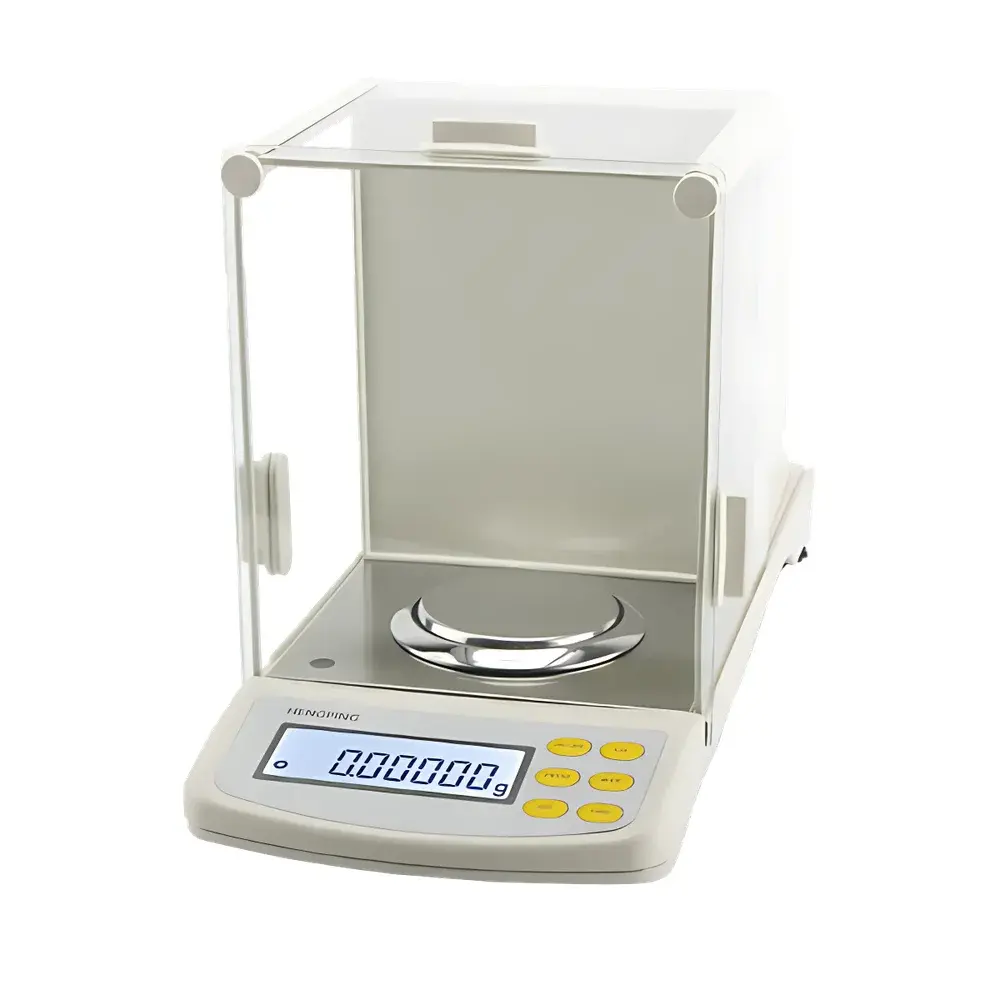
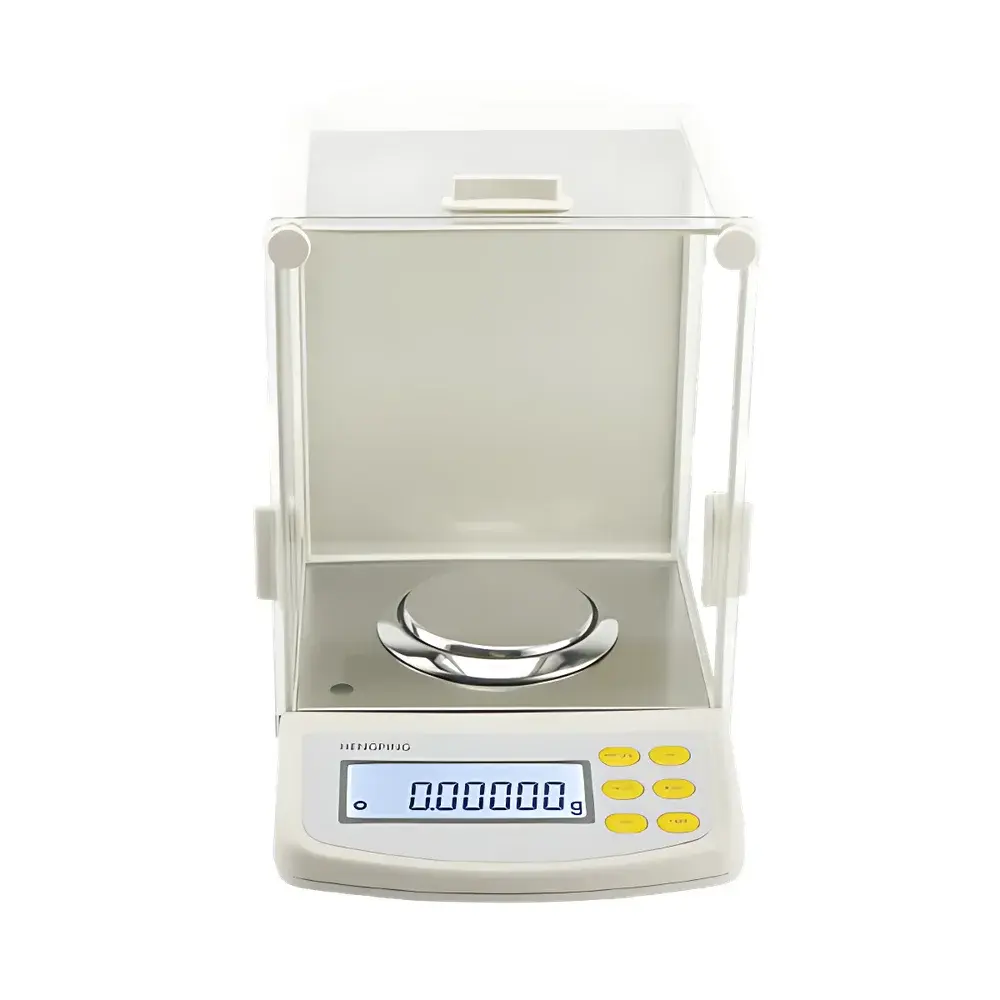
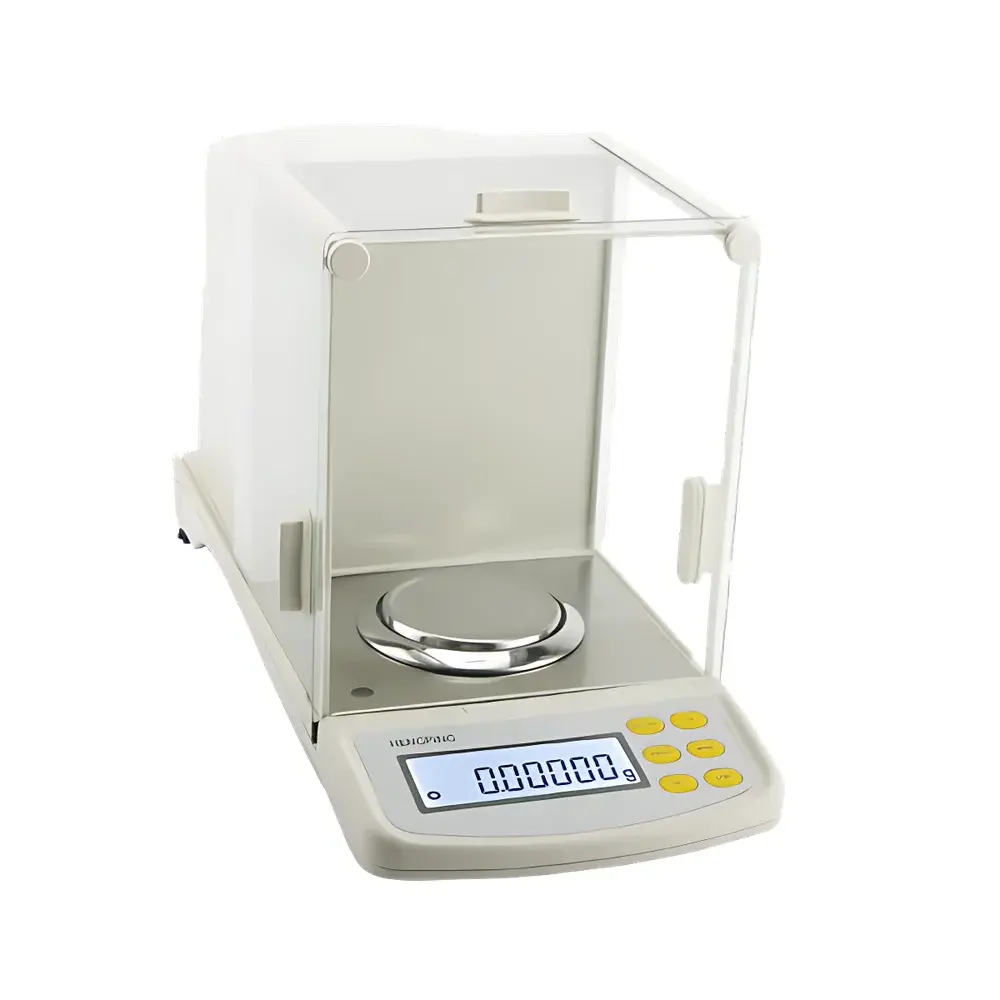
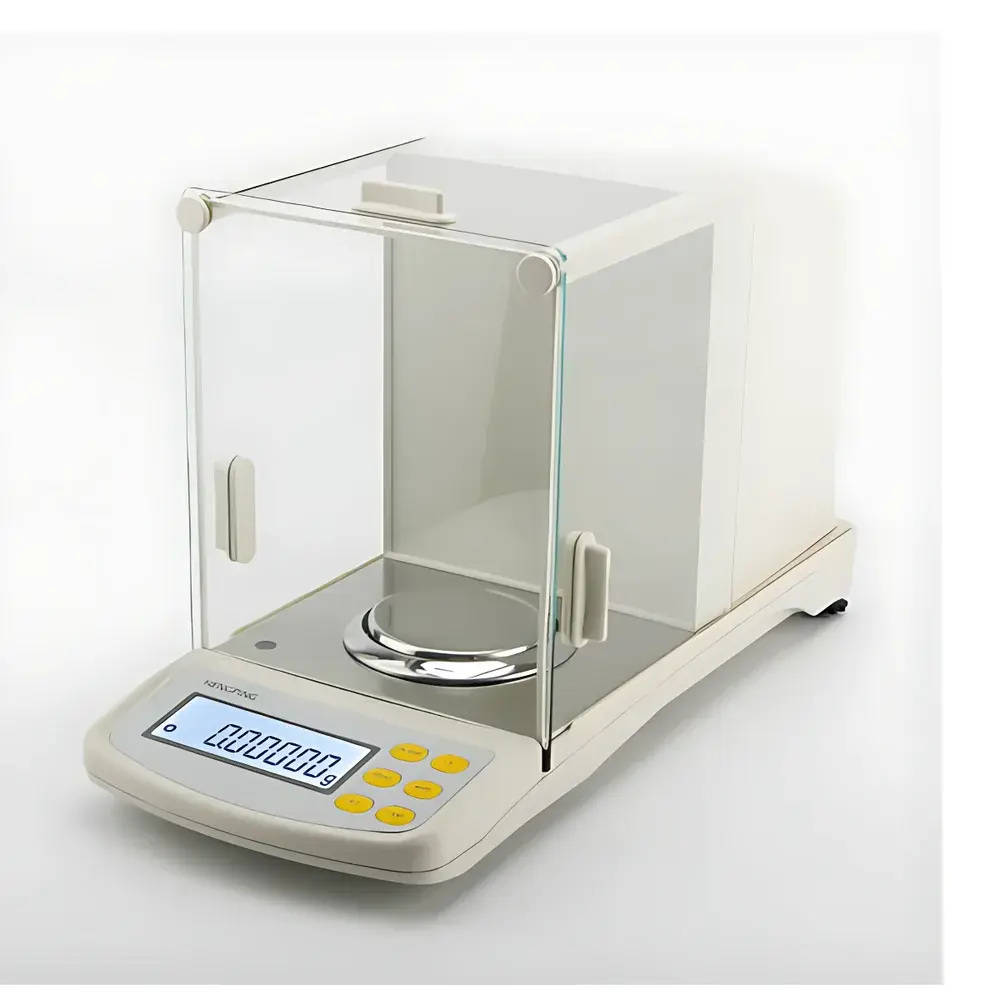
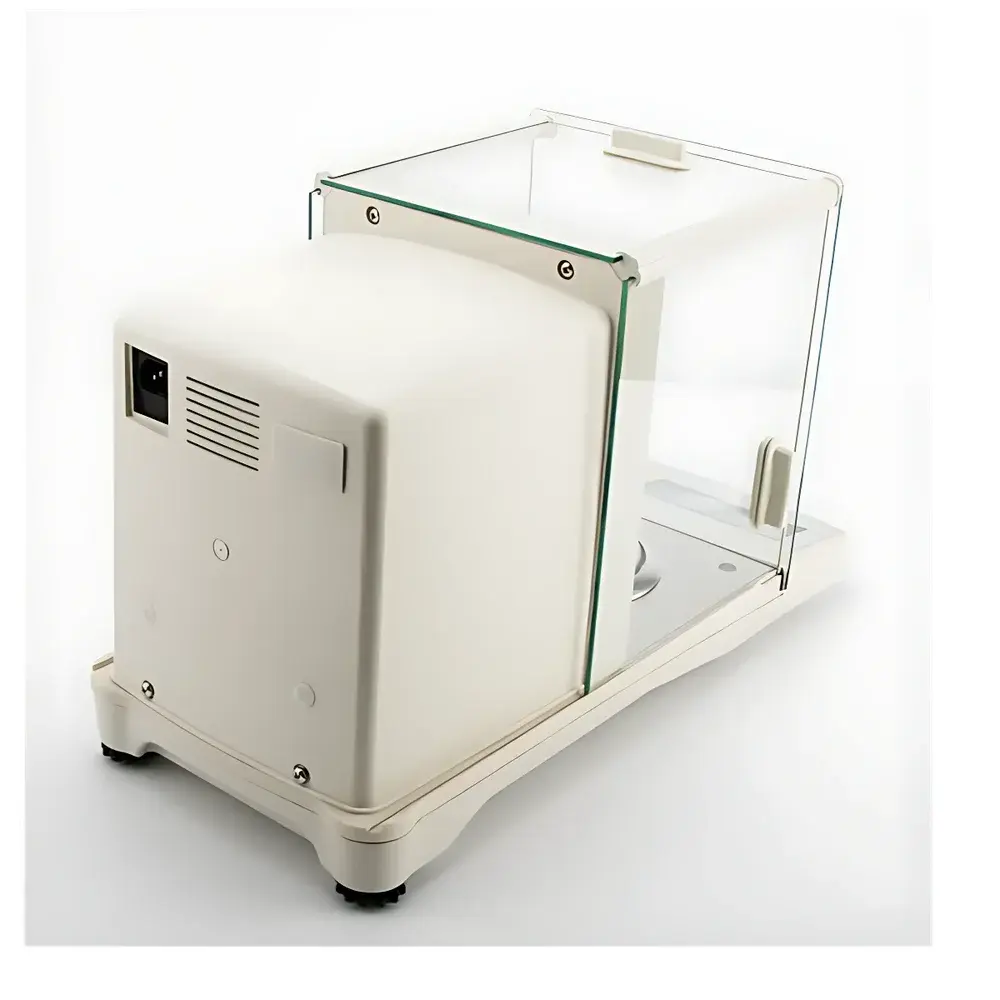
SUNNY HENGPING FA/FB2035 Advanced Microbalance
| Key | Brand: SUNNY HENGPING INSTRUMENT |
|---|---|
| Origin | Shanghai, China |
| Manufacturer | Yes |
| Country of Origin | China |
| Model | FA/FB2035 |
| Instrument Type | Ultra-Micro Balance |
| Maximum Capacity | 210 g (dual-range: 210/32 g) |
| Readability | 0.1 mg / 0.01 mg |
| Repeatability | ≤0.1 mg / ≤0.05 mg |
| Linearity | ±0.2 mg / ±0.08 mg |
| Calibration | Internal (FB series only) and External |
| Stabilization Time | 3 s / 15 s |
| Preheating Time | 30–45 min |
| Pan Diameter | Φ90 mm |
| Weighing Chamber Dimensions | 190 × 155 × 210 mm (L×W×H) |
| Operating Temperature | 0–45 °C |
| Relative Humidity | ≤85% RH (non-condensing) |
| Power Supply | AC 230 V, 50–60 Hz |
| Interface | RS232 |
| Net Weight | 9.1 kg |
| Dimensions (W×D×H) | 460 × 205 × 280 mm |
Overview
The SUNNY HENGPING FA/FB2035 Advanced Microbalance is a high-precision analytical instrument engineered for laboratories requiring consistent sub-milligram mass measurement under demanding quality control, pharmaceutical development, and materials science workflows. Based on electromagnetic force compensation (EMFC) principle, it delivers stable, drift-resistant weighing performance by balancing the gravitational force of a sample against a precisely controlled electromagnetic field. The rear-mounted EMFC sensor—widely adopted in metrology-grade balances—ensures superior long-term stability, minimal thermal drift, and enhanced resistance to mechanical perturbation compared to front-suspended designs. With dual-range capability (210 g / 32 g), the FA/FB2035 achieves 0.01 mg readability in its high-sensitivity mode, enabling accurate quantification of micro-dosed active pharmaceutical ingredients (APIs), catalysts, reference standards, and nanomaterial samples. Its robust architecture complies with fundamental requirements of ISO/IEC 17025, USP , and ASTM E898 for analytical balance validation.
Key Features
- Rear-mounted electromagnetic force compensation (EMFC) sensor delivering high sensitivity, low noise, and exceptional long-term repeatability (≤0.05 mg)
- Large, triple-door draft shield with optimized airflow design and spacious weighing chamber (190 × 155 × 210 mm) for unrestricted sample handling and minimized air current interference
- High-resolution backlit LCD display with adaptive brightness control—adjustable for both ambient light and low-light laboratory environments to reduce operator eye fatigue
- Automated internal calibration (FB series only): scheduled auto-calibration, temperature-triggered recalibration, and zero-point tracking—all executed without manual intervention or physical contact with calibration weights
- Dual-range weighing modes: full capacity (210 g) for routine tasks and ultra-sensitive mode (32 g @ 0.01 mg) for trace-level analysis
- Comprehensive error mitigation: built-in temperature compensation, automatic zero-tracking, full-scale tare, overload/underload warning, and anti-static grounding terminals
- RS232 serial interface compliant with standard laboratory communication protocols, supporting direct data transfer to LIMS, ELN, or statistical process control (SPC) software
Sample Compatibility & Compliance
The FA/FB2035 accommodates a wide range of sample types—including powders, granules, liquids in tared vessels, small metallic components, and filter membranes—within its Φ90 mm stainless-steel pan and enclosed chamber. Optional accessories include bottom-hook assemblies for density determination (via hydrostatic weighing) and static-dissipative weighing pans for electrostatic-prone materials. The balance meets essential regulatory expectations for GxP environments: its internal calibration logs (FB series), real-time stability indicators, and deterministic response time (3 s in standard mode; 15 s in high-resolution mode) support audit-ready documentation per FDA 21 CFR Part 11 when integrated with compliant data acquisition systems. While not certified as a legal-for-trade device, its linearity (±0.08 mg) and repeatability meet the verification thresholds outlined in EURAMET cg-18 and OIML R 76 for Class I analytical balances.
Software & Data Management
Data output via RS232 follows ASCII-based, configurable format (e.g., “S” for stable reading, “W” for weight value), enabling seamless integration with third-party laboratory software such as LabWare LIMS, Thermo Fisher SampleManager, or custom Python/Excel automation scripts. The balance supports multiple unit conversions (g, ct, oz, %, piece count) and arithmetic functions (accumulation, subtraction, net/gross toggling). For regulated environments, external software can enforce electronic signature capture, audit trail generation, and user access controls—complementing the balance’s inherent traceability features including timestamped calibration events and stabilization status flags. Firmware updates are performed via PC-connected terminal emulation, ensuring continued alignment with evolving data integrity standards.
Applications
- Pharmaceutical QC/QA: assay testing of low-dose tablets, capsule fill weight verification, residual solvent quantification, and reference standard preparation
- Materials research: precise formulation of polymer blends, catalyst loading optimization, and gravimetric analysis of thin-film deposition yields
- Environmental testing: micro-quantification of particulate matter collected on filters (e.g., PM2.5/PM10 gravimetric analysis per EPA Method IO-4.2)
- Academic and metrology labs: calibration of secondary standards, inter-laboratory comparison studies, and uncertainty budgeting exercises
- Food & cosmetics: ingredient dosing validation, moisture loss tracking, and preservative concentration verification
FAQ
What is the difference between FA and FB models?
The FB series includes fully automated internal calibration with temperature and time-based triggers; the FA series relies solely on external calibration using certified weights.
Does the balance support GLP-compliant data recording?
Yes—when connected to validated third-party software with audit trail, electronic signature, and role-based access control, it fulfills core GLP/GMP data integrity requirements.
Can the FA/FB2035 be used for density determination?
Yes—with optional bottom hook and sinker assembly, it enables hydrostatic density measurements per ASTM D792 or ISO 1183-1.
Is the 0.01 mg readability available across the entire 210 g range?
No—the 0.01 mg resolution is active only in the 32 g high-sensitivity range; the 210 g range provides 0.1 mg readability.
What environmental conditions are required for optimal performance?
Stable ambient temperature (±1 °C/hour variation), vibration-isolated benchtop, and relative humidity below 85% non-condensing are recommended to maintain specified repeatability and linearity.