
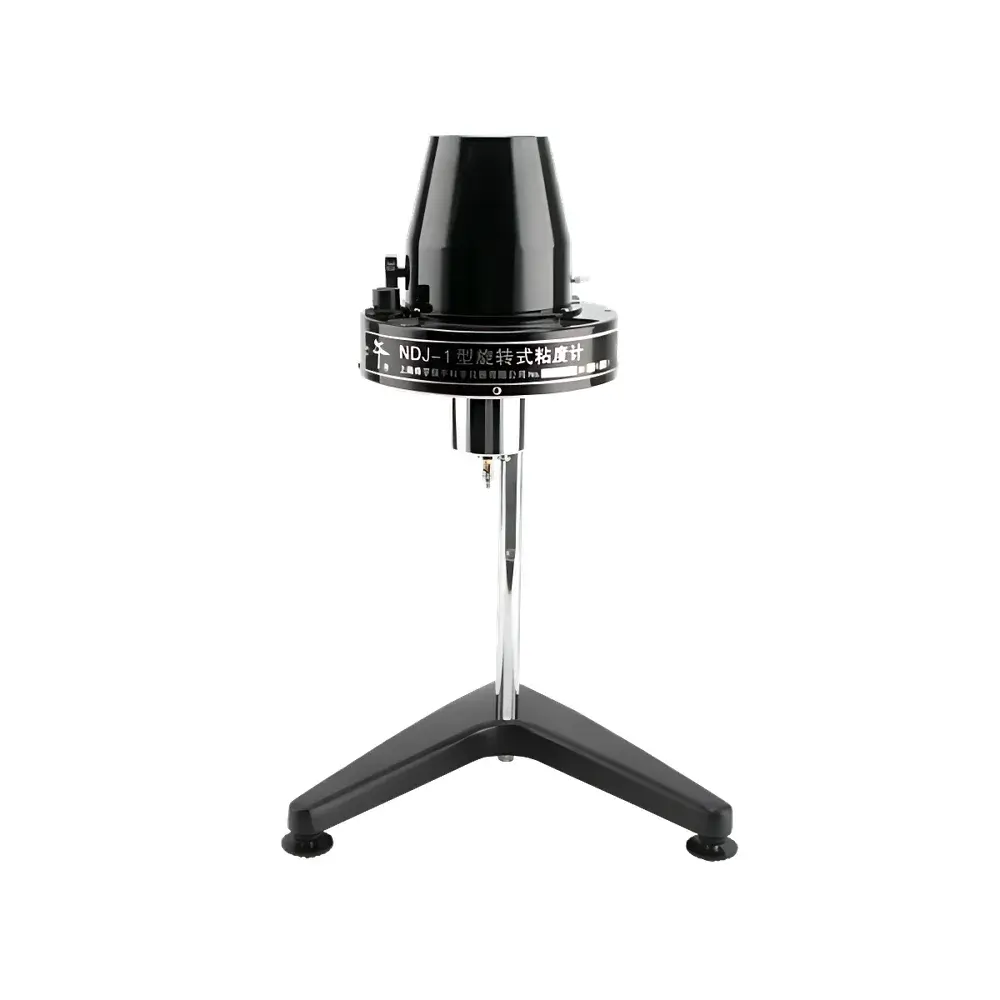
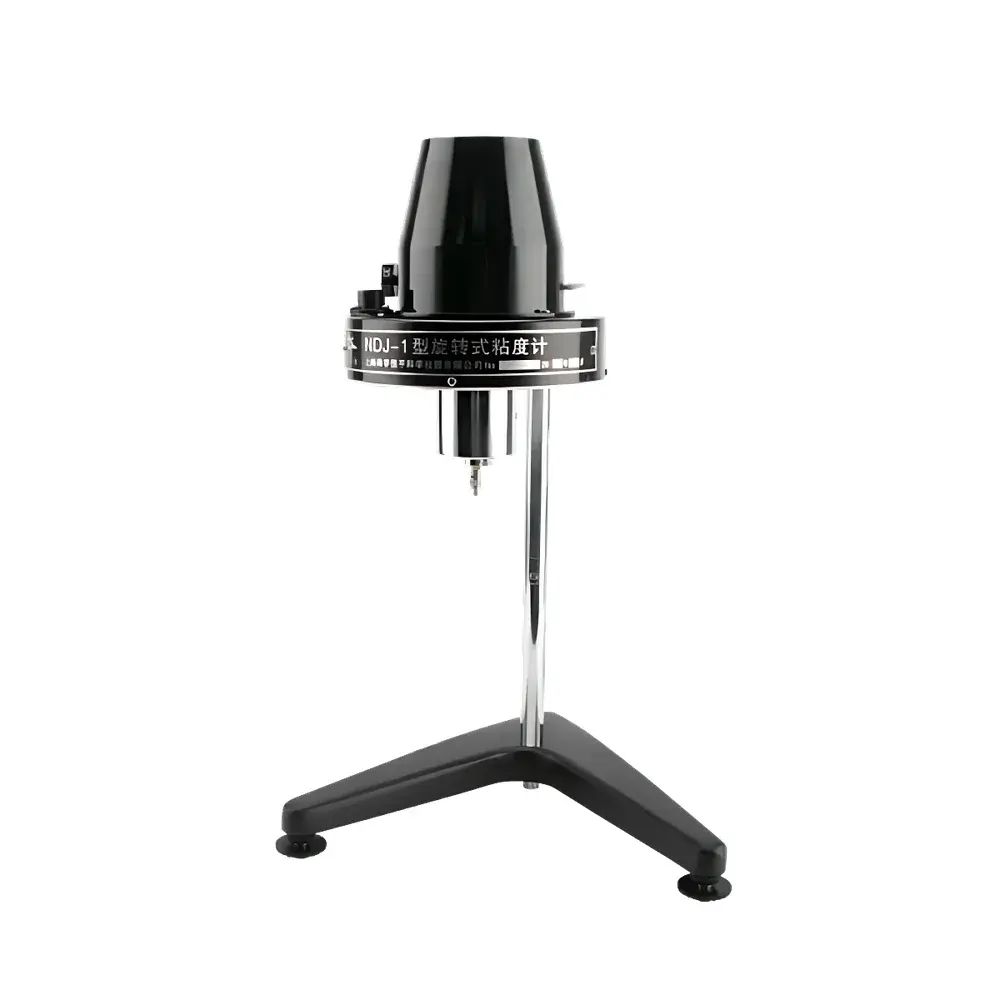
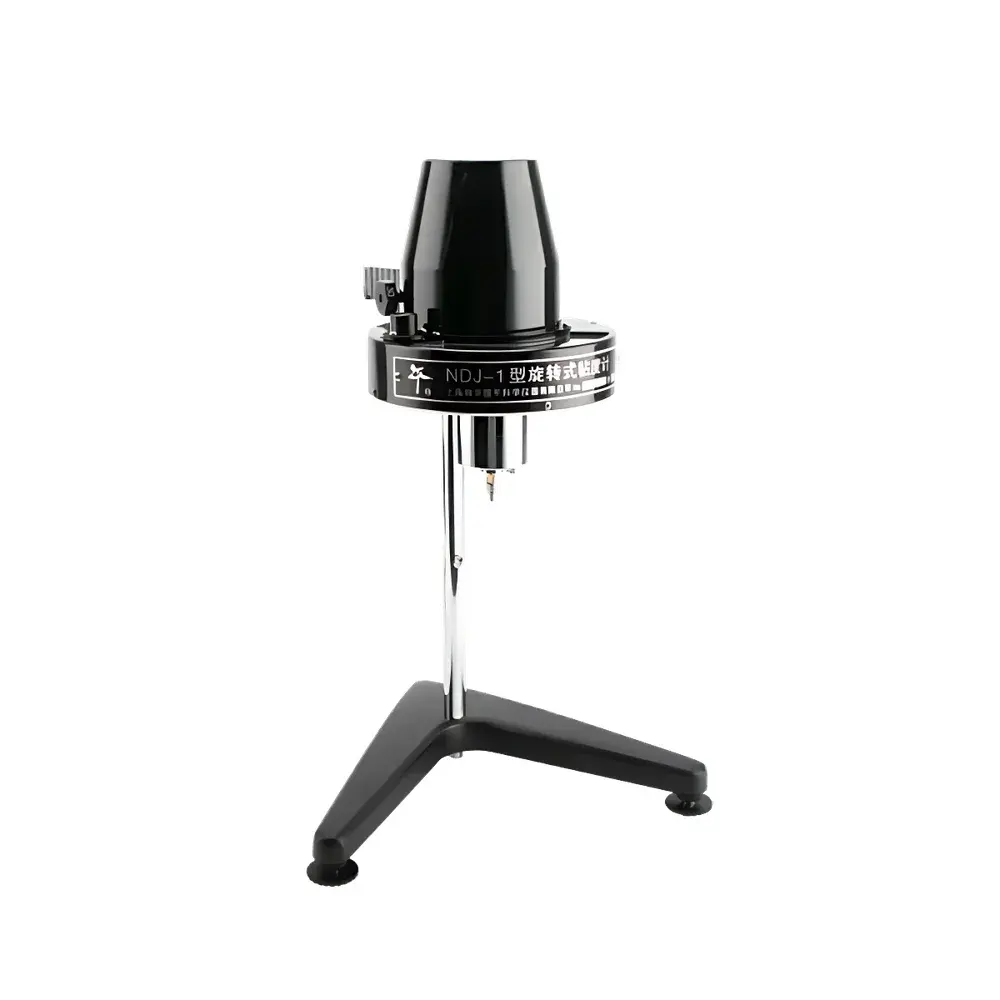
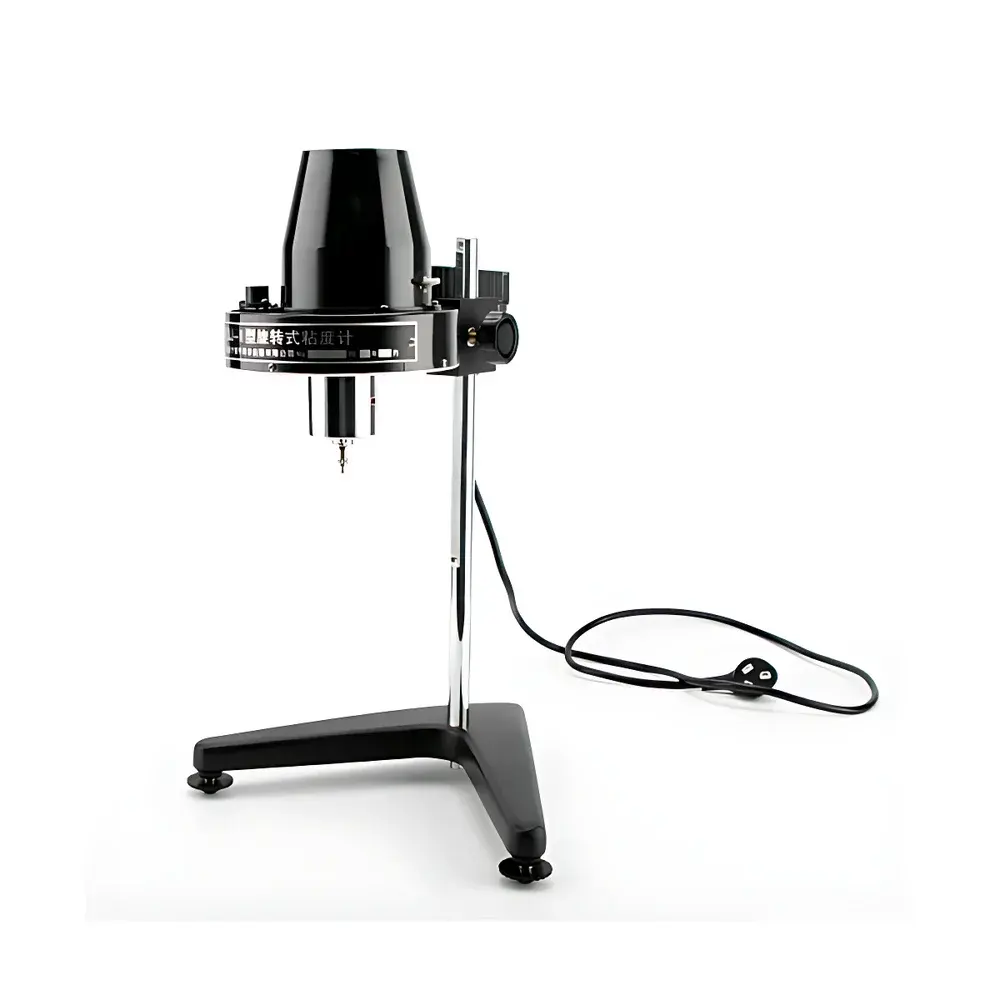
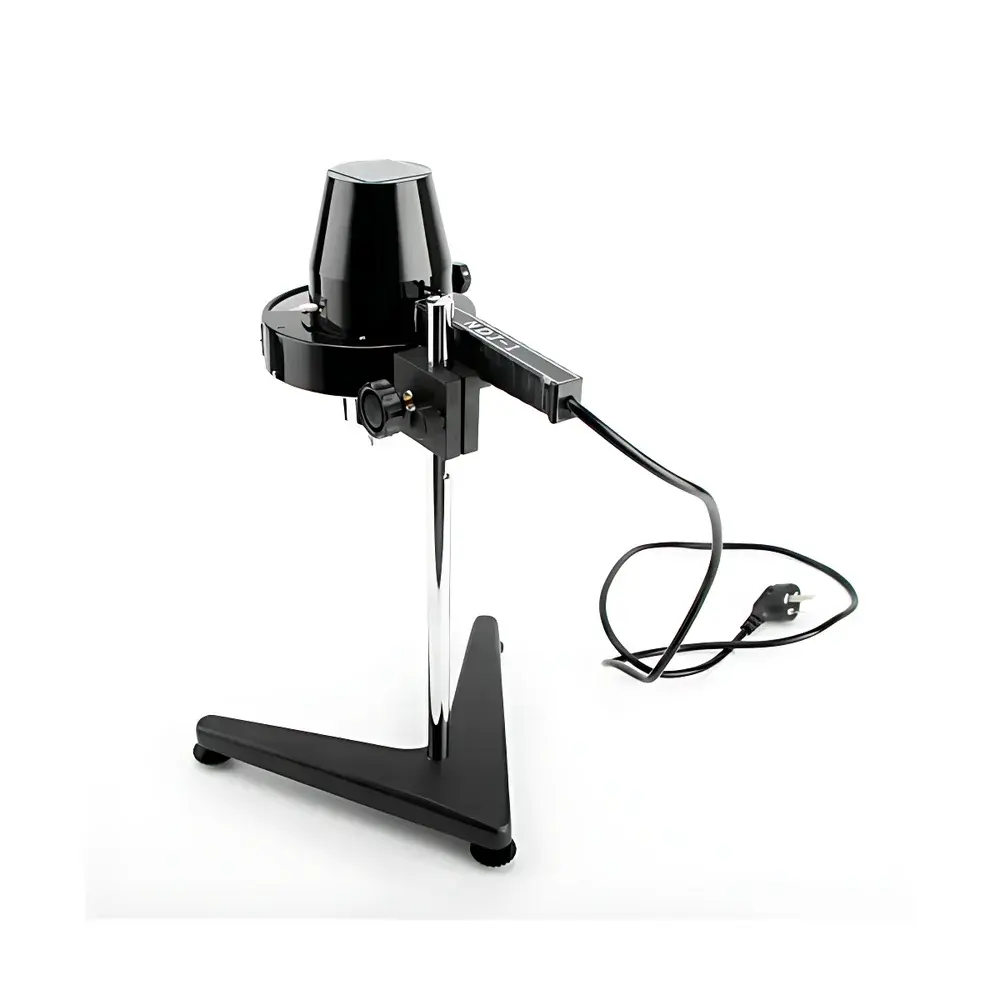
SOPOTOP NDJ Series Mechanical Rotational Viscometer
| Brand | SOPOTOP |
|---|---|
| Origin | Shanghai, China |
| Model | NDJ Series |
| Instrument Type | Fixed-Base Rotational Viscometer |
| Operating Environment | Ambient Temperature |
| Viscosity Range | 0.1–1,000,000 mPa·s |
| Display | Analog Pointer |
| Speed Settings | Manual Selection (e.g., 0.3–60 rpm across models) |
| Rotor Sets | Standard #1–#4 (NDJ-1/NDJ-4) |
| Accuracy | ±5% for Newtonian fluids |
| Dimensions (L×W×H) | 275 × 265 × 445 mm |
| Compliance | Designed per GB/T 2794–2013 (Chinese national standard for viscometer calibration), compatible with ISO 2555 and ASTM D1084 test methodologies |
Overview
The SOPOTOP NDJ Series Mechanical Rotational Viscometer is a precision-engineered, fixed-base instrument designed for routine viscosity measurement of Newtonian and mildly non-Newtonian fluids in quality control, production, and educational laboratories. Based on the Couette principle—where torque generated by a rotating spindle immersed in a fluid is proportional to its dynamic viscosity—the NDJ series delivers stable, repeatable readings without electronic sensors or software dependency. Its analog pointer display provides immediate visual feedback, eliminating boot time, calibration drift from digital components, and susceptibility to electromagnetic interference. The mechanical architecture ensures long-term stability under continuous operation in ambient laboratory conditions (15–30 °C, <80% RH), making it especially suitable for environments where power reliability, simplicity of validation, or minimal maintenance overhead are operational priorities.
Key Features
- Robust all-metal mechanical drive system with gear-driven spindle rotation—no stepper motors or encoders required.
- Manually selectable rotational speeds: NDJ-1 offers four fixed speeds (6/12/30/60 rpm); NDJ-1 with #0 spindle adds ultra-low-speed options (0.3/0.6/1.5/3/6/12/30/60 rpm); NDJ-4 supports the same eight-speed range with enhanced torque transmission.
- Dedicated spindle sets: Standard #1–#4 spindles cover mid-to-high viscosity ranges; optional #0 spindle extends low-end sensitivity down to 0.1 mPa·s for solvents, thin oils, and aqueous solutions.
- Direct-reading analog scale calibrated in mPa·s (cP), enabling rapid interpretation without unit conversion or software lookup.
- Fixed-height sample cup design ensures consistent immersion depth (spindle submerged to marked line), minimizing operator-induced variability.
- No external power supply required for core measurement function—only needed for optional auxiliary lighting or leveling base (if equipped).
Sample Compatibility & Compliance
The NDJ Series accommodates common cylindrical sample containers (typically 60–100 mL capacity) and accepts fluids ranging from low-viscosity liquids (e.g., ethanol, acetone, light mineral oils) to highly viscous pastes (e.g., tomato paste, polymer melts, heavy greases). While optimized for Newtonian behavior, empirical corrections may be applied for pseudoplastic or thixotropic samples using standardized shear-time protocols. The instrument conforms to GB/T 2794–2013 for viscometer verification and supports method alignment with ISO 2555 (plastics—determination of apparent viscosity) and ASTM D1084 (viscosity of adhesives). Its mechanical construction facilitates straightforward IQ/OQ documentation and satisfies basic GLP requirements for manual instruments where electronic audit trails are not mandated.
Software & Data Management
As a purely mechanical instrument, the NDJ Series does not incorporate embedded firmware, USB interfaces, or data logging capabilities. All measurements are recorded manually by operators into lab notebooks or LIMS-compatible spreadsheets. This architecture eliminates concerns related to cybersecurity, software validation (e.g., FDA 21 CFR Part 11), or firmware obsolescence. For regulated environments requiring traceability, users may pair the viscometer with validated manual entry procedures, including dual-operator verification and controlled form usage—fully compliant with Annex 11 (EU GMP) and ALCOA+ data integrity principles when documented appropriately.
Applications
- QC testing of edible oils, syrups, sauces, and dairy products per AOAC or national food standards.
- Routine monitoring of paint, ink, and coating formulations during batch release.
- Viscosity grading of pharmaceutical suspensions and ointments in non-GMP pilot labs.
- Educational demonstrations of rheological concepts—including shear stress vs. shear rate relationships—in undergraduate physics and chemical engineering curricula.
- Field-deployable assessment of lubricant degradation in maintenance workshops (when used with portable temperature-controlled baths).
FAQ
Is the NDJ Series suitable for non-Newtonian fluid characterization?
It provides single-point apparent viscosity values at discrete shear rates defined by spindle geometry and speed. Full flow curves require manual speed stepping and interpolation—not automated ramping.
Can I use custom spindles or sample geometries?
Only factory-calibrated #0–#4 spindles are supported. Substitution invalidates stated accuracy and voids compliance with GB/T 2794.
Does it require annual recalibration?
Yes—mechanical viscometers must undergo periodic verification using certified standard oils (e.g., Cannon-Manning series) traceable to NIST or equivalent national metrology institutes.
What is the minimum sample volume required?
60 mL for standard #1–#4 spindles; 100 mL recommended for optimal thermal equilibration and meniscus correction.
Is temperature control integrated?
No—external water baths or Peltier plates must be used for temperature-dependent measurements. The instrument itself contains no heating/cooling elements.



