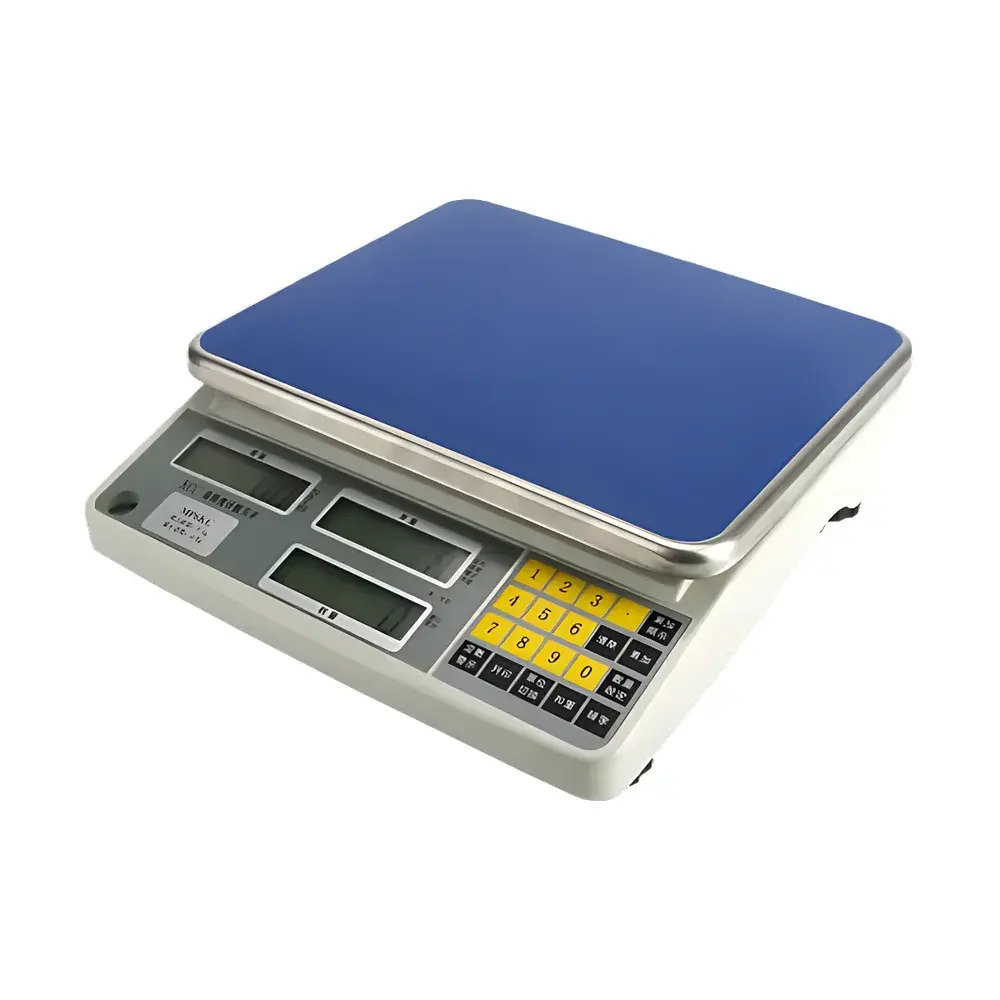
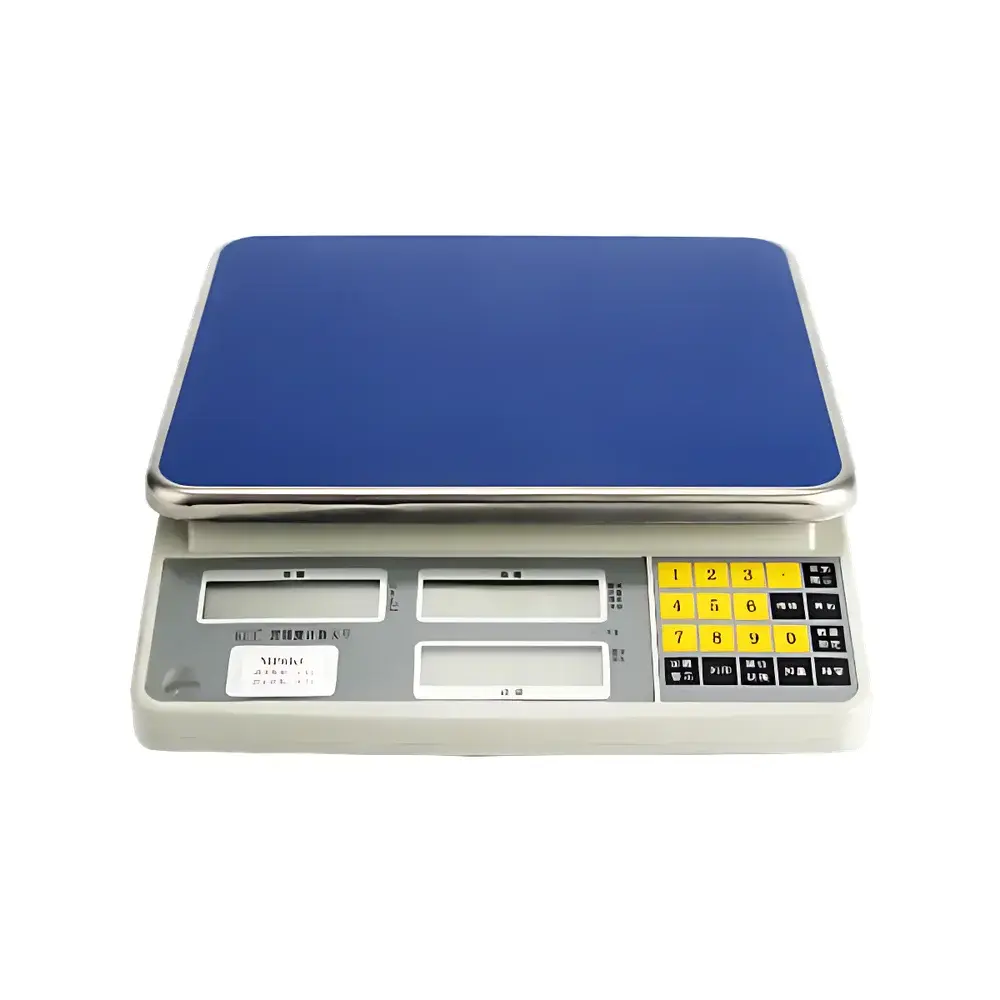
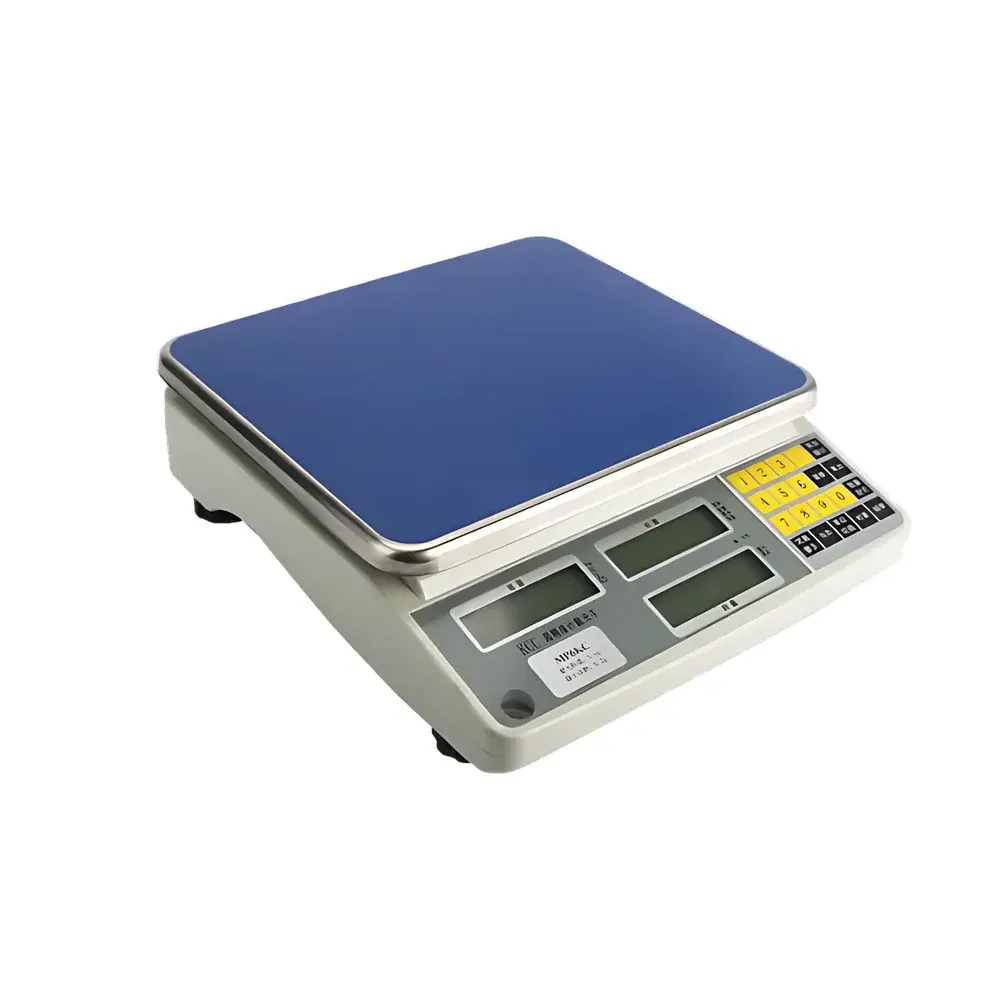
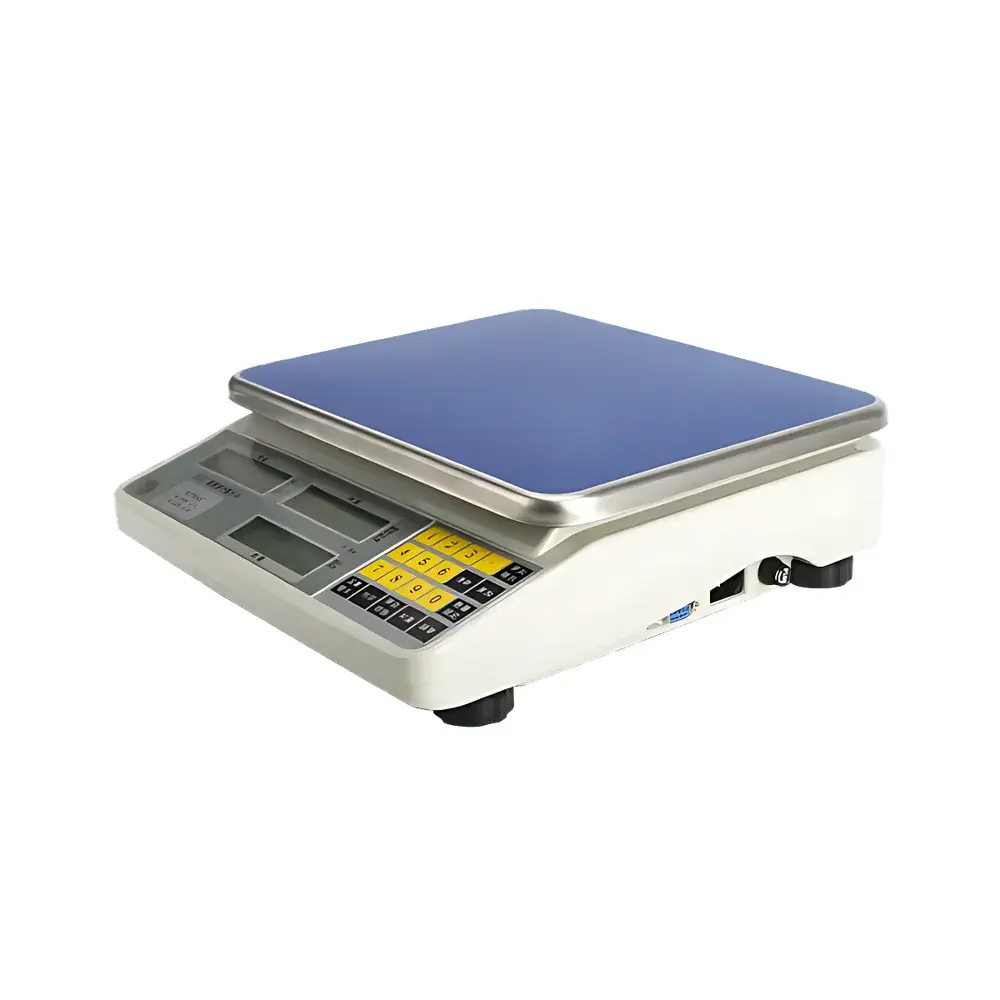
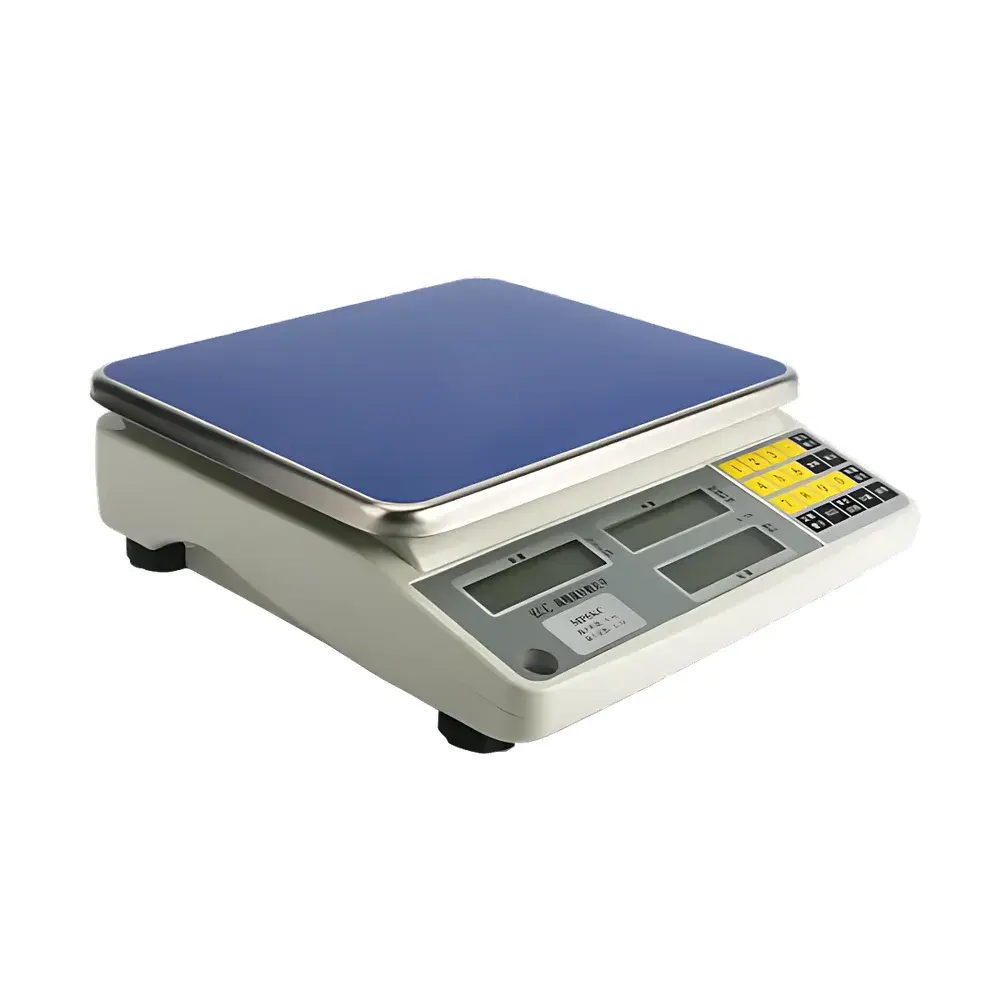
SOPTOP MP Series Counting Balance (Platform Scale)
| Brand | SOPTOP |
|---|---|
| Origin | Shanghai, China |
| Model | MP Series (Platform Scale) |
| Maximum Capacity | 3000 g |
| Readability | 0.1 g |
| Repeatability | ±0.1 g |
| Linearity Error | ±0.2 g |
| Pan Dimensions | 238 × 286 mm |
| Power | AC/DC with Rechargeable Backup Battery |
| Shock Protection | Level 4 |
Overview
The SOPTOP MP Series Counting Balance is a high-reliability platform-scale instrument engineered for industrial and laboratory environments where rapid, accurate piece-counting and mass measurement are critical. Based on electromagnetic force compensation transduction, the MP Series delivers stable, drift-resistant weighing performance across its full 3000 g capacity range. Its core design prioritizes operational robustness—featuring a reinforced stainless-steel pan (238 × 286 mm), four-level shock absorption, and intelligent dynamic filtering to maintain accuracy under non-ideal mechanical conditions such as floor vibration or air currents. Unlike analytical balances, the MP Series operates at 0.1 g readability—a resolution optimized for high-throughput counting of small-to-medium components (e.g., screws, washers, electronic connectors, pharmaceutical tablets, or hardware parts) without sacrificing repeatability or long-term stability. The balance conforms to fundamental metrological principles defined in OIML R76 and ISO 9001-compliant manufacturing practices, ensuring traceable performance suitable for QC labs, production line verification, and inventory management workflows.
Key Features
- Triple-display LCD with simultaneous readouts for total weight, average piece weight, and item count—each with adjustable backlight intensity for low-ambient lighting.
- AC/DC dual-power architecture with integrated rechargeable backup battery (≥8 hours continuous operation), enabling mobility and uninterrupted use during power fluctuations.
- Configurable weighing speed (fast/standard/slow modes) to balance throughput and stability—particularly beneficial when handling lightweight or aerodynamically sensitive samples.
- Full-range tare function with auto-zero tracking (adjustable threshold), allowing repeated subtraction of container weight across varying load conditions without manual intervention.
- Comprehensive self-diagnostic system that monitors sensor integrity, temperature drift, and internal voltage levels—reporting fault codes via display for rapid troubleshooting.
- RS232 serial interface compliant with standard ASCII protocol, supporting direct data export to LIMS, MES, or Excel-based inventory databases without proprietary software dependencies.
- Overload protection rated to 150% of maximum capacity (4500 g), safeguarding load cell integrity against accidental overloading during routine operation.
Sample Compatibility & Compliance
The MP Series accommodates diverse sample geometries—including irregularly shaped parts, bulk powders in shallow trays, and stacked components—thanks to its wide, low-profile pan and minimal draft shield interference. It supports counting of items with nominal masses ≥0.5 g, provided the coefficient of variation (CV) of individual piece weights remains ≤0.5%—a condition verified during initial setup using statistically valid sample batches (n ≥ 10). The device meets CE marking requirements for electromagnetic compatibility (EMC Directive 2014/30/EU) and low-voltage safety (LVD Directive 2014/35/EU). While not certified for legal-for-trade applications under NTEP or EC Type Approval, its performance aligns with ASTM E1222–22 (Standard Guide for Laboratory Balance Selection) for non-regulated industrial counting tasks. Calibration documentation follows ISO/IEC 17025 traceability pathways when performed with NIST-traceable external weights.
Software & Data Management
No proprietary software installation is required. The RS232 interface outputs ASCII-formatted strings (e.g., “W: 1250.3g C: 247 P: 5.06g”) at user-defined baud rates (9600–115200), enabling seamless integration with custom scripts, LabVIEW VIs, or Python-based data loggers. Optional Windows-compatible terminal utilities (e.g., PuTTY, Tera Term) allow real-time capture, timestamping, and CSV export. Audit trails—critical for GLP/GMP-aligned environments—are maintained externally via host-system logging; the balance itself retains no stored history but provides firmware-level timestamp synchronization upon command initiation. Firmware updates (if released) are delivered via serial bootloader protocol, preserving calibration constants and user-configured parameters.
Applications
- Manufacturing: Component quantity verification prior to packaging, kitting, or assembly line feeding.
- Pharmaceuticals: Tablet or capsule batch counting in secondary packaging QA checkpoints (non-sterile environments).
- Electronics: PCB component inventory reconciliation, SMT reel verification, and connector lot sampling.
- Education: Introductory metrology labs emphasizing statistical process control (SPC), CV calculation, and measurement uncertainty fundamentals.
- Warehousing: Fast-cycle stock audits, pallet load validation, and return-goods reconciliation.
FAQ
What is the recommended sample size for accurate counting?
A minimum of 10 identical pieces is required for average piece weight determination; for higher confidence (CV < 0.2%), 30–50 pieces are advised.
Does the balance support internal calibration?
No—calibration must be performed externally using certified weights traceable to national standards.
Can the RS232 output be configured for automated data logging?
Yes—baud rate, delimiter format, and transmission trigger (auto-send on stabilization or manual keypress) are programmable via front-panel menu.
Is the MP Series suitable for use in cleanroom environments?
It is not ISO Class 5-rated; however, its sealed keypad and absence of moving drafts make it deployable in ISO Class 7–8 settings with appropriate surface decontamination protocols.
How is repeatability verified during routine checks?
By performing three consecutive weighings of the same test weight (e.g., 2000 g) and calculating the standard deviation—values ≤0.1 g confirm compliance with specification.