
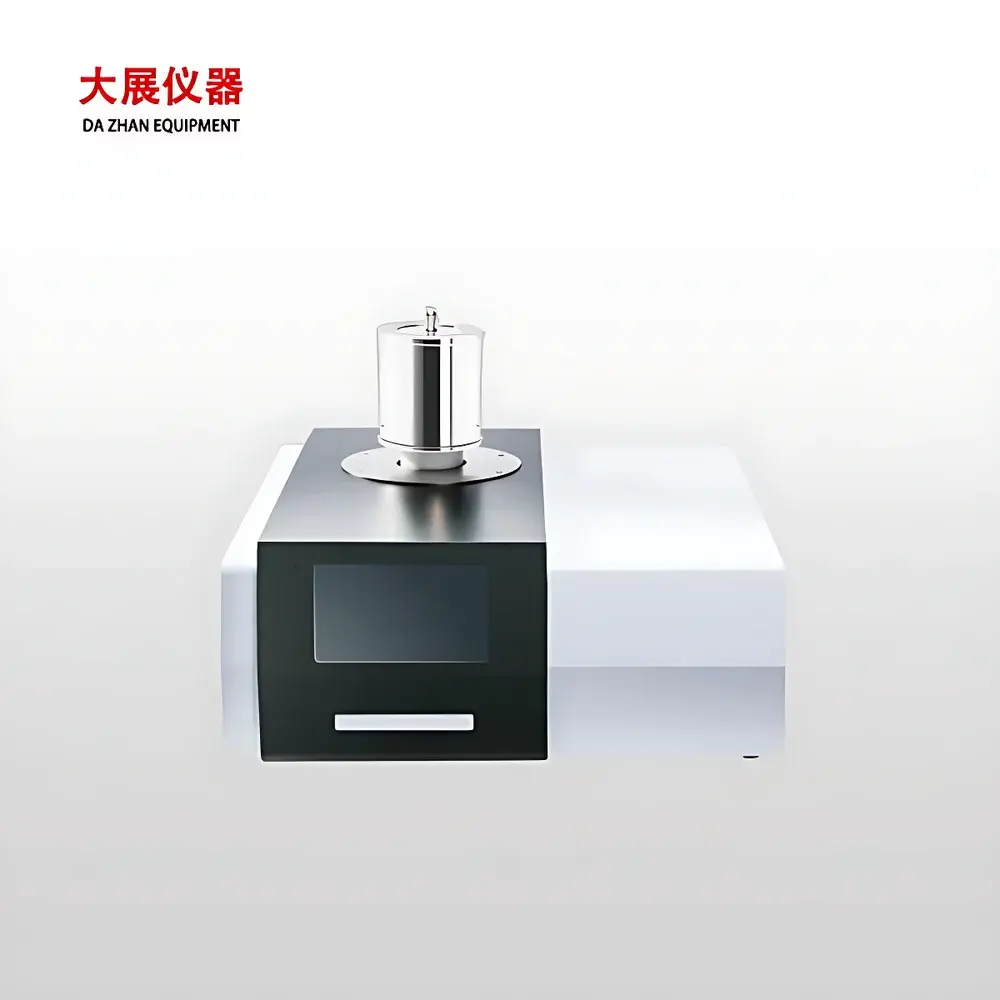
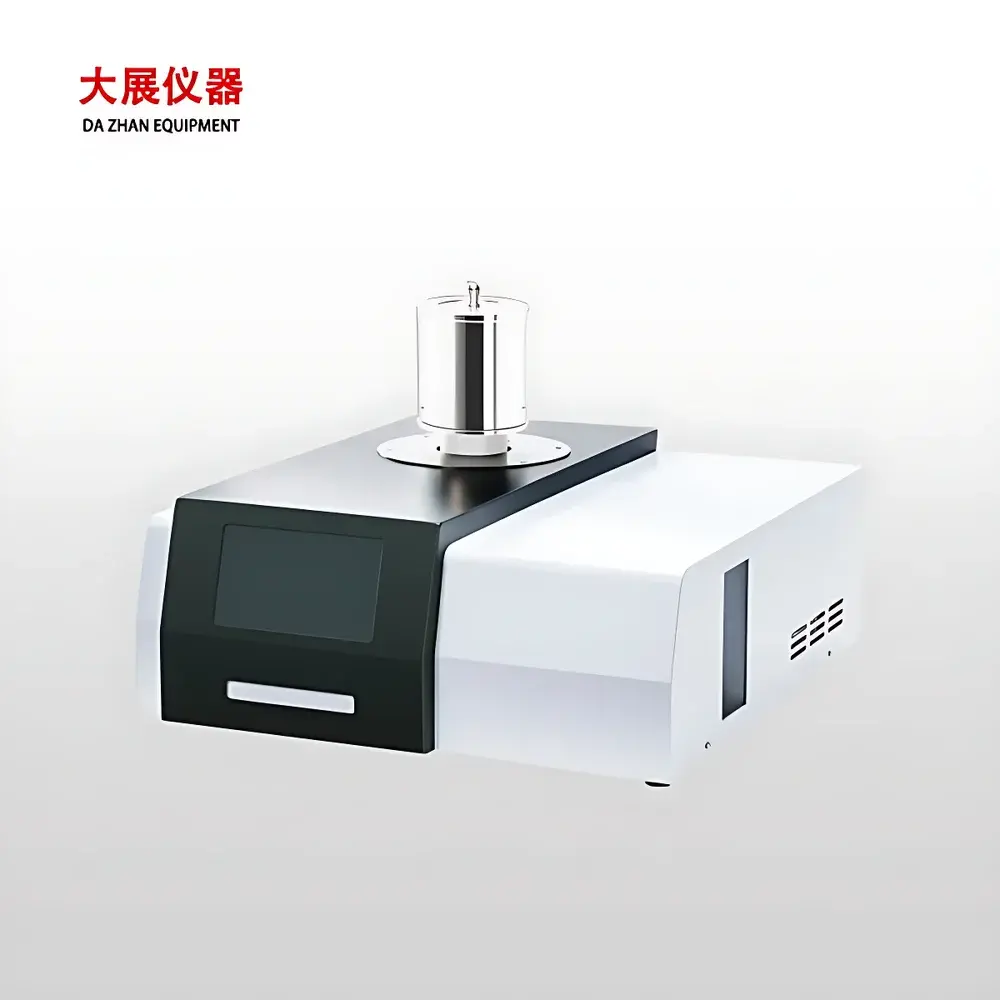
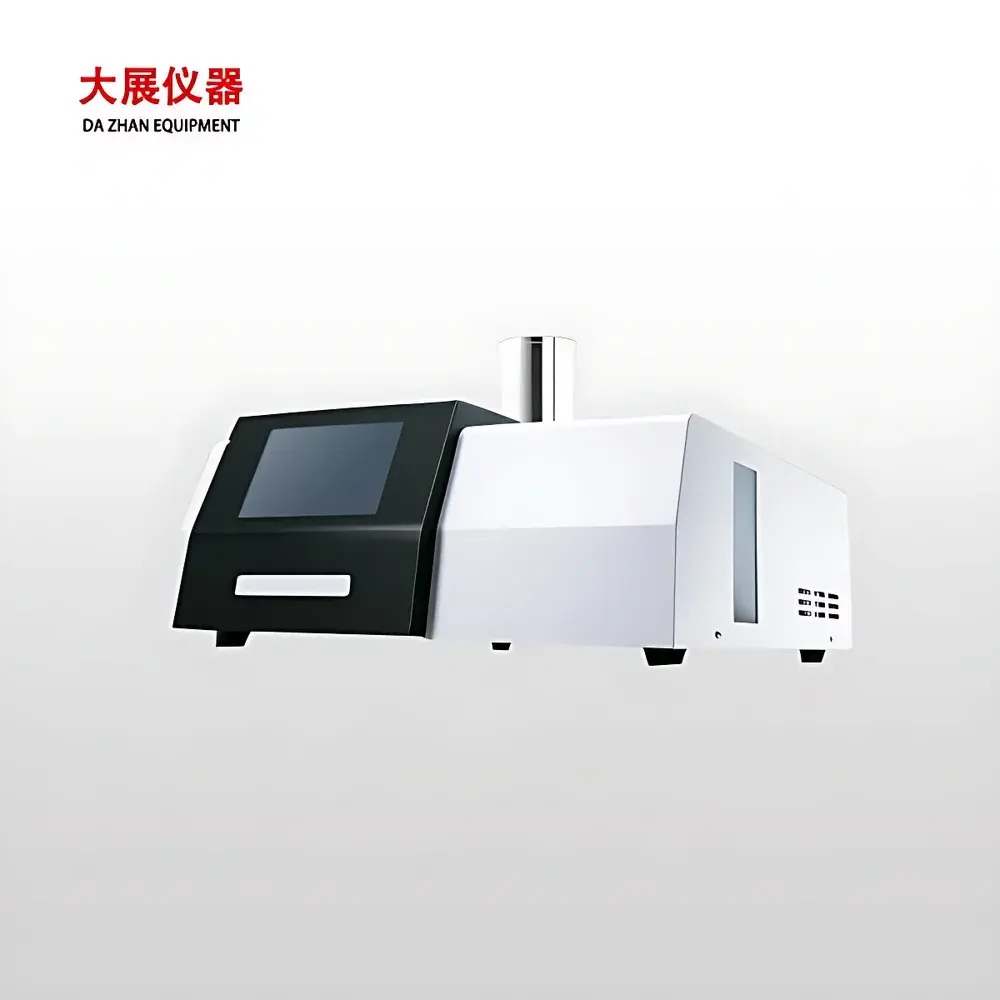
Nanjing Dazhan DZ3320A Differential Thermal Analyzer (DTA)
| Brand | Nanjing Dazhan |
|---|---|
| Origin | Jiangsu, China |
| Manufacturer Type | Direct Manufacturer |
| Country of Origin | China |
| Model | DZ3320A |
| Sample Capacity | Single-sample configuration |
| Instrument Type | Differential Thermal Analyzer (DTA) |
| Temperature Range | Ambient to 1150 °C |
| Temperature Accuracy | ±0.1 °C |
| Heating/Cooling Rate | 1–80 °C/min |
| Temperature Resolution | 0.1 °C |
| Temperature Stability (Drift) | ±0.1 °C |
| DTA Signal Range | 0 to ±2000 µV (field-expandable) |
| Baseline Adjustment | Adjustable slope and intercept |
| Calibration | Built-in standard reference materials with one-click temperature calibration |
| Display | 7-inch 24-bit color LCD touchscreen |
| Data Interface | Standard USB port with bundled acquisition software |
| Power Supply | AC 220 V, 50 Hz |
| Furnace Design | Top-opening vertical furnace architecture |
| Atmosphere Control | Programmable internal gas switching logic |
Overview
The Nanjing Dazhan DZ3320A Differential Thermal Analyzer (DTA) is a precision laboratory instrument engineered for quantitative thermal event detection under controlled heating or cooling programs. Unlike differential scanning calorimetry (DSC), which measures heat flow differences, the DZ3320A operates on the classical DTA principle: it records the temperature difference (ΔT) between a sample and an inert reference material as both are subjected to identical thermal profiles. This method enables direct identification of endothermic and exothermic transitions—including solid–solid phase changes, melting, crystallization, decomposition, oxidation, reduction, and dehydration—based on characteristic inflection points and peak positions in the ΔT vs. temperature curve. Designed for routine quality control, materials research, and academic thermal characterization, the DZ3320A delivers high reproducibility across its full operating range from ambient to 1150 °C, with programmable ramp rates from 1 to 80 °C/min and temperature accuracy maintained within ±0.1 °C.
Key Features
- Top-opening vertical furnace architecture—eliminates mechanical lift mechanisms, improves thermal uniformity, and simplifies sample loading/unloading while minimizing thermal lag and positional error.
- High-resolution signal detection: 24-bit analog-to-digital conversion supports DTA voltage measurement from 0 to ±2000 µV with sub-microvolt baseline stability; optional firmware extension allows extended dynamic range for demanding applications.
- Integrated touchscreen interface: 7-inch 24-bit color LCD with intuitive navigation, real-time curve visualization, and embedded parameter configuration—no external PC required for basic operation.
- Programmable atmosphere control logic: Internal solenoid valve sequencing enables automated switching between purge gases (e.g., N₂, Ar, air, O₂) during multi-step thermal protocols—critical for oxidation kinetics or inert-phase stabilization studies.
- One-click calibration suite: Supplied with certified reference standards (e.g., high-purity In, Sn, Pb, Zn) and automated calibration routines that adjust temperature offset and baseline slope/intercept without user intervention.
- Robust thermal control system: PID-regulated heating element with active cooling assist ensures temperature stability within ±0.1 °C over extended dwell periods and maintains linearity across all ramp rates.
Sample Compatibility & Compliance
The DZ3320A accommodates standard ceramic or alumina crucibles (typically 60–100 µL volume), supporting solid powders, granules, thin films, and compacted pellets. Liquid samples require sealed crucibles rated for elevated pressure. The instrument complies with core thermal analysis practice guidelines defined in ASTM E794 (melting point determination), ASTM E1131 (composition analysis via thermal events), and ISO 11357-1 (general principles of DSC/DTA). While not FDA 21 CFR Part 11–validated out-of-the-box, audit-trail functionality—including timestamped calibration logs, parameter change history, and raw data export with metadata—can be configured to support GLP/GMP-aligned workflows when deployed with validated software versions.
Software & Data Management
Bundled Windows-compatible acquisition and analysis software provides real-time plotting, baseline correction (polynomial or tangent-based), peak integration (onset, peak, endset), and comparative overlay of multiple runs. Data exports in CSV, TXT, and universal .QTX formats ensure compatibility with third-party tools such as OriginLab, MATLAB, or Python-based thermal analysis pipelines. All raw thermograms retain embedded instrument metadata (serial number, calibration date, operator ID, furnace history), satisfying traceability requirements for regulated environments. USB 2.0 interface enables plug-and-play connectivity; no drivers required on modern Windows OS versions (10/11).
Applications
- Phase transition analysis: Detection of polymorphic transformations, eutectic melting, glass transitions (in conjunction with complementary techniques), and solid-state recrystallization kinetics.
- Thermal stability assessment: Quantification of decomposition onset temperatures, activation energy estimation via Ozawa–Flynn–Wall method, and oxidative induction time (OIT) under controlled atmospheres.
- Inorganic material characterization: Identification of dehydroxylation in clays, carbonate decomposition, metal oxide reduction, and spinel formation in ceramics.
- Pharmaceutical development: Excipient compatibility screening, hydrate/anhydrate interconversion monitoring, and stability-indicating assay support for regulatory submissions.
- Metallurgical QC: Solidus/liquidus mapping of alloys, grain boundary reaction detection, and heat treatment validation.
FAQ
Is the DZ3320A compliant with ISO or ASTM thermal analysis standards?
Yes—the instrument’s thermal performance, calibration methodology, and reporting structure align with ASTM E794, ASTM E1131, and ISO 11357-1. Full compliance documentation is provided upon request.
Can the DTA signal range be extended beyond ±2000 µV?
Yes—firmware update and optional hardware module installation enable configurable gain scaling up to ±5000 µV for high-enthalpy reactions or low-sensitivity sample configurations.
Does the system support dual-sample or simultaneous DTA-DSC measurement?
No—the DZ3320A is a single-sample DTA platform. For concurrent DTA/DSC or multi-sample throughput, consider Nanjing Dazhan’s DZ3330 series or modular thermal analysis workstations.
What maintenance is required for long-term baseline stability?
Annual verification using certified reference materials is recommended. Furnace insulation integrity and thermocouple drift should be assessed every 12 months in high-usage environments.
Is remote operation supported?
Local USB connection is standard; Ethernet or Wi-Fi modules are available as optional add-ons for networked lab integration and centralized instrument management.



