
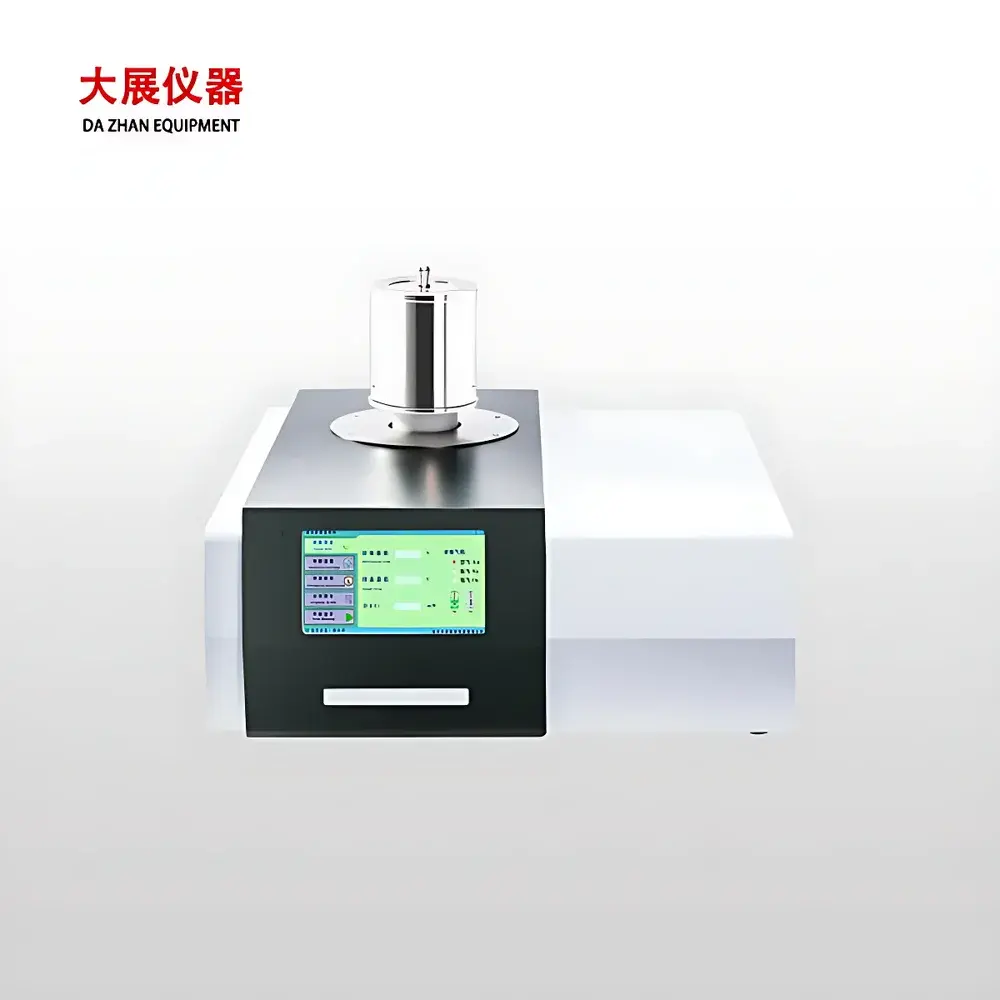
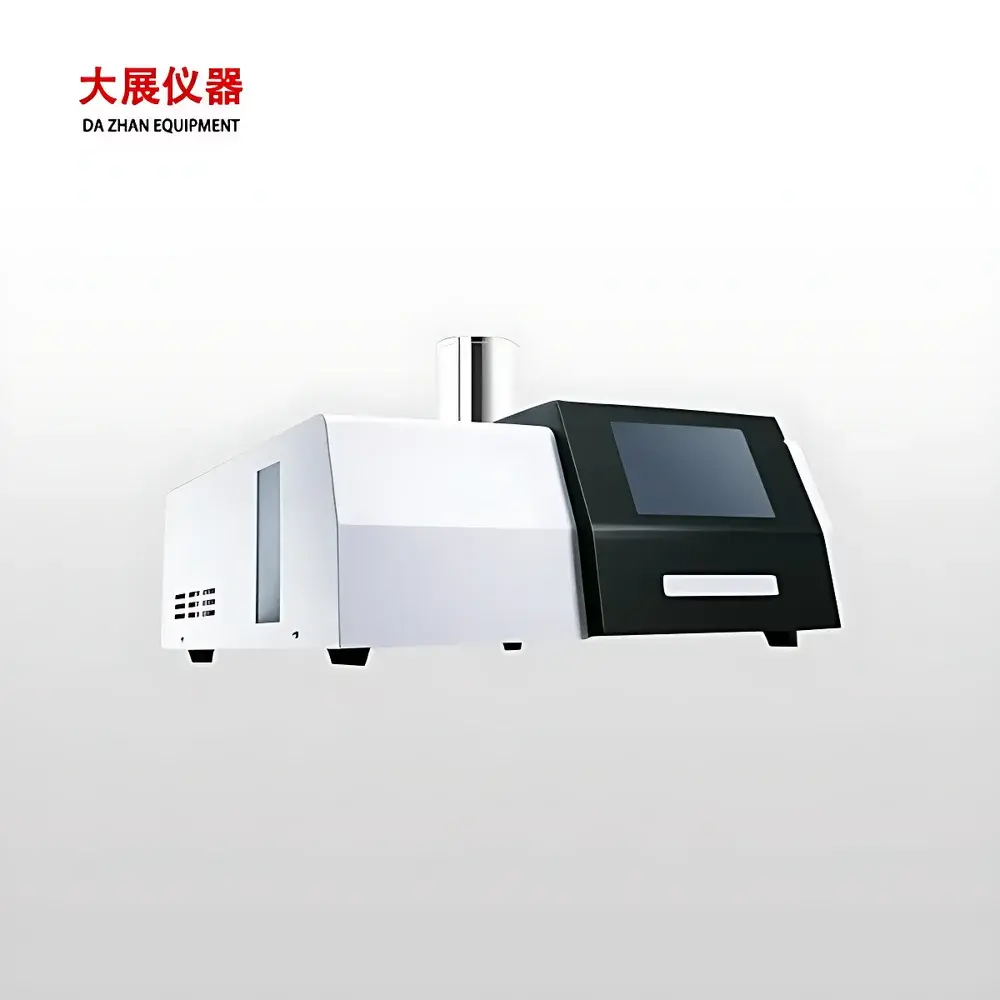
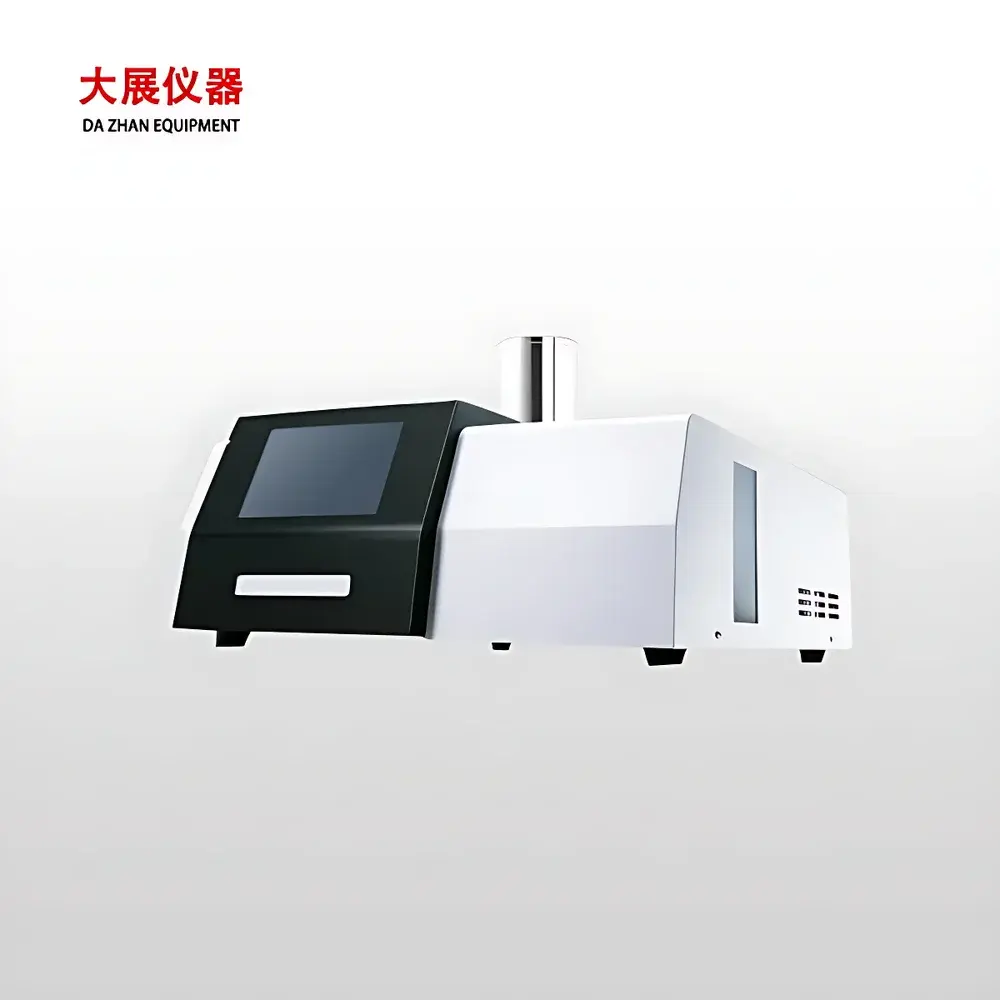
Nanjing Dazhan DZ-STA 300 Simultaneous Thermal Analyzer (STA)
| Brand | Nanjing Dazhan |
|---|---|
| Origin | Jiangsu, China |
| Manufacturer Type | Direct Manufacturer |
| Model | DZ-STA 300 |
| Temperature Range | Ambient to 1550 °C |
| Heating Rate | 0.1–100 °C/min |
| Max Sample Mass | 5 g |
| Atmosphere Control | Inert, Oxidizing, Reducing |
| Temperature Resolution | 0.01 °C |
| Temperature Stability | ±0.1 °C |
| TG Sensitivity | 0.1 µg |
| TG Accuracy | 0.01 mg |
| DSC Range | ±1000 mW |
| DSC Resolution | 0.1 µW |
| DSC Accuracy | 0.01 mW |
| Cooling Time (1000 °C → 100 °C) | ≤15 min |
| Data Interface | USB |
| Display | 7-inch 24-bit LCD touchscreen |
Overview
The Nanjing Dazhan DZ-STA 300 Simultaneous Thermal Analyzer is an integrated thermoanalytical instrument engineered for high-fidelity, real-time concurrent measurement of thermal gravimetric (TG) and differential scanning calorimetry (DSC) responses under controlled atmospheric conditions. Based on the principle of simultaneous thermogravimetry–differential scanning calorimetry (TG–DSC), the system employs a single furnace and dual-sensor architecture to acquire mass change (via microbalance) and heat flow (via thermocouple-based heat-flux detection) from the same sample, at identical temperature–time conditions. This eliminates inter-run variability and enables direct correlation between endothermic/exothermic events and mass-loss/gain steps—critical for kinetic modeling, phase transition analysis, and compositional quantification in advanced materials research, pharmaceutical development, and metallurgical quality control.
Key Features
- High-temperature furnace with dual-row wound nickel–chromium alloy heating elements, delivering uniform thermal distribution and extended service life up to 1550 °C.
- Custom-fabricated platinum–rhodium alloy sample holder and sensor assembly, resistant to oxidation, corrosion, and thermal drift across wide temperature ranges.
- Physically decoupled power supply and forced-air cooling module—mounted separately from the main chassis—to suppress mechanical vibration and thermal crosstalk to the microbalance subsystem.
- Top-opening furnace design with vertical lift mechanism, enabling safe, ergonomic sample loading without risk of probe misalignment or crucible rod deformation.
- Multi-layer passive thermal shielding between furnace and instrument housing, minimizing radiative and conductive heat transfer to the balance chamber and electronics enclosure.
- Integrated dual-gas mass flow control system with two independently regulated channels, supporting precise switching and blending of inert (e.g., N₂, Ar), oxidizing (e.g., air, O₂), or reducing (e.g., H₂/N₂ mixtures) atmospheres in static or dynamic modes.
Sample Compatibility & Compliance
The DZ-STA 300 accommodates standard crucible formats—including alumina, platinum, and aluminum—with optional high-purity ceramic crucibles for aggressive chemical environments. It supports sample masses from 0.1 mg to 5 g, making it suitable for both trace-component characterization and bulk thermal stability screening. The instrument complies with core methodology standards referenced in ASTM E1131 (standard test method for compositional analysis by TG), ASTM E1269 (heat capacity by DSC), ISO 11357 series (plastics—DSC), and USP (thermal analysis in pharmaceuticals). Its hardware architecture and software audit trail functionality support GLP-compliant operation, including user access control, electronic signature capability, and full metadata logging per run.
Software & Data Management
The proprietary STAControl software provides native acquisition and post-processing for TG, DTG, DSC, and derivative curves (e.g., dTG/dT, dDSC/dT). Users may perform baseline correction, peak deconvolution, onset/melting point determination, enthalpy integration, kinetic modeling (e.g., Kissinger, Ozawa–Flynn–Wall), and multi-step decomposition fitting. All data are exportable in CSV, Excel (.xlsx), and PDF report formats—with customizable templates for regulatory submissions. The software implements temperature and heat-flow multi-point calibration routines traceable to NIST-certified reference materials (e.g., indium, zinc, alumina), ensuring metrological consistency across ambient-to-ultrahigh-temperature regimes. USB 2.0 interface ensures compatibility with Windows-based laboratory PCs and facilitates secure offline data archiving.
Applications
- Quantification of hydration states (free vs. bound water, crystalline hydrates) in pharmaceuticals and catalysts via stepwise mass loss coupled with endothermic DSC signatures.
- Thermal stability assessment of polymers, composites, and battery electrode materials under oxidative aging protocols (e.g., air ramp to 800 °C).
- Reaction enthalpy and activation energy determination for solid-state synthesis, decomposition, or redox processes using isoconversional methods.
- Compositional analysis of multi-component inorganic systems (e.g., ceramics, slags, ores) through residue quantification and phase transition mapping.
- Validation of thermal processing parameters in additive manufacturing feedstocks, including binder burnout profiles and sintering onset behavior.
FAQ
What is the maximum operating temperature and how is temperature accuracy ensured?
The DZ-STA 300 achieves a maximum furnace temperature of 1550 °C, with temperature resolution of 0.01 °C and stability maintained within ±0.1 °C during isothermal holds. Calibration is performed using certified reference materials (e.g., indium, silver, gold) at multiple points across the operational range.
Can the system operate under reducing atmospheres such as H₂ or CO?
Yes—the built-in dual-channel gas controller supports programmable delivery of reducing gases, including H₂/N₂ mixtures, with flow rates adjustable from 0–200 mL/min per channel and automatic atmosphere switching synchronized to temperature ramps.
Is the software compliant with FDA 21 CFR Part 11 requirements?
While the base software includes user authentication, audit trail logging, and electronic signature prompts, full Part 11 compliance requires deployment within a validated IT infrastructure and documented SOPs; the system architecture is designed to support such validation.
What crucible types are supported for high-temperature DSC–TG measurements?
Standard configurations include high-purity α-alumina and Pt–Rh crucibles rated to 1550 °C; custom crucibles (e.g., tungsten, graphite) can be integrated upon request with appropriate safety review.
How does the instrument minimize thermal interference between the furnace and microbalance?
A combination of spatial separation, multi-stage passive insulation, and physically isolated cooling circuits ensures thermal drift of the microbalance remains below 0.1 µg over 1-hour isothermal segments at 1000 °C.
Related Products



