
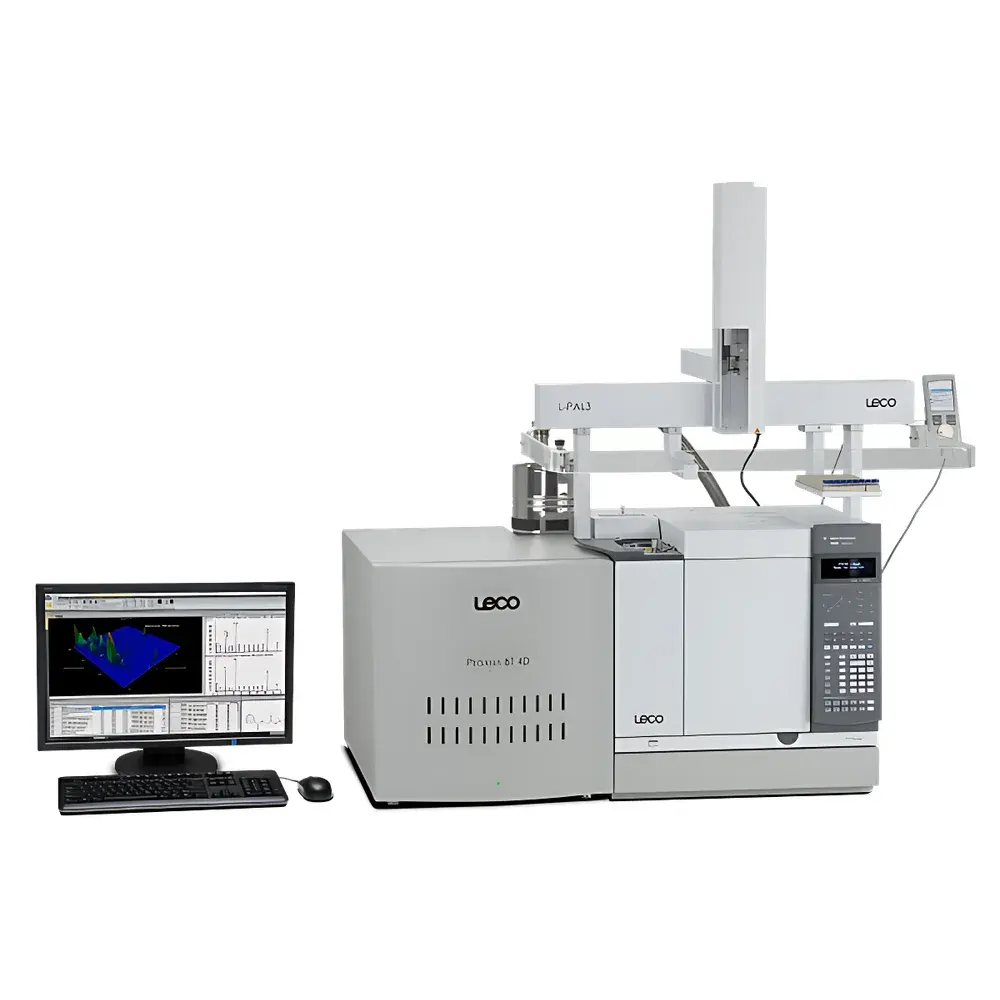
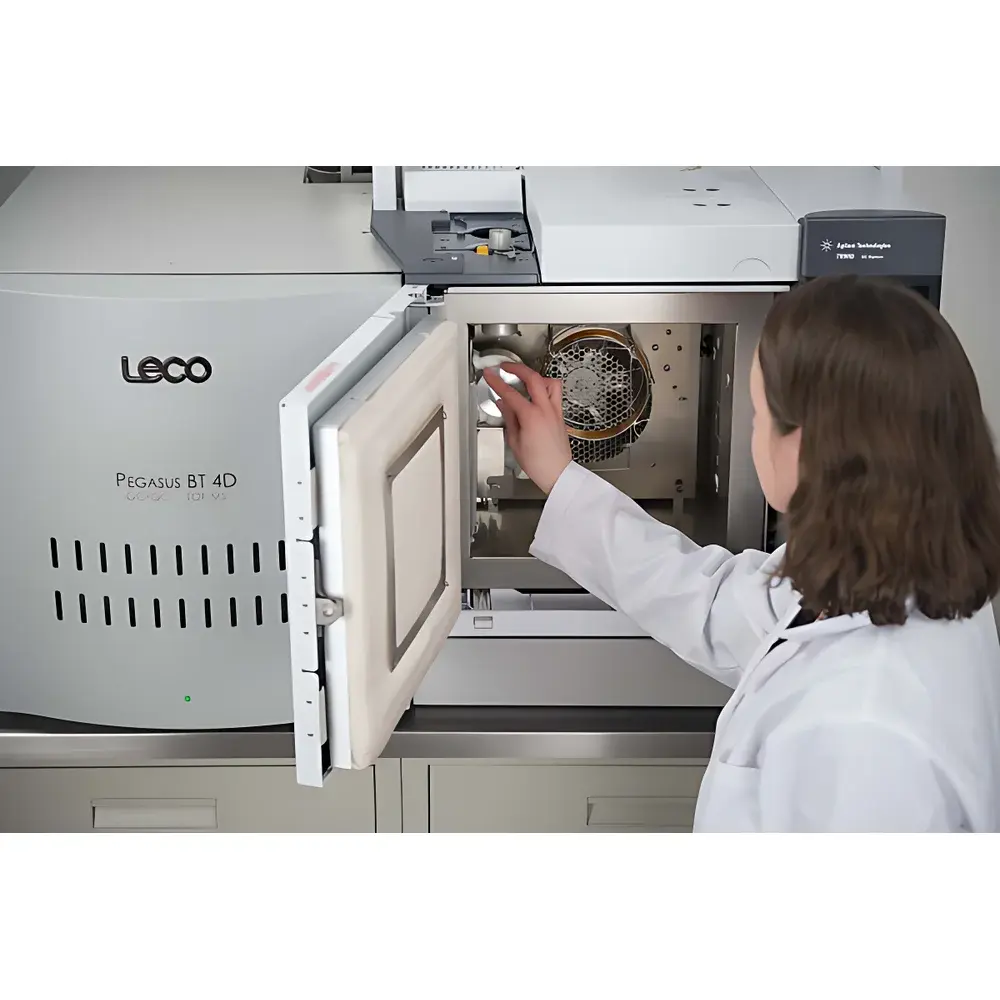
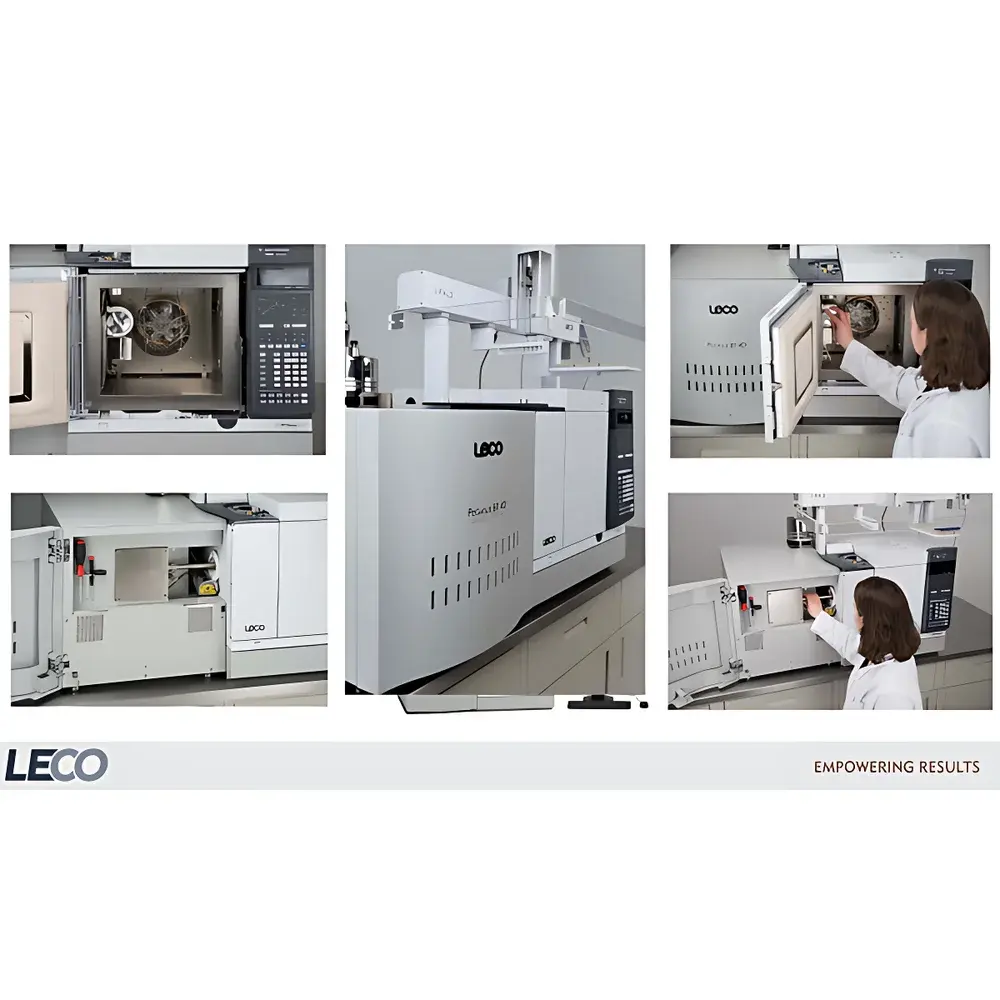
LECO Pegasus BT4D Comprehensive Two-Dimensional Gas Chromatography Time-of-Flight Mass Spectrometer
| Brand | LECO |
|---|---|
| Origin | USA |
| Manufacturer | LECO Corporation |
| Instrument Type | Time-of-Flight Mass Spectrometer (TOFMS) |
| GC Configuration | Comprehensive 2D Gas Chromatography (GC×GC) |
| Mass Range | m/z 1–1500 |
| Sensitivity | 1 fg octafluoronaphthalene (OFN) in full-scan mode |
| Acquisition Rate | 35,000 spectra per second |
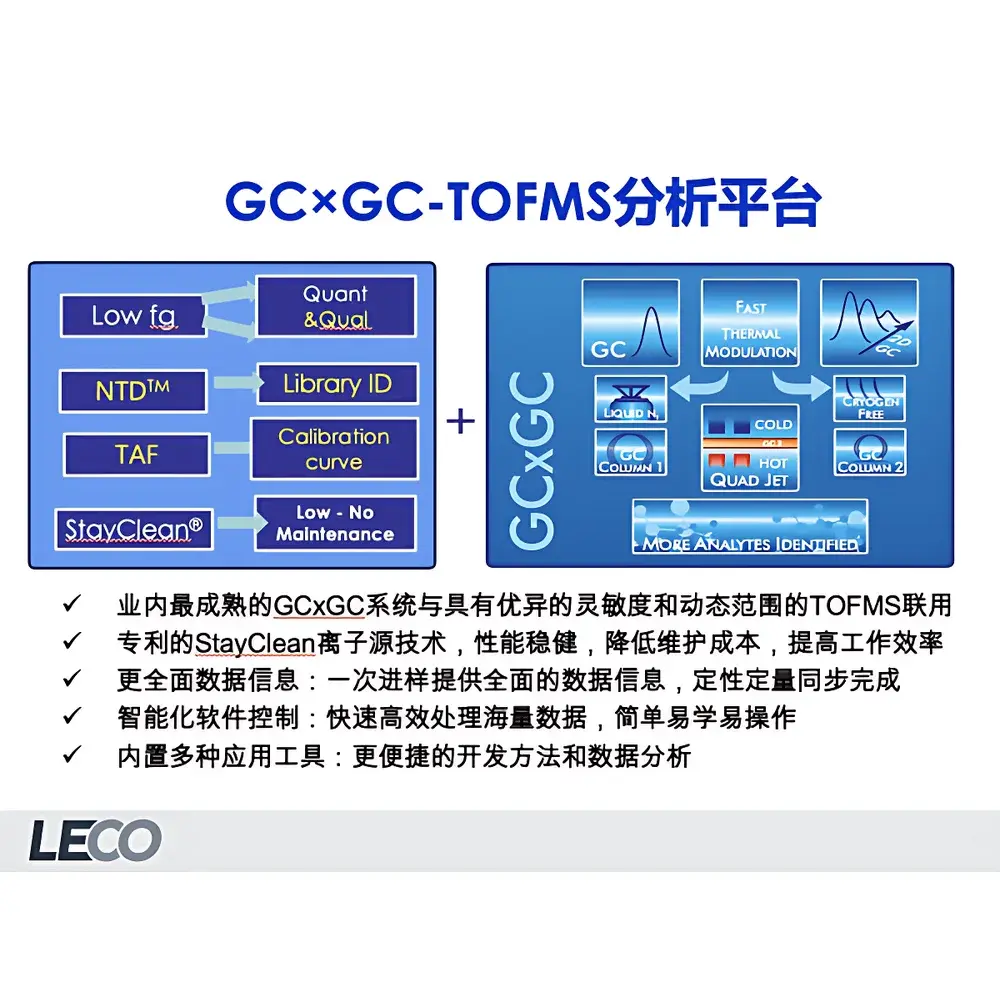
| Cooling System | Cryogen-free electrically cooled modulator |
| Modulation Technology | Dual-stage, quad-jet thermal modulator |
Overview
The LECO Pegasus BT4D is a fully integrated, commercially available comprehensive two-dimensional gas chromatography time-of-flight mass spectrometer (GC×GC-TOFMS) engineered for high-fidelity separation and ultra-fast, high-resolution mass spectral acquisition. Unlike conventional one-dimensional GC-MS systems, the BT4D leverages orthogonal separation mechanisms—first-dimension (¹D) separation by volatility and second-dimension (²D) separation by polarity—to dramatically expand peak capacity, resolve co-eluting analytes, and enhance detection sensitivity. Coupled with LECO’s award-winning Pegasus BT platform and industry-standard dual-stage quad-jet thermal modulation, the BT4D delivers true four-dimensional analytical capability: retention time (¹D), retention time (²D), mass-to-charge ratio (m/z), and intensity—enabling unambiguous compound identification and robust quantitation in highly complex matrices such as petrochemicals, environmental extracts, food volatiles, and biological fluids.
Key Features
- Integrated GC×GC-TOFMS platform: Combines a high-performance capillary GC system, cryogen-free electrically cooled thermal modulator, dual-stage quad-jet modulator, TOF mass analyzer, and automated liquid/solid-phase microextraction-ready autosampler in a single commercial instrument.
- Ultra-high-speed acquisition: Sustained full-spectrum acquisition at 35,000 Hz (35 kHz), ensuring complete spectral fidelity across rapid ²D elution windows (typically 2–10 s).
- Extended mass range: Linear dynamic range from m/z 1 to 1500 with unit-mass resolution and isotopic fidelity maintained across the entire range.
- Cryogen-free modulation: Patented electrically cooled modulator eliminates liquid nitrogen dependency while maintaining precise, reproducible modulation temperatures and duty cycles.
- Enhanced sensitivity: Achieves sub-femtogram detection limits (1 fg OFN, full-scan) due to optimized ion optics, high-efficiency electron ionization source, and low-noise digital detection architecture.
- Modular flow-path design: Supports optional flow modulation for non-thermal modulation strategies and facilitates method transfer between standard GC and GC×GC configurations.
Sample Compatibility & Compliance
The Pegasus BT4D is validated for analysis of volatile and semi-volatile organic compounds (VOCs/SVOCs) across diverse sample types—including soil and water extracts (EPA Methods 8270, 8260), petroleum fractions (ASTM D7213, D7900), flavor/aroma profiles (ISO 11014), and metabolomic biofluids (human serum, urine). Its hardware architecture and ChromaTOF software support audit-trail-enabled operation compliant with FDA 21 CFR Part 11, GLP, and GMP requirements. All calibration, tuning, and data processing events are timestamped, user-attributed, and non-erasable within the secure database environment. The system meets ISO/IEC 17025 traceability standards when operated with NIST-traceable reference standards and certified calibration gases.
Software & Data Management
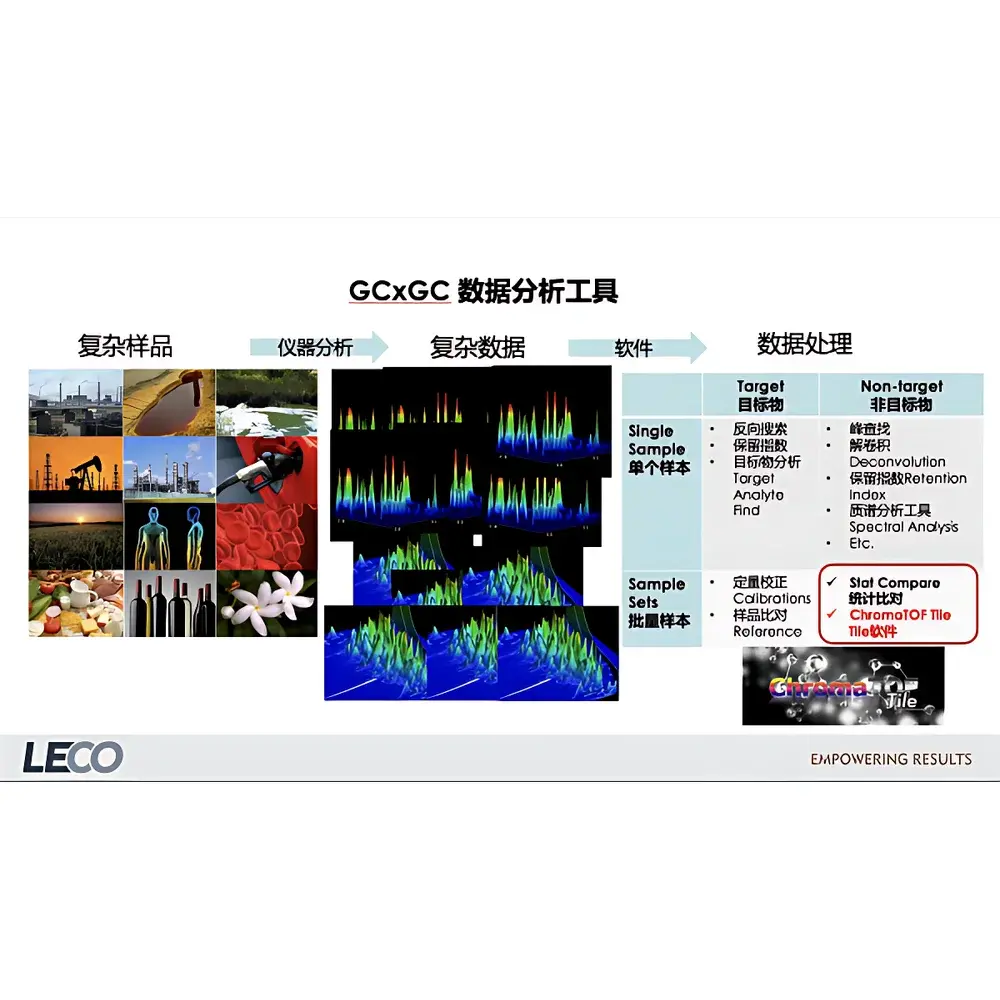
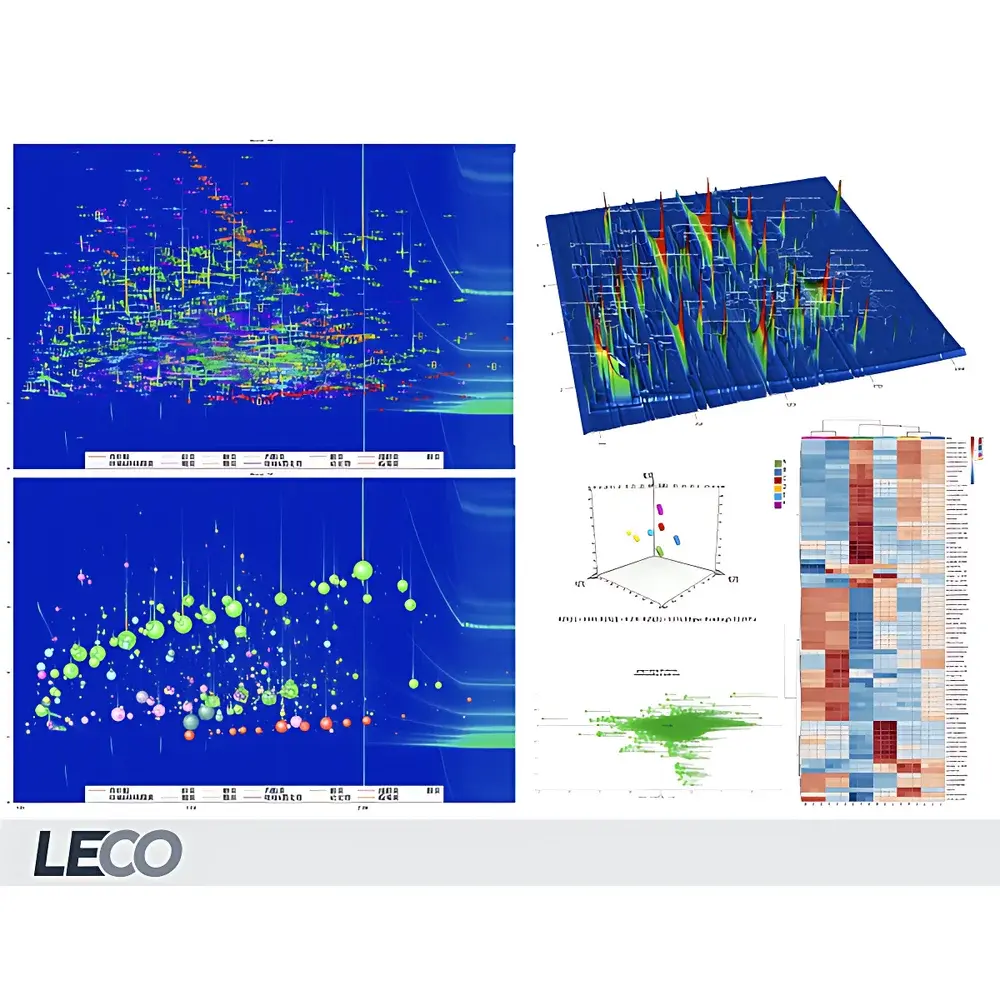
ChromaTOF® software serves as the unified control, acquisition, and interpretation engine for the BT4D platform. It implements True Signal Deconvolution® (TSD®) and Non-Target Deconvolution® (NTD®) algorithms to resolve overlapping peaks in both chromatographic and mass spectral domains—critical for accurate library matching in GC×GC datasets. Peak Find® automates feature detection across four-dimensional data cubes; Reference® enables spectral library searching against NIST, Wiley, and custom-built libraries; Script® supports customizable batch processing workflows for routine QA/QC. Target Analyte Finding (TAF) provides isotope-ratio-corrected, response-factor-based quantitation with precision comparable to triple quadrupole instruments. Statistical Compare and Tile modules deliver unsupervised multivariate analysis (PCA, PLS-DA, hierarchical clustering) directly on raw GC×GC-TOF data—enabling high-throughput “omics”-scale comparative studies without manual peak table curation.
Applications
The BT4D excels in applications demanding maximum chemical specificity and data richness: petroleomics (hydrocarbon class separation, biomarker profiling), environmental forensics (PCB congener resolution, dioxin/furan fingerprinting), food authenticity (geographic origin tracing via volatile markers), clinical metabolomics (broad-spectrum small-molecule screening), and polymer additive migration analysis. Its ability to detect and quantify thousands of features per run—many previously obscured in 1D-GC-MS—makes it indispensable for discovery-driven research and regulatory compliance where unknown identification and retrospective data mining are essential.
FAQ
What distinguishes GC×GC-TOFMS from conventional GC-MS?
GC×GC separates compounds across two independent chromatographic dimensions, increasing peak capacity by one to two orders of magnitude versus 1D-GC. When coupled with TOFMS, this yields structured, ordered chromatograms where chemical classes form recognizable patterns—enabling improved identification confidence and reduced false positives.
Is the BT4D compliant with regulatory data integrity requirements?
Yes. ChromaTOF software supports 21 CFR Part 11-compliant electronic signatures, audit trails, role-based access control, and immutable raw data storage—fully aligned with pharmaceutical, environmental, and clinical laboratory quality systems.
Can existing GC methods be migrated to the BT4D platform?
Yes. The system supports direct import of legacy GC methods; the ChromaTOF Method Wizard guides users through ²D parameter optimization (modulation period, ¹D/²D column selection, temperature programming) while preserving retention behavior of target analytes.
Does the BT4D require liquid nitrogen or other cryogens?
No. The electrically cooled modulator operates without LN₂, reducing operational cost, safety hazards, and logistical constraints—ideal for core facilities and regulated laboratories with limited infrastructure support.
How does ChromaTOF handle large-scale comparative studies?
Through Tile and Statistical Compare modules, ChromaTOF performs automated alignment, normalization, and multivariate statistical modeling across hundreds of GC×GC-TOF datasets—generating heatmaps, score plots, and biomarker lists without manual peak table construction.
Related Products






