
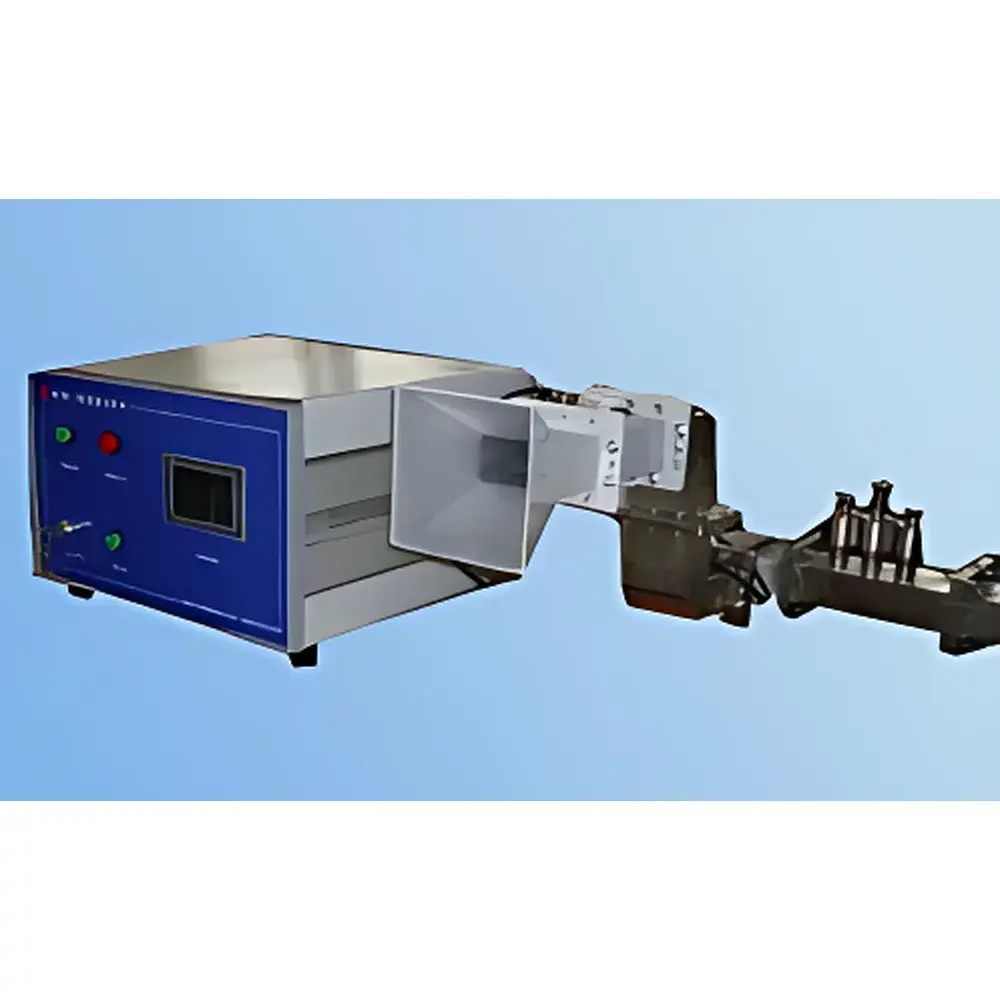
Microwave Radiation Experimental System MY8C-1
| Brand | Huiyan |
|---|---|
| Origin | Jiangsu, China |
| Manufacturer Type | Authorized Distributor |
| Country of Origin | China |
| Model | MY8C-1 |
| Price | Upon Request |
| Microwave Frequency | 2450 MHz ± 50 MHz |
| Output Power Range | 0–200 W (continuous, linearly adjustable) |
| Waveguide Standard | GB/T BJ-26 (FD-26 flange) |
| Cavity Material | Stainless Steel |
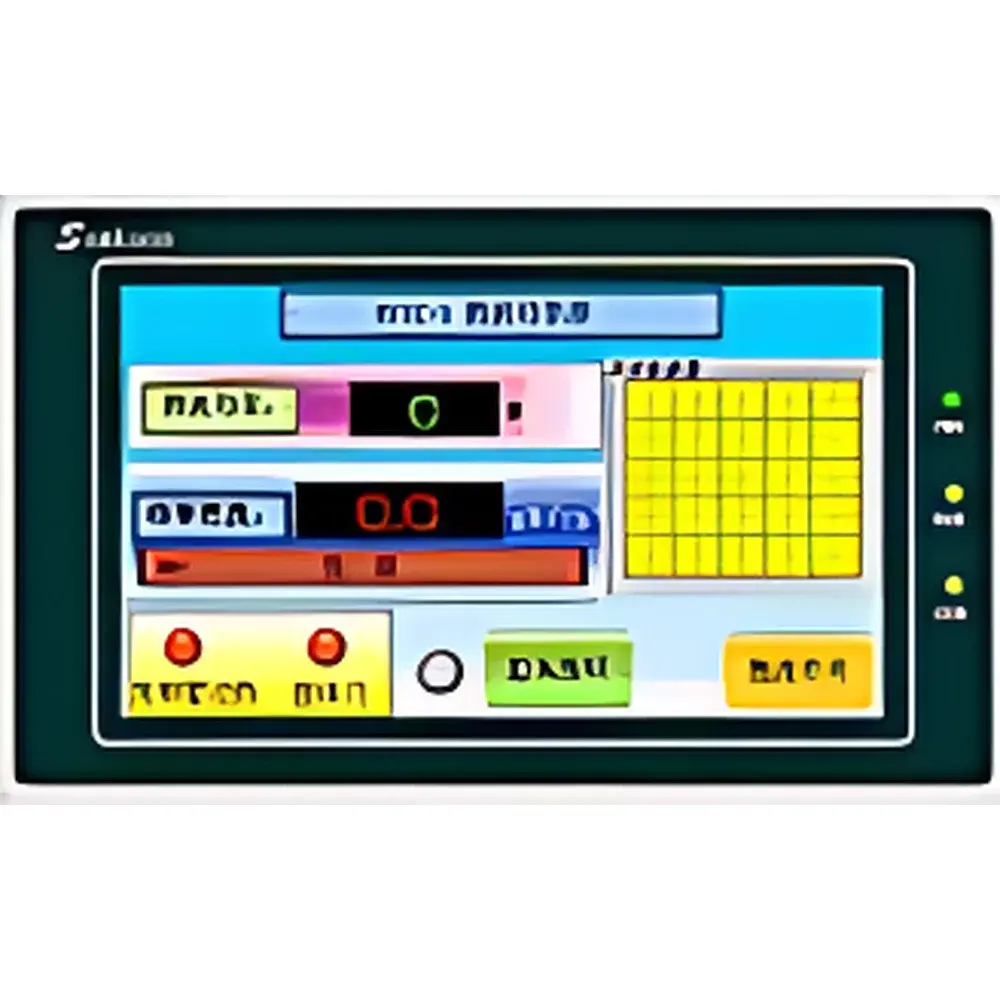
| Control Interface | Industrial-grade color touchscreen with embedded microcomputer controller |
| Power Density Monitoring | Real-time display of source output power and cavity-internal power density |
| Calibration | User-configurable power density calibration coefficient |
| Data Visualization | Real-time power density trend curve (sampling-based) |
| Operation Modes | Dual-mode dynamic power density regulation |
| Radiation Mode | Waveguide-fed cavity irradiation or free-space radiation via optional waveguide antenna |
Overview
The Huiyan MY8C-1 Microwave Radiation Experimental System is a precision-engineered platform designed for controlled, quantifiable microwave exposure in scientific and biomedical research environments. Operating at the industrial, scientific, and medical (ISM) band of 2450 MHz ± 50 MHz, the system employs magnetron-based microwave generation coupled with a rigorously characterized waveguide transmission path compliant with Chinese national standard GB/T BJ-26 (equivalent to WR-340/US standard, FD-26 flange interface). The core architecture comprises three integrated subsystems: a digitally regulated microwave power source, a low-loss rectangular waveguide transmission line assembly, and a stainless-steel experimental cavity engineered for electromagnetic field uniformity and thermal stability. Unlike open-field emitters or uncalibrated domestic ovens, the MY8C-1 enables traceable, repeatable irradiation protocols by providing real-time, dual-point power monitoring—both at the magnetron output and within the irradiation zone—thereby supporting dose-controlled studies aligned with established bioelectromagnetics methodologies.
Key Features
- Dual-point microwave power monitoring: Simultaneous readout of source output power (0–200 W) and intra-cavity power density (W/m²), displayed in real time on an industrial-grade color touchscreen.
- Continuous, linear power regulation: 0–200 W output range with fine-grained digital control; power level settable via intuitive touch interface with <1% step resolution.
- User-definable calibration coefficient: Enables empirical mapping between source power setting and measured cavity power density—critical for inter-laboratory reproducibility and protocol transfer.
- Real-time power density trend visualization: On-screen graphical plot updated at configurable sampling intervals (default: 100 ms), facilitating transient response analysis during exposure ramping or pulsed operation.
- Dual-mode power density control: Supports both fixed-setpoint and dynamic feedback-regulated modes, allowing adaptive irradiation based on external sensor inputs (e.g., temperature or dielectric probe signals).
- Stabilized magnetron operation: Microcomputer-controlled anode voltage and filament current ensure consistent output amplitude and spectral purity over extended duty cycles (>8 h continuous operation).
- Standardized waveguide interfacing: FD-26 flanged output compatible with ISO/IEC 60154-2-compliant waveguide components, enabling integration with circulators, directional couplers, attenuators, and calibrated power sensors.
Sample Compatibility & Compliance
The MY8C-1 accommodates a wide range of sample configurations: solid specimens placed on quartz or ceramic supports inside the stainless-steel cavity; liquid samples in low-loss borosilicate containers; or biological models (e.g., cell cultures in Petri dishes, small rodents in ventilated exposure chambers) positioned under defined field conditions. The cavity geometry permits standing-wave pattern characterization via field-mapping probes (not included), supporting compliance verification against IEEE Std C95.1-2019 limits for occupational and environmental RF exposure. While the system itself does not carry CE, FCC, or IEC 61000-4 certification (as it is intended for shielded laboratory use only), its mechanical and electrical design adheres to GB 4706.21 (microwave appliance safety) and GB/T 12190 (EMI shielding effectiveness) requirements. All operational parameters—including maximum permissible exposure duration, power density thresholds, and interlock logic—are fully configurable to align with institutional biosafety protocols and GLP-compliant study designs.
Software & Data Management
The embedded industrial microcomputer runs a deterministic real-time control firmware (RTOS-based) with non-volatile parameter storage and audit-trail logging. Every session records timestamped entries including setpoint history, measured power density values, system status flags (e.g., cooling fan RPM, magnetron temperature), and user authentication ID. Export formats include CSV and XML, compatible with MATLAB, Python (pandas), and LabVIEW for downstream statistical analysis. The system supports optional RS-485 or Ethernet (Modbus TCP) connectivity for integration into centralized lab management systems. All data logs are cryptographically signed and tamper-evident per NIST SP 800-53 Rev. 4 AC-17 and FDA 21 CFR Part 11 requirements when paired with validated identity management modules.
Applications
- Biomedical dosimetry: Quantitative assessment of microwave-induced thermal and non-thermal effects on mammalian cells, tissues, or model organisms under ISO/IEC 17025-aligned test conditions.
- Materials processing R&D: Controlled dielectric heating studies for polymer curing, ceramic sintering optimization, and moisture removal kinetics in porous media.
- Sensor calibration: Reference-source generation for broadband RF power density meters and E-field probes requiring traceable 2.45 GHz excitation.
- Electromagnetic compatibility (EMC) pre-compliance testing: Localized immunity stress testing of electronic subassemblies using calibrated near-field exposure.
- Academic electromagnetics education: Hands-on instruction in wave propagation, cavity resonance, impedance matching, and SAR estimation fundamentals.
FAQ
Is the MY8C-1 suitable for in vivo animal studies?
Yes—when used with purpose-built, ventilated exposure chambers and integrated thermoregulatory monitoring, the system supports IEEE ICES TC9-compliant rodent irradiation protocols. Cavity field homogeneity must be verified prior to each study using a calibrated isotropic E-field probe.
Can the system operate in pulsed mode?
No—the MY8C-1 delivers continuous-wave (CW) output only. Pulsed operation requires external RF switching hardware and is outside the scope of factory validation.
Does the system include a calibrated power sensor?
No—cavity power density calibration requires a separately procured, NIST-traceable isotropic field probe (e.g., Narda AMB-8050 series) and associated meter. The onboard display provides relative readings only until user calibration is performed.
What safety interlocks are implemented?
Hardware-enforced door interlock disables magnetron operation when the cavity access panel is unlatched; redundant thermal cutoffs monitor magnetron anode temperature and waveguide wall temperature; all interlock states are logged and visible on the main screen.
Is remote operation supported?
Yes—via optional Ethernet module with Modbus TCP server functionality. Full control and real-time data streaming are available through third-party SCADA or custom Python applications using standard socket communication.
Related Products







