
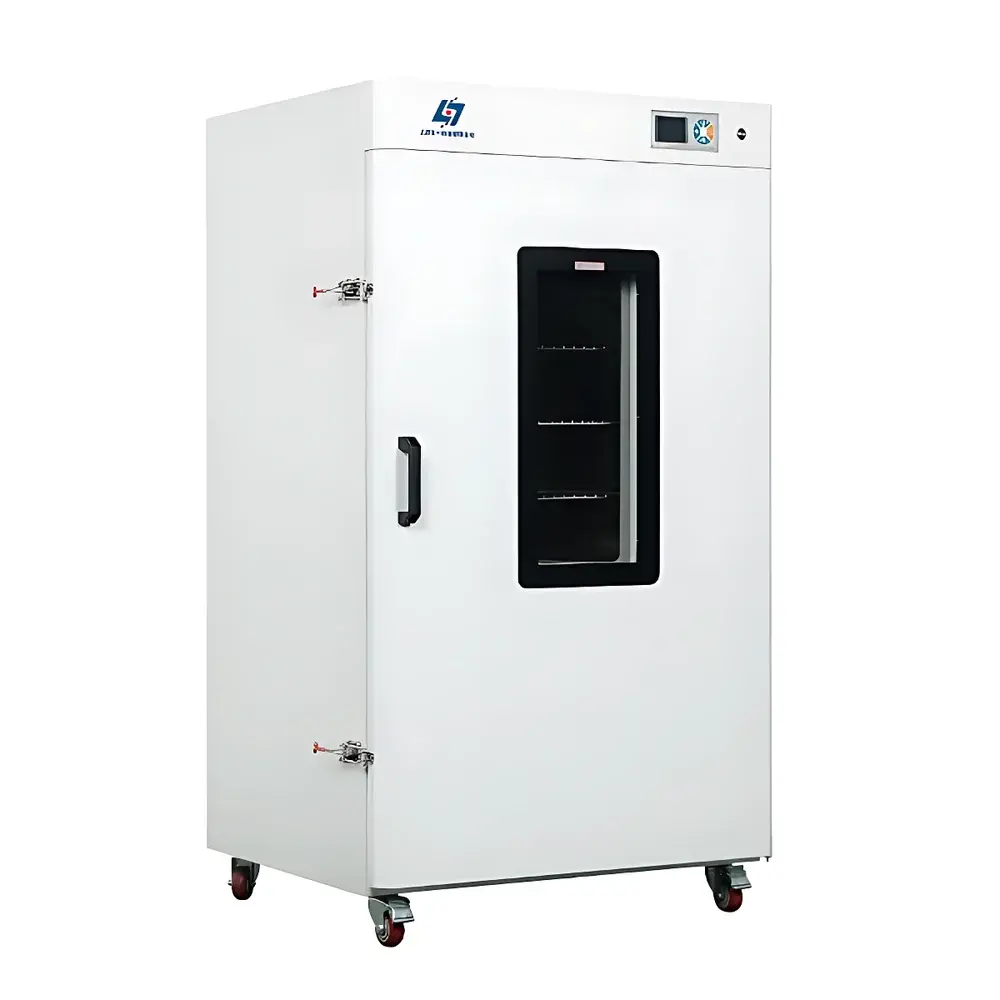
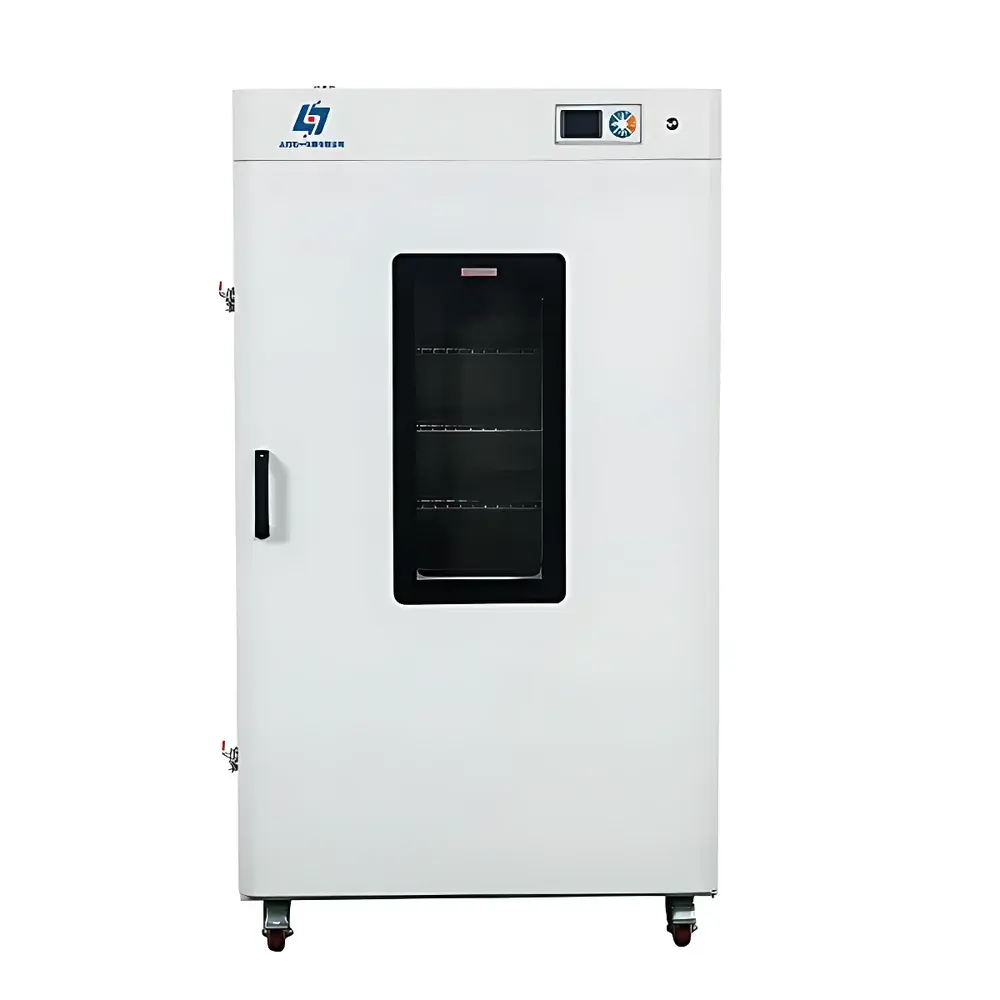
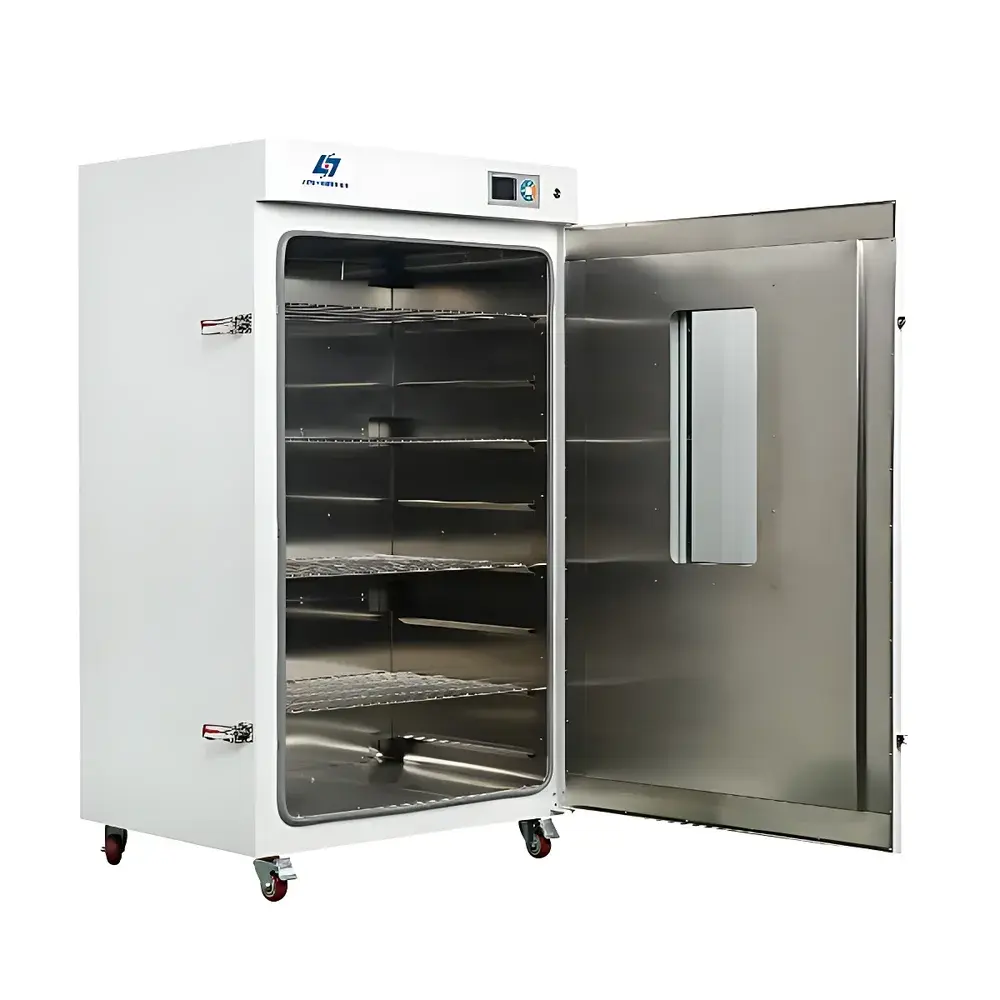
Yoyi DHG-9425A Vertical Large-Capacity Forced-Air Laboratory Oven
| Brand | Yoyi |
|---|---|
| Origin | Shanghai, China |
| Manufacturer Type | Direct Manufacturer |
| Product Category | Domestic |
| Model | DHG-9425A |
| Temperature Range | RT+10°C to 300°C |
| Temperature Uniformity | ±2.5% (at 100°C) |
| Temperature Fluctuation | ±1°C |
| Temperature Resolution | 0.1°C |
| External Dimensions (W×D×H) | 780×750×1750 mm |
| Internal Chamber Dimensions (W×D×H) | 600×550×1300 mm |
| Internal Volume | 420 L |
| Chamber Material | Mirror-Finish Stainless Steel |
| Power Supply | AC 220 V, 50 Hz |
| Input Power | 3500 W |
| Operating Ambient Temperature | RT+5°C to 40°C |
| Compliance | GB/T 30435–2013 |
Overview
The Yoyi DHG-9425A is a vertical, large-capacity forced-air laboratory oven engineered for precision thermal processing in research, quality control, and production environments. Designed according to GB/T 30435–2013 — the Chinese national standard for electrically heated laboratory ovens — it employs a robust convection-based heating architecture with rear-mounted air intake and exhaust ducts, enabling continuous, uniform airflow throughout the chamber. The oven utilizes resistive heating elements coupled with a high-efficiency axial fan and optimized wind tunnel geometry to achieve stable thermal distribution across its 420 L working volume. Its operational range spans from ambient +10°C up to 300°C, making it suitable for applications including moisture removal, polymer curing, pharmaceutical stability testing, component pre-baking, and dry-heat sterilization protocols where precise temperature maintenance and repeatability are critical.
Key Features
- Microprocessor-based intelligent temperature controller with PID algorithm, supporting setpoint programming, real-time monitoring, and over-temperature cut-off protection;
- Large-format LCD display with menu-driven interface showing set temperature, actual chamber temperature, elapsed time, and remaining hold time simultaneously;
- Dual-layer tempered glass observation window with wide viewing angle, facilitating non-intrusive process monitoring without compromising thermal integrity;
- Mirror-finish stainless steel interior chamber (SUS304 grade), corrosion-resistant and easy to clean; adjustable stainless steel shelving (3 standard trays included);
- High-strength cold-rolled steel outer casing with electrostatic epoxy powder coating for durability and chemical resistance;
- High-temperature silicone door gasket ensuring tight sealing and extended service life under repeated thermal cycling;
- Automated air exchange system with rear-mounted inlet and outlet ports, eliminating manual vent adjustment and improving condensation management during prolonged drying cycles;
- Power-loss recovery function preserving user-defined parameters and resuming operation upon power restoration;
- Optional independent over-temperature safety limiter (mechanical or digital), compliant with IEC 61000-4-2/4-4 immunity requirements for lab-grade instrumentation.
Sample Compatibility & Compliance
The DHG-9425A accommodates a broad spectrum of sample types and container formats, including Petri dishes, weighing boats, glassware, metal trays, and standard ISO/ASTM-compliant test specimens. Its chamber geometry supports stacked or staggered loading configurations without significant airflow obstruction. The unit conforms to GB/T 30435–2013 for performance verification under no-load conditions at 20°C ambient and 50% RH. While not certified to UL, CSA, or CE standards out-of-the-box, its electrical design adheres to IEC 61010-1 safety principles for laboratory equipment. For GLP/GMP-regulated workflows, optional RS485 communication enables integration into validated data acquisition systems supporting 21 CFR Part 11 audit trails when paired with compliant software platforms.
Software & Data Management
As a standalone instrument, the DHG-9425A operates via embedded firmware with local parameter storage. Optional accessories expand its connectivity and traceability capabilities: an RS485 interface (with Modbus RTU protocol support) allows remote monitoring and logging via SCADA or LabVIEW; an embedded thermal printer provides hard-copy records of temperature profiles and event timestamps; multi-segment programmable controllers (up to 30 segments) enable complex ramp-hold-cool cycles for accelerated aging or material characterization studies. All optional modules undergo functional validation per manufacturer specifications and integrate seamlessly with the base controller’s calibration registry.
Applications
- Moisture content determination in food, agricultural, and pharmaceutical raw materials (per AOAC 950.46, USP <731>);
- Thermal stabilization of electronic components prior to soldering or encapsulation;
- Drying of filter papers, chromatography media, and microbiological culture plates;
- Curing of adhesives, coatings, and composite laminates in materials science labs;
- Preconditioning of polymeric samples for tensile or impact testing (ASTM D618);
- Dry-heat depyrogenation of glassware and stainless-steel tools (validated at ≥250°C for ≥30 min);
- Accelerated shelf-life testing of packaged goods under controlled thermal stress.
FAQ
What is the maximum operating temperature of the DHG-9425A?
The unit is rated for continuous operation up to 300°C, consistent with the “9XX5” series designation.
Does the oven include validation documentation for GxP environments?
Factory-supplied IQ/OQ documentation templates are available upon request; full qualification requires on-site sensor mapping and protocol execution by the end user or qualified third party.
Can inert gas purging be implemented?
Yes — an optional inert gas inlet port with calibrated rotameter (0–10 L/min range) is available for nitrogen or argon blanketing during oxygen-sensitive processes.
Is the temperature uniformity verified at multiple setpoints?
Per GB/T 30435–2013, uniformity is specified as ±2.5% at 100°C under no-load conditions; users should perform periodic mapping at their target operating temperatures using NIST-traceable thermocouples.
What maintenance is required for long-term reliability?
Routine inspection of door seal integrity, cleaning of air intake filters (if installed), and annual verification of controller accuracy against a reference thermometer are recommended.



