
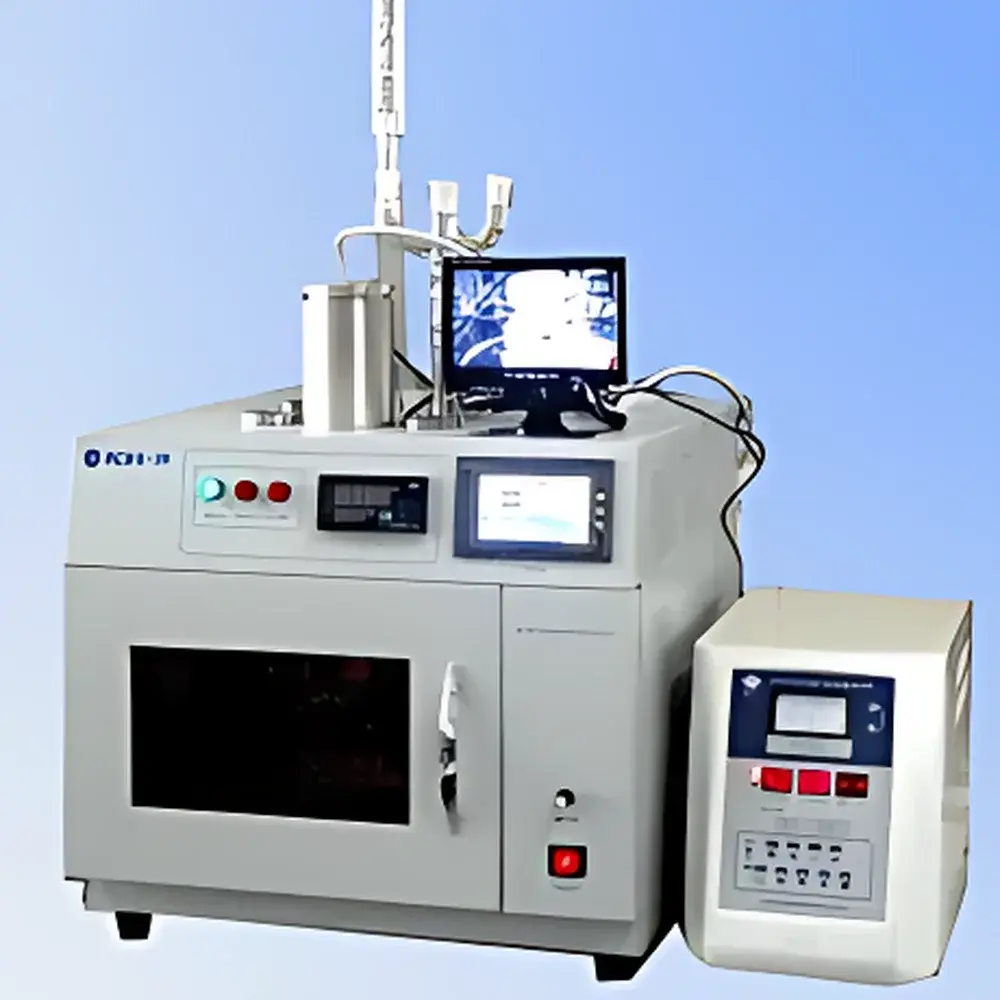
Hywell MC8S-1A Microwave-Ultrasound Combined Extraction and Reaction System
| Brand | Hywell |
|---|---|
| Origin | Jiangsu, China |
| Manufacturer Type | Authorized Distributor |
| Country of Origin | China |
| Model | MC8S-1A |
| Price Range | USD 1,400–7,200 (FOB) |
| Microwave Power | 0–1000 W (continuous, linearly adjustable) |
| Microwave Frequency | 2.45 GHz ± 0.05 GHz |
| Temperature Control Range | 0–300 °C |
| Temperature Control Accuracy | ±1 °C |
| Cavity Material | 304 Stainless Steel |
| Ultrasonic Power | 0–900 W (continuous, adjustable) |
| Ultrasonic Frequency | 25 kHz |
| Transducer Type | Immersion-type with Φ8 mm titanium alloy probe |
| Stirring | Built-in magnetic stirrer (speed continuously adjustable) |
| Reaction Volume Capacity | 10–1000 mL |
| Cavity Ports | Three microwave-suppressed top ports for condenser, gas inlet/outlet, coolant, or probe insertion |
| Safety Compliance | Meets GB 10436-2008 (Microwave Leakage ≤ 1 mW/cm² at 5 cm) |
Overview
The Hywell MC8S-1A Microwave-Ultrasound Combined Extraction and Reaction System is an integrated laboratory platform engineered for precision-controlled, multi-energy-field chemical processing. It combines three independent yet synergistic physical activation modalities—microwave irradiation (2.45 GHz), high-intensity immersion ultrasonication (25 kHz), and magnetic stirring—within a single robust stainless-steel cavity. Unlike conventional batch reactors limited to thermal conduction or single-mode energy input, the MC8S-1A operates on the principle of non-thermal and thermal synergy: microwave energy induces rapid, volumetric dielectric heating of polar molecules; ultrasonic cavitation generates localized hotspots (>5000 K), microturbulence, and enhanced mass transfer at solid–liquid interfaces; and magnetic agitation ensures homogeneous reagent distribution and heat dispersion. This tri-modal architecture enables accelerated reaction kinetics, improved extraction yields, reduced solvent consumption, and superior reproducibility in applications ranging from natural product isolation to catalytic synthesis and oxidative degradation studies. The system employs real-time contact temperature sensing with closed-loop PID feedback, ensuring compliance with ISO/IEC 17025 method validation requirements for thermal process control.
Key Features
- Triple-energy modularity: Microwave, ultrasound, and magnetic stirring operate independently or in any combination—enabling method development flexibility across heterogeneous reaction systems.
- Continuous microwave power regulation (0–1000 W) via fuzzy logic algorithm, eliminating pulse artifacts and delivering stable, linear power density modulation within the resonant cavity.
- Immersion-type ultrasonic transducer (25 kHz, 0–900 W) with automatic frequency tracking and Φ8 mm titanium alloy probe—optimized for high-amplitude transmission into viscous or particulate suspensions.
- Open-top cavity design with three microwave-suppressed ports (diameter: 45 mm each), permitting simultaneous installation of reflux condensers, inert gas lines, thermocouple probes, or mechanical stirrers without compromising RF shielding integrity.
- Industrial-grade 7-inch TFT color touchscreen interface with full Chinese/English bilingual support, enabling intuitive parameter programming, multi-step protocol storage (≥100 user-defined methods), and real-time graphical display of temperature, power, and time profiles.
- Integrated safety architecture: dual interlock door switches, magnetron overtemperature cutoff, RF leakage monitoring (<1 mW/cm² at 5 cm per GB 10436-2008), and pressure-relief-compatible vessel mounting options.
- Real-time visual monitoring via built-in camera module with standard CVBS video output—compatible with external frame grabbers for GLP-compliant digital recording of reaction morphology changes.
Sample Compatibility & Compliance
The MC8S-1A accommodates a broad range of sample matrices—including plant tissues, soil extracts, polymer composites, metal-organic frameworks, and biological suspensions—across volumes from 10 mL (micro-scale screening) to 1000 mL (pilot-scale optimization). Its open-system configuration supports standard borosilicate glassware (e.g., round-bottom flasks, Soxhlet thimbles, reflux assemblies) and optional pressurized digestion vessels rated to 3 MPa and 300 °C. The instrument meets electromagnetic compatibility (EMC) requirements per GB/T 18268.1-2010 and adheres to occupational exposure limits defined in ICNIRP 2020 guidelines. For regulated environments, optional RS-485 MODBUS RTU interface enables integration into LIMS or SCADA platforms supporting 21 CFR Part 11 audit trails when paired with validated third-party acquisition software.
Software & Data Management
The embedded control firmware supports full experimental traceability: timestamped parameter logs (power, temperature, duration), alarm event history (e.g., door open, sensor fault, overtemperature), and user authentication via password-protected access levels. All data are exportable in CSV format via USB 2.0 port. Optional remote operation is achievable through MODBUS-enabled industrial PCs, allowing centralized monitoring of multiple units in QC laboratories or teaching facilities. Firmware updates are delivered via secure HTTP download and verified using SHA-256 checksums—ensuring integrity during maintenance cycles.
Applications
- Accelerated solvent extraction (ASE) of polyphenols, alkaloids, and essential oils from botanical matrices—reducing extraction time by 60–80% versus conventional Soxhlet methods.
- Ultrasound-assisted microwave digestion of environmental samples (sediments, sludges) prior to ICP-MS analysis, achieving complete mineralization of refractory silicates.
- Catalyst-supported organic synthesis (e.g., Suzuki coupling, esterification) under controlled thermal gradients and acoustic cavitation fields.
- Preparation of nanomaterial dispersions (graphene oxide, metal nanoparticles) with narrow size distribution and minimal agglomeration.
- Thermal stability assessment of pharmaceutical intermediates under dynamic microwave heating profiles aligned with ICH Q1A(R2) guidelines.
FAQ
Can the MC8S-1A be used for closed-vessel microwave digestion?
Yes—when equipped with optional high-pressure quartz or Teflon-lined digestion vessels and corresponding temperature/pressure sensors, the system supports ASTM D5511-compliant anaerobic digestion protocols.
Is ultrasonic frequency tunable across the 20–40 kHz range?
No—the transducer is fixed at 25 kHz for optimal cavitation efficiency in aqueous and moderately viscous media; frequency sweeping is not supported.
Does the system comply with FDA 21 CFR Part 11 for electronic records?
Out-of-the-box functionality does not include Part 11 compliance; however, the RS-485/MODBUS interface allows integration with validated third-party software meeting electronic signature and audit trail requirements.
What is the maximum allowable operating ambient temperature?
The unit is rated for continuous operation at ambient temperatures up to 35 °C and relative humidity ≤80% non-condensing, as specified in IEC 61010-1:2010.
Are calibration certificates available for the temperature sensor?
NIST-traceable calibration reports (per ISO/IEC 17025) are provided upon request for the Pt100 RTD sensor, with uncertainty ≤±0.5 °C over the 0–300 °C range.



