
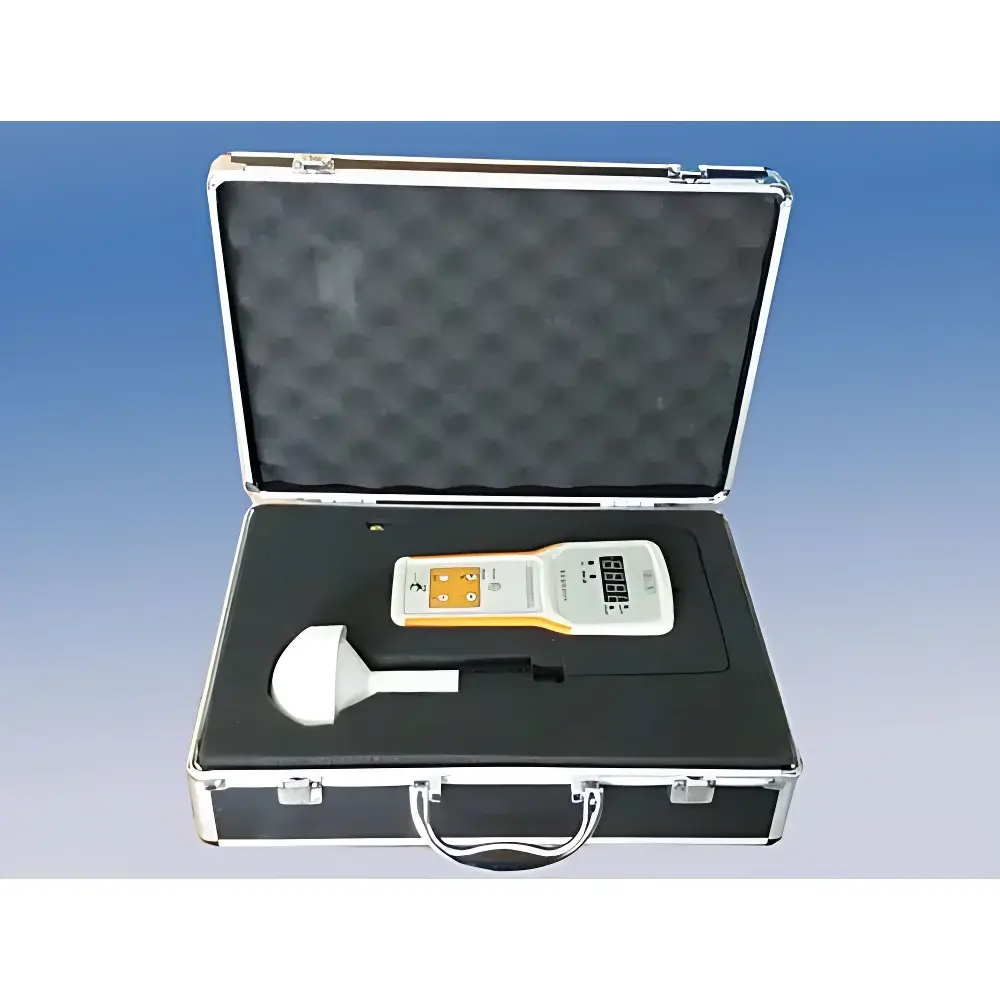
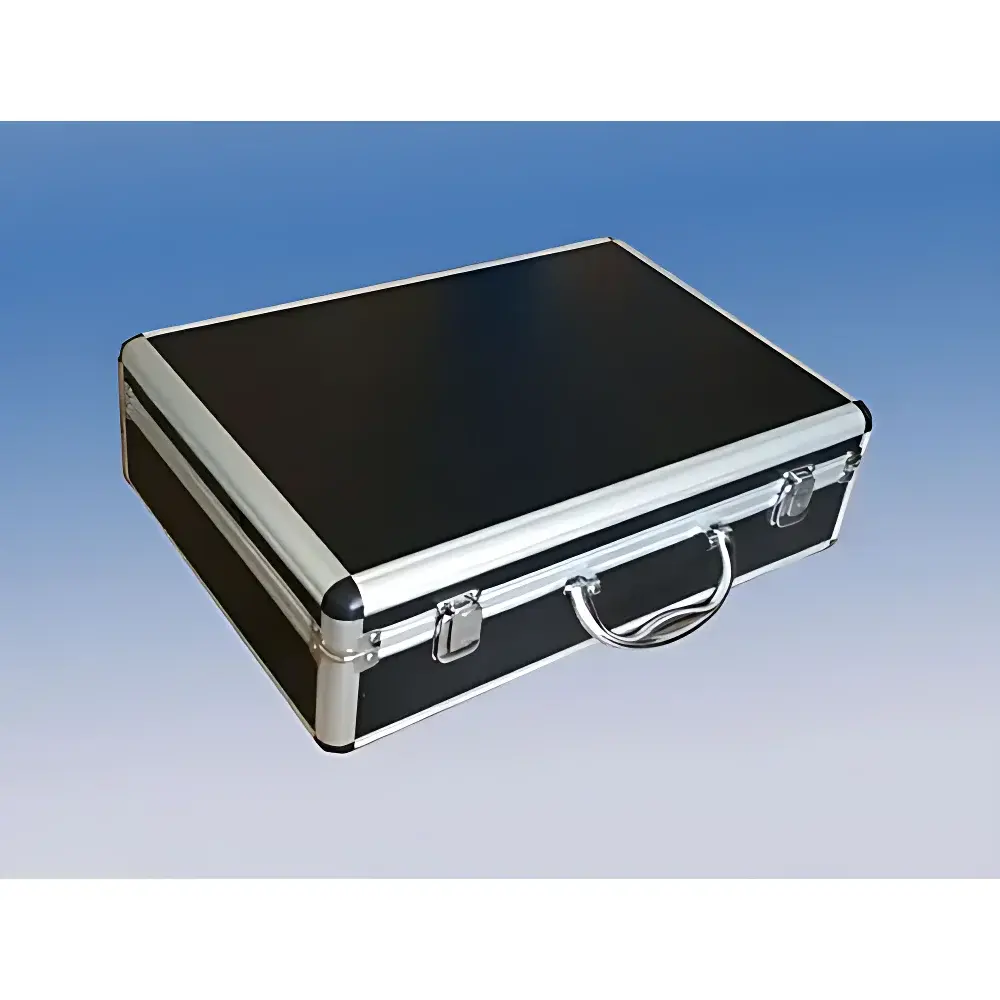
Hyeyan MHJ-99 Microwave Leakage Power Density Meter
| Brand | Hyeyan |
|---|---|
| Model | MHJ-99 |
| Instrument Type | RF Power Density Meter (Metering/Dose Rate) |
| Frequency Range | 0.9–12.4 GHz |
| Measurement Range | 0.2 µW/cm² to 20 mW/cm² |
| Display | LED Digital, 3.5-digit |
| Accuracy (Full Scale) | ±1.5% |
| Calibration Field Uncertainty | ±0.75 dB |
| Operating Modes | Continuous Wave (CW) and Pulsed RF |
| Alarm Threshold | User-Adjustable (Factory Default: 5 mW/cm²) |
| Dimensions | 100 × 210 × 35 mm |
| Weight | ~0.5 kg |
| Environmental Operating Range | −10°C to +40°C, RH 51–81%, Atmospheric Pressure 720–780 mmHg |
| Sensor Sensitivity | Optimized for Wavelengths 3–33 cm |
| Internal Control | Microcontroller-Based Architecture with Auto-Zero and Self-Test Functions |
Overview
The Hyeyan MHJ-99 Microwave Leakage Power Density Meter is a handheld, microprocessor-controlled instrument engineered for quantitative assessment of electromagnetic field (EMF) leakage from microwave-emitting equipment operating within the 0.9–12.4 GHz frequency band. It employs a calibrated isotropic E-field probe coupled with high-stability RF-to-DC conversion circuitry to measure time-averaged power density in free space—expressed in µW/cm² or mW/cm²—conforming to fundamental principles of RF dosimetry as defined in IEEE Std C95.3 and IEC 62233. Designed for field-deployable operation, the MHJ-99 delivers traceable measurements without requiring external calibration sources during routine use. Its compact form factor (100 × 210 × 35 mm), low mass (~0.5 kg), and battery-powered architecture support extended use in clinical radiology suites, industrial microwave oven maintenance, telecommunications infrastructure audits, and occupational safety inspections.
Key Features
- Microcontroller-based real-time signal processing with automatic zero-point compensation and built-in self-diagnostic startup sequence
- LED digital display with 3.5-digit resolution and auto-ranging capability across six measurement spans
- User-configurable acoustic and visual alarm thresholds, factory preset at 5 mW/cm² per ICNIRP reference levels for occupational exposure
- Dual-mode RF detection: supports both continuous-wave (CW) and pulsed RF sources; all displayed values represent time-averaged power density over user-selectable integration periods
- Calibration traceability anchored to a certified reference field with uncertainty ≤ ±0.75 dB (k = 2), verified per ISO/IEC 17025-accredited procedures
- Robust mechanical design with light-shielded sensor head to minimize photonic interference; optimized for wavelength bands spanning 3–33 cm (corresponding to 0.9–10 GHz)
- Compliant with environmental operating specifications: −10°C to +40°C ambient temperature, relative humidity 51–81%, and barometric pressure 720–780 mmHg
Sample Compatibility & Compliance
The MHJ-99 is validated for non-invasive, near-field assessment of RF leakage from common microwave-generating devices—including medical diathermy units, industrial heating systems, radar transceivers, and domestic/commercial microwave ovens. It meets functional requirements outlined in national occupational health standards (e.g., GBZ 2.2–2014 in China) and aligns with international exposure limit frameworks including ICNIRP (2020) and IEEE C95.1–2019. While not a Class I medical device under FDA 21 CFR Part 820, its measurement methodology satisfies technical prerequisites for GLP-aligned workplace monitoring programs. The instrument does not require type approval under FCC Part 18 or CE RED Directive for measurement use, as it functions solely as a passive receiving system with no intentional emissions.
Software & Data Management
The MHJ-99 operates as a standalone meter with no embedded data logging or PC interface. All measurement data are presented in real time on the integrated LED display; no proprietary software, drivers, or cloud connectivity are included or required. This architecture ensures deterministic response latency (< 200 ms), immunity to firmware vulnerabilities, and long-term operational stability—critical attributes for audit-ready compliance documentation. For record-keeping, users manually transcribe readings into laboratory notebooks or validated electronic systems compliant with 21 CFR Part 11 (where applicable). Calibration certificates—including date, standard reference, and measurement uncertainty—must be retained per ISO/IEC 17025 clause 7.8.3.
Applications
- Ongoing verification of microwave oven door seal integrity in food service and manufacturing facilities
- Preventive maintenance screening of magnetron assemblies and waveguide joints in industrial drying systems
- Occupational exposure assessment for technicians servicing radar installations or satellite uplink stations
- Baseline surveys prior to installation of 5G small cells operating in n78 (3.3–3.8 GHz) or n41 (2.496–2.69 GHz) bands
- Verification of shielding effectiveness in RF anechoic chambers and MRI control rooms
- Field validation of EMF mitigation measures following installation of RF-absorbing materials or metallic enclosures
FAQ
What is the calibration interval recommendation for the MHJ-99?
Annual recalibration against a NIST-traceable standard is recommended under normal use conditions; more frequent calibration may be required after mechanical shock, extreme thermal cycling, or exposure to strong RF transients.
Can the MHJ-99 measure peak pulse power density?
No—it reports only time-averaged power density. Pulse peak detection requires specialized broadband peak-hold instrumentation with sub-microsecond rise time (e.g., compliant with IEC 61000-4-3).
Is the sensor isotropic across the full 0.9–12.4 GHz range?
The probe exhibits ≥95% isotropy within ±30° off-axis for frequencies below 6 GHz; above 6 GHz, angular response deviation increases progressively—users should orient the sensor per manufacturer’s alignment guide for critical measurements.
Does the MHJ-99 comply with EU EMC Directive 2014/30/EU?
As a passive measurement device with no active transmission or switching power supply, it falls outside the scope of the EMC Directive and carries no CE marking requirement for electromagnetic immunity.
How is measurement uncertainty determined for field use?
Total expanded uncertainty (k=2) is ±1.5% of reading plus ±0.75 dB contribution from calibration field variability, assuming proper sensor orientation, stable ambient conditions, and avoidance of metallic reflections within 1 m of the probe.
Related Products







