
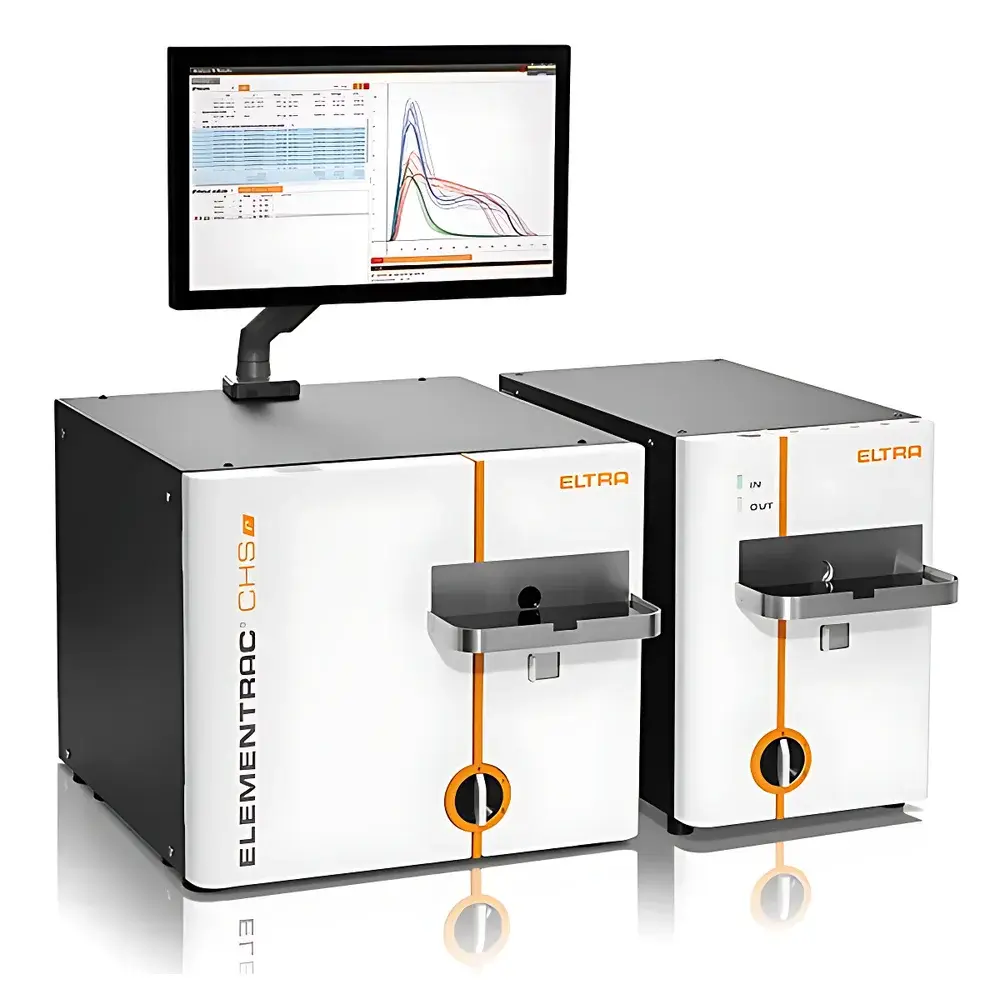
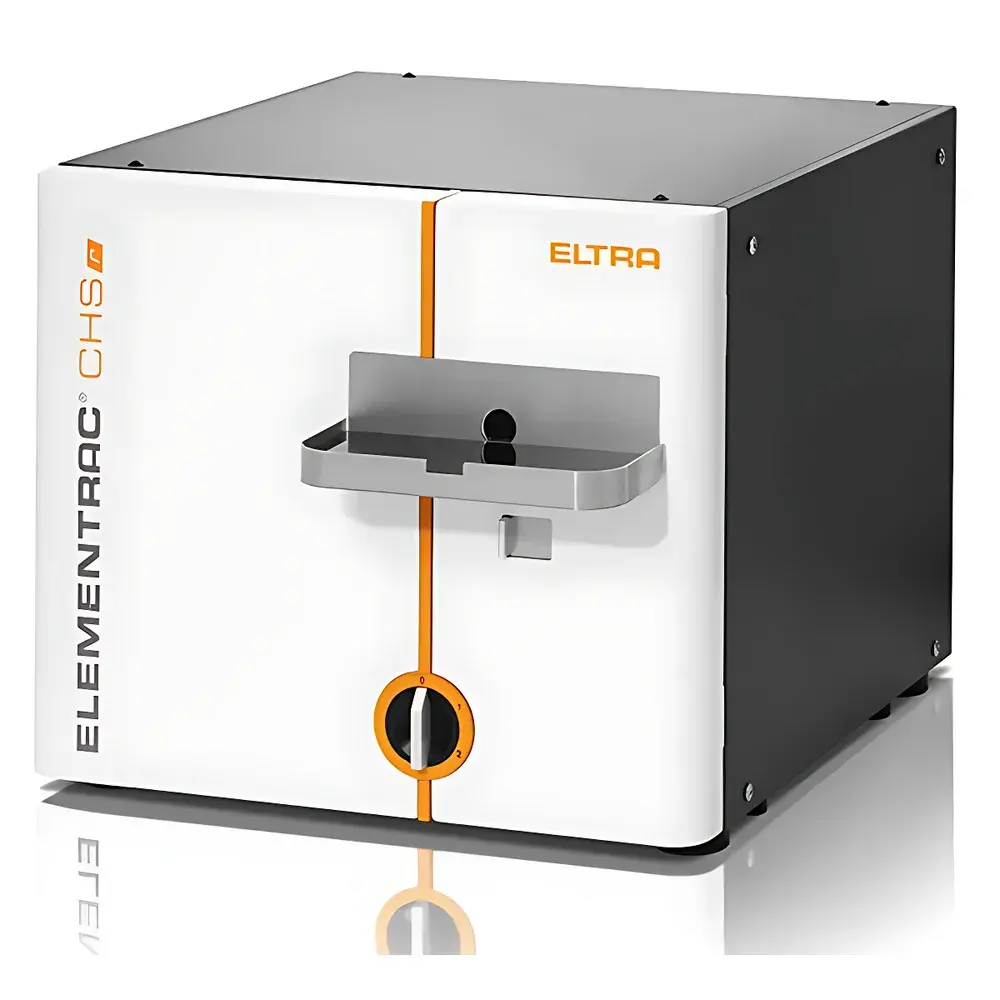
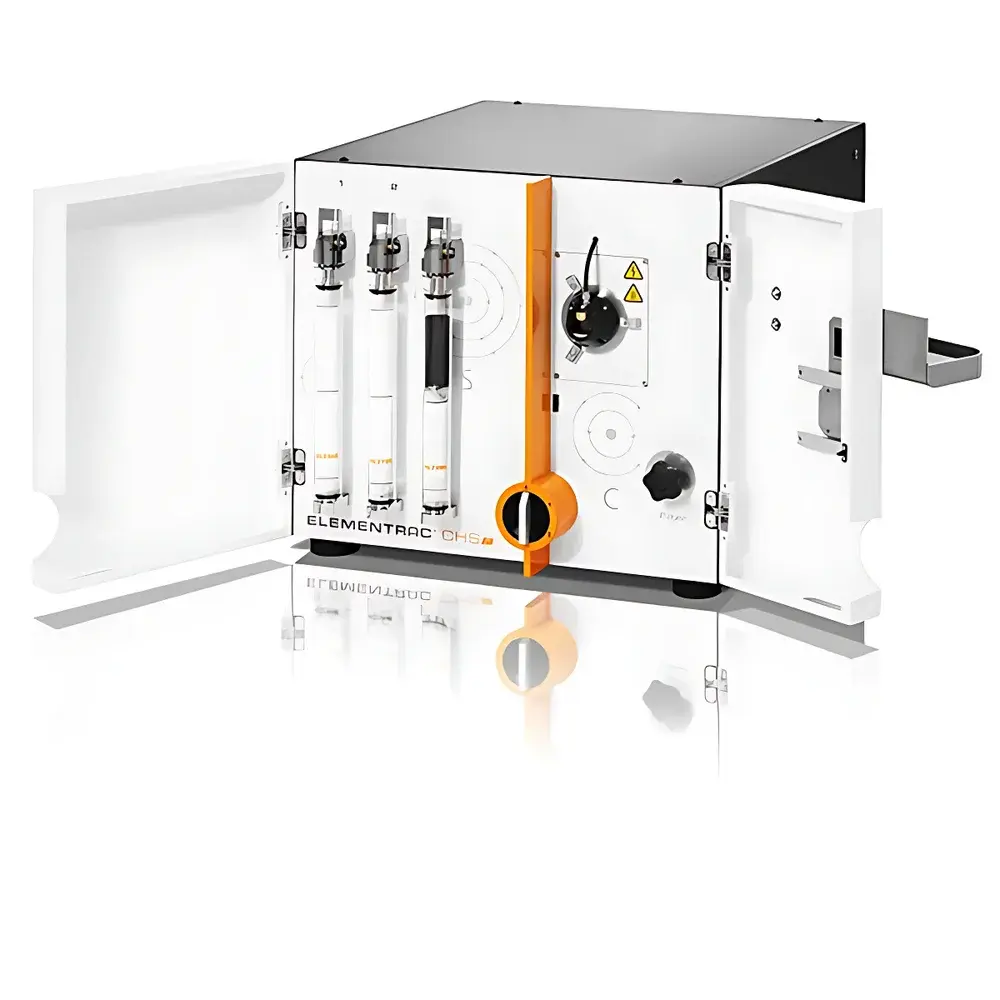
ELTRA ELEMENTRAC CHS-r Carbon-Hydrogen-Sulfur Analyzer
| Brand | ELTRA |
|---|---|
| Origin | Germany |
| Model | CHS-r |
| Measurement Principle | Infrared Absorption (CO₂, SO₂, H₂O detection) |
| Furnace Type | Horizontal Resistance Furnace with Ceramic Tube |
| Temperature Range | 600 °C to 1550 °C |
| Sample Weight Capacity | Up to 500 mg |
| Detection Range | 20 ppm to 100 wt% |
| Compliance | ASTM D5373, ASTM D7289, ISO 11725, ISO 20362, DIN 51721, EN 15407 |
| Key Features | Triple IR detection cells (C, H, S), gold-plated IR cells, low-blank sample inlet, oxygen flow control with electronic mass flow meter |
Overview
The ELTRA ELEMENTRAC CHS-r is a high-performance, combustion-based elemental analyzer engineered for the simultaneous quantitative determination of carbon (C), hydrogen (H), and sulfur (S) in solid organic and inorganic materials. Operating on the principle of high-temperature oxidative combustion followed by selective infrared absorption spectroscopy, the instrument thermally decomposes samples in a purified oxygen stream at temperatures up to 1550 °C within a horizontal ceramic-tube resistance furnace. The resulting combustion gases—CO₂, SO₂, and H₂O—are individually quantified using three dedicated, gold-plated infrared detection cells. This configuration ensures high specificity, long-term signal stability, and minimal cross-sensitivity between analytes. Designed for routine laboratory use in quality control, environmental testing, and research settings, the CHS-r delivers trace-level sensitivity (down to 20 ppm) across an exceptionally wide dynamic range (20 ppm–100 wt%), supporting both regulatory compliance and method validation requirements.
Key Features
- Triple-channel infrared detection system optimized for CO₂, SO₂, and H₂O—enabling true simultaneous C/H/S measurement in a single run
- Horizontal resistance furnace with ceramic tube, offering precise temperature control from 600 °C to 1550 °C and uniform thermal distribution for complete sample oxidation
- Gold-plated infrared measurement cells that resist corrosion, reduce background drift, and extend service life under high-concentration or aggressive matrix conditions
- Low-blank sample introduction system minimizing contamination risk and improving accuracy for ultra-trace analysis
- Integrated electronic mass flow controller for oxygen delivery, ensuring stoichiometric combustion and reproducible oxidation—even for refractory matrices such as cement, slag, or sulfide ores
- Modular hardware architecture supporting flexible configurations: C-only, S-only, C+S, or full C+H+S, without requiring firmware or software reconfiguration
Sample Compatibility & Compliance
The CHS-r accommodates heterogeneous and challenging solid samples—including coal, coke, biomass (wood, charcoal), petroleum coke, plastics, soils (for TOC/TIC), construction materials (cement, limestone), geological samples (sulfide ores, sediments), and industrial waste streams. Its 500 mg maximum sample capacity enhances statistical representativeness for non-homogeneous materials. The system meets critical international standards for elemental combustion analysis, including ASTM D5373 (coal and coke), ASTM D7289 (petroleum coke), ISO 11725 (solid biofuels), ISO 20362 (soil organic carbon), DIN 51721 (carbon in steelmaking raw materials), and EN 15407 (waste characterization). All measurements are fully traceable to NIST-certified reference materials, and the instrument supports GLP/GMP workflows through audit-trail-enabled operation logs and user-access controls.
Software & Data Management
Operation is managed via ELTRA’s proprietary WinElement software, a Windows-based platform compliant with FDA 21 CFR Part 11 requirements. It provides full instrument control, real-time gas chromatogram visualization, automatic baseline correction, peak integration, calibration curve management (linear, quadratic, or multi-point), and customizable reporting templates. Data export supports CSV, XML, and LIMS-compatible formats. The software maintains a secure, time-stamped audit trail for all analytical events—including method changes, calibration updates, user logins, and result modifications—ensuring full data integrity and regulatory readiness. Optional network integration enables centralized fleet monitoring and remote diagnostics.
Applications
- Energy sector: Carbon and sulfur content in coal, coke, and alternative fuels per ISO 20362 and ASTM D5373
- Environmental laboratories: Total organic carbon (TOC) and total inorganic carbon (TIC) in soils and sediments; sulfur speciation in contaminated waste
- Metallurgy & mining: Quantification of residual carbon and sulfur in ferroalloys, slag, and sulfidic ores
- Petrochemical industry: Hydrogen content determination in hydrocarbons and catalysts; sulfur screening in feedstocks
- Construction materials: Carbonate content in limestone aggregates and cementitious binders per EN 196-2
- Research institutions: Method development for novel biomass-derived materials, carbon sequestration studies, and circular economy feedstock characterization
FAQ
What standards does the CHS-r support for carbon and sulfur analysis?
ASTM D5373, ASTM D7289, ISO 11725, ISO 20362, DIN 51721, EN 15407, and other combustion-based elemental analysis standards.
Can the CHS-r analyze liquid or powder samples directly?
It is designed for solid samples only; liquids require pre-treatment (e.g., drying, ashing, or adsorption onto inert carriers) prior to analysis.
How is calibration performed and how often is it required?
Calibration uses certified reference materials (CRMs) traceable to NIST or BAM; frequency depends on usage intensity and regulatory requirements—typically daily verification with check standards and full recalibration every 1–3 months.
Is the furnace tube replaceable in the field?
Yes—the ceramic furnace tube is a field-serviceable consumable with documented replacement procedures and no need for factory recalibration.
Does the system support automated sample loading?
The base CHS-r model operates with manual sample insertion; optional autosamplers (e.g., ELTRA AS-200) are available for unattended batch processing of up to 40 samples.
Related Products



