
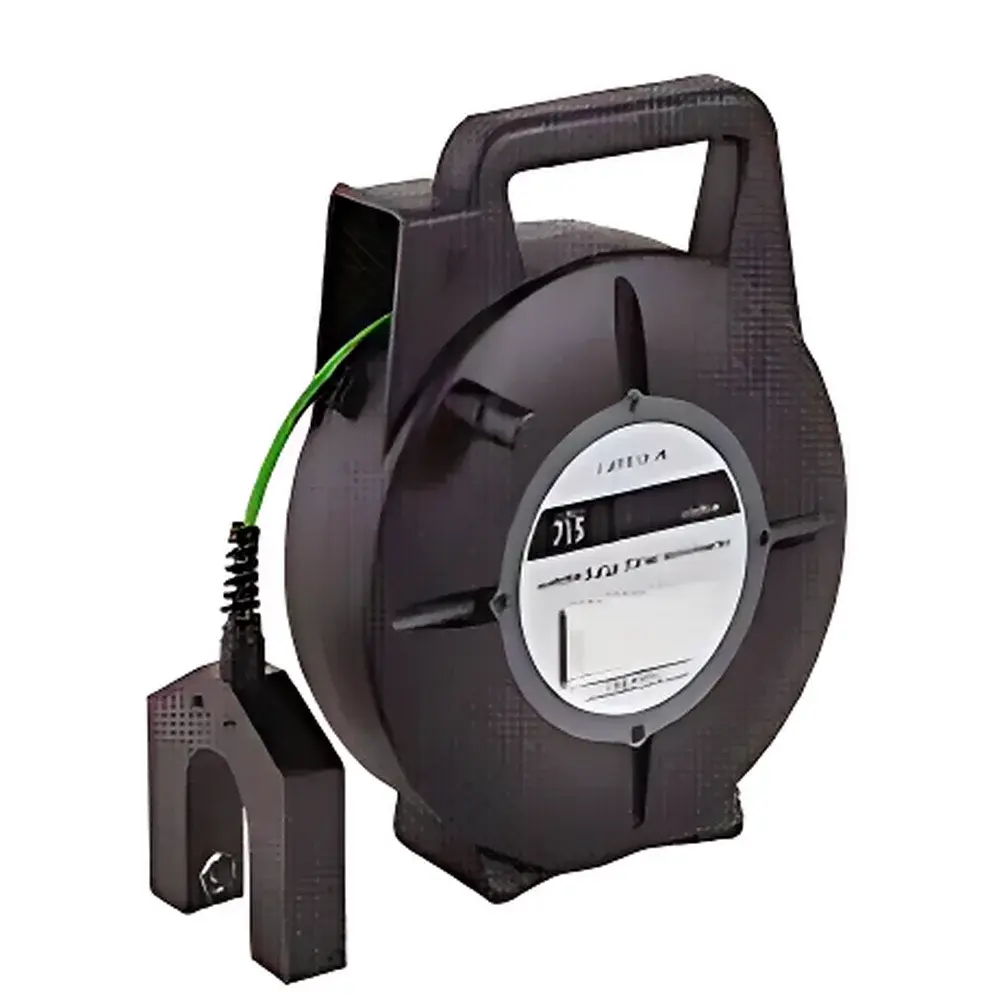
English Product Name
| Origin | United Kingdom |
|---|---|
| Distribution Model | Authorized Distributor |
| Import Status | Imported |
| Model | 715 |
| Pricing | Upon Request |
| Weight | 1.2 kg |
| Dimensions | 280 × 230 × 130 mm |
| Enclosure Rating | IP54 (main unit), IP68 (probe) |
| Cable Diameter | 5 mm |
| Standard Cable Length | 10 m (max. 15 m) |
| Operating Temperature | −20–60 °C (unit), 0–40 °C (probe) |
| Storage Temperature | −20–60 °C (unit), 0–40 °C (probe) |
| Power Supply | 9 V PP9 battery (typical lifespan: 3 months) |
| Response Time | 0.5 s |
| Interface Detection Accuracy | ±1 cm |
| Resolution | 1 cm (marked at 1 m intervals) |
| Measurement Principle | Near-infrared light scattering (960 nm) |
| Probe Options | IR100 (0–200 mg/L, 100 mm sensing gap), IR40 (0–1,500 mg/L, 40 mm), IR15 (0–10,000 mg/L, 15 mm), IR8 (0–30,000 mg/L, 8 mm) |
| Output | Audible tone (short in water, long in sludge), LED indicator, no analog/digital output |
Overview
The EnviroTech 715 Portable Sludge Interface Monitor is a field-deployable, optically based instrument engineered for rapid, operator-independent determination of the sludge–supernatant interface depth in primary, secondary, and tertiary sedimentation tanks—including clarifiers, thickeners, and final settling basins. It operates on the principle of near-infrared (NIR) light scattering at 960 nm: as the probe descends through the liquid column, changes in suspended solids concentration alter the backscatter intensity, triggering an audible tone shift (short pulse in clarified water, sustained tone in high-turbidity sludge) and simultaneous LED illumination upon interface detection. Unlike manual dip tapes or time-consuming lab-based solids profiling, the 715 delivers repeatable, real-time interface localization with ±1 cm accuracy—critical for optimizing sludge withdrawal timing, preventing under- or over-draw, and maintaining hydraulic and biological stability across wastewater treatment trains.
Key Features
- Integrated cable reel design eliminates need for external storage bags or cleaning kits—enabling immediate deployment from the carry case.
- Dual-mode acoustic feedback and visual LED confirmation provide unambiguous interface identification without reliance on operator interpretation.
- Pre-marked polyurethane-coated cable (10 m standard, extendable to 15 m) includes calibrated depth indicators at 1 m intervals and user-definable high/low limit markers for process setpoint reference.
- Ruggedized housing constructed from deep-blue UV-stabilized nylon; main unit rated IP54 (dust-protected, splash-resistant), probe rated IP68 (submersible up to 10 m for indefinite duration).
- Single 9 V PP9 battery powers all functions—no external chargers, adapters, or calibration tools required. Typical field service life exceeds 3 months under routine use.
- Probe interchangeability supports application-specific optimization: IR100 for low-solids clarifiers, IR40 for conventional activated sludge settlers, IR15 for WTW thickeners, and IR8 for high-density sludge beds (>30,000 mg/L).
Sample Compatibility & Compliance
The 715 is validated for use in municipal and industrial wastewater streams containing organic and inorganic suspended solids, including activated sludge flocs, chemical precipitates, and digested biosolids. Its NIR-based detection mechanism is insensitive to color, pH, conductivity, or dissolved ions—making it suitable for variable influent conditions. While not certified to IEC 61508 or SIL standards, its mechanical and electrical design complies with EN 61000-6-2 (EMC immunity) and EN 61000-6-3 (EMC emissions). The device supports adherence to ISO 5667-14 (water quality — sampling — guidance on sludge sampling) and facilitates data collection aligned with EPA Method 1681 (sludge monitoring) and EU Urban Wastewater Treatment Directive (91/271/EEC) operational best practices. No software validation or 21 CFR Part 11 compliance is applicable, as the instrument generates no electronic records.
Software & Data Management
The EnviroTech 715 operates as a standalone, hardware-only measurement system with no embedded firmware, Bluetooth, USB, or cloud connectivity. All interface determinations are recorded manually by the operator using the cable’s physical depth markings. This architecture ensures zero cybersecurity exposure, eliminates firmware update dependencies, and guarantees functional continuity in environments with restricted IT infrastructure—such as remote pump stations or aging treatment plants. For traceability, users may log measurements in paper-based logbooks or integrate readings into existing SCADA or LIMS systems via manual entry. Calibration is factory-set and non-adjustable in the field; verification is performed using known-depth test tanks or comparative dip-tape cross-checks per internal QA protocols.
Applications
- Optimizing sludge blanket depth control in primary sedimentation tanks to prevent short-circuiting and improve BOD/TSS removal efficiency.
- Monitoring interface migration during storm events or flow surges in final clarifiers—supporting adaptive control of return activated sludge (RAS) and waste activated sludge (WAS) rates.
- Validating performance of lamella or tube settlers where conventional ultrasonic methods suffer from signal attenuation.
- Commissioning and troubleshooting of new thickeners or retrofitted clarifiers—providing empirical baseline interface profiles prior to automation integration.
- Regulatory inspections and third-party audits requiring documented, repeatable interface measurements compliant with ISO/IEC 17025 laboratory practice principles.
FAQ
Does the 715 require periodic recalibration?
No. The optical sensing system is factory-calibrated and sealed; no user-accessible calibration adjustments exist. Verification against a known reference depth is recommended before critical measurements.
Can the 715 be used in saline or seawater-influenced wastewater?
Yes. NIR scattering at 960 nm is unaffected by ionic strength or salinity—only by particle concentration and size distribution.
Is the probe compatible with abrasive sludge containing grit or sand?
The IR-series probes feature hardened sapphire windows and stainless-steel housings rated for continuous immersion in grit-laden environments; typical service life exceeds 2 years under normal municipal plant conditions.
What maintenance is required between uses?
Rinse the probe with clean water after each deployment; wipe the cable dry. No lubrication, disassembly, or sensor cleaning is necessary—IP68 sealing prevents ingress of solids or biofilm.
Can multiple operators achieve consistent results?
Yes. The objective audio/visual detection threshold eliminates subjective judgment—inter-operator variability is reduced to ≤0.5 cm under controlled testing per ASTM D2730-22 (Standard Practice for Field Testing of Sludge Interface Devices).
Related Products







