
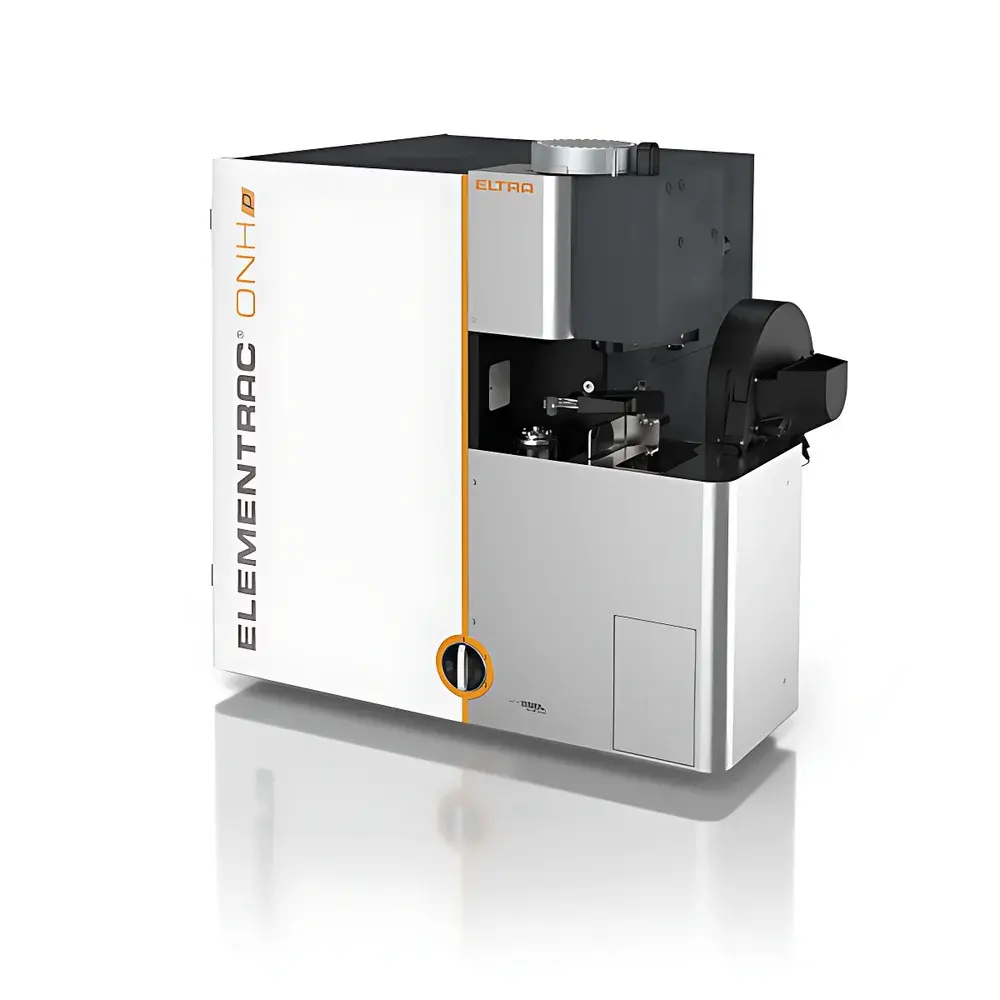
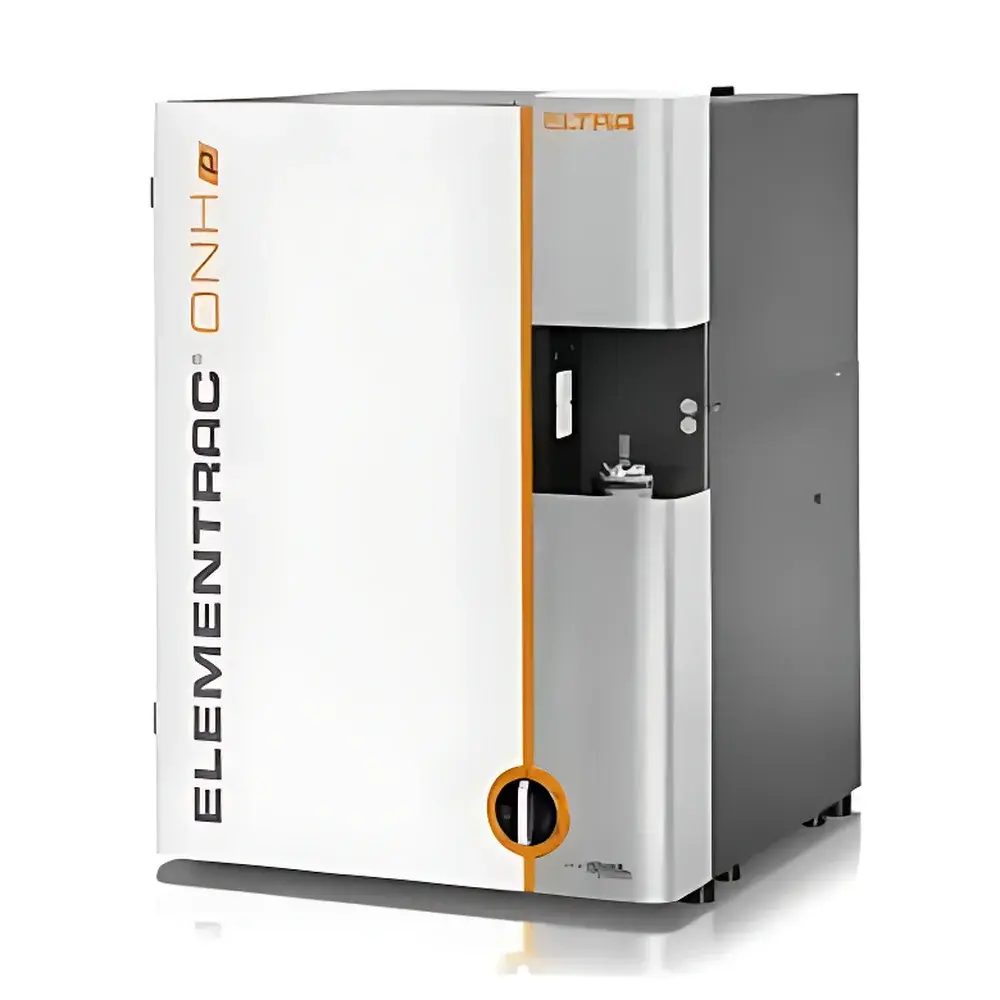
ELTRA ELEMENTRAC ONH-p 2 Oxygen-Nitrogen-Hydrogen Analyzer
| Brand | ELTRA |
|---|---|
| Origin | Germany |
| Model | ELEMENTRAC ONH-p 2 |
| Analysis Elements | Oxygen, Nitrogen, Hydrogen |
| Analysis Range | O: 0.1 ppm–2.0 wt% |
| N | 0.1 ppm–2.0 wt% |
| H | 0.01 ppm–1000 ppm |
| Detection Limits | O: 0.1 ppm |
| N | 0.1 ppm |
| H | 0.01 ppm |
| Analysis Time | 120–180 s (typical) |
| Pulse Furnace Power | up to 8.5 kW |
| Maximum Furnace Temperature | 3000 °C |
| Detection Principle | O by Non-Dispersive Infrared (NDIR) Absorption |
| Carrier Gases | He (99.995% purity), N₂ or Ar (99.995% purity), 2–4 bar |
| Power Supply | 3-phase, 400 V, 50/60 Hz, max. 8.5 kVA |
| Dimensions (W×H×D) | 56 × 78 × 64 cm |
| Weight | ~165 kg |
Overview
The ELTRA ELEMENTRAC ONH-p 2 is a high-performance inert gas fusion elemental analyzer engineered for the precise quantification of oxygen (O), nitrogen (N), and hydrogen (H) in inorganic solid materials. It operates on the principle of inert gas fusion—where samples are thermally decomposed in a graphite crucible under high-purity helium (or optional argon/nitrogen) carrier gas within a high-power pulse furnace. Released gaseous species—including CO, CO₂, N₂, and H₂—are swept through a series of chemical traps and then detected using orthogonal detection technologies: oxygen is converted to CO and subsequently to CO₂, measured via dual-channel non-dispersive infrared (NDIR) absorption; nitrogen and hydrogen are quantified directly as diatomic gases using high-stability thermal conductivity detectors (TCD). This dual-detection architecture ensures trace-level sensitivity and wide dynamic range—from sub-ppm hydrogen concentrations to multi-percent oxygen content—without cross-interference or matrix-induced bias. Designed for metallurgical QA/QC, R&D laboratories, and advanced materials development, the ONH-p 2 delivers reproducible, standards-compliant results across diverse sample types including ferrous and non-ferrous alloys, ceramics, refractories, slags, ores, and carbides.
Key Features
- High-power pulse furnace with programmable power output up to 8.5 kW and peak temperature capability of 3000 °C, enabling complete decomposition of refractory and high-melting-point matrices.
- Vertical sample introduction system with integrated pulse degassing—minimizes contamination risk and improves precision for rod, granular, and powdered specimens (max. sample mass: 2.0 g).
- Dual NDIR cells optimized for CO₂ detection (oxygen channel) and independent TCD cells for simultaneous N₂ and H₂ measurement—ensuring robust multi-element analysis in a single run.
- Closed-loop gas handling system with low dead-volume manifolds and automated valve sequencing, reducing carrier gas consumption by up to 40% versus open-flow designs while enhancing signal-to-noise ratio.
- Modular configuration support: instrument can be operated in dedicated O-only, N-only, H-only, ON, OH, NH, or full ONH modes—optimized for throughput or regulatory flexibility.
- Integrated reagent management with auto-replacement indicators for CO₂ absorbent (Mg(ClO₄)₂), water scrubber (NaOH), and oxidizing agent (CuO); optional Schütz reagent module available for enhanced H recovery.
Sample Compatibility & Compliance
The ELEMENTRAC ONH-p 2 accommodates a broad spectrum of inorganic solids without prior dissolution or digestion. Validated sample forms include cast iron, stainless steel, aluminum alloys, copper, titanium, silicon, tungsten carbide, fused silica, alumina ceramics, blast furnace slag, and geological reference materials. Sample preparation requires only homogenization and precise weighing (0.0001 g resolution balance recommended). The system complies with ASTM E1019 (Standard Test Methods for Determination of Carbon, Sulfur, Nitrogen, and Oxygen in Steel, Iron, Nickel, and Cobalt Alloys), DIN EN ISO 3976 (Metallic materials — Determination of oxygen, nitrogen and hydrogen), and JIS G 1211. Its hardware architecture and firmware design support GLP/GMP environments, including full audit trail logging, user access control, and electronic signature readiness per FDA 21 CFR Part 11 when paired with ELTRA’s certified software suite.
Software & Data Management
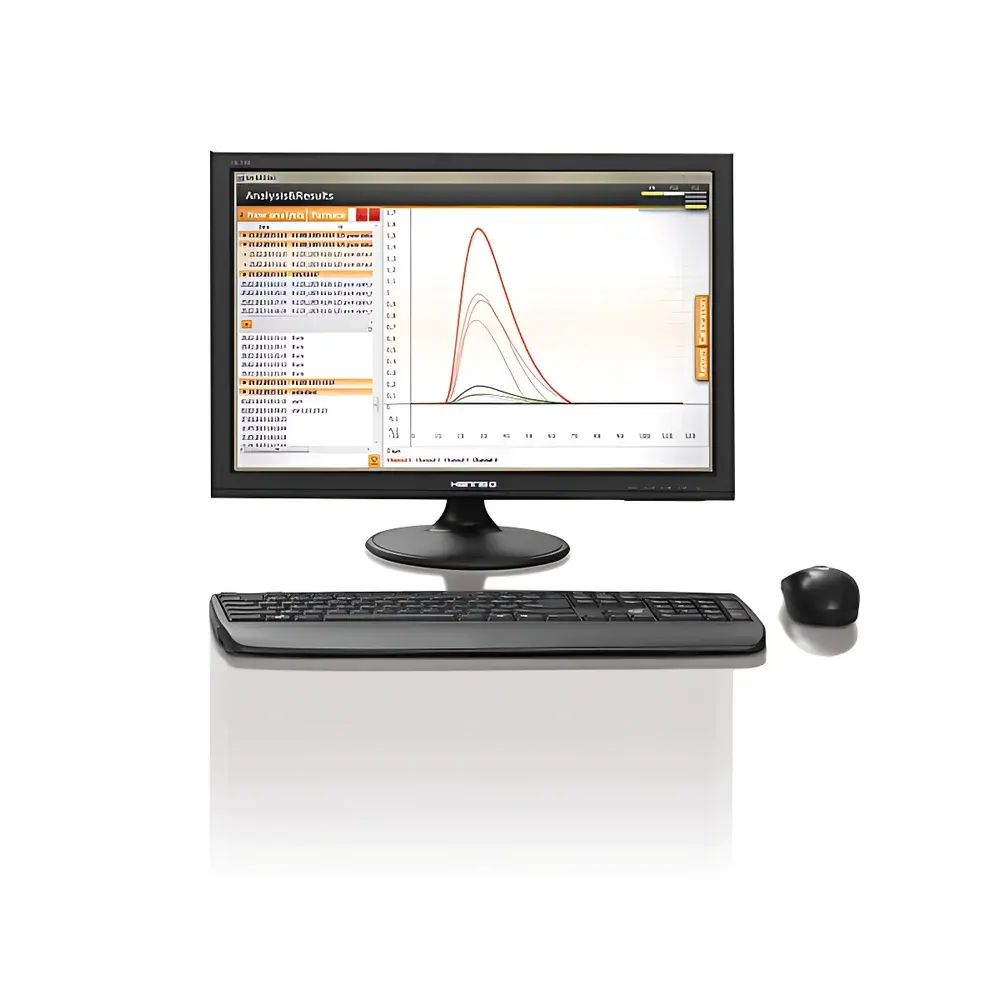
Controlled via ELTRA’s Windows-based ELEMENTS software, the ONH-p 2 provides real-time furnace temperature profiling, gas flow monitoring, detector baseline stabilization diagnostics, and automatic calibration curve generation using certified reference materials (CRMs). All raw signals (absorbance, thermal conductivity voltage), processed integrals, and metadata (operator ID, sample ID, date/time, furnace power profile, gas pressure logs) are stored in a secure, encrypted SQLite database. Export formats include CSV, XML, and PDF reports compliant with LIMS integration protocols. Optional modules include automated drift correction, multi-point linear/non-linear calibration, and statistical process control (SPC) dashboards for long-term method stability tracking.
Applications
- Metallurgy: Monitoring interstitial gas content in austenitic steels, superalloys, and titanium grades—critical for weldability, ductility, and fatigue resistance.
- Electronics: Quantifying hydrogen in silicon wafers and packaging ceramics to prevent blistering and delamination during thermal cycling.
- Research & Development: Studying gas uptake kinetics in metal hydrides, nitride formation in transition metals, and oxygen vacancy concentration in functional oxides.
- Quality Assurance: Routine verification of melt cleanliness in foundry operations and certification of high-purity metals for aerospace or medical device manufacturing.
- Geoscience: Determination of volatile content in mineral concentrates and synthetic refractories used in high-temperature industrial processes.
FAQ
What carrier gases are supported, and what purity specifications are required?
Helium (≥99.995% purity) is the default carrier gas for full ONH analysis. High-purity nitrogen (≥99.995%) may be used for ON-only mode, and argon (≥99.995%) is approved for OH or H-only applications. All gases must be delivered at regulated pressure (2–4 bar / 30–60 psi).
Can the ONH-p 2 analyze coated or surface-treated samples?
Yes—provided the coating is thermally stable below 3000 °C and does not introduce volatile organic contaminants. Surface oxide layers are fully included in total oxygen measurement; for bulk-only analysis, mechanical removal or etching prior to weighing is recommended.
Is external cooling required for continuous operation?
A recirculating chiller (optional) is strongly advised for >20 analyses/day or ambient temperatures exceeding 25 °C to maintain detector thermal stability and furnace coil longevity.
How is calibration performed, and what reference materials are recommended?
Calibration uses certified metal and ceramic CRMs traceable to NIST or BAM. Common standards include SRM 1263 (Fe–O), BCS-CRM 304 (Ni–N), and NIST SRM 2137 (Ti–H). Multi-point calibration curves are generated automatically and validated per ASTM E1019 Section 9.
Does the system support remote diagnostics or service access?
Yes—via secure TLS-encrypted remote desktop connection (with customer authorization), enabling ELTRA Field Application Engineers to perform firmware updates, parameter optimization, and diagnostic troubleshooting without onsite visit.
Related Products



