
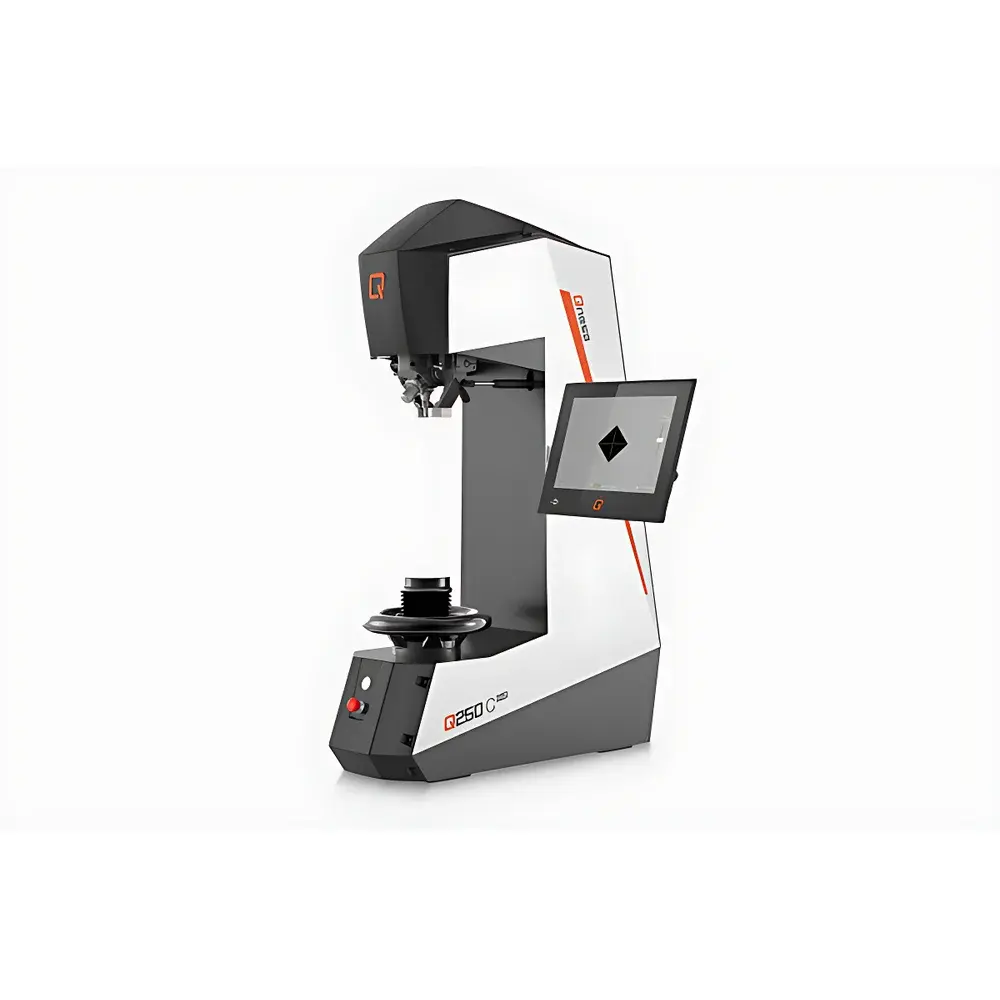
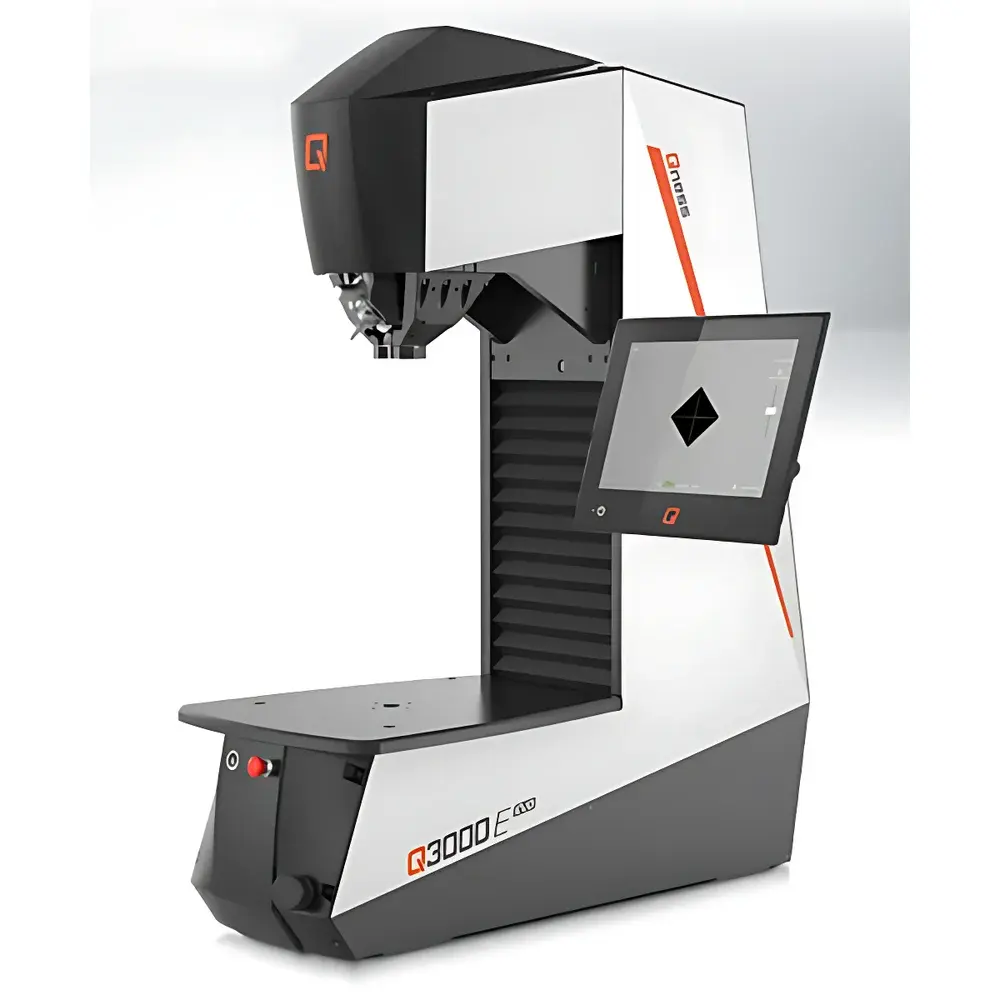
QATM Qness 250/750/3000 CS/M/E EVO Universal Macro Hardness Tester
| Brand | QATM |
|---|---|
| Origin | Austria |
| Model | Qness 250/750/3000 EVO |
| Instrument Type | Universal Hardness Tester |
| Load Range (Q250) | 1–250 kgf (9.8–2450 N) |
| Load Range (Q750) | 0.3–750 kgf (2.94–7358 N) |
| Load Range (Q3000) | 0.3–3000 kgf (2.94–29430 N) |
| Test Height | 175–510 mm |
| Throat Depth | 220–320 mm |
| Max Specimen Weight | ≤3500 kg |
| Imaging System | 5 MP CMOS camera with Ethernet interface |
| Display | 12″ capacitive touchscreen |
| Loading Control | Electromechanical, closed-loop force feedback |
| Illumination | XLED optical module for Brinell impression analysis |
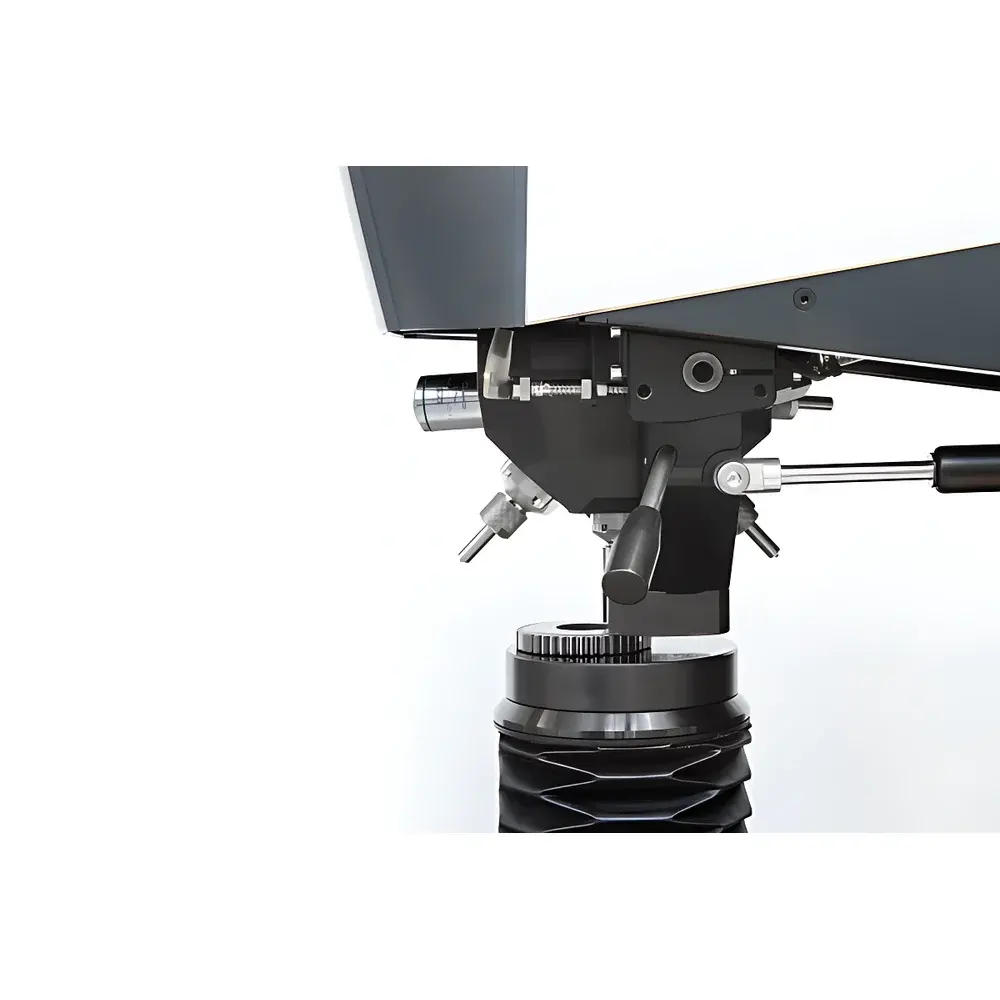
| Turret | Manual 2-position or optional motorized 8-position auto-turret |
Overview
The QATM Qness 250/750/3000 CS/M/E EVO Universal Macro Hardness Tester is an engineered solution for precision mechanical property evaluation across R&D laboratories, quality control departments, and industrial production floors. Based on the fundamental principles of static indentation hardness testing—compliant with ISO 6506 (Brinell), ISO 6507 (Vickers), ISO 6508 (Rockwell), and ISO 2039 (plastics)—the EVO platform delivers traceable, repeatable, and metrologically robust hardness measurements under standardized loading conditions. Its modular architecture supports macro-scale testing (≥1 kgf), distinguishing it from micro- and nano-hardness systems. Designed and manufactured in Austria, the system integrates electromechanical load application with real-time force feedback control, eliminating hydraulic drift and ensuring compliance with ASTM E10, E384, and E18 requirements for force accuracy and repeatability.
Key Features
- Electromechanical loading system with closed-loop force control: achieves ±0.5% load accuracy across full range (per ISO 6506-2 Annex A), independent of ambient temperature or operator technique.
- XLED illumination module optimized for high-contrast Brinell impression imaging—enabling automated detection of edge discontinuities and surface irregularities that compromise traditional halogen-based analysis.
- Dual-turret configuration: standard manual 2-position turret accommodates Vickers and Brinell indenters; optional motorized 8-position turret enables unattended sequential testing across multiple scales and methods.
- Modular frame variants (CS, M, E) tailored to specimen geometry and workflow: CS for compact benchtop integration (175 mm test height); M for large-part stability with fixed anvil and extended throat depth (320 mm); E for fully automated operation in mixed-environment settings, featuring integrated asynchronous motor-driven Z-axis positioning and 3500 kg specimen capacity.
- 12-inch capacitive touchscreen interface with intuitive HMI—supports multi-user profiles, customizable test templates, and real-time load-displacement curve visualization during indentation.
- 5-megapixel industrial CMOS camera with Gigabit Ethernet output—provides sub-pixel resolution for impression measurement (≤0.1 µm repeatability in diagonal determination), compliant with ISO 6507-2 digital image analysis requirements.
Sample Compatibility & Compliance
The Qness EVO series accommodates specimens ranging from small machined coupons to structural castings and forged components up to 3500 kg. Its adjustable test height (175–510 mm) and throat depth (220–320 mm) ensure compatibility with irregular geometries—including gears, turbine blades, weld joints, and extruded profiles—without requiring secondary fixturing. All models conform to CE marking directives (2006/42/EC Machinery Directive, 2014/30/EU EMC Directive) and support GLP/GMP audit readiness via optional software modules enabling 21 CFR Part 11-compliant electronic signatures, audit trails, and data integrity logging. Calibration certificates are issued per ISO/IEC 17025-accredited procedures, with traceability to national standards (e.g., PTB, NIST).
Software & Data Management
QATM’s Qpix 3.0 software suite provides full instrument control, automated measurement, statistical reporting, and database integration. It supports export to CSV, PDF, and XML formats compatible with LIMS and MES platforms. Measurement data includes raw impression images, load-time curves, hardness values (HV, HBW, HRC, HRB, etc.), statistical summaries (mean, SD, Cp/Cpk), and pass/fail flags against user-defined tolerances. The software architecture incorporates role-based access control, encrypted local storage, and optional cloud synchronization with TLS 1.2 encryption—meeting ISO 27001-aligned information security benchmarks.
Applications
- Metallurgical process validation: heat treatment verification (annealing, quenching, tempering), case depth assessment, and carburizing/nitriding uniformity mapping.
- Aerospace component certification: hardness profiling of landing gear steels, titanium airframes, and nickel-based superalloys per AMS 2430, AMS 2438, and EN 2042.
- Automotive powertrain QA: cylinder head aluminum alloys, crankshaft nodular iron, and gear tooth surface hardening verification per SAE J417 and DIN 50190.
- Energy sector compliance: weld procedure qualification (WPQR) testing for pipeline steels (API RP 2X), pressure vessel materials (ASME Section VIII), and nuclear-grade forgings (ASTM E1921).
- Plastics and polymers: Shore D and Rockwell M-scale testing of thermoplastics and composites per ISO 2039-2 and ASTM D785.
FAQ
What hardness standards does the Qness EVO series comply with?
It supports ISO 6506 (Brinell), ISO 6507 (Vickers), ISO 6508 (Rockwell), ISO 2039 (plastics), ASTM E10, E18, E384, and EN ISO 1463 for coating thickness correlation.
Can the system perform automatic hardness mapping across large surfaces?
Yes—when equipped with the optional motorized 8-position turret and XY motorized stage (sold separately), Qpix 3.0 enables programmable grid-based hardness mapping with positional repeatability <±2 µm.
Is remote diagnostics and firmware updates supported?
All EVO models include embedded web server functionality and support secure remote maintenance via QATM’s authorized service portal, with version-controlled firmware deployment and rollback capability.
How is force calibration maintained over time?
The system performs daily self-checks using internal reference load cells; certified recalibration is recommended annually or after 10,000 test cycles, following QATM’s documented SOPs aligned with ISO 6506-2 Clause 7.
Does the software meet FDA 21 CFR Part 11 requirements?
Yes—optional Part 11 compliance package includes electronic signature workflows, immutable audit trails, and role-based permissions, validated per IQ/OQ protocols supplied with the system.



