
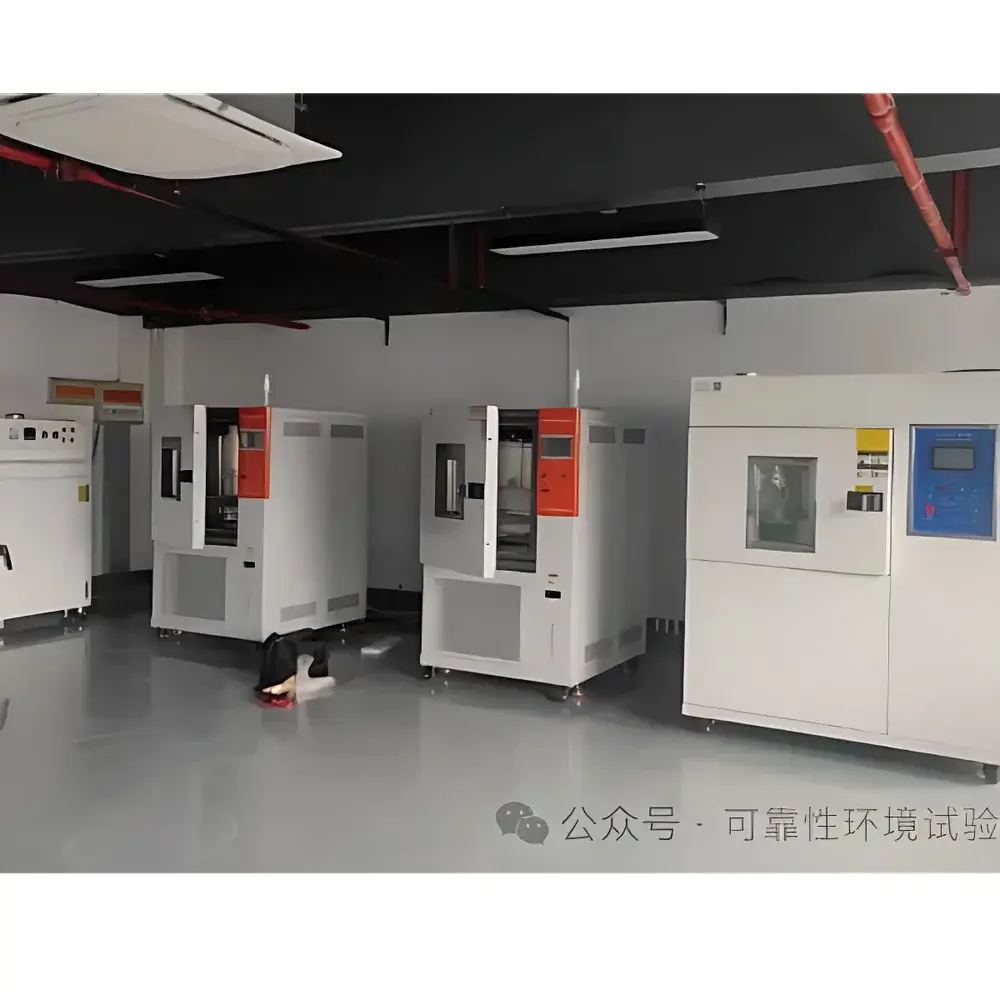
JianHu JH-Series Compact Two-Zone Thermal Shock Test Chamber
| Brand | JianHu |
|---|---|
| Origin | Shanghai, China |
| Model | JH-Series Compact Two-Zone Thermal Shock Test Chamber |
| High-Temperature Range | +60 °C to +200 °C |
| Low-Temperature Range | −70 °C to 0 °C |
| Thermal Shock Range | −60 °C to +150 °C |
| Temperature Stability | ±0.5 °C to ±2 °C |
| Heating Rate | 3–20 °C/min |
| Cooling Rate | 3–15 °C/min |
Overview
The JianHu JH-Series Compact Two-Zone Thermal Shock Test Chamber is an engineered solution for accelerated reliability assessment under extreme temperature transitions. Based on the two-box (dual-chamber) architecture, it physically separates high- and low-temperature zones—enabling rapid, repeatable thermal cycling via mechanical sample transfer between chambers. This design eliminates thermal cross-contamination and ensures precise, independent control of each zone’s setpoint, conforming to the fundamental requirements of IEC 60068-2-14 and GB/T 2423.22 for thermal shock testing. Unlike single-chamber ramp-based systems, the JH-Series achieves true step-change thermal stress by minimizing transition time—critical for evaluating solder joint integrity, polymer dimensional stability, die attach adhesion, and intermetallic growth in electronic assemblies and automotive components. Its compact footprint (typically < 1.2 m² floor space) makes it suitable for constrained laboratory environments, QC labs, and R&D pilot lines where spatial efficiency and operational flexibility are prioritized without compromising test fidelity.
Key Features
- Two-zone physical isolation: Independent high-temperature (+60 °C to +200 °C) and low-temperature (−70 °C to 0 °C) chambers with sealed thermal barriers and inert gas purge capability to prevent condensation and oxidation during transfers.
- High-fidelity thermal control: Dual PID-controlled refrigeration and heating circuits with platinum RTD sensors (Class A tolerance), delivering temperature stability within ±0.5 °C at steady state and repeatability ≤ ±1.0 °C across cycles.
- Programmable transition dynamics: Adjustable dwell times (1 min – 999 min per zone) and user-defined transfer timing (≤ 10 s typical mechanical basket movement), supporting both standard and custom thermal shock profiles.
- Robust chamber construction: Stainless steel 304 interior with electropolished finish; insulated double-wall structure using vacuum-insulated panels (VIPs) and high-density polyurethane foam (λ ≤ 0.022 W/m·K) for minimized energy loss and enhanced thermal inertia management.
- Integrated safety architecture: Over-temperature/over-pressure cut-offs, refrigerant leak detection, door interlock, and emergency stop compliant with IEC 61000-6-2/6-4 EMC standards and CE machinery directive requirements.
Sample Compatibility & Compliance
The JH-Series accommodates samples up to 300 mm × 300 mm × 300 mm (W×D×H) and supports standardized test fixtures including PCB carriers, component trays, and non-metallic mounting plates compatible with MIL-STD-810H Method 503.5 and JEDEC JESD22-A104F. It meets essential environmental compliance prerequisites for ISO/IEC 17025-accredited laboratories—including traceable calibration paths per ISO/IEC 17025:2017 Annex A.3, documented uncertainty budgets for temperature measurement, and audit-ready log files supporting GLP/GMP traceability. While not inherently 21 CFR Part 11-compliant, its data export functionality (CSV, Excel-compatible) enables integration into validated LIMS or ELN platforms meeting FDA-regulated documentation requirements.
Software & Data Management
Equipped with a 7-inch capacitive touchscreen HMI running embedded Linux OS, the system provides real-time dual-zone temperature monitoring, cycle progress visualization, and alarm event logging with timestamps. All operational parameters—including setpoints, dwell durations, transfer counts, and sensor readings—are stored internally (≥ 10,000-cycle history) and exportable via USB 2.0 or optional Ethernet TCP/IP interface. The included PC software (Windows 10/11 compatible) enables waveform replay, deviation analysis against target profiles, statistical summary reports (min/max/mean/stdev per cycle), and comparative overlay of multiple test runs. Audit trail functionality records operator ID, parameter changes, and system events—supporting internal quality audits and regulatory readiness.
Applications
- Electronics & Semiconductor: Qualification of IC packages, BGA solder joints, flex circuits, and MEMS devices per JEDEC, IPC, and AEC-Q200 specifications; identification of delamination, popcorning, and coefficient-of-thermal-expansion (CTE) mismatch failures.
- Automotive Electronics: Validation of ECUs, ADAS sensors, battery management systems (BMS), and power electronics modules under simulated under-hood and cold-start conditions per ISO 16750-4 and LV-124.
- Medical Devices: Environmental stress screening of handheld diagnostics (e.g., glucose meters, pulse oximeters), implantable component housings, and sterilization-packaged assemblies per ISO 14971 risk management and IEC 60601-1 clause 10.2.2.
- Materials Science Research: Investigation of phase transition kinetics in shape-memory alloys, thermal fatigue behavior of composites, and aging effects in encapsulants and conformal coatings under controlled cyclic stress.
- Quality Control & Incoming Inspection: Batch-level reliability sampling for suppliers in aerospace, defense, and industrial automation sectors requiring accelerated life validation prior to full-scale production release.
FAQ
What standards does the JH-Series support for thermal shock testing?
It natively supports IEC 60068-2-14, GB/T 2423.22, MIL-STD-810H Method 503.5, and JEDEC JESD22-A104F. Custom profiles may be configured to align with proprietary OEM specifications.
Can the chamber accommodate samples with active power input during testing?
Yes—optional feedthrough ports (up to 4 × Ø12 mm) allow external power, signal, or thermocouple connections while maintaining chamber integrity and thermal performance.
Is remote monitoring and control available?
Standard Ethernet connectivity enables Modbus TCP integration for SCADA or MES systems. Optional cloud-based telemetry (via secure MQTT) is available for fleet-wide chamber health monitoring and predictive maintenance alerts.
How is calibration maintained over time?
The system includes NIST-traceable calibration certificates for all primary sensors. Internal self-diagnostics verify sensor drift daily; annual recalibration is recommended per ISO/IEC 17025 and manufacturer guidelines.
What maintenance intervals are required for optimal performance?
Refrigerant circuit inspection every 12 months, condenser coil cleaning quarterly, and door gasket integrity verification before each qualification run—documented in the included maintenance log template.



