
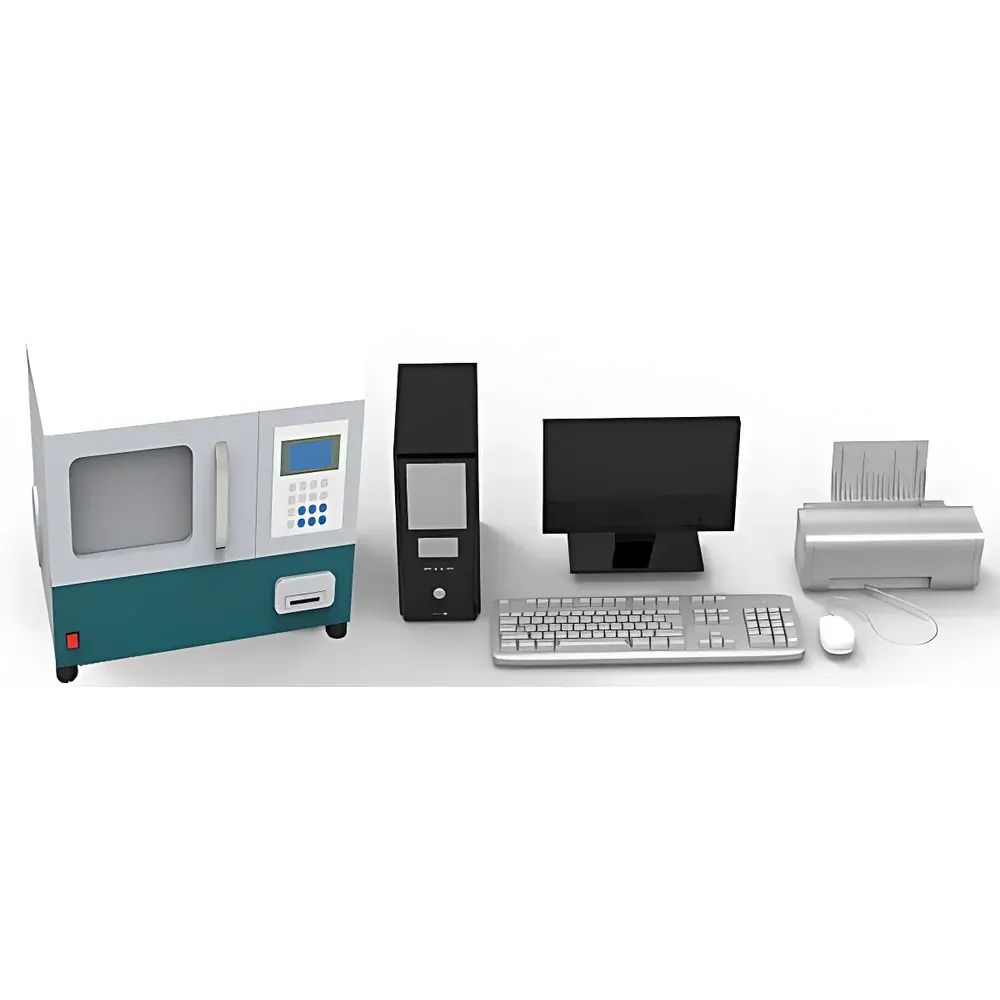
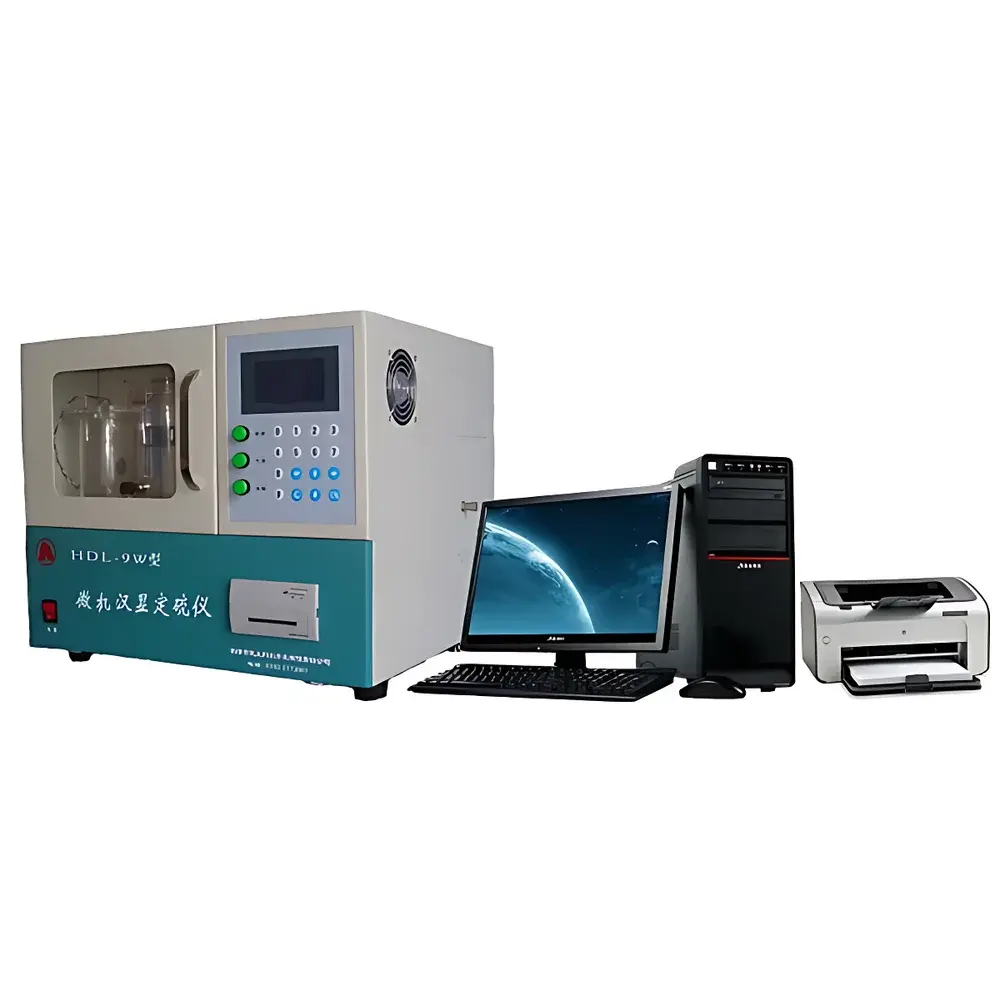
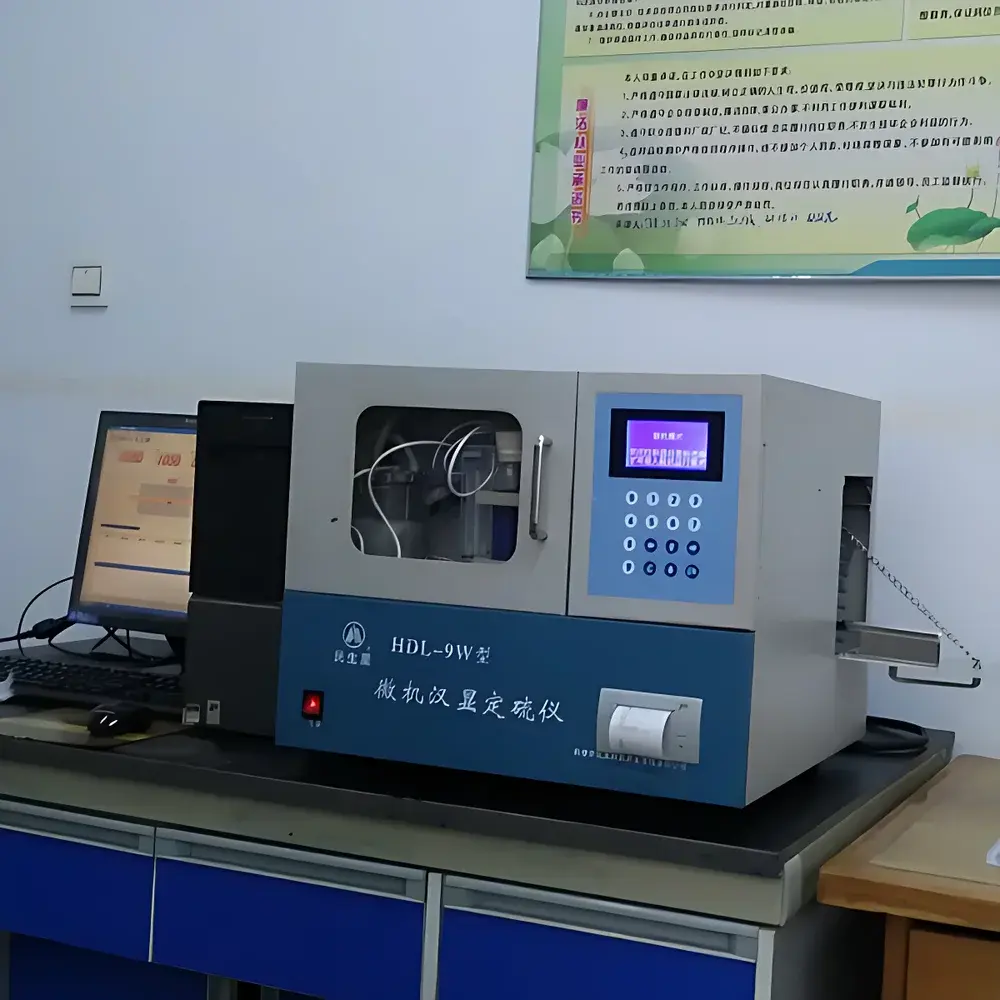
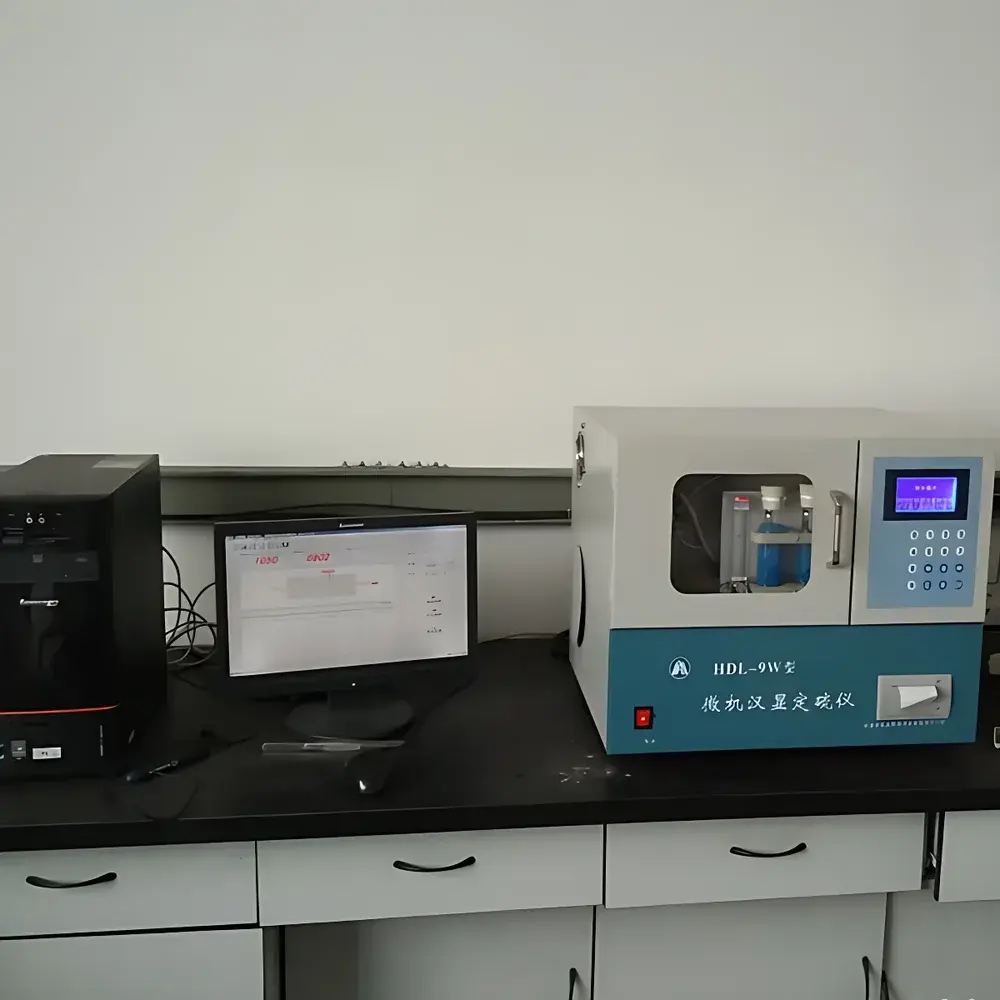
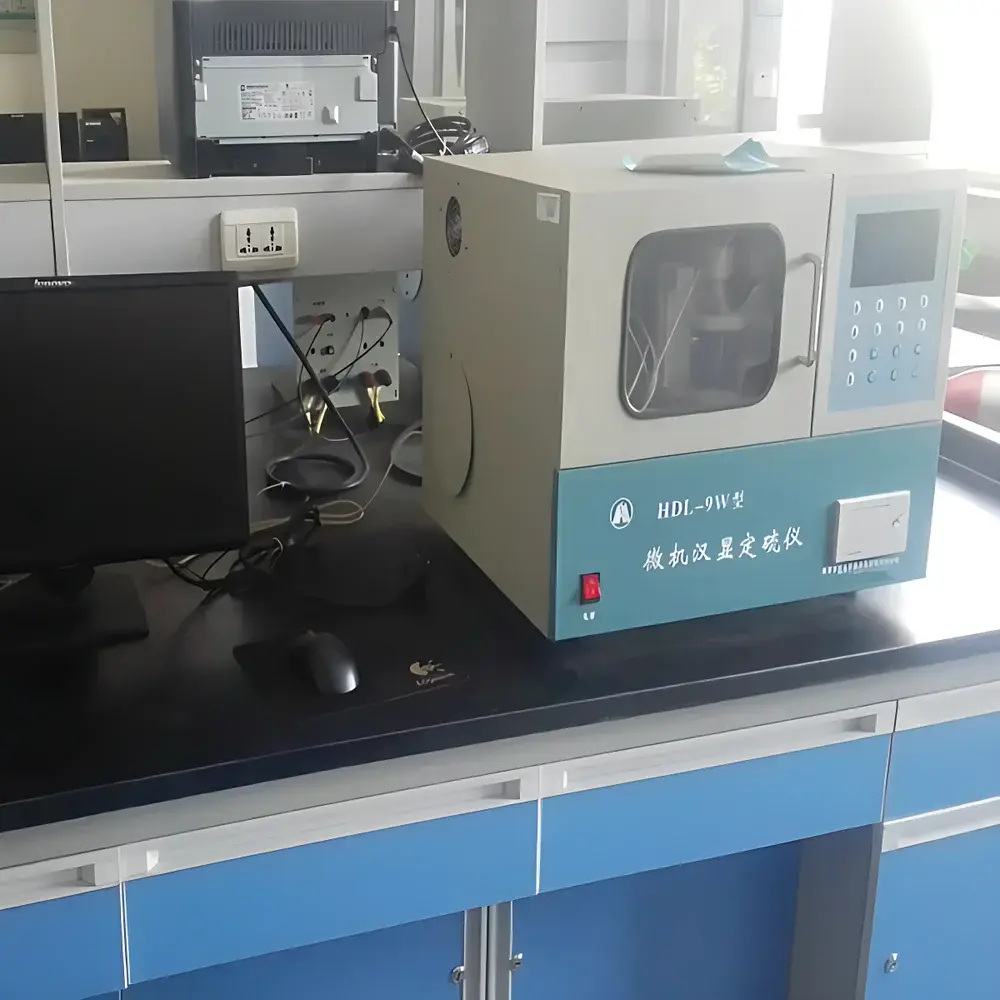
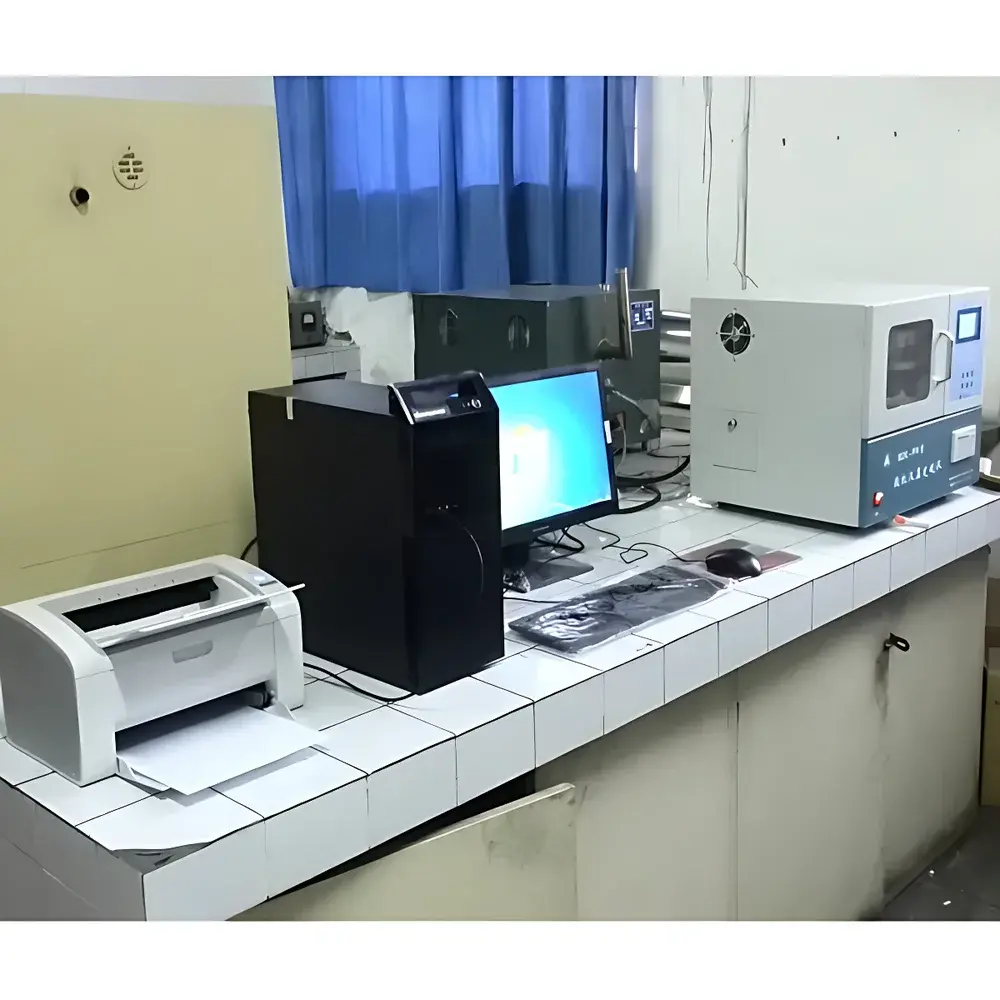
MingShen Science HDL-9W Microcomputer-Based Coulometric Sulfur Analyzer
| Brand | MingShen Science |
|---|---|
| Origin | Henan, China |
| Manufacturer Type | Authorized Distributor |
| Country of Origin | China |
| Model | HDL-9W |
| Detection Principle | Coulometric Titration (Microcoulometry) |
| Portability | Benchtop (Non-portable) |
| Analyte | Total Sulfur |
| Measurement Range | 0.1–40 wt% |
| Analysis Time | 3–9 min per sample |
| Detection Limit | 0.01 wt% (as specified in GB/T 214) |
| Display Interface | Dual-mode (Chinese LCD + PC-controlled) |
| Operating Temperature Range | 600–1150 °C (user-selectable |
| Carrier Gas Flow Rate | 1000 mL/min |
| Heating Element | Silicon Carbide Tube (340 mm length) |
| Power Supply | 220 V AC, 50 Hz, 2 kW |
| Compliance | GB/T 214–2007 |
Overview
The MingShen Science HDL-9W Microcomputer-Based Coulometric Sulfur Analyzer is a benchtop laboratory instrument engineered for precise, trace-to-high-level total sulfur quantification in solid and liquid hydrocarbon matrices—including coal, coke, crude oil, distillates, and refined petroleum products. It operates on the fundamental principle of microcoulometric titration, wherein sulfur-containing samples are combusted at high temperature in a controlled oxygen-rich atmosphere, converting all sulfur species to sulfur dioxide (SO₂). The SO₂ is then carried by a purified, regulated stream of carrier gas into a titration cell containing an iodine-based electrolyte. Electrolytic generation of iodine occurs in real time to quantitatively oxidize the SO₂, and the integrated coulometer measures the total charge (in coulombs) required to maintain stoichiometric equivalence—directly proportional to sulfur mass according to Faraday’s law. This method delivers high reproducibility, linearity across a wide dynamic range, and intrinsic compliance with standardized combustion-coulometric methodology.
Key Features
- Dual operational mode: Fully functional as a standalone unit with built-in Chinese-language LCD interface (activated via front-panel numeric key), or as a PC-integrated system via RS232 serial communication—enabling seamless transition between field-deployed autonomy and centralized lab data management.
- Programmable high-temperature furnace with silicon carbide heating element (340 mm length), capable of stable, uniform operation from 600 °C to 1150 °C; ramp time to 1050 °C is 20–40 minutes, optimized for coal analysis per GB/T 214, while 800 °C is configurable for lower-boiling petroleum fractions to minimize thermal decomposition artifacts.
- Integrated hardware architecture consolidates combustion furnace, magnetic stirrer, gas purification train (including desiccant and catalyst beds), dual-compartment electrolytic cell, automated sample introduction mechanism, and embedded microcontroller—all housed within a single compact chassis for minimized footprint, reduced interconnection complexity, and simplified maintenance.
- Real-time digital monitoring of furnace temperature, sample position, titration current, and accumulated charge, displayed simultaneously on either the local LCD or host PC interface.
- Auto-save functionality preserves last-used configuration—including temperature setpoint, calibration factors, and interface mode—ensuring consistent startup behavior without manual reconfiguration.
Sample Compatibility & Compliance
The HDL-9W is validated for use with heterogeneous solid fuels (e.g., bituminous coal, lignite, petroleum coke) and liquid petroleum samples (e.g., diesel, fuel oil, naphtha) following ASTM D3120, ASTM D5453, ISO 20846, and most critically, the Chinese national standard GB/T 214–2007 “Method for Determination of Total Sulfur in Coal—Coulometric Titration Method.” Its measurement range (0.1–40 wt%) accommodates both low-sulfur feedstocks and high-sulfur residuals, while the 0.01 wt% detection limit meets regulatory requirements for ultra-low-sulfur diesel (ULSD) verification. All gas-handling components conform to ISO 8573-1 Class 2 purity specifications for compressed air/oxygen supply, and the electrolyte system supports ≥10,000 titrations per refill under routine QC conditions.
Software & Data Management
The Windows-compatible control software provides full instrument orchestration: method setup (temperature profile, gas flow, integration time), real-time signal visualization, automatic endpoint detection, and quantitative calculation using preloaded calibration curves. Raw coulometric data (current vs. time) and processed results (wt% S) are stored in timestamped, user-named files compliant with GLP audit-trail requirements—each entry includes operator ID, sample ID, analysis date/time, furnace temperature log, and system diagnostic flags. Export formats include CSV and PDF for LIMS integration or regulatory reporting. The RS232 interface ensures electromagnetic noise immunity over distances up to 15 meters, with configurable baud rates (9600–115200) and hardware handshaking support.
Applications
- Quality control of coal feedstock in power generation and coking plants, ensuring compliance with emission trading thresholds and boiler corrosion mitigation protocols.
- Refinery process monitoring of desulfurization efficiency across hydrotreating units (HDS), particularly for monitoring breakthrough in guard beds or catalyst deactivation trends.
- Regulatory testing of transportation fuels against Euro 5/6, EPA Tier 3, and China VI sulfur limits (≤10 ppm for gasoline/diesel).
- Research applications in petrochemical catalysis, where sulfur poisoning kinetics of Ni/Mo/Al₂O₃ catalysts are evaluated via controlled sulfidation experiments.
- Third-party certification laboratories performing accredited testing per CNAS-CL01 (equivalent to ISO/IEC 17025), where documented traceability, calibration history, and electronic record retention are mandatory.
FAQ
What standards does the HDL-9W comply with for sulfur analysis?
It is fully aligned with GB/T 214–2007 and technically compatible with ASTM D3120, ASTM D5453, and ISO 20846 for total sulfur determination in solid and liquid fuels.
Can the instrument analyze viscous or high-boiling petroleum samples directly?
Yes—samples must be pre-diluted with high-purity xylene or solvent naphtha and introduced via the automated solid/liquid sample boat; optional quartz wool wrapping prevents splashing during flash volatilization.
Is the electrolyte cell reusable, and what is its service life?
The dual-compartment Pt/Ir electrode cell is designed for >5,000 analyses with proper cleaning (10% HNO₃ rinse followed by ultrapure water) and periodic membrane replacement every 6 months under continuous use.
Does the system support 21 CFR Part 11-compliant electronic signatures?
The base software does not include Part 11 modules; however, it exports ASCII-formatted audit logs that can be ingested into validated LIMS or ELN platforms meeting FDA requirements.
How is calibration performed, and how often is it required?
Calibration uses certified sulfur standards (e.g., benzoic acid with known S content); initial 3-point calibration is recommended before first use, followed by daily bracketing checks using mid-range reference material—full recalibration advised after 50 samples or any hardware maintenance.





