
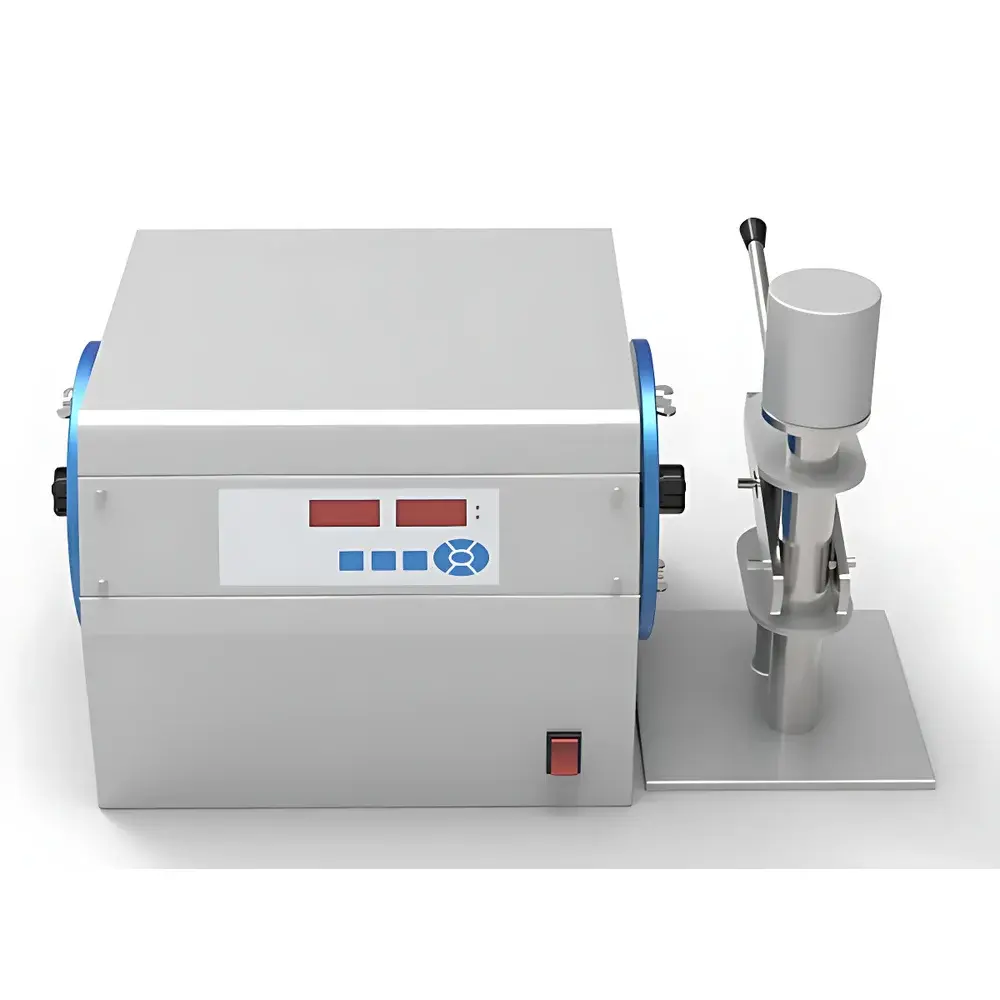
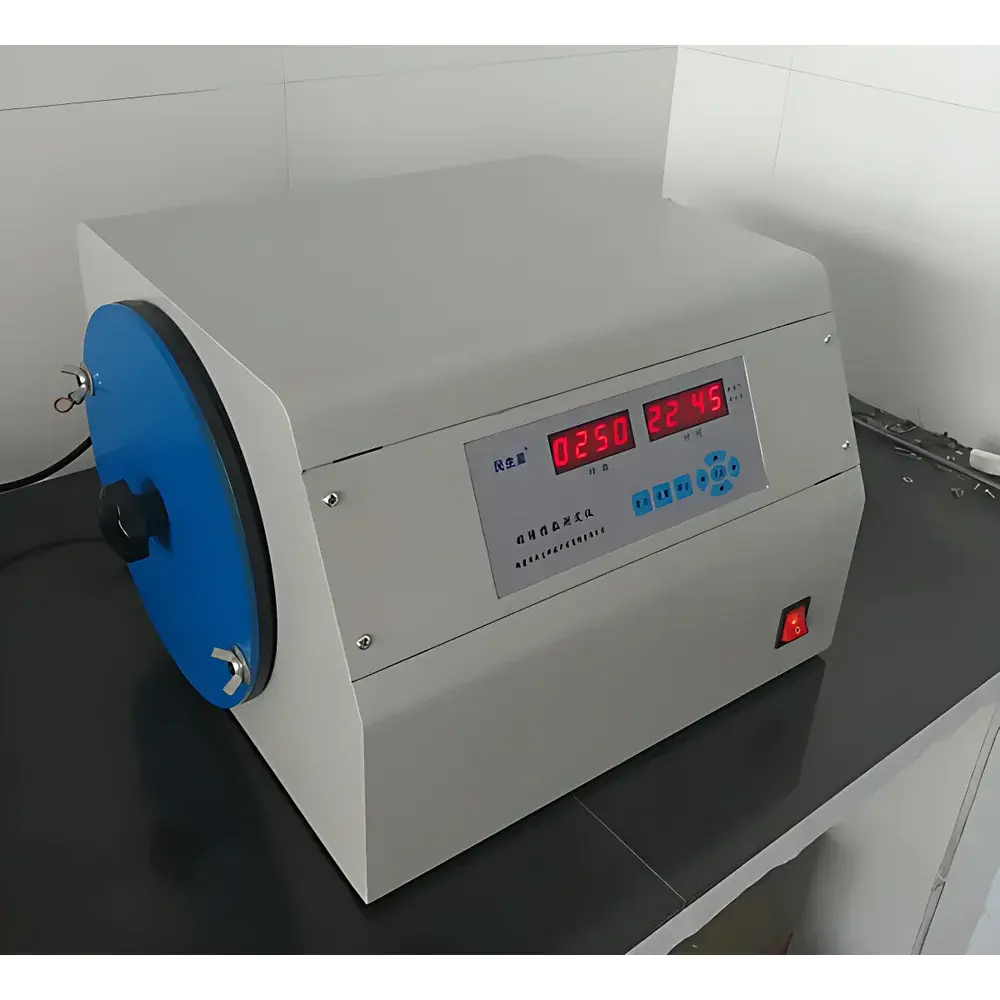
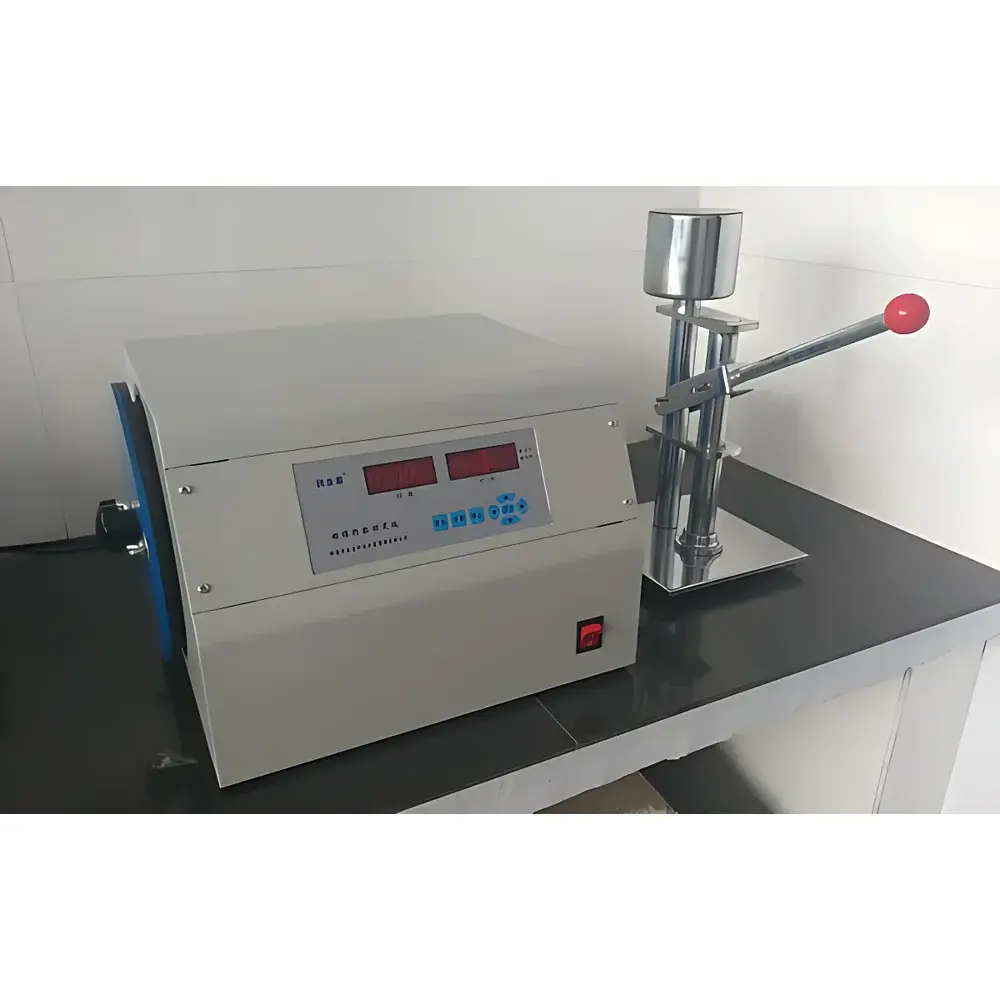
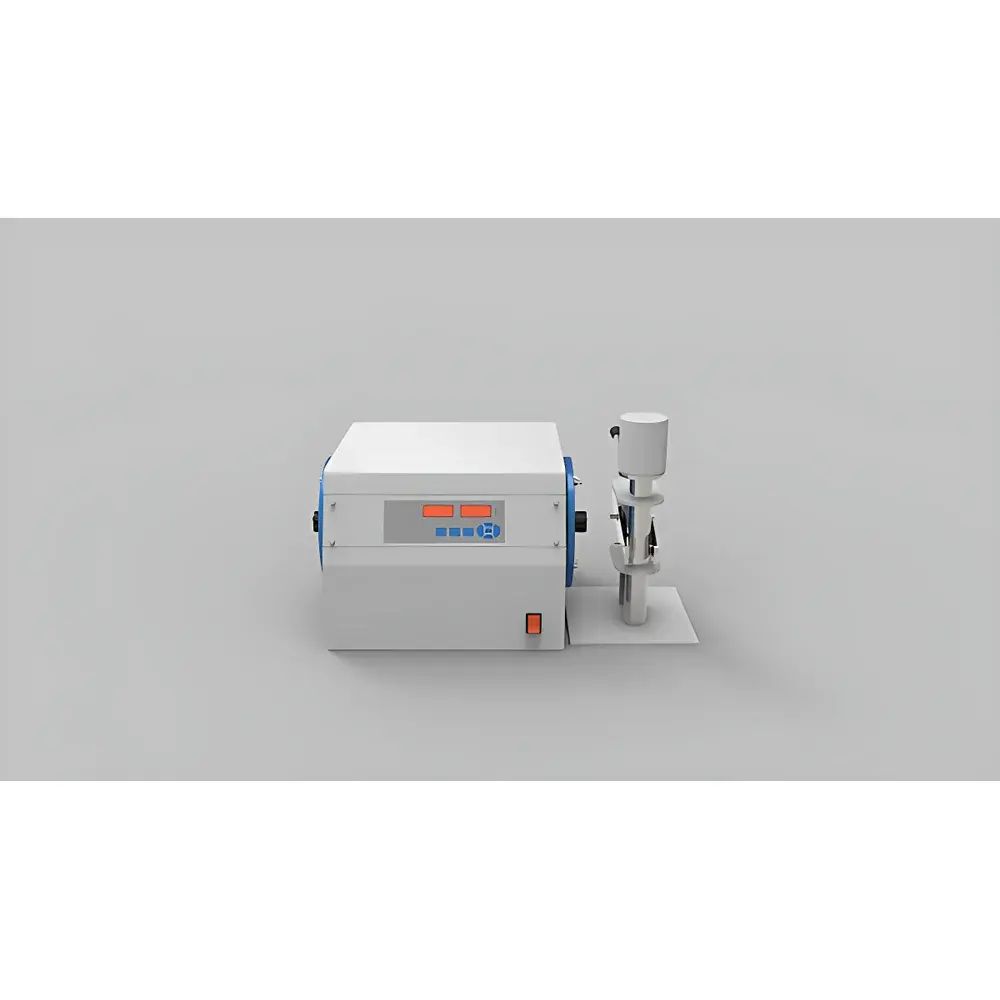
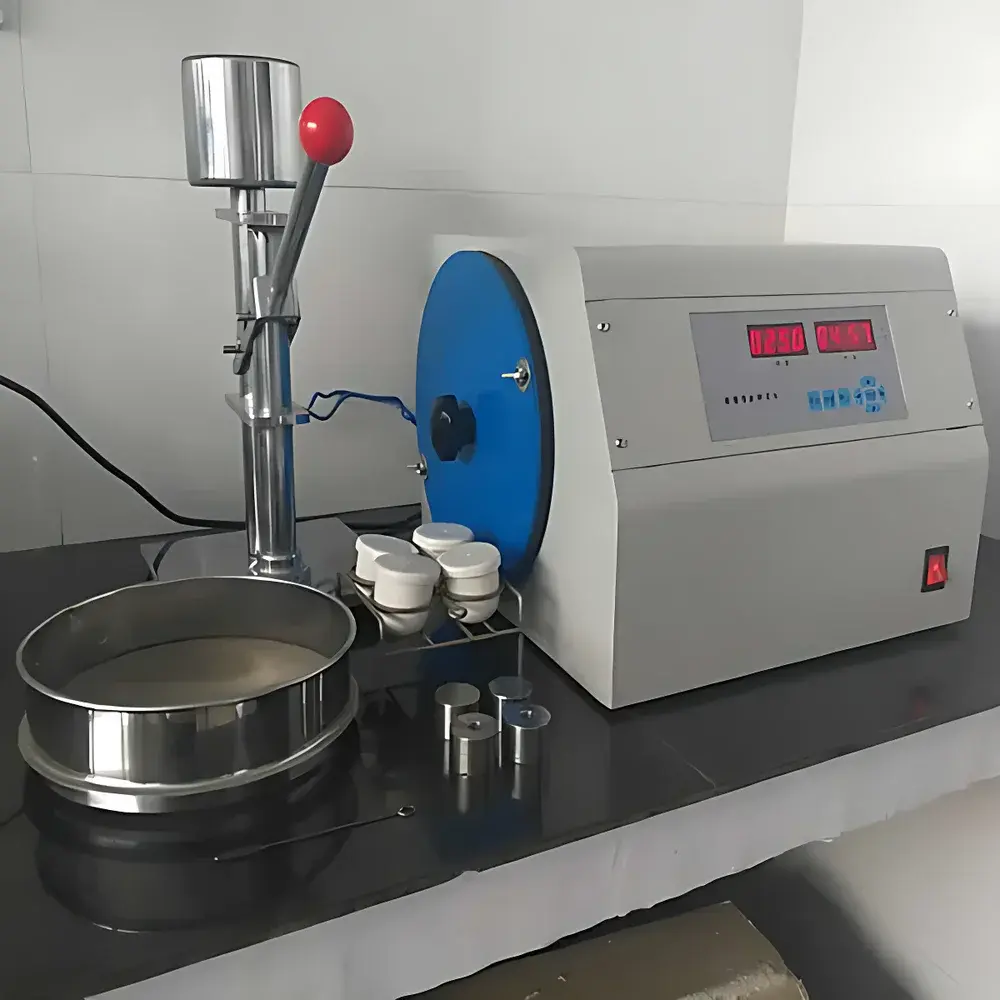
MingShen Science NJ-2 Roga Index Tester
| Brand | MingShen Science |
|---|---|
| Origin | Henan, China |
| Manufacturer Type | Authorized Distributor |
| Country of Origin | China |
| Model | NJ-2 |
| Price | USD 410 (FOB) |
| Compliance | GB/T 5447–2014, GB/T 5449–2015 |
| Drum Diameter | 200 mm |
| Drum Depth | 70 mm |
| Baffle Thickness | 3 mm |
| Baffle Angular Spacing | 180° |
| Rotational Speed | 50 ± 0.5 rpm |
| Total Revolutions | 250 (pre-set), adjustable 1–999 |
| Drive Motor Power | 120 W |
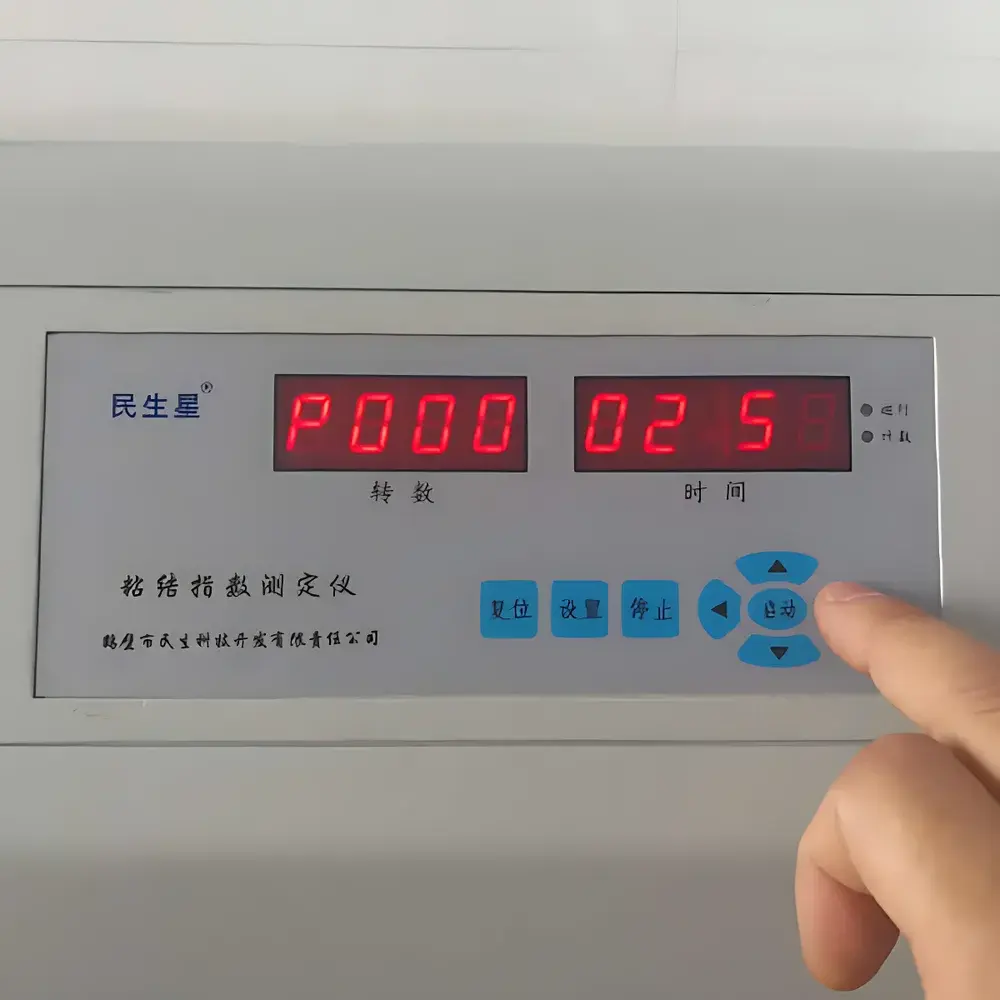
| Display | Dual LED — counter (left), timer (right) |
| Control | Photoelectric sensor-based non-contact counting |
| Auto-stop | Yes, at preset revolution count |
| Dimensions (L×W×H) | 480 × 370 × 280 mm |
| Net Weight | 20 kg (unit), 35 kg (total with packaging) |
Overview
The MingShen Science NJ-2 Roga Index Tester is a precision mechanical instrument engineered for the standardized determination of caking and bonding properties of bituminous coals used in coke production. It operates on the principle of mechanical abrasion resistance evaluation—quantifying coal’s ability to form coherent coke agglomerates under controlled thermal and mechanical stress. The test method is grounded in the classical Roga Index (RI) and Caking Index (CI) protocols, both of which rely on the physical integrity of coke residue after carbonization and subsequent tumbling in a rotating drum. The NJ-2 implements the prescribed tumbling sequence per GB/T 5449–2015 (Roga Index) and GB/T 5447–2014 (Caking Index), delivering reproducible, operator-independent results essential for coal blending optimization, quality assurance in metallurgical coke plants, and raw material qualification in blast furnace operations.
Key Features
- Two identical, parallel stainless-steel drums (200 mm internal diameter, 70 mm depth), each fitted with two opposing 3 mm-thick baffles spaced at 180° to ensure uniform tumbling dynamics and consistent particle impact distribution.
- High-stability worm-gear reduction drive system coupled to a 120 W AC induction motor, maintaining rotational speed at 50 ± 0.5 rpm across extended operational cycles—critical for adherence to national standard tolerances.
- Non-contact optical counting system using industrial-grade photoelectric sensors, eliminating mechanical wear and ensuring long-term counting accuracy over >100,000 test cycles.
- Dual-function LED display: left window shows real-time revolution count; right window displays elapsed time or serves as a programmable timer—both fields support manual reset and user-defined revolution presets (1–999).
- Microcontroller-based logic unit enabling fully automated termination at precisely 250 revolutions, with audible and visual indicators signaling test completion.
- Rugged steel housing (480 × 370 × 280 mm) designed for laboratory benchtop deployment, featuring vibration-dampened base mounting and IP20-rated electrical enclosure for safe operation in industrial lab environments.
Sample Compatibility & Compliance
The NJ-2 is validated exclusively for use with air-dried, crushed bituminous coal samples prepared per GB/T 211–2017 (coal sample preparation) and GB/T 5447–2014 (sample mass: 1 g coal + 5 g anthracite blend). It supports all coal ranks classified under ISO 11760:2005 and ASTM D388, provided they meet the moisture and particle size specifications (≤0.2 mm, <2.0% total moisture). The instrument conforms strictly to the mechanical design, dimensional, and performance requirements outlined in GB/T 5447–2014 and GB/T 5449–2015—including drum geometry, rotational tolerance, counting resolution, and auto-stop repeatability. While not certified to ISO/IEC 17025 or GLP out-of-the-box, its traceable mechanical calibration and documented test procedure enable full integration into GMP-aligned coal testing workflows when paired with laboratory SOPs and equipment logbooks.
Software & Data Management
The NJ-2 operates as a standalone electromechanical tester with no embedded software or network interface. All operational parameters are set manually via front-panel controls, and results are recorded externally by laboratory personnel. However, the device is compatible with third-party LIMS and QA documentation systems through standardized manual data entry protocols. For laboratories requiring audit trails, the dual LED display allows timestamped verification of each test cycle, and the photoelectric counter provides tamper-resistant revolution logging. When deployed in regulated environments (e.g., ISO 9001-certified coke plants), users may implement supplementary calibration logs, preventive maintenance records, and daily verification checks—fully compliant with FDA 21 CFR Part 11 principles when paired with electronic record-keeping platforms.
Applications
- Metallurgical coal procurement screening for blast furnace coke plants.
- Blending ratio optimization in coal preparation plants to balance caking strength and fluidity.
- Quality control of run-of-mine (ROM) coal batches prior to carbonization trials.
- Research and development of low-caking coal additives and binder formulations.
- Inter-laboratory proficiency testing under CNAS-accredited coal testing programs.
- Technical due diligence during coal asset acquisitions and reserve evaluations.
FAQ
Does the NJ-2 comply with international standards such as ASTM or ISO?
The NJ-2 is designed and verified per Chinese national standards GB/T 5447–2014 and GB/T 5449–2015. While it does not carry formal ASTM D5001 or ISO 3987 certification, its mechanical specifications—including drum geometry, speed tolerance, and counting fidelity—align with the functional requirements of those methods. Cross-validation studies against ASTM-compliant instruments are recommended for multi-standard reporting.
Can the revolution count be adjusted for non-standard test protocols?
Yes—the NJ-2 supports user-defined revolution presets from 1 to 999 via the front-panel keypad, enabling method development, intermediate durability testing, or research-oriented abrasion profiling.
What maintenance is required to ensure long-term measurement stability?
Routine maintenance includes monthly lubrication of the worm-gear reducer with ISO VG 220 gear oil, quarterly verification of photoelectric sensor alignment using the included calibration template, and annual torque verification of baffle rivets per manufacturer’s service bulletin MS-NJ2-REV4.
Is the instrument suitable for continuous high-throughput testing in a QC lab?
With a duty cycle rating of 8 hours/day and thermal protection on the 120 W motor, the NJ-2 supports sustained operation in shift-based quality control environments. Its solid-state counting architecture eliminates contact wear, ensuring >5 years of uninterrupted service under typical lab usage.
How is calibration traceability established?
Calibration is performed using a certified tachometer (traceable to NIM, China) for rotational speed verification and a calibrated digital revolution counter for cross-checking the built-in photoelectric sensor output. Calibration certificates and procedures are supplied with each unit.





